Ultimate Play the Game 1982–1985
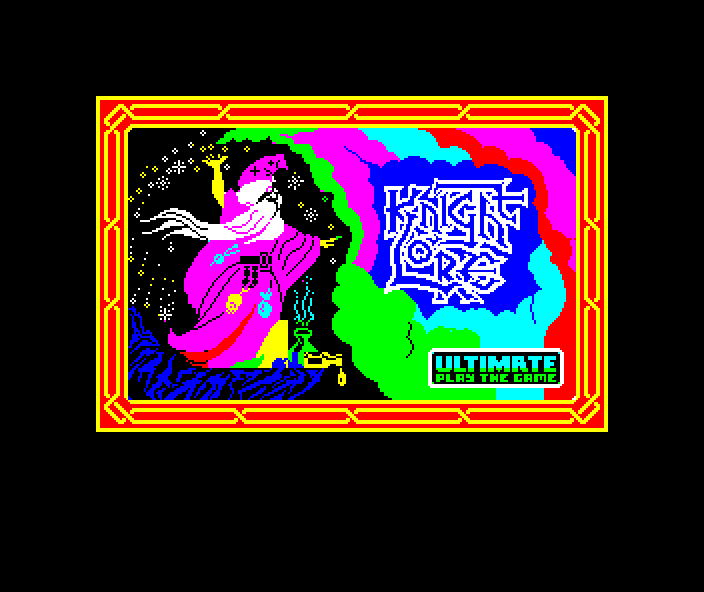
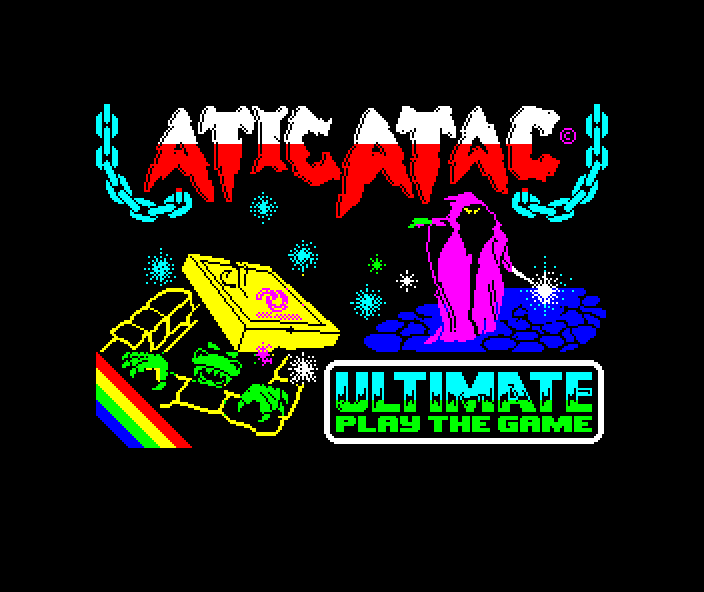
Tim Stamper and Chris Stamper founded Ultimate Play the Game in 1982, based in Ashby-de-la-Zouch, Leicestershire (later moving to Twycross, Warwickshire). Tim handled the programming; Chris specialised in hardware reverse-engineering. Neither had a conventional games industry background — they simply understood machines at a level few others did.
Their first ZX Spectrum titles demonstrated an immediate grasp of what the hardware could do. Atic Atac (1983) delivered top-down dungeon exploration with surprising depth; then came Knight Lore (1984) — a game so far ahead of its time that Ultimate deliberately delayed its release to avoid cannibalising sales of Sabre Wulf, the game that preceded it.
Knight Lore introduced the isometric “Filmation” engine: a pseudo-3D perspective that created genuine spatial depth on an 8-bit machine. The technique was revolutionary — it spawned an entire subgenre of isometric games and established Ultimate as the technical leader of British ZX Spectrum development.
“Knight Lore was way ahead of its time. We knew exactly what we were doing, and we knew it would cause a sensation.”
— Tim Stamper
Rare: NES Dominance
1985–1993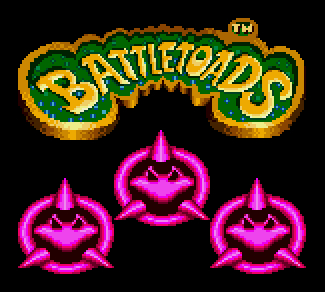
In 1985, the company rebranded as Rare Ltd. Chris Stamper reverse-engineered Nintendo hardware — without authorisation — giving Rare a deep understanding of the NES that would power years of output. The first Rare NES titles landed with immediate impact.
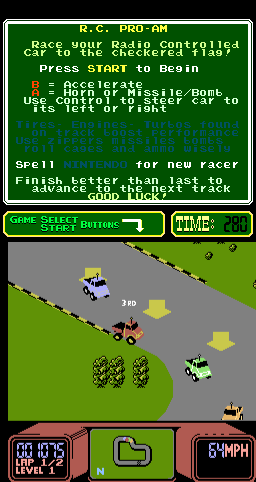
R.C. Pro-Am (1988, published by Nintendo) was a top-down radio-controlled car racer that combined addictive gameplay with impressive NES visuals. It became a commercial success and established Rare as a reliable supplier for Nintendo. More importantly, it opened the door to a run of increasingly ambitious NES projects.
Battletoads (1991, published by Tradewest) is arguably the zenith of Rare’s NES output. The game pushed the hardware to limits other developers couldn’t reach: scaling sprites, Mode 7-like perspective shifts, and a level design ambition that alternated between beat-’em-up, racing, and shooter sequences. David Wise composed the driving NES score. The game also carried no internal developer credits — Rare’s policy of credit suppression was in full effect.
Other notable NES titles in this era included Solstice: The Quest for the Staff of Demnos (1990, CSG Imagesoft) with its extraordinary Tim Follin score; Snake Rattle ‘n’ Roll (1990, Nintendo); and Solar Jetman: Hunt for the Golden Warpship (1990, Tradewest). The Battletoads & Double Dragon crossover followed in 1993.
“Every Rare NES game was us trying to do something nobody else was doing. We wanted to push past what people thought was possible on the hardware.”
— Chris Stamper
The Nintendo Partnership & DKC Revolution
1994–1997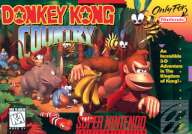
The DKC Revolution
The Stampers purchased Silicon Graphics ONYX workstations and deployed them for a technique Rare called ACM — Advanced Computer Modelling. The process rendered high-quality 3D models on the workstations, then converted the output into SNES sprites through compression. The result was a visual quality on SNES cartridge that appeared years ahead of its time.
When Nintendo executives Minoru Arakawa and Peter Main of Nintendo of America saw the Donkey Kong Country demo, they were immediately convinced. Nintendo acquired a 49% stake in Rare for approximately $75 million in 1994. DKC launched that November to enormous acclaim — critics hailed its visuals as groundbreaking and it received several year-end accolades. With over 8 million copies sold, it became the third best-selling SNES game ever.
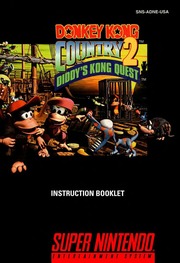
Donkey Kong Country 2: Diddy’s Kong Quest (1995) refined and surpassed the original. The pirate world setting was more atmospheric, the level variety more inventive, and David Wise’s score — Stickerbush Symphony in particular — elevated the experience to something genuinely extraordinary. See the Flagship page for the full DKC2 deep dive.
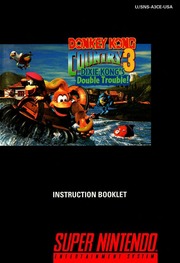
Donkey Kong Country 3: Dixie Kong’s Double Trouble! (1996) completed the trilogy. Eveline Novakovic-Fischer composed the SNES score, delivering a distinctive industrial and ambient character that set DKC3 apart from its predecessors. DKC3 also introduced more world exploration elements.
“The pre-rendered look was unprecedented at the time. People couldn’t believe they were looking at SNES graphics.”
— Rare developer (retrospective press, circa 2004)
N64 Era & Microsoft Acquisition
1997–2002
On the N64, Rare continued its record of technical achievement. Banjo-Kazooie (1998, Nintendo) — a 3D platformer with Grant Kirkhope’s instantly recognisable score — was a critical and commercial success that cemented Rare’s reputation as Nintendo’s most dependable second-party developer.
In September 2002, Microsoft acquired Rare for approximately $375 million. Tim and Chris Stamper remained at the company but departed by 2007. The Microsoft era marked the end of Rare’s Nintendo relationship and a pivot toward different kinds of games — Viva Piñata, Kameo, and eventually Sea of Thieves under a new generation of Rare developers.