Who Were Rainbow Arts?
Founded in 1984 in Gütersloh, Germany, Rainbow Arts became one of Europe’s most technically accomplished game studios of the 8-bit and 16-bit era.
German Precision, International Impact
Rainbow Arts was founded in 1984 by Armin Gessert and Thomas Hertzler in Gütersloh, Germany. From their first releases on the Commodore 64 through to the Amiga golden age, they built a reputation for technical excellence matched by very few studios anywhere in the world.
Their catalogue spans shooter classics, platform games of landmark ambition, and puzzle titles, always executed with a rigour and polish that set them apart from competitors. The studio’s peak coincided with the hiring of programmer Manfred Trenz and composer Chris Hülsbeck, whose work on Katakis, Turrican, and Turrican II remains some of the most celebrated software of the entire 8-bit and 16-bit era.
After a period of consolidation, talent exodus, and acquisition - first by Funsoft, then absorbed into the THQ chain by 1999 - the Rainbow Arts name faded. But its games endure: Turrican lives on through official collections, Evercade cartridges, and a passionate global community.
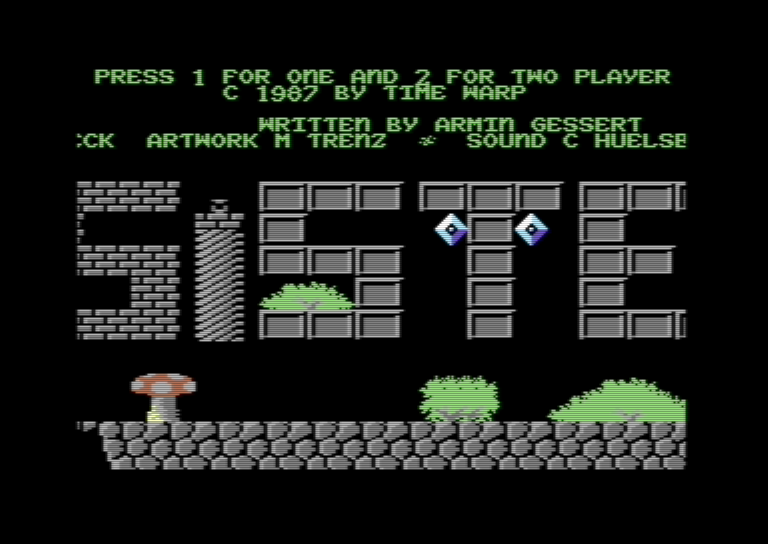
The Rainbow Arts story is told through five games above all others. The Great Giana Sisters (1987) arrived as Rainbow Arts’s first international sensation, a technically accomplished platform game that Nintendo’s legal team withdrew from shelves within weeks - creating a legend that outgrew the game itself. Katakis (1988) introduced the world to Manfred Trenz, a programmer who extracted arcade-quality shoot-’em-up performance from C64 hardware that most developers treated as exhausted. Turrican (1990) was the statement game - a run-and-gun platformer of genuine scale that defined what European home computer software could achieve. Its sequel, Turrican II (1991), surpassed it in every dimension and included a cinematic World 5 built around Hülsbeck’s score that had no precedent in home computing. X-Out (1990) launched in the same year as Turrican and has been underappreciated ever since - a vertical shooter with a tactical weapon shop and Matt Furniss’s finest Amiga score.
Full editorial coverage for all five titles is on the flagship titles page. The complete Rainbow Arts catalogue, with platform credits and release dates, is in the catalogue. The people page covers Trenz, Hülsbeck, Gessert, Hertzler, and the broader Rainbow Arts team.
Full History
Founding 1984 through Rushware, peak years, talent exodus, and Ziggurat catalogue acquisition.
Catalogue
Complete title reference with year, platform badges, programmer and composer credits.
People
Manfred Trenz, Chris Hülsbeck, Armin Gessert, Thomas Hertzler, and the Rainbow Arts team.
Modern Legacy
Turrican Flashback, Evercade collection, Rendering Ranger R², and Ziggurat availability.