Flagship Titles
Five games that define the Rainbow Arts legacy. See the gallery for screenshots, the catalogue for complete credits, and the music page for soundtrack coverage.
Turrican (1990)
Turrican is the game that defined Rainbow Arts. Programmed by Manfred Trenz and scored by Chris Hülsbeck, it arrived on the Commodore 64 and Amiga in 1990 as a demonstration of what dedicated, technically exceptional German software engineering could achieve. The C64 version in particular is remarkable - a game of genuine scale and visual ambition on hardware that most developers treated as already exhausted.
Fourteen Months, Two Platforms, One Programmer
Turrican grew from Trenz's confidence after completing Katakis. The C64 shoot-'em-up had proved he could extract arcade-level performance from 8-bit hardware; the question was what he could achieve with more time, more scope, and a brief that handed him almost complete creative autonomy. Rainbow Arts backed the project with that autonomy and Trenz delivered a game that exceeded every expectation the studio had set.
The C64 version was developed first, over approximately fourteen months. The Amiga version followed, built by Trenz to exploit the 16-bit platform's additional capabilities: extended colour depth, OCS copper-driven background effects, and the four-channel audio that allowed Hülsbeck's compositions to breathe in ways the SID chip's three oscillators could not fully accommodate. Both versions were finished and shipped within weeks of each other.
"Making games was about pushing the machine to its absolute limit - and then going a little further."
Manfred Trenz, developer retrospective, mt-fanpage.de
The Gyro Spark Changed the Genre
Turrican's worlds are large and varied across five distinct settings. Players collect power-ups to upgrade their laser cannon, switch between three primary weapon systems, and deploy the gyro spark - a circular ring of energy that rolls across platforms and terrain, destroying everything it contacts without expending the player's energy bar. The game rewards exploration: many stages contain hidden power-up caches and passages accessible only through careful investigation rather than speed-running.
The freeze ray allows players to temporarily halt enemy movement, adding a layer of crowd-control strategy to the otherwise kinetic action. The gyro spark in particular redefined the feel of action gaming on 8-bit hardware: it transformed a precision-skill game into something that periodically gave the player a feeling of overwhelming power, a deliberate counterpoint to the standard run-and-gun challenge.
Fifty Sprites and No Slowdown
The C64 version achieves smooth multi-directional scrolling across levels far larger than most C64 games attempted. Sprite multiplexing - reusing the VIC-II chip's eight hardware sprites across multiple objects by cycling them at specific raster line positions - allows enemy density far beyond the hardware's nominal limits. The technique was not unique to Rainbow Arts, but Trenz implemented it at a level of stability and visual density that contemporary reviewers found difficult to credit on home hardware.
The Amiga version uses the OCS copper coprocessor to create parallax-scrolling backgrounds that give the game's levels visual depth unmatched by most contemporary Amiga titles. The four-channel Paula chip allows Hülsbeck's score - already a landmark in SID composition on the C64 - to expand into a richer orchestral texture that became one of the defining soundtracks of the Amiga era.
Zzap!64 Reached for New Words
Zzap!64 awarded Turrican one of its highest C64 scores - the magazine cited the game's scale, technical quality, and playability in terms that exhausted their standard review vocabulary. The Amiga version received similarly strong marks from Amiga Power and CU Amiga, both of which described it as a platform showcase. ACE covered the multi-platform release across C64, Amiga, and Atari ST, with consistent praise for the technical execution across all three.
Within weeks of release, Turrican was discussed internationally as a landmark. The game made Rainbow Arts's reputation in markets beyond Germany and established Trenz and Hülsbeck as two of the most significant figures in European home computer software. See the full period reception on the reviews page.
The Franchise That Outlasted the Studio
Turrican II followed in 1991, again from Trenz and Hülsbeck. After Trenz's departure, Factor 5 developed SNES and Mega Drive versions with additional Hülsbeck compositions - Super Turrican and Mega Turrican are distinct productions with their own musical and gameplay identities. The catalogue documents all platform versions.
The franchise was revived as Turrican Flashback (2021) for Nintendo Switch and PlayStation 4, collecting four games. An Evercade cartridge offers six titles in the series. Hülsbeck's score has been performed at the Symphonic Shades concerts in Germany, one of the earliest major concerts of video game music in Europe. The full modern legacy is documented on the modern legacy page.
See also: catalogue entry - Hülsbeck soundtrack - Manfred Trenz - Turrican Flashback
Turrican II: The Final Fight (1991)
If Turrican announced Manfred Trenz's genius, Turrican II: The Final Fight confirmed it. Released in 1991, the sequel surpasses its predecessor in scope, structural variety, and musical ambition. Chris Hülsbeck's score is the finest work he produced for home computer software - and his Amiga compositions for this game stand as one of the medium's most complete artistic statements from the 8-bit and 16-bit era.
Trenz's Final Song at Rainbow Arts
Development began immediately after the first Turrican shipped. Rainbow Arts invested heavily in a more ambitious follow-up, giving Trenz the same autonomy and expanding the production scope across more platforms and a broader world structure. Hülsbeck and Trenz worked in unusual parallel - the score developed alongside the game design rather than being composed after the levels were finished. This approach allowed the music to inform the pacing of individual sections, and the gameplay to create the emotional context the music needed.
Both men knew this would be Trenz's final Rainbow Arts project. He had decided to pursue independent development after completing the sequel, and the knowledge that this was his last work at the studio may have sharpened both the ambition and the execution.
Three Genres, One Disc
Turrican II spans five worlds, each structurally distinct from the last. The first two worlds extend the exploration-shooter model of the original with expanded level design and more varied enemy encounters. World 3 breaks the formula entirely: a horizontal shoot-'em-up sequence that demonstrates Trenz's programming range, implementing a fully different genre within the same executable without degrading visual or audio quality.
World 4 returns to platforming territory before World 5 delivers the game's most celebrated sequence: a cinematic passage where enemy encounters recede and Hülsbeck's orchestrated score carries the player through a visual and musical experience without real precedent in 8-bit or 16-bit gaming. No objectives, no threats - just the music and the imagery, moving together toward the final confrontation.
"With Turrican II I set out to write a score that the player would remember long after they put the game down. The fifth world was the moment I tried to show that game music could do what film music does - carry an experience without any gameplay underneath it."
Chris Hülsbeck, composer retrospective, huelsbeck.com
The World That Felt Like a Film
The World 5 sequence synchronizes Amiga OCS audio DMA output with visual copper-driven effects in a way that anticipates the "cutscene" concept the industry would formalize in the mid-1990s. The C64 version compresses five worlds of content - including the full horizontal shooter section - into the platform's 64KB address space through careful bank switching and compressed asset management. The fact that both versions delivered the same fundamental experience, regardless of their hardware differences, is one of the more remarkable cross-platform achievements of the era.
Critics Called It the Best Amiga Game
Zzap!64, Amiga Power, and CU Amiga all awarded Turrican II scores that placed it among the highest-rated releases they had covered for their respective platforms. Amiga Power described the game as demonstrating what the Amiga was made for - a statement that reflected the game's status as a platform showcase. The Amiga version in particular has been cited consistently since 1991 as one of the finest games ever released for the hardware.
What Factor 5 Built On
Trenz's departure after completion created a gap that no subsequent Rainbow Arts programmer filled. Factor 5 developed Super Turrican for the SNES (with Hülsbeck contributing new compositions) and Mega Turrican for the Mega Drive. These are distinct productions - technically accomplished, but separate from the original creative partnership. Both Turrican games are included in the Turrican Flashback collection (2021) and the Evercade Turrican cartridge. Hülsbeck's Turrican II score was performed at the Symphonic Shades concert series - among the first major concerts of video game music in Europe.
See also: catalogue entry - Hülsbeck soundtrack - Manfred Trenz - Turrican Flashback
The Great Giana Sisters (1987)
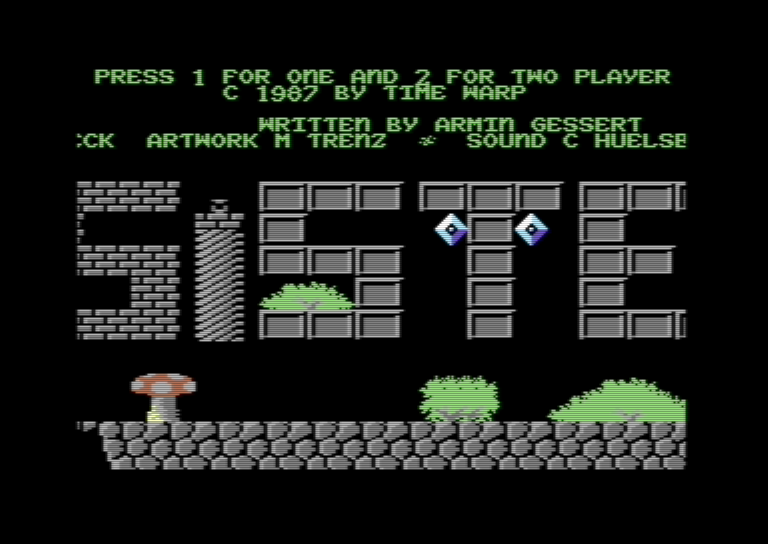
The Great Giana Sisters occupies a unique place in Rainbow Arts's history and in the broader story of European game development. Programmed by Armin Gessert and scored by Chris Hülsbeck, the game arrived on the Commodore 64 in 1987 to immediate commercial success - and was withdrawn within weeks under legal pressure from Nintendo. What remained was a legend: a game more people have heard about than played, defined as much by its removal as by its quality.
Armin Gessert's Bold Gamble
Gessert designed and programmed Giana Sisters with clear knowledge of what he was doing. The game's platform-adventure structure, level design conventions, and character behaviour drew openly from Super Mario Bros. - the horizontally scrolling worlds, the underground sections, the power-up that transformed the protagonist, and the general visual language were all unmistakably in dialogue with Nintendo's flagship title. Rainbow Arts published it regardless, betting that Nintendo's attention would not extend to C64 software distributed primarily through European retail channels.
The bet was wrong. Nintendo's legal team made contact within weeks of the game's release. The proximity of the design to Super Mario Bros. was substantial enough that Rainbow Arts's legal advisers determined a defence would be difficult to sustain. The decision to withdraw was taken quickly.
"We knew the game would attract attention. The legal letter from Nintendo came faster than we had anticipated. The decision to withdraw was not one we wanted to make, but we did not have the resources for a legal contest with a company of Nintendo's size."
Thomas Hertzler, co-founder interview, Arcade Attack
Familiar Until It Isn't
Giana Sisters is a platform game: the player runs and jumps through horizontally scrolling levels, collects power-ups, and avoids or defeats enemies placed throughout the environment. The structural similarity to Super Mario Bros. is undeniable at the design level. What distinguishes the game is its execution on hardware without dedicated scrolling hardware and its distinct visual aesthetic - a dreamworld setting with a character identity separate from Nintendo's.
Giana's bubble shield power-up transforms her into a punk-styled variant character with different movement properties - a visual transformation mechanic that serves the same narrative function as Mario's mushroom, but with a different aesthetic register entirely. The game's 32 levels vary in theme and challenge, and the C64 version sustains playability throughout despite the hardware limitations.
Smooth Scrolling on a 1 MHz Clock
The C64 version's technical accomplishment is real and distinct from its legal problems. Gessert achieved smooth horizontal scrolling across 32 levels on hardware running at 1 MHz with 64KB of addressable memory - a combination of constraints that made fluid scrolling platform games a genuine technical challenge. The visual polish of the C64 version was unusually high for 1987, and contemporary reviewers noted the quality of the scrolling before the legal situation overtook the critical conversation.
Hülsbeck's C64 score became the most lasting element of the game's legacy. The title theme in particular - a melodic SID composition that the three oscillators render with an expressiveness that continues to surprise listeners unfamiliar with the chip's capabilities - has been covered, remixed, and performed hundreds of times in the decades since. It ranks among the canonical SID compositions alongside Rob Hubbard's finest work. Full documentation is on the music page.
Sold Out, Then Silenced
The game sold well in its brief window of availability. The withdrawal created immediate scarcity, and the scarcity created legend. Giana Sisters became a game that circulated through the C64 community via unauthorized copying - the normal distribution channel for software that had been withdrawn from retail - while simultaneously acquiring a reputation far larger than its brief commercial window would normally support. Period reviews, where they appear, are on the reviews page.
The Character Nintendo Could Not Erase
Black Forest Games developed a sequel, Giana Sisters DS, in 2009 - with Hülsbeck returning to score. Giana Sisters: Twisted Dreams (2012) and subsequent entries continued under the same developer. These are separate productions unconnected to Rainbow Arts, but they revived the character identity that Gessert and Hülsbeck established in 1987. The original C64 and Amiga games are available for play via emulation; original boxed copies are collector's items documented in the catalogue.
See also: catalogue entry - Hülsbeck SID score - period reviews - Armin Gessert
Katakis (1988)
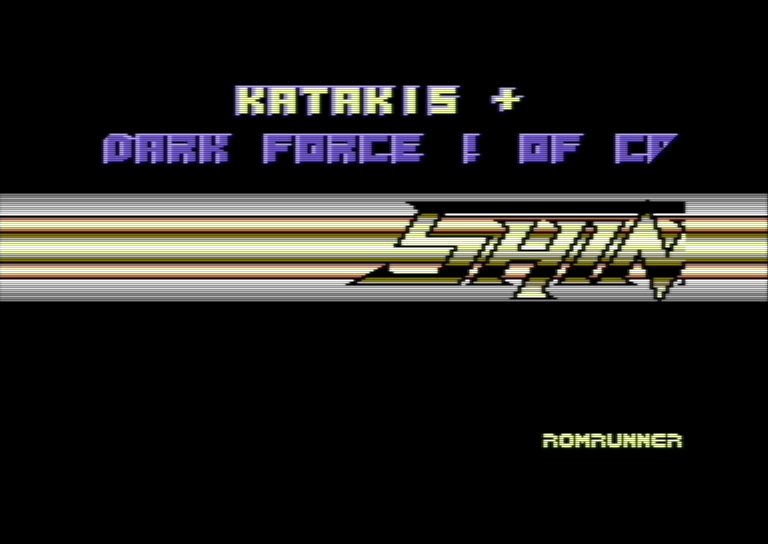
Katakis is the game that introduced Manfred Trenz to the world - and the game that demonstrated, definitively, that Rainbow Arts was capable of producing software that could compete with anything produced globally for the Commodore 64. Released in 1988, it is a horizontal scrolling shoot-'em-up of extraordinary technical accomplishment, Trenz's first game as lead programmer, and the immediate predecessor to Turrican.
One Programmer's Shot at the Arcade
Trenz had been working at Rainbow Arts in a supporting role before Katakis. The studio's leadership recognized his technical ability and gave him lead responsibility on a shooter intended to match the quality of Gradius and R-Type on home hardware - Japanese arcade originals that had set the standard for the horizontal shoot-'em-up genre. The brief was simple and the ambition enormous: build the best C64 shooter the platform had seen.
Trenz coded Katakis to prove the point. The sprite work, the scrolling, the enemy formations, the boss encounter design - each element was executed at a level that pushed the VIC-II chip beyond what most C64 developers considered achievable without flicker or slowdown. Hülsbeck scored both the C64 SID and Amiga OCS versions, producing compositions that matched the game's visual intensity with driving, energetic music.
"Katakis was the game where I had to prove myself. I knew what I wanted it to look like and what I wanted it to feel like - the question was whether I could make the C64 actually do it. Every line of the scroller, every sprite cycle, was written to answer that question."
Manfred Trenz, developer retrospective, mt-fanpage.de
Seven Levels of Precision Shooting
Katakis presents seven levels of horizontal scrolling action, each building enemy density and pattern complexity progressively. The game demands accuracy and memorization: enemy formations arrive in predictable waves that reward the player who learns their timing, while boss encounters require specific approaches rather than general spray-and-pray tactics.
Power-up collection is central to the experience. Ships grow in firepower as players collect passing icons, and the game becomes considerably more manageable at full power - a design decision that rewards survival without punishing skilled players who maintain their upgrade chains. The weapon system is less varied than later Rainbow Arts shooters but more focused: every upgrade is meaningful.
What Gradius Couldn't Do on the C64
The C64 version's technical achievement centers on its smooth multi-layer scrolling and the density of simultaneous enemies it sustains without visible slowdown. The VIC-II chip has eight hardware sprites; Katakis regularly displays far more enemy objects than this by cycling sprites across multiple positions within a single frame, timed precisely to the raster scan. Trenz's implementation is stable and visually clean - sprites do not flicker in the way that naive multiplexing implementations produce.
The Amiga version extends the game to the 16-bit platform with expanded audio and an enhanced visual presentation. The four-channel OCS audio allows Hülsbeck's score to develop beyond what the SID version achieves, and the Amiga's larger colour palette produces richer enemy and background designs. Full platform details are in the catalogue.
Zzap!64 Ran Out of Superlatives
Zzap!64 awarded Katakis exceptional marks and cited it as one of the finest C64 shoot-'em-ups ever released. The technical quality was the primary focus of the review - contemporary writers struggled to reconcile the visual density of the game with what they knew the C64 hardware could do. The score was praised alongside the gameplay, and Trenz was immediately established as a programmer of significant interest to the European games press. See the reviews page for period coverage.
The Game That Made Turrican Possible
Katakis established Trenz's reputation internally and externally. It demonstrated to Rainbow Arts that they had a programmer capable of delivering world-class action games, and the reception it received from Zzap!64 and the broader C64 community created expectations that Turrican was designed to exceed. The international market exposure through Denaris brought the game to buyers in territories where the Rainbow Arts name had previously had limited reach.
See also: catalogue entry - Hülsbeck SID score - Manfred Trenz
X-Out (1990)
X-Out is the underrated entry in the Rainbow Arts catalogue - a vertical scrolling shoot-'em-up with a distinctive underwater aesthetic and a score by Matt Furniss that ranks among his finest work. Released in 1990 alongside Turrican, X-Out demonstrates a different mode of Rainbow Arts excellence: focused intensity rather than expansive exploration, tactical weapon management rather than raw firepower accumulation.
Matt Furniss and the Sound of Deep Space
X-Out was scored by Matt Furniss, a UK-based composer whose work appeared on several Rainbow Arts titles published for the British and international market. His approach differs from Hülsbeck's: where Hülsbeck built melodies of orchestral complexity, Furniss composed rhythmically driven pieces with a harder, more propulsive edge that matched X-Out's demanding pace.
The underwater setting gave Furniss creative latitude to explore sonic textures that would have felt mismatched in a conventional space shooter. The C64 SID and Amiga OCS compositions use the sound of the hardware differently from Hülsbeck's contemporaneous Turrican work - heavier oscillator usage, more percussive attack, a rhythmic urgency that fits the relentless enemy patterns of the game's later levels.
"X-Out was a chance to work with a theme - the underwater world - that pushed me toward sounds I wouldn't normally reach for. The SID chip has a roughness you can lean into, and this game gave me the right context to do that."
Matt Furniss, interview on Amiga and C64 game composition, Lemon64 community archive
Buy Your Guns Before Each Stage
X-Out's defining mechanical innovation is its between-stage weapon shop. After each level the player visits an equipment screen where credits earned through combat are spent on ship type selection and weapon loadout configuration. Six ship configurations are available, each with different speed, firepower, and defensive characteristics; weapon slots allow several combinations of front, rear, and auxiliary armaments.
The system adds a strategic dimension unusual for the vertical shooter genre in 1990. Players who analyse enemy patterns and configure loadouts accordingly will find specific level sections considerably more manageable than players who apply a single generic configuration throughout the game. The shop is not merely cosmetic - the difference between an appropriate and inappropriate loadout for a given level is significant.
Six Ships in Forty-Eight Kilobytes
The weapon customization system required careful implementation within C64 memory constraints. Storing six ship configurations with distinct behaviour profiles, multiple weapon slot definitions, and the shop interface itself demanded the kind of disciplined asset management that Rainbow Arts's C64 programmers had refined across their earlier titles. The Amiga version extends this system with enhanced visuals and the four-channel Furniss score, but the core shop mechanic was designed for and implemented on the C64.
The One Remembered When You Return to It
X-Out received positive reviews across platforms on release. Zzap!64 and Amiga Power both noted its quality, though the game received less sustained coverage than Turrican due to the simultaneous release. Players who spent time with X-Out on any platform tended to find the weapon shop system more engaging on repeat play than it appeared on first encounter - the game rewards re-evaluation. See the reviews page for contemporary coverage.
Z-Out and the Furniss Catalogue
X-Out received a sequel, Z-Out (1991), which extends the underwater aesthetic with additional ship configurations and continues Furniss's scoring work. Both titles are documented in the catalogue and covered on the music page. Furniss continued to compose for Amiga and DOS titles through the 1990s; his broader catalogue is referenced on the people page.
See also: catalogue entry - Matt Furniss score - Matt Furniss