Console Variants

Hardware

From the original 1987 white PC Engine to the portable TurboExpress — NEC and Hudson Soft produced eight major hardware variants across seven years.

Inside the Machine

CPU

ModelHudson HuC6280
Architecture8-bit (6502-derived)
Clock7.16 MHz
RAM8 KB work RAM
DesignerHudson Soft

Graphics

VDCHuC6270 Video Display
VCEHuC6260 Color Encoder
VRAM64 KB dedicated
Colors512 on-screen (from 512)
Sprites64 hardware sprites

Sound

ChipHuC6280 PSG (built-in)
Channels6 channels
OutputStereo
CD AudioRedbook stereo (CD add-on)

Did You Know?

The HuC6280’s built-in PSG sound generator produced wave-memory synthesis audio — not simple square waves like the NES. Each of the six channels could output arbitrary 32-sample waveforms, enabling voices, complex tones, and effects far beyond what the NES or Master System could produce.

Console Models

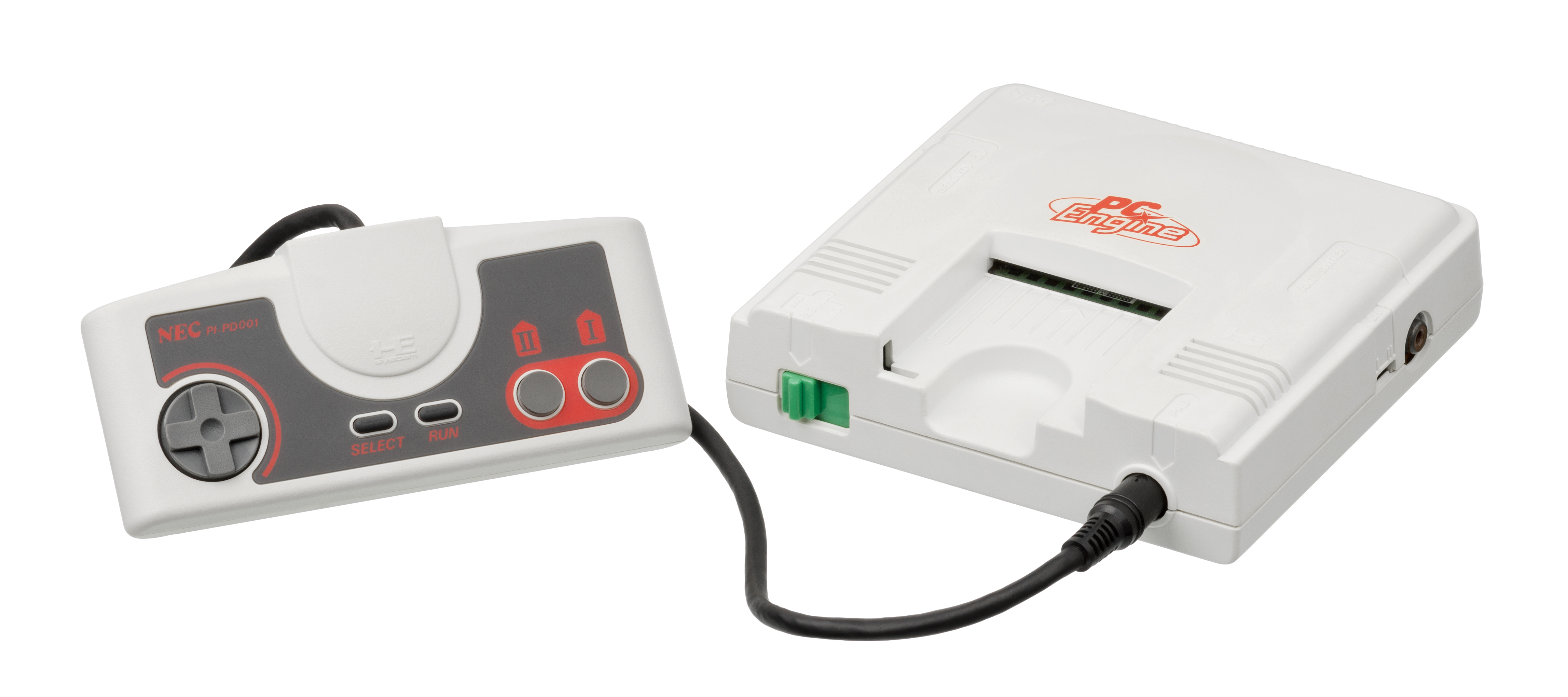
NEC PC Engine original white console (1987)

PC Engine

Japan · October 1987

The original. Cream-white housing, HuCard slot on top, single controller port. 14 × 14 × 3.8 cm — the world’s smallest home console at launch. Shipped with a single two-button controller. Required a separate RF unit or AV adapter for composite/RGB output.

Japan Only 1987
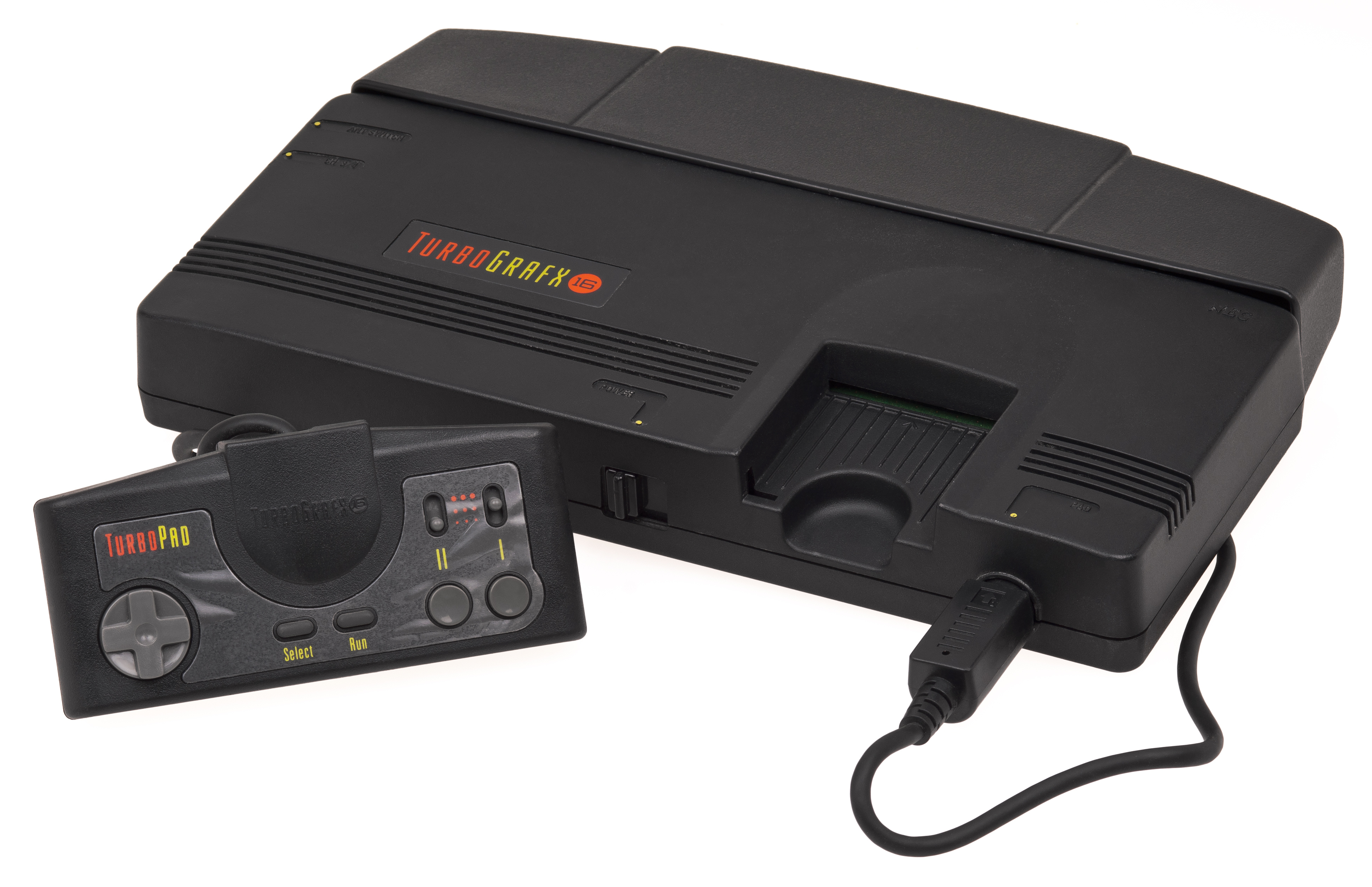
TurboGrafx-16 console set (1989)

TurboGrafx-16

North America · August 1989

The North American identity for the PC Engine. Black housing, identical internal hardware, slightly larger form factor. Sold by NEC Technologies. The “16” in the name emphasised the graphical processor rather than the CPU, positioning it against the Sega Genesis.

North America 1989
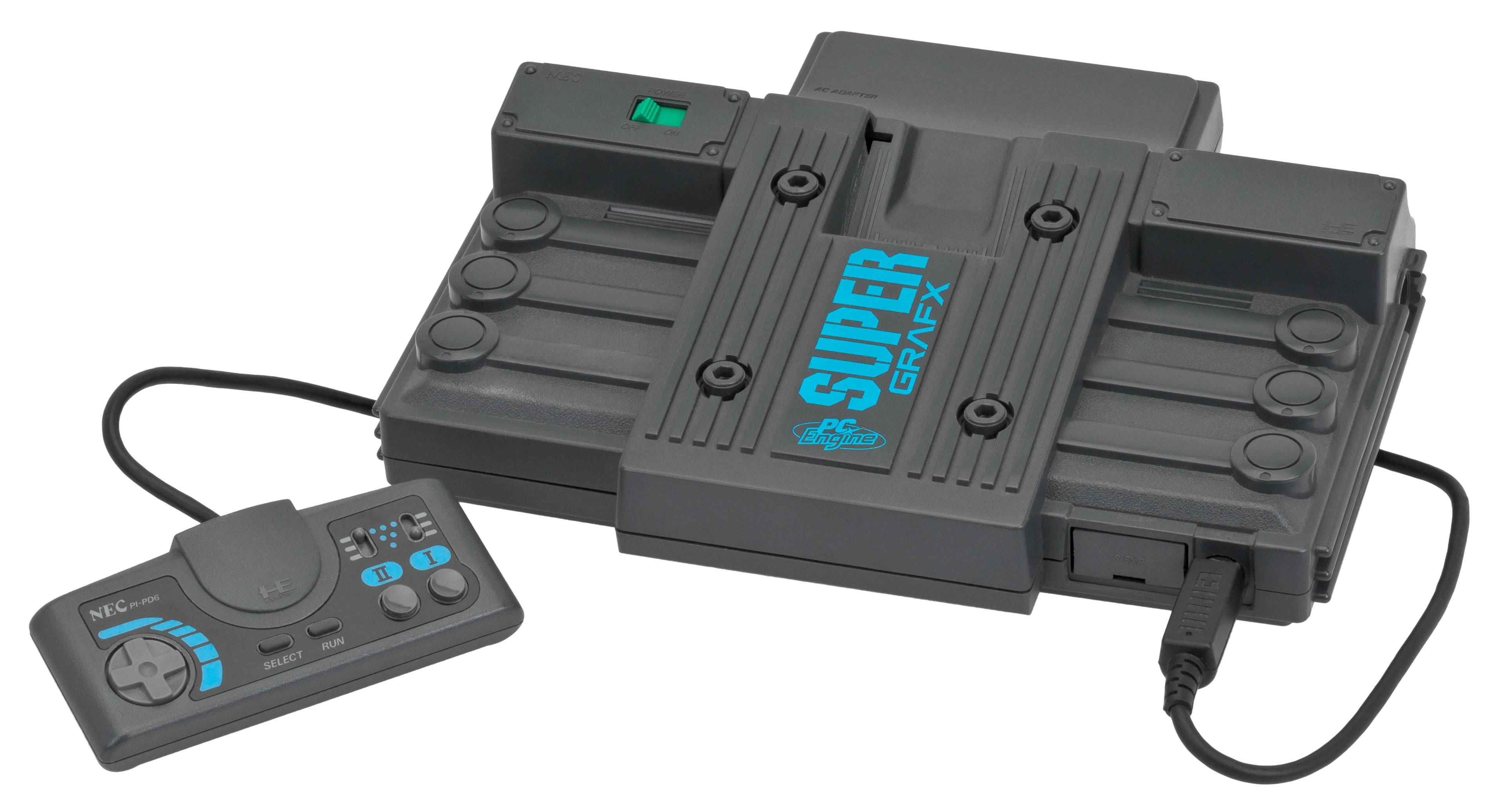
PC Engine SuperGrafx enhanced console (1989)

PC Engine SuperGrafx

Japan · December 1989

An enhanced PC Engine with doubled VRAM (128 KB), two VDCs for background layering, and more system RAM. Backward-compatible with all PC Engine HuCards. Only five games ever exploited its enhanced capabilities, including Ghouls ‘n Ghosts and Daimakaimura. One of gaming history’s great what-ifs.

Japan Only 1989
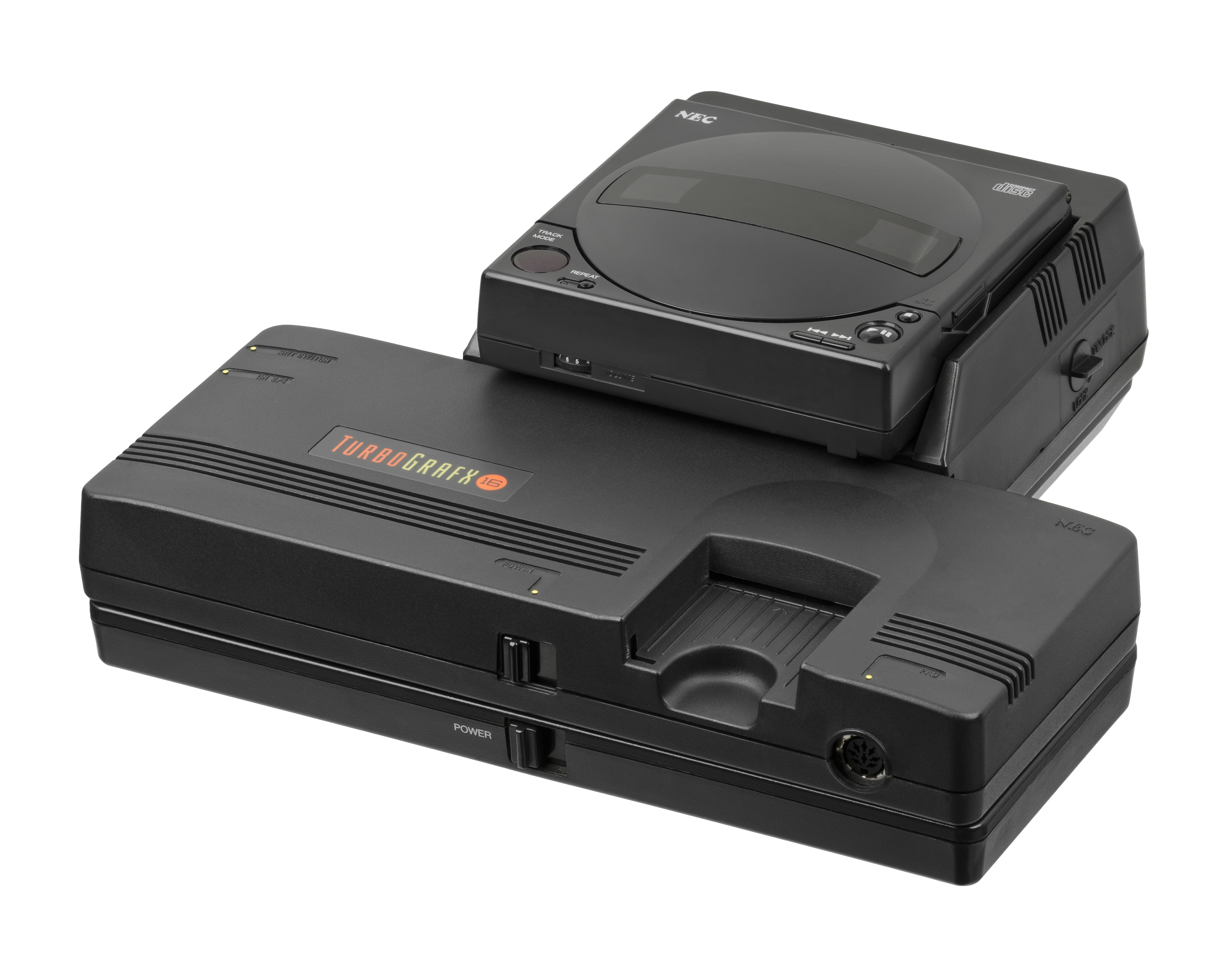
TurboGrafx-CD add-on unit for TurboGrafx-16

TurboGrafx-CD

North America · 1989

The North American equivalent of the PC Engine CD-ROM² interface unit. Attached beneath the TurboGrafx-16 to add CD-ROM playback, 64 KB additional RAM, and redbook audio capability. Required the separately sold System Card to boot CD software. The add-on that transformed the platform’s ambition.

CD Add-on 1989
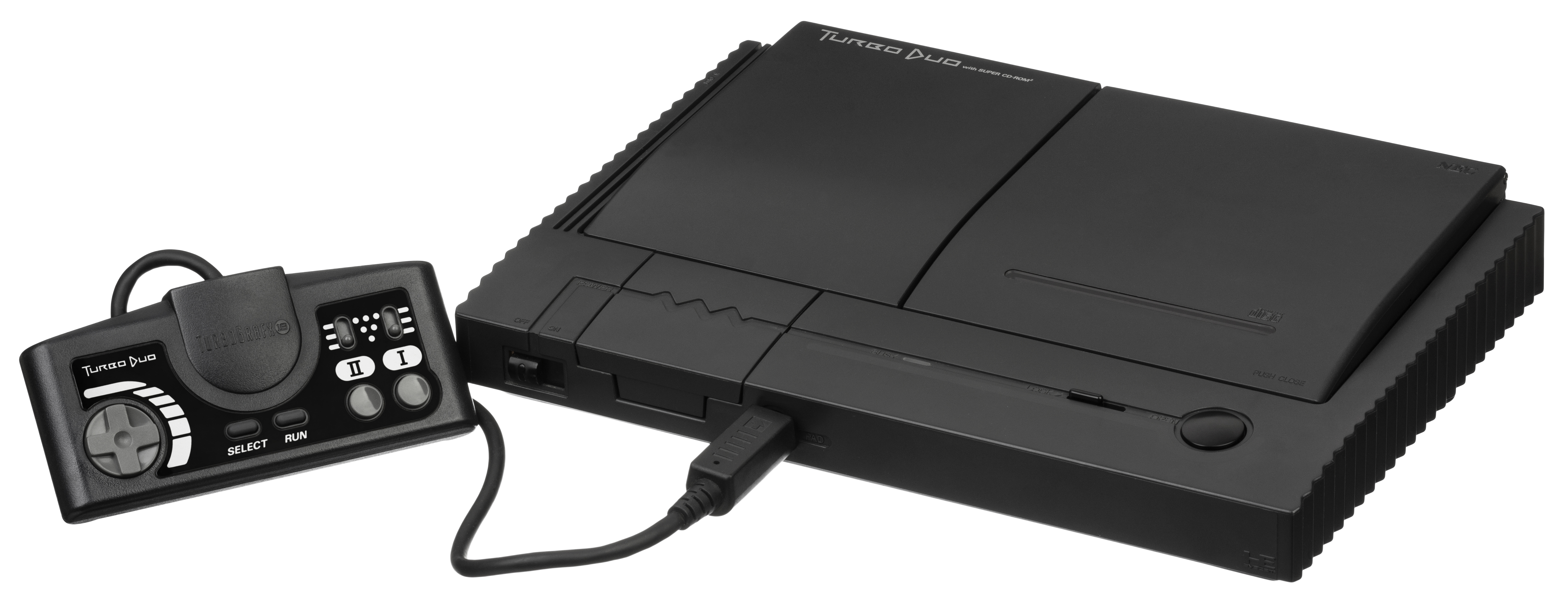
NEC TurboDuo combined console and CD-ROM unit

TurboDuo

North America · October 1992

The all-in-one North American solution. Combined TurboGrafx-16 and TurboGrafx-CD into a single unit with Super CD-ROM² compatibility built-in. Launched at USD 299.99 and bundled with Gate of Thunder, Bonk’s Adventure, and Bomberman. The TurboDuo bundle remains legendary among collectors.

North America CD Built-in 1992
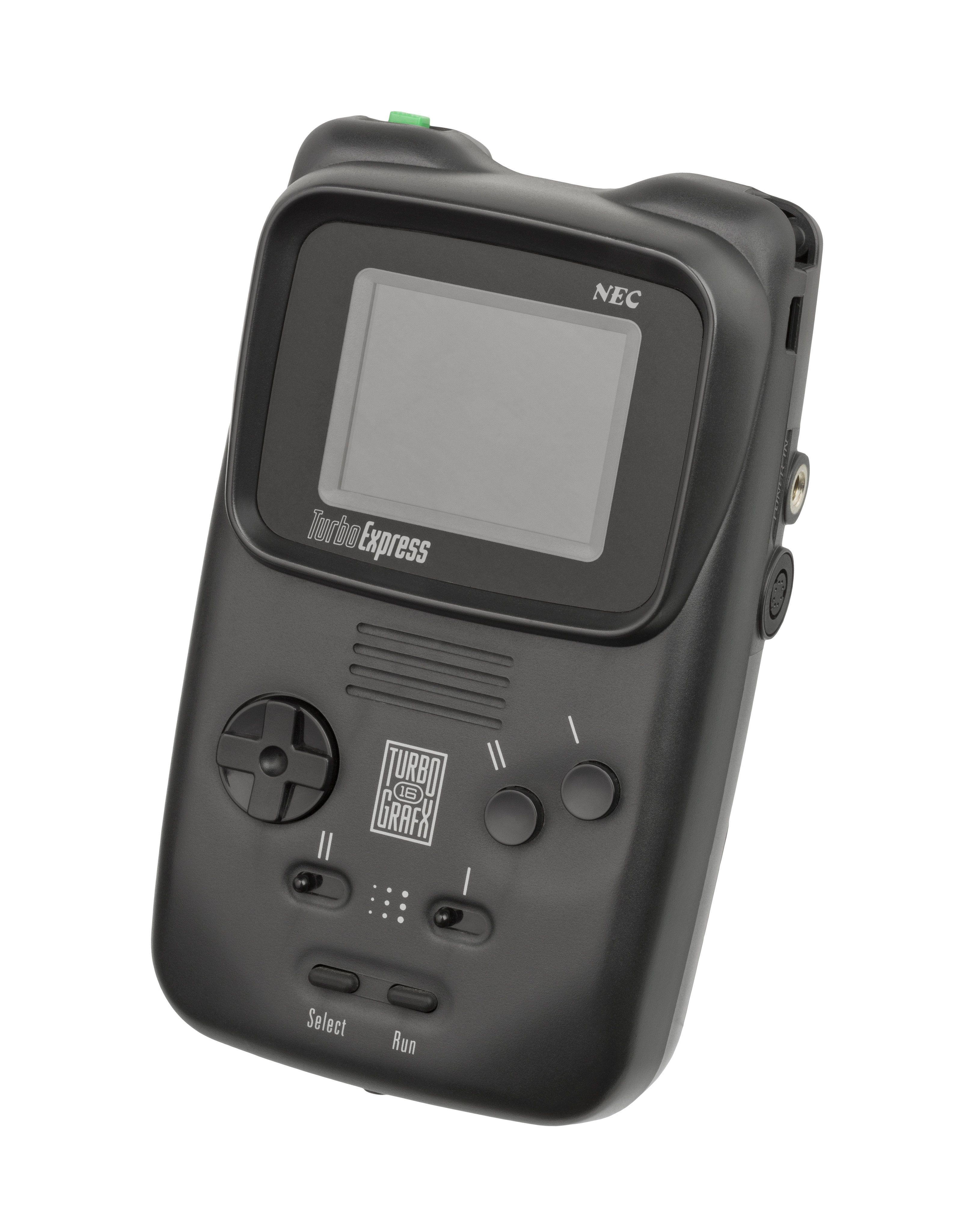
NEC TurboExpress portable game console (1990)

TurboExpress

North America · 1990 / Japan: PC Engine GT

A full PC Engine in portable form. The TurboExpress played all PC Engine HuCards on a 2.6-inch active-matrix LCD screen and produced stereo sound via headphones. At USD 249.99 launch price it was the most expensive handheld ever released to that point — and technically the most capable. Battery life was the compromise.

Portable 1990

The HuCard

Credit Card Gaming

The HuCard (also called TurboChip in North America) was the PC Engine’s proprietary game medium — a credit-card-sized ROM cartridge encased in thin plastic. Approximately 85 × 54 mm, the HuCard slotted into a slot on top of the console, with a row of contacts along the bottom edge connecting to the PC Engine’s bus.

The format’s small size was both a strength and a limitation. It was convenient, distinctive, and well-suited to the PC Engine’s compact form factor. However, HuCard ROM capacity maxed out at approximately 8 megabytes — sufficient for most titles but a constraint that made large RPGs and games with extensive audio difficult to produce. The CD-ROM² expansion addressed this directly.

Did You Know?

R-Type was originally released in Japan as two separate HuCards (R-Type I and R-Type II), split across the game’s stages because the full game exceeded what a single card could hold at standard density. The North American TurboGrafx-16 release combined them onto a single, higher-density card.