Film Licences

Ocean's commercial identity was built on film tie-ins. The studio negotiated licences with Hollywood's biggest names and typically shipped within weeks of a film's theatrical release, a pace that shaped both their reputation and their working methods.

RoboCop

1988 C64 / Spectrum / Amiga / NES / SNES / Game Boy / DOS Film Licence

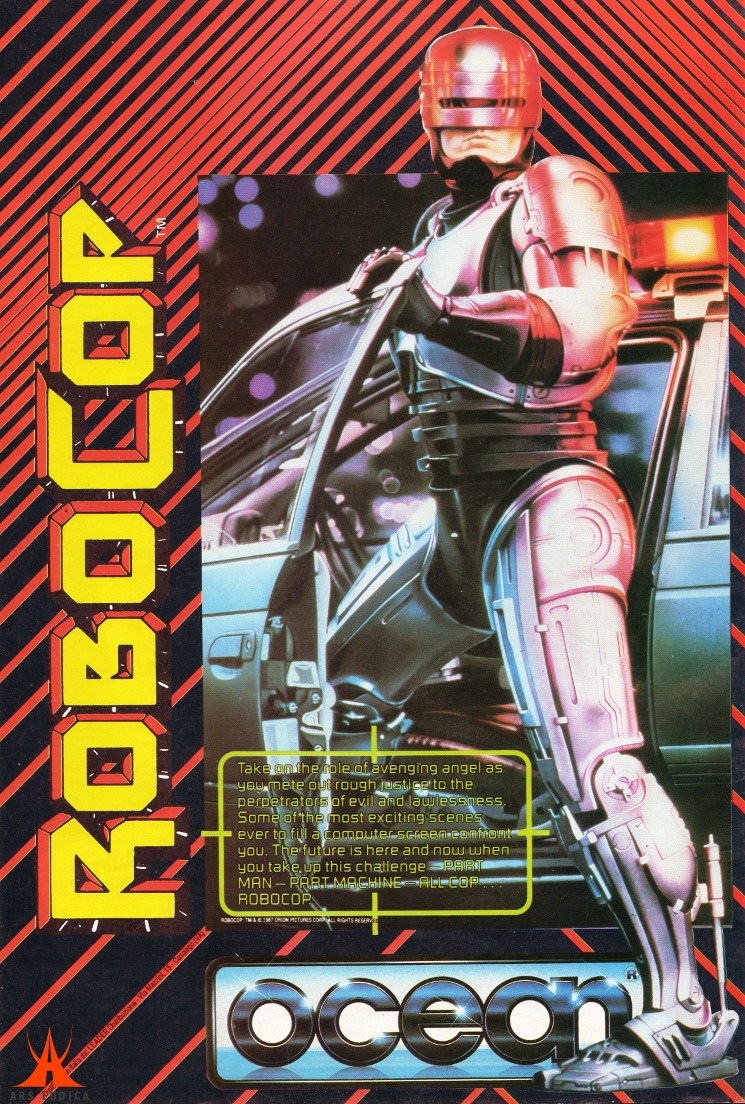
Ocean's adaptation of Paul Verhoeven's dystopian cop thriller became one of the bestselling licences of the 8-bit era, topping the UK charts for months. The side-scrolling action game cast players as the cyborg officer Murphy gunning through Old Detroit, with Jonathan Dunn's C64 soundtrack widely regarded as one of the finest compositions on the platform.

The game sold over 500,000 copies across all formats and demonstrated that Ocean could translate cinematic spectacle into compelling gameplay - a template the studio refined repeatedly over the following decade.

KEY FACTS

Developer
Ocean Software
Licence
Orion Pictures
Composer
Jonathan Dunn
Genre
Run and gun
RoboCop (1988) - C64 cassette inlay
RoboCop — Ocean Software, 1988

Batman: The Movie

1989 C64 / Spectrum / Amiga / NES / Game Boy / DOS Film Licence

Timed to coincide with Tim Burton's landmark 1989 blockbuster, Ocean's Batman adaptation blended driving sections, platform stages and a final boss confrontation that closely mirrored the film's climax at Gotham Cathedral. The multi-stage structure demonstrated Ocean's growing ambition to reflect a film's narrative arc within the constraints of an 8-bit game.

On the Amiga and PC, the game featured upgraded graphics and a digitised speech sample of Jack Nicholson's Joker. The Spectrum version, developed internally by Ocean's Manchester team, was particularly well received for its clean isometric sections.

KEY FACTS

Developer
Ocean Software
Licence
Warner Bros.
Composer
Jonathan Dunn
Genre
Action platformer
Batman: The Movie (1989) - Amiga inlay
Batman: The Movie — Ocean Software, 1989

The Addams Family

1992 SNES / NES / Game Boy / Amiga / DOS Film Licence

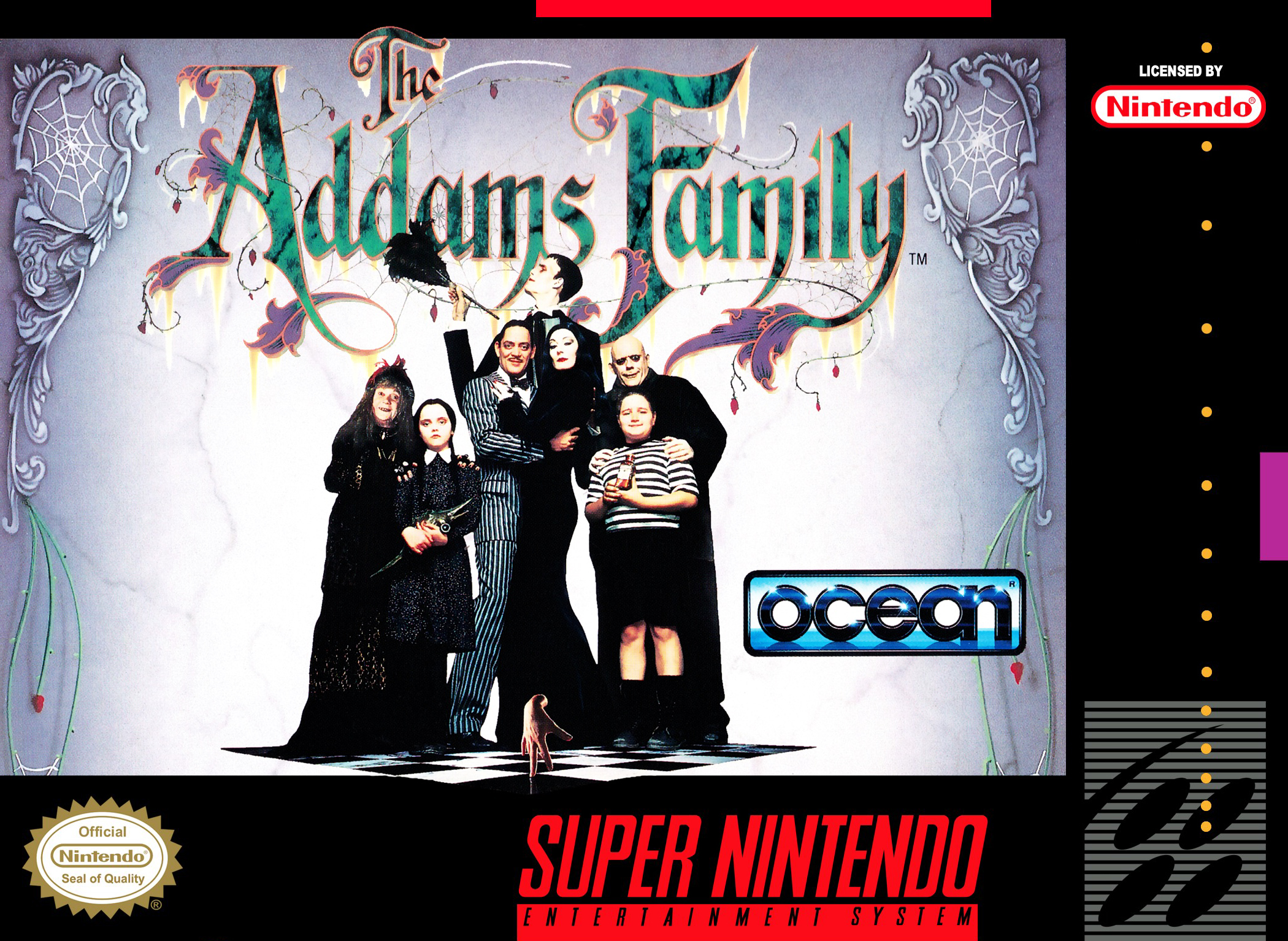
Released alongside Barry Sonnenfeld's 1991 film revival, Ocean's Addams Family adaptation was a non-linear platformer in which Gomez Addams traverses the family mansion rescuing kidnapped relatives. The SNES version was notably polished, with fluid sprite animation and a moody, synth-driven score that captured the film's gothic comedy tone.

The game sold strongly across formats and spawned a sequel - Addams Family Values - in 1994. It remains one of the more fondly remembered licensed platformers of the 16-bit era.

KEY FACTS

Developer
Ocean Software
Licence
Paramount Pictures
Genre
Platform
Formats
SNES, NES, Game Boy, Amiga, DOS
The Addams Family (1992) - SNES inlay
The Addams Family — Ocean Software, 1992

Total Recall

1990 C64 / Spectrum / Amiga / NES / Game Boy / DOS Film Licence

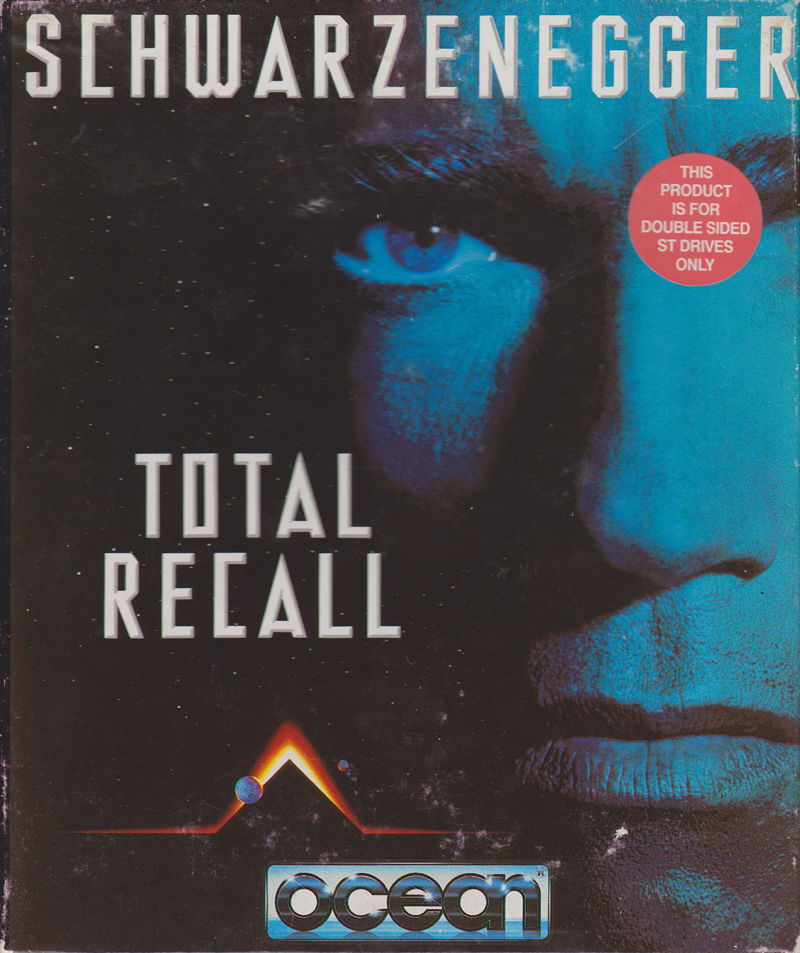
Based on Paul Verhoeven's Schwarzenegger vehicle, Total Recall was a side-scrolling brawler that followed Douglas Quaid from Earth to the Martian colony of Venusville. The Amiga version featured digitised images from the film's production stills across its loading screens, a technique Ocean had pioneered with RoboCop.

The game arrived in shops the same week as the film's UK theatrical opening, demonstrating Ocean's well-oiled machinery for hitting release-date windows that other publishers consistently missed.

KEY FACTS

Developer
Ocean Software
Licence
TriStar Pictures / Carolco
Composer
Jonathan Dunn
Genre
Beat 'em up / action
Total Recall (1990) - Amiga inlay
Total Recall — Ocean Software, 1990

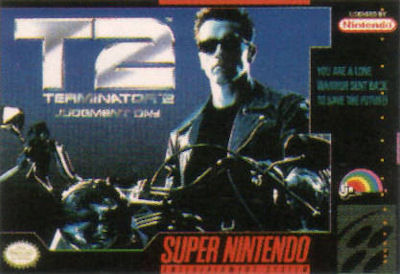
Terminator 2: Judgment Day

1991 SNES / NES / Game Boy / Amiga / DOS Film Licence

Ocean's adaptation of James Cameron's sequel mixed a first-person Mode 7 driving segment with side-scrolling action stages, approximating the film's key set-pieces across Cyberdyne Systems and the steel mill finale. The SNES version made ambitious use of the console's scaling hardware for its motorcycle chase.

Multiple other publishers released their own T2 games simultaneously under different licence sub-agreements; Ocean's home computer versions were considered the most faithful to the film's tone among the UK market releases.

KEY FACTS

Developer
Ocean Software
Licence
Carolco Pictures
Genre
Action / driving
Formats
SNES, NES, Game Boy, Amiga, DOS
Terminator 2: Judgment Day (1991) - SNES inlay
Terminator 2: Judgment Day — Ocean Software, 1991

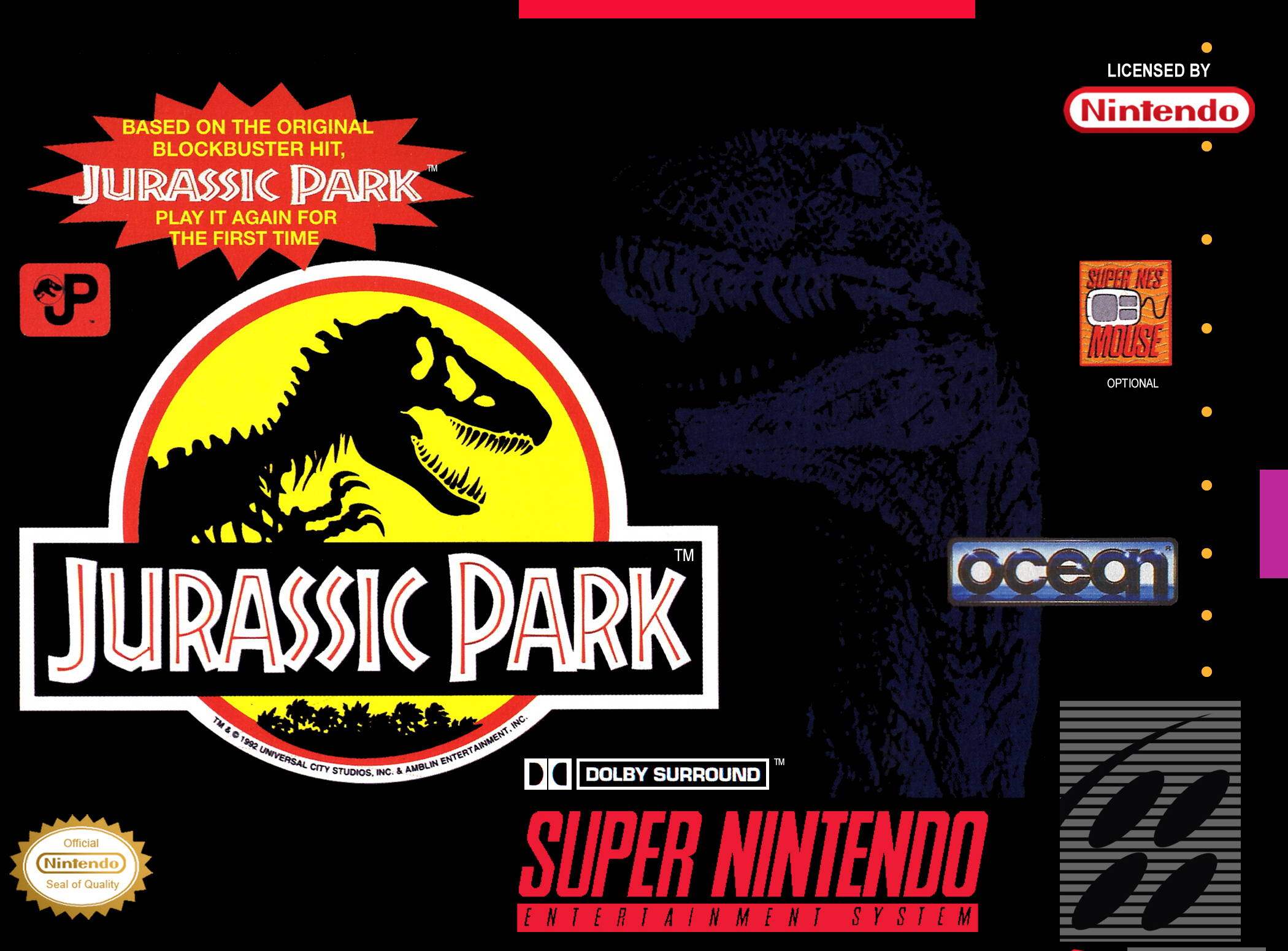
Jurassic Park

1993 SNES / NES / Game Boy / Amiga / DOS Film Licence

Ocean's Jurassic Park was one of the most high-profile licences of the 16-bit generation, coinciding with Spielberg's summer blockbuster at the height of the dinosaur-mania it generated. The SNES version - developed separately from the Ocean home computer releases - featured both first-person and third-person gameplay modes as players navigated the island as Dr Alan Grant.

The Amiga version developed by Ocean's in-house team took a different approach, offering a top-down action structure closer in feel to the company's earlier arcade conversions. The licence was secured through Amblin Entertainment and Universal Pictures.

KEY FACTS

Developer
Ocean Software
Licence
Amblin Entertainment / Universal
Genre
Action / adventure
Formats
SNES, NES, Game Boy, Amiga, DOS
Jurassic Park (1993) - SNES inlay
Jurassic Park — Ocean Software, 1993

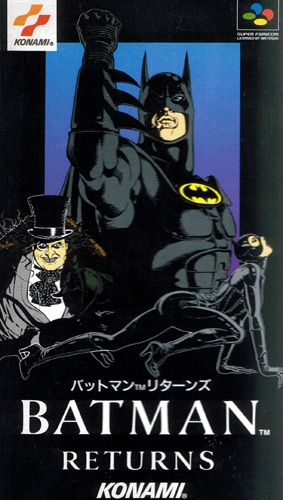
Batman Returns

1992 SNES / NES / Game Boy / Amiga / DOS Film Licence

Tim Burton's darker, more expressionistic sequel attracted a more ambitious game treatment from Ocean. The SNES version - a belt-scrolling brawler - is especially well regarded for its moody visuals and the quality of its sprite work, capturing the snow-drenched Gotham cityscape of the film more convincingly than many contemporary tie-ins managed.

The Game Boy version offered a simpler but solid side-scrolling action game that made reasonable use of the hardware's limited palette. Ocean's willingness to tailor each version to its platform's strengths was evident across the Batman Returns release.

KEY FACTS

Developer
Ocean Software
Licence
Warner Bros.
Genre
Beat 'em up
Formats
SNES, NES, Game Boy, Amiga, DOS
Batman Returns (1992) - SNES inlay
Batman Returns — Ocean Software, 1992

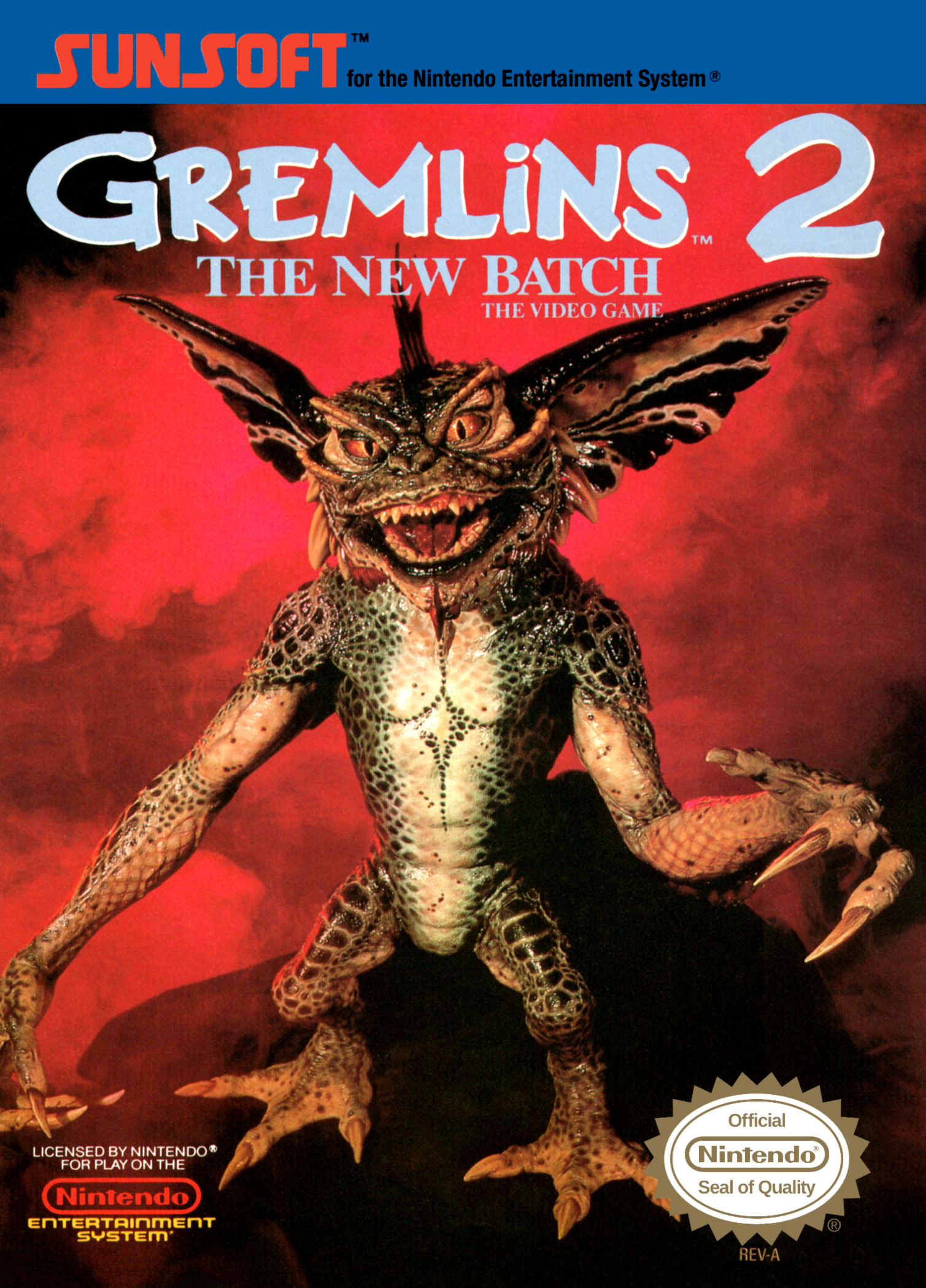
Gremlins 2: The New Batch

1990 NES / Game Boy Film Licence

Based on Joe Dante's self-referential 1990 sequel, Ocean's Gremlins 2 was a platform game in which Gizmo navigates the floors of the Clamp Centre skyscraper, battling the mutant gremlin variants introduced in the film. The NES version was developed for the North American and European markets simultaneously and was one of Ocean's more accomplished console platformers of the period.

The Game Boy release offered a faithful if visually compressed version of the NES game and performed respectably in the handheld market, where film licences with recognisable characters consistently sold well.

KEY FACTS

Developer
Ocean Software
Licence
Warner Bros.
Genre
Platform
Formats
NES, Game Boy
Gremlins 2: The New Batch (1990) - NES inlay
Gremlins 2: The New Batch — Ocean Software, 1990

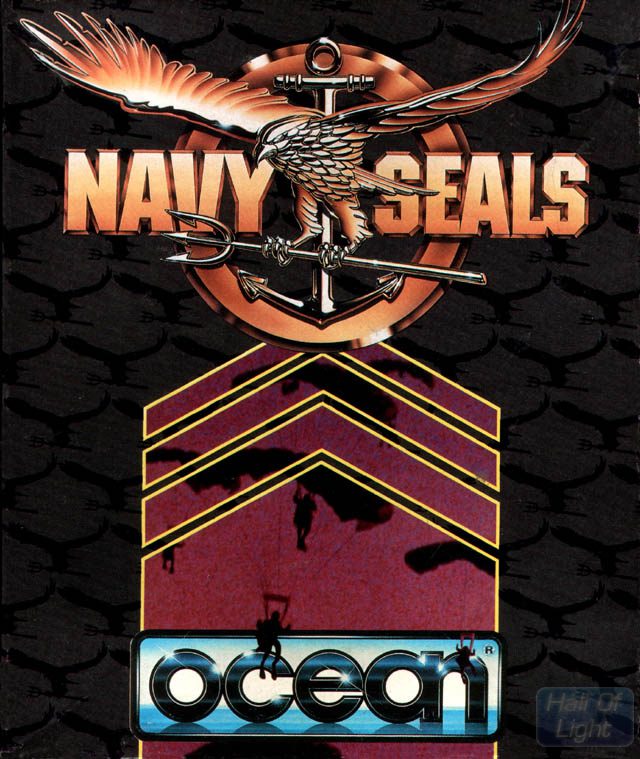
Navy SEALs

1991 C64 / Spectrum / Amiga / DOS Film Licence

Adapting the 1990 action film starring Charlie Sheen and Michael Biehn, Ocean's Navy SEALs was a side-scrolling run-and-gun in the mould of RoboCop, with players leading a special forces team through hostage rescue missions. The Amiga version received the most favourable reviews, with reviewers praising the smooth scrolling and weapon variety.

The game is a useful example of Ocean's ability to work the same film-licence template across very different hardware simultaneously, adapting the core game loop for the Spectrum's attribute-based colour system while delivering a more visually ambitious experience on the Amiga.

KEY FACTS

Developer
Ocean Software
Licence
Orion Pictures
Genre
Run and gun
Formats
C64, Spectrum, Amiga, DOS
Navy SEALs (1991) - Amiga inlay
Navy SEALs — Ocean Software, 1991

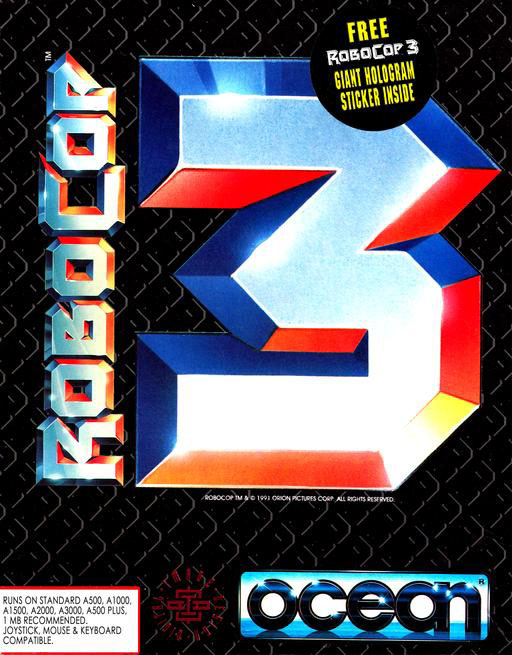
RoboCop 3

1992 C64 / Spectrum / Amiga / DOS / SNES Film Licence

The final entry in Ocean's RoboCop series returned the cyborg officer to the streets of Delta City in a multi-stage action game that introduced a jet-pack section alongside the familiar side-scrolling combat. The Amiga version was developed with extra production time following the film's delayed theatrical release, resulting in a noticeably more polished product than some of Ocean's quicker turnaround licences.

Jonathan Dunn again composed the music across formats, giving the trilogy a sonic coherence that was unusual for licensed game series of the period. RoboCop 3 sold well on the strength of the franchise name, despite the third film being less commercially successful than its predecessors.

KEY FACTS

Developer
Ocean Software
Licence
Orion Pictures
Composer
Jonathan Dunn
Genre
Run and gun
RoboCop 3 (1992) - Amiga inlay
RoboCop 3 — Ocean Software, 1992

Arcade Conversions

Before the film-licence era took hold, Ocean built its reputation converting coin-op hits for home computers. Working within severe hardware constraints - the Spectrum offered 48K of RAM and crude colour - Ocean's programmers developed techniques for smooth scrolling and sprite animation that set a technical benchmark for UK home computing.

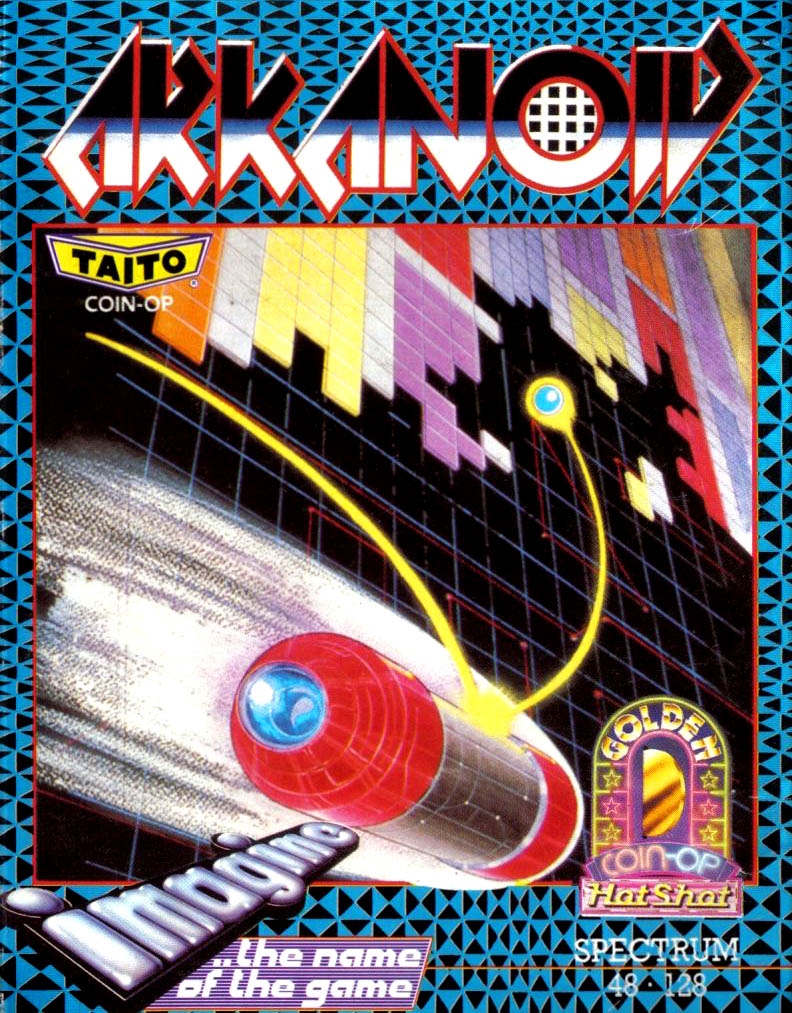
Arkanoid

1987 C64 / Spectrum Arcade Conversion

Taito's 1986 block-breaking coin-op was a global hit, and Ocean's home computer conversion - released in 1987 - was widely considered the most faithful available on 8-bit hardware. The Spectrum version was technically demanding, requiring a purpose-built controller to match the smooth analogue movement of the arcade's Vaus dial.

Ocean shipped a bundled rotary controller (marketed as the Arkanoid controller) with some versions of the Spectrum release - an unusual hardware accessory for a home computer game at the time - demonstrating their commitment to arcade authenticity over straightforward keyboard control.

KEY FACTS

Developer
Ocean Software
Original arcade
Taito (1986)
Genre
Breakout / action
Formats
C64, Spectrum
Arkanoid (1987) - Spectrum inlay
Arkanoid — Ocean Software, 1987

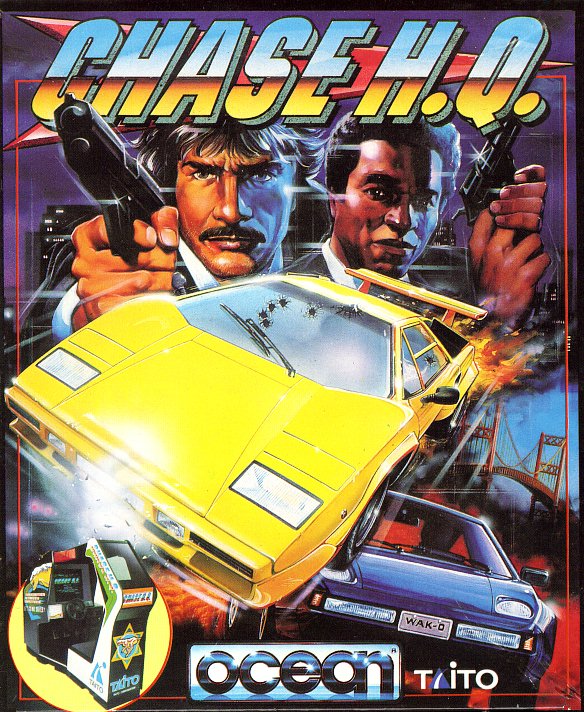
Chase H.Q.

1989 C64 / Spectrum / Amiga / NES / SNES Arcade Conversion

Taito's 1988 driving arcade game placed players in a pursuit car chasing down criminal vehicles through traffic-heavy highways. Ocean's 1989 conversion was exceptional by home computer standards: the C64 version achieved impressively smooth scaling for its pursuit sequences, and the Amiga version was widely praised as among the best racing games available on the platform.

The Spectrum version, technically the most challenged of the conversions, still managed convincing pseudo-3D perspective using attribute graphics tricks that had become something of a house speciality at Ocean. The game was a commercial success across every format it appeared on.

KEY FACTS

Developer
Ocean Software
Original arcade
Taito (1988)
Composer
Jonathan Dunn (C64)
Genre
Racing / pursuit
Chase H.Q. (1989) - Amiga inlay
Chase H.Q. — Ocean Software, 1989

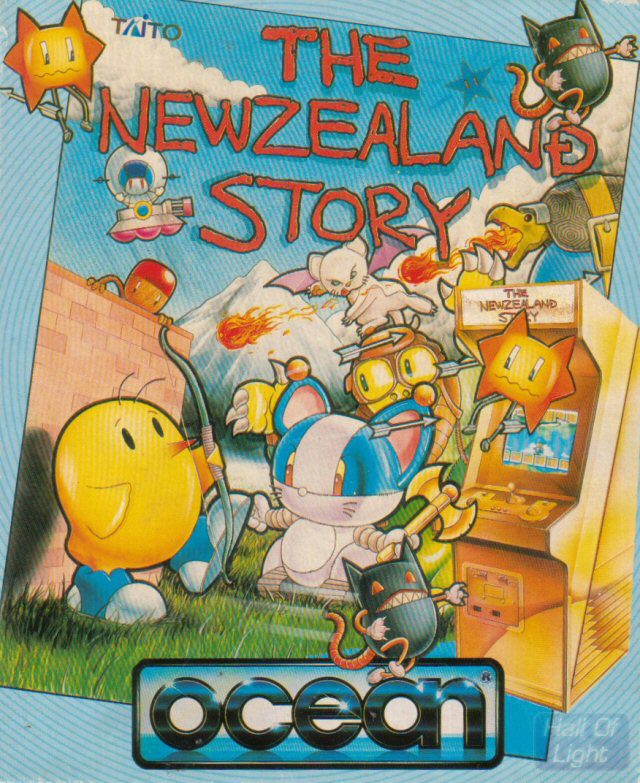
New Zealand Story

1988 C64 / Spectrum / Amiga Arcade Conversion

Taito's whimsical 1988 arcade game starred Tiki, a kiwi bird rescuing his friends from a clutch of evil walruses across a series of balloon-filled platform stages. Ocean's home computer versions - arriving the same year - were colourful, playful conversions that captured the original's bouncy feel. The Amiga version in particular was visually close to the coin-op, benefiting from the platform's superior colour palette.

New Zealand Story occupied a lighter register than most Ocean releases of the period, demonstrating the studio's range beyond action and film licences. The C64 version's music, once again by Jonathan Dunn, became a favourite of the SID music community.

KEY FACTS

Developer
Ocean Software
Original arcade
Taito (1988)
Composer
Jonathan Dunn (C64)
Genre
Platform
New Zealand Story (1988) - Amiga inlay
New Zealand Story — Ocean Software, 1988

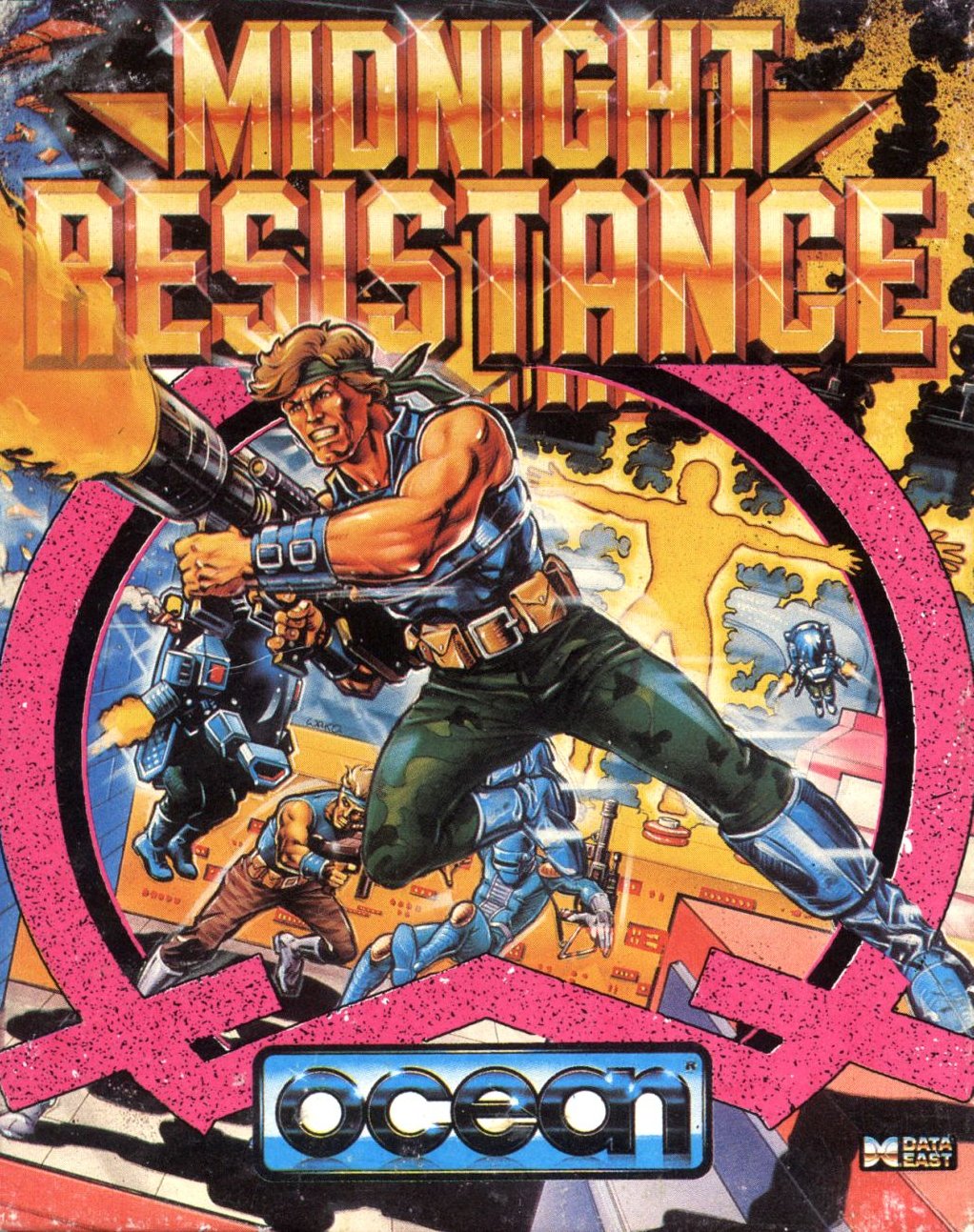
Midnight Resistance

1990 C64 / Spectrum / Amiga Arcade Conversion

Data East's 1989 dual-joystick run-and-gun arcade game was a technically demanding conversion target: the original relied on independent aim and movement controls via twin sticks, a configuration no standard home computer joystick could replicate. Ocean solved this with a clever auto-fire and directional-aiming system that adapted the game's mechanics for single-stick control without gutting the experience.

The Amiga version was the flagship conversion, praised for its sound design and the scale of its scrolling stages. The C64 version was also well received, and the Spectrum version - despite obvious compromises - retained the game's core loop intact.

KEY FACTS

Developer
Ocean Software
Original arcade
Data East (1989)
Genre
Run and gun
Formats
C64, Spectrum, Amiga
Midnight Resistance (1990) - C64 inlay
Midnight Resistance — Ocean Software, 1990

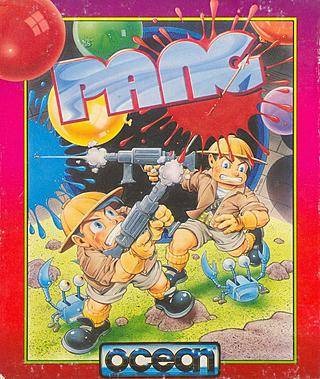
Pang

1990 C64 / Spectrum / Amiga / SNES / NES Arcade Conversion

Mitchell Corporation's 1989 coin-op tasked players with shooting harpoons upward to burst bouncing balloons across a world tour of exotic locations. Ocean's conversions - released under the Pang title in Europe and Buster Bros in North America - were considered among the finest arcade ports of the 8-bit and 16-bit era. The two-player simultaneous mode was preserved across all home formats.

The SNES version released in 1992 was especially accomplished, with smooth animation and a vibrant colour palette that made it one of the better-looking conversions on the platform. Pang's accessible mechanics and satisfying co-op play gave it unusually broad commercial appeal beyond the core gaming audience.

KEY FACTS

Developer
Ocean Software
Original arcade
Mitchell Corp. (1989)
Genre
Action / puzzle
Formats
C64, Spectrum, Amiga, SNES, NES
Pang (1990) - Amiga inlay
Pang — Ocean Software, 1990

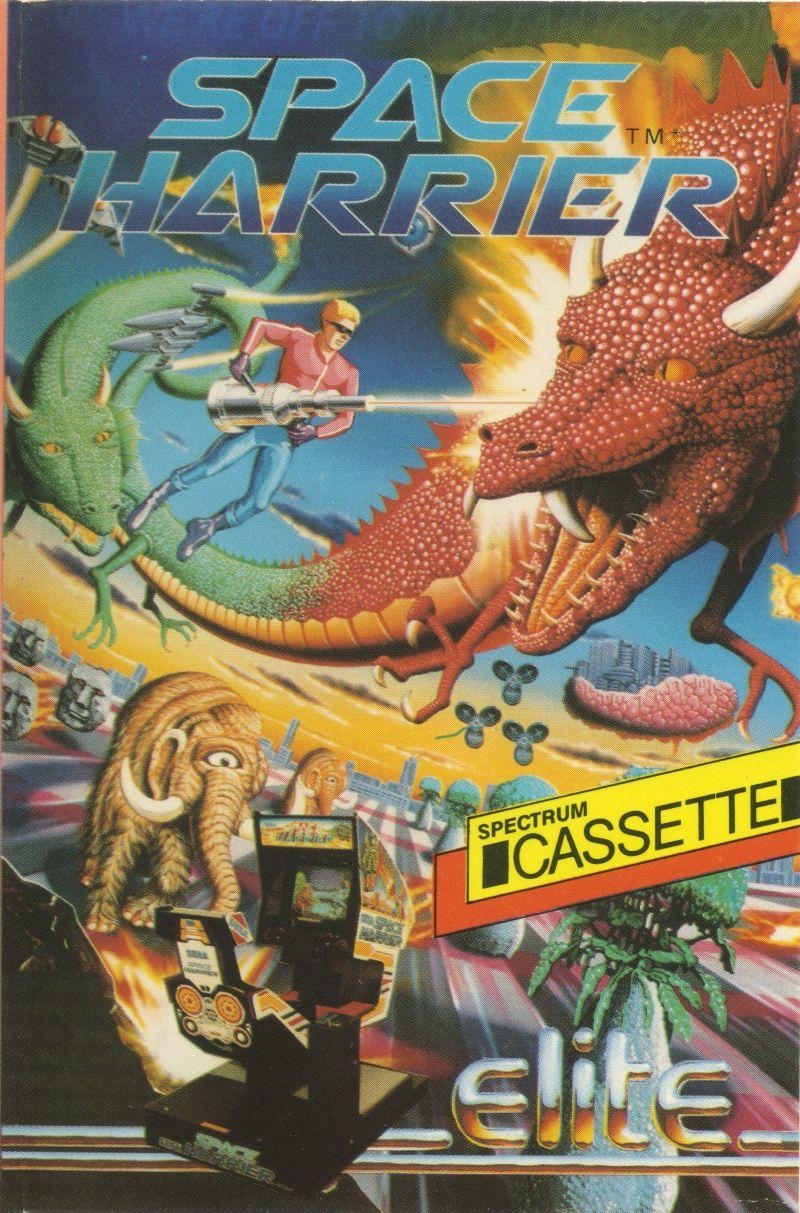
Space Harrier

1986 Spectrum Arcade Conversion

Sega's 1985 third-person rail shooter was a spectacular arcade experience - fast, colourful, and technically beyond what any contemporary home computer should have been able to replicate. Ocean's 1986 Spectrum conversion was ambitious precisely because of this gap: programmers had to suggest the coin-op's scaling, speed, and colour density within the ZX Spectrum's constrained 48K environment and attribute-based display.

The result was widely discussed in the British gaming press as a technical achievement even if the play experience inevitably fell short of the arcade original. Space Harrier sits in Ocean's catalogue as evidence of the conversion work they were taking on before film licences became their signature output.

KEY FACTS

Developer
Ocean Software
Original arcade
Sega (1985)
Genre
Rail shooter
Formats
Spectrum
Space Harrier (1986) - Spectrum inlay
Space Harrier — Ocean Software, 1986

Original & Creative Titles

Not every Ocean title was a licence or arcade port. The studio published a number of original games - sometimes developed in-house, sometimes acquired from independent studios - that demonstrated genuine creative ambition. These titles tended to be more experimental in design and have aged particularly well.

Wizball

1987 C64 / Spectrum / Amiga Original

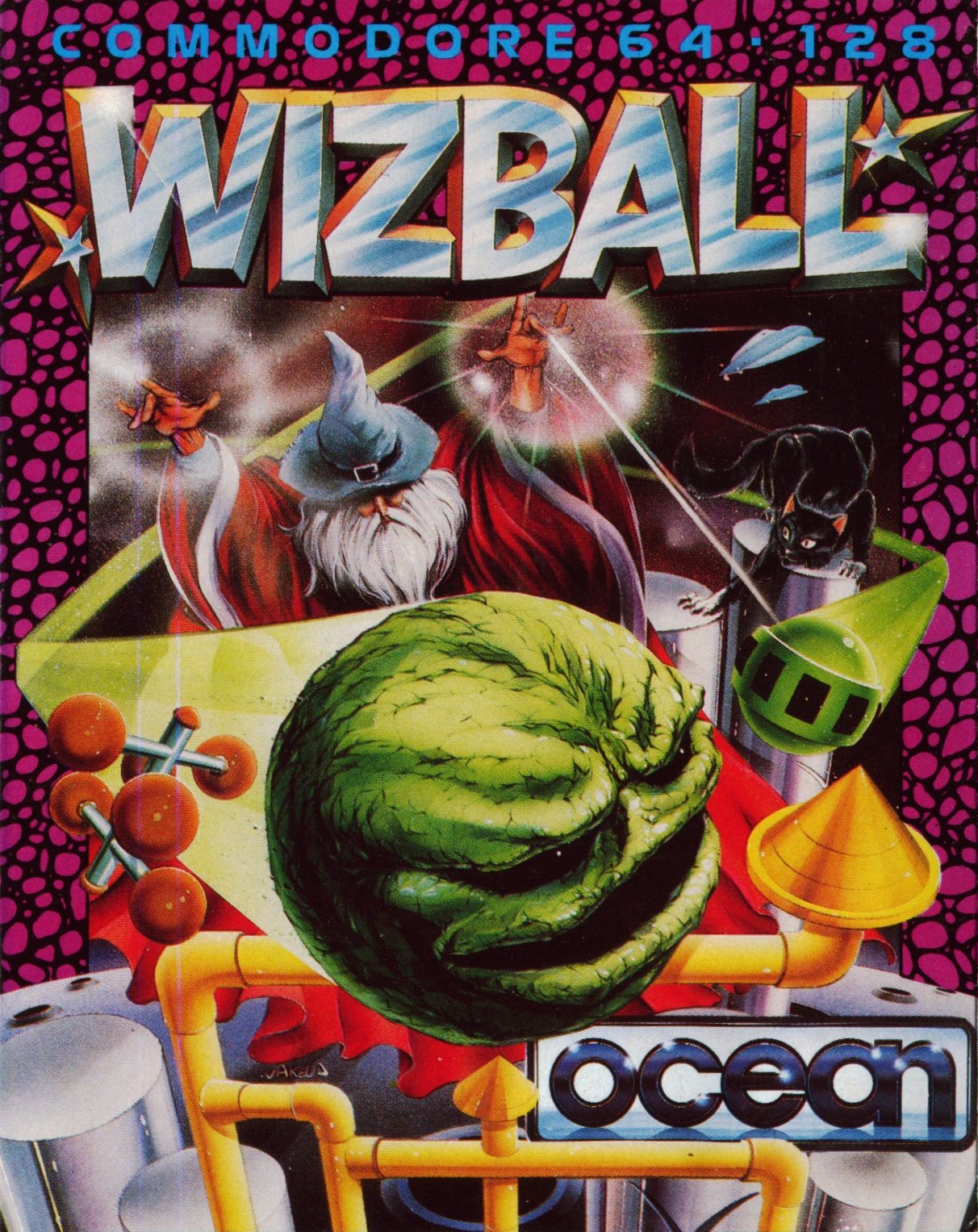
Developed by Sensible Software and published by Ocean, Wizball is one of the most inventive games of the 8-bit era. The player controls Wiz, a wizard trapped inside a bouncing ball in a monochromatic world, gradually restoring colour to the landscape by collecting paint drops - a mechanic that was entirely novel in 1987. The C64 version is widely considered the definitive release, with a SID soundtrack by Martin Galway that features one of the most celebrated music tracks in the platform's history.

Wizball received near-universal critical acclaim on release and holds a reputation in the retro gaming community that has only grown with time. Its design - emergent physics-based movement, incremental ability unlocking, colour as a progress mechanic - feels decades ahead of its moment.

KEY FACTS

Developer
Sensible Software
Publisher
Ocean Software
Composer
Martin Galway (C64)
Genre
Action / shooter
Wizball (1987) - C64 inlay
Wizball — Sensible Software / Ocean, 1987

Head Over Heels

1987 C64 / Spectrum / Amiga Original

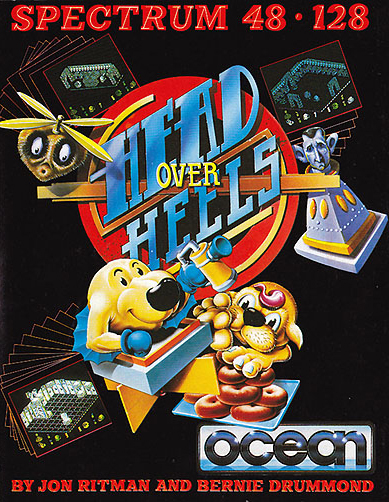
Jon Ritman and Bernie Drummond's isometric action-adventure is frequently cited as one of the greatest games ever written for 8-bit home computers. Players control Head and Heels - two characters with complementary abilities who must navigate the planet Blacktooth, free enslaved worlds, and overthrow the Emperor. The game's isometric engine was among the most accomplished of its era, with each of the five worlds featuring distinct architecture and puzzle logic.

The Spectrum version is the most celebrated, as Ritman and Drummond developed the game primarily for that platform before Ocean coordinated ports to C64 and Amiga. Head Over Heels was a critical and commercial hit and remains an essential reference point in discussions of British game design.

KEY FACTS

Developer
Jon Ritman & Bernie Drummond
Publisher
Ocean Software
Genre
Isometric action-adventure
Formats
Spectrum, C64, Amiga
Head Over Heels (1987) - Spectrum inlay
Head Over Heels — Ocean Software, 1987

Hyper Sports

1985 C64 / Spectrum Sports / Licence

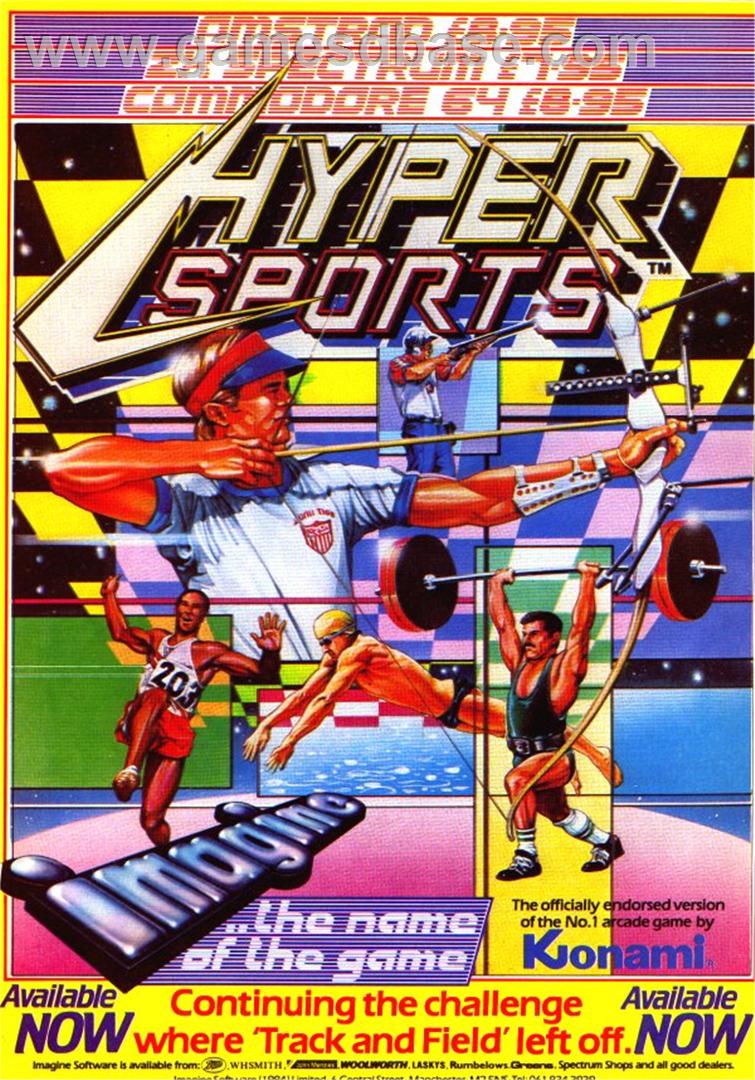
The follow-up to Daley Thompson's Decathlon, Hyper Sports was based on Konami's 1984 arcade game of the same name and featured six athletic events including swimming, skeet shooting, the triple jump, and the high bar. The multi-event format required players to master a variety of control inputs, and the game's competitive appeal made it a popular fixture in schoolyard gaming culture across the UK.

Ocean's conversions were considered technically sound for the period and sold strongly on the back of the multi-event sports game format that Track & Field and Decathlon had established the previous year.

KEY FACTS

Developer
Ocean Software
Based on
Konami arcade (1984)
Genre
Sports / multi-event
Formats
C64, Spectrum
Hyper Sports (1985) - Spectrum inlay
Hyper Sports — Ocean Software, 1985

Match Day II

1987 C64 / Spectrum Original Sports Sim

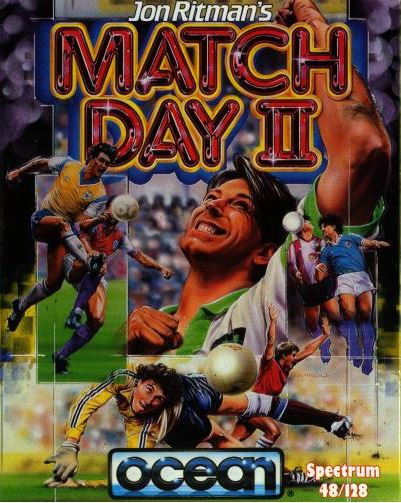
Jon Ritman's football simulation was the dominant football game on UK home computers throughout the late 1980s. Match Day II improved on its predecessor with refined ball physics, improved player AI, and a wider variety of set-piece situations. The top-down scrolling pitch and responsive controls set a standard that football games on 8-bit hardware consistently aspired to.

Ritman's approach prioritised feel and ball-weight simulation over graphical complexity - a design philosophy the game shares with the analogue-era football simulation tradition. Match Day II remained a popular choice years after its release, a sign of how thoroughly it had got the fundamentals right.

KEY FACTS

Developer
Jon Ritman
Publisher
Ocean Software
Genre
Football simulation
Formats
C64, Spectrum
Match Day II (1987) - Spectrum inlay
Match Day II — Ocean Software, 1987

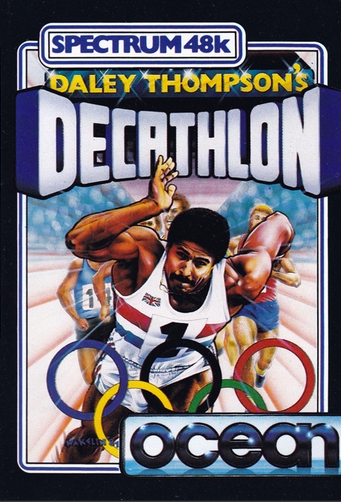
Daley Thompson's Decathlon

1984 C64 / Spectrum Sports Licence

One of Ocean's earliest major commercial successes, Daley Thompson's Decathlon licenced the name and image of the British double Olympic gold medallist to produce a ten-event athletics simulation. The joystick-waggling mechanic - requiring rapid alternating left-right movements to simulate sprinting - became a defining feature of the multi-event sports game genre, and an occasional destroyer of joystick mechanisms.

The game sold over 1 million copies across formats, establishing Ocean as a significant commercial force in the UK games market. Its success demonstrated that celebrity endorsement combined with accessible but demanding gameplay was a reliable commercial formula - a lesson Ocean applied repeatedly through the film-licence era that followed.

KEY FACTS

Developer
Ocean Software
Licence
Daley Thompson
Genre
Sports / multi-event
Formats
C64, Spectrum
Daley Thompson's Decathlon (1984) - Spectrum inlay
Daley Thompson's Decathlon — Ocean Software, 1984