Matthew Smith: The Story
From a Christmas present to a household name, the life of a programmer who defined British bedroom coding - and then stepped away from it entirely.

A TRS-80 for Christmas, 1979
Matthew Smith was born in 1966 in Penge, south London, and moved with his family to Wallasey on the Wirral Peninsula when he was seven. Programming found him via a TRS-80 received for Christmas in 1979, when he was thirteen. Within a few years he had produced his first commercial game: Delta Tau One, a Galaxian clone for the TRS-80. He also wrote Monster Muncher for the VIC-20, reportedly in around three hours.
These early games were unremarkable by any contemporary standard - Galaxian clones were a standard genre exercise, and Monster Muncher was, by all accounts, basic. But they established a work rate and a commercial instinct that would prove significant. Smith was already treating programming as craft rather than hobby, writing games fast and shipping them.
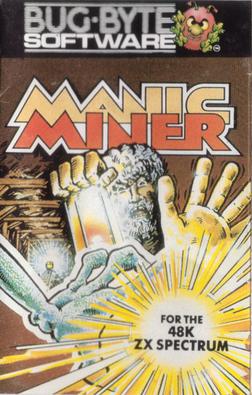
Bug-Byte, a Borrowed Spectrum, and a Three-Game Deal
Bug-Byte Software was a Liverpool-based software house active in the early 1980s, publishing games for home computers including the ZX Spectrum. Smith arranged a deal with them: Bug-Byte would give him a Spectrum on loan, and in return he would write three games under a freelance contract.
The first game was Styx (1983), a maze-and-shooter with an ancient mythology theme. Smith received 3,000 pounds for it. Styx was a competent game - averaging around 70% in the limited press coverage it received - but it was not what Smith was really thinking about. His attention was already on the second game in the contract.
The design inspiration came from Miner 2049er (1982), an American Atari 8-bit title by Bill Hogue. Where Miner 2049er had its miner walking across platforms and collecting items, Smith's game would have jumping, precision timing, and twenty hand-designed caverns. He wrote it in eight weeks, working on a Model III Tandy. The game was then converted to run on the ZX Spectrum.
Manic Miner shipped in 1983 with two facts that set it apart: it was the first ZX Spectrum game to include music during actual gameplay (a single-channel beepy arrangement of Edvard Grieg's "In the Hall of the Mountain King"), and it was designed with a level of precision that matched - and arguably exceeded - anything produced at commercial studios at the time. The main character, Miner Willy, had to navigate twenty increasingly complex caverns, collecting items, avoiding guardians, and managing a constantly depleting oxygen supply.
"The first great home computer platform game."
ACE magazine, 1991, in their retrospective feature on landmark platform games
Contract Oversight, Royalties, and a New Company
Manic Miner was a hit. Bug-Byte was slow to issue royalty payments. Smith grew impatient. He left the company and - crucially - was able to take the rights to Manic Miner with him, because of an oversight in his freelance contract that had not adequately assigned the intellectual property to Bug-Byte.
Smith co-founded Software Projects with Alan Maton and Colin Roach. The company published and marketed Manic Miner independently of Bug-Byte, which continued to sell its own version of the game - creating a brief period in which two competing versions of the same title were on the market simultaneously.
The Software Projects version of Manic Miner outsold the Bug-Byte edition. A Commodore 64 port followed in early 1984, which reached number one in UK charts. Total sales across all versions exceeded 100,000 copies. Smith was seventeen or eighteen years old during much of this period and was reportedly, by the time of Jet Set Willy's release, a millionaire from game royalties.
Sixty Rooms and Seven Shades of Hell
Jet Set Willy was published by Software Projects in March 1984. Where Manic Miner had twenty caverns arranged in a fixed sequence, Jet Set Willy offered sixty rooms in Miner Willy's newly purchased mansion - and they could be explored in any order from the start. It was a significant design change: less a precision platformer, more a vast, free-roaming, obstacle-saturated property that rewarded exploration rather than rote memorisation of sequences.
The game spent over three months at the top of UK home computing charts and became the best-selling home video game in Britain for 1984. It was also, according to its creator, "seven shades of hell" to make.
The original release shipped with what became known as the Attic Bug: entering a specific room - The Attic - corrupted the game's memory in a way that made several subsequent rooms impossible to complete. Software Projects issued a fix on cassette, distributing POKE instructions that players had to load and apply before starting the game. It was a clumsy solution to a serious problem, but the game's popularity was such that players complied.
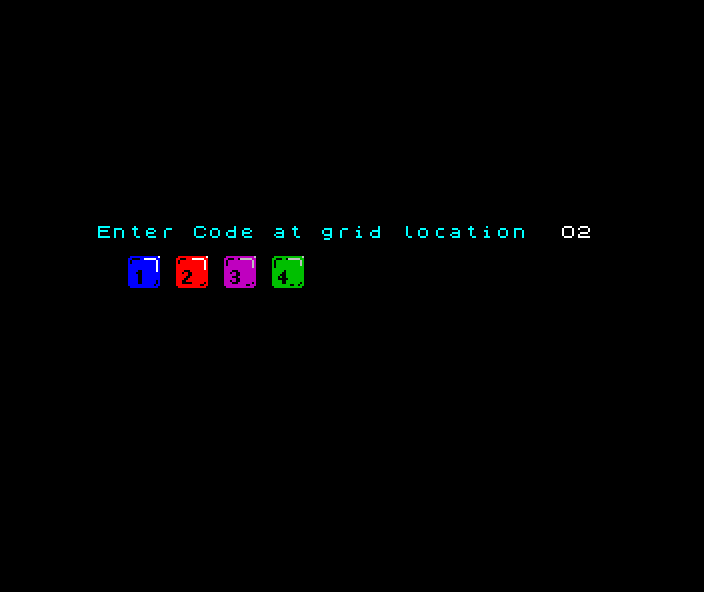
Jet Set Willy was also the first commercial game to include copy protection in the form of colour-coded entry cards. Players had to enter a code from the card before the game would load. By 1984 standards this was innovative, if ultimately ineffective - the game was widely cracked and distributed.
"Seven shades of hell."
Matthew Smith, describing the development of Jet Set Willy - cited in Wikipedia and multiple retrospective interviews
The Full Story on Film
Kim Justice's 2019 documentary is the most comprehensive account of Matthew Smith's career currently available, drawing on interviews, contemporary materials, and retrospective analysis. It covers the Bug-Byte period, Manic Miner's creation, Software Projects, Jet Set Willy's troubled launch, and the years that followed.
The Quiet Years
After Jet Set Willy, Smith began work on a Commodore 64 game variously known as The Mega Tree or Willy Meets The Taxman. Three months into development, the project was abandoned. Software Projects continued operating, publishing games developed by other teams, but Smith himself wrote nothing further. The company closed in 1988.
During the 1990s, Smith lived in a Dutch commune. In October 1997, he was deported from the Netherlands after failing to maintain his residency papers. He returned to the UK, and in 1999 took a job at Runecraft, a Dewsbury-based games developer. In 2000, he appeared on the British television documentary series Thumb Candy, discussing Manic Miner and his 1980s career. These public appearances were rare.
From 2013 onward, Smith made occasional appearances at retro gaming events, giving a small number of interviews about his work. At PLAY Expo 2019, he appeared alongside Italian filmmaker Paolo Santagostino. Attendees reported that when asked about certain periods of his life, Smith said he had been advised by his therapist not to discuss them.
What the Games Left Behind
Manic Miner was the foundation of the British platform game. ACE magazine named it "the first great home computer platform game" in a 1991 retrospective. Retro Gamer called it one of the most influential platform games of all time. Your Sinclair readers placed it 6th in an all-time top 100. The 2018 Black Mirror episode Bandersnatch was written by Manic Miner enthusiast Charlie Brooker - who included visual references to the game in the episode.
Jet Set Willy's influence was more diffuse but equally lasting. The open mansion structure predated open-world design by years. The game's community has been actively producing new levels and rooms since 1984. As of 2026, JSW Central and jswmm.co.uk host hundreds of fan-created levels and an active forum dedicated to the Miner Willy engine.
Both games have been ported to numerous platforms including DOS, Amstrad CPC, BBC Micro, SAM Coupe, Acorn Electron, C64, MSX, and mobile devices. Fan remakes and HTML5 versions allow the games to be played in a browser without any emulator software.
For the deep editorial treatment of both Manic Miner and Jet Set Willy as games, see the Flagship page. For the community's modern scene, see Modern Scene.
The games he made at seventeen and eighteen years old are still being played. Manic Miner and Jet Set Willy have been ported to virtually every platform that has existed since their release. Fan communities maintain level editors, speedrun records, and archives. The Kim Justice documentary of 2019 brought both games to a new generation of viewers who had not been born when the originals were published.
Matthew Smith coded two games in a bedroom in Wallasey. The first showed what the ZX Spectrum could do. The second showed what was possible when someone imagined a whole world, not just a series of screens. That he then disappeared has, if anything, made both games more interesting.
Smith described his reaction to the games' lasting reputation as one of genuine surprise - he had not expected either game to still be discussed forty years later.
Matthew Smith - reported in retrospective coverage of his 2007 Replay appearance