Biography & Context

History

Masashi Kageyama’s career inside Capcom’s NES division, the 2A03 music era, and the community effort that confirmed his credits decades later.

Early Life and Entry into Game Music

Masashi Kageyama (影山雅志) was born in 1966 in Osaka, Japan. He grew up during the foundational years of Japanese electronic entertainment: the arcade boom of the late 1970s, the Famicom launch of 1983, and the rapid expansion of the home console market that followed.

Kageyama entered the games industry via Capcom’s internal sound team. Capcom, founded in 1979 in Osaka by Kenzo Tsujimoto, had established itself as an arcade software house by the mid-1980s. Its pivot to NES/Famicom home software created a new internal production context - and a new compositional challenge. The Famicom’s Ricoh 2A03 chip was the only instrument.

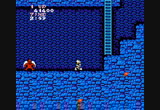
Nintendo Entertainment System console - the hardware platform for Kageyama's Ghosts 'n Goblins NES compositions
The Nintendo Entertainment System (NES) - the platform for Kageyama’s most celebrated compositions. Powered by the Ricoh 2A03, five audio channels, no reverb.

Early Capcom NES History

Capcom’s entry into NES/Famicom software development was driven by the commercial success of its arcade titles in the mid-1980s. Ghosts ‘n Goblins (arcade, 1985) - designed by Tokuro Fujiwara - was a hit in coin-op form, and Capcom moved quickly to port it to the Famicom for the home market.

The NES division’s sound team operated under strict hardware constraints. The Ricoh 2A03 APU provided five audio channels - two square-wave pulse channels, one triangle wave, one noise channel, one DPCM sample channel - and no hardware reverb or polyphony beyond simple two-voice harmony. Composers had to create atmospheric depth from this limited palette.

Kageyama’s approach to the Ghosts ‘n Goblins NES soundtrack demonstrated that the 2A03 could produce harmonic sophistication. The Stage 1 main theme uses borrowed chords - chords drawn from parallel modes - giving the piece a minor-key emotional weight unusual for the period’s game music.

“The original arcade GnG music by Ayako Mori used FM synthesis hardware - Kageyama was not transcribing it but composing a wholly new work within the NES chip’s constraints. The result is a different piece of music entirely.”

VGMPF Community Analysis - Ghosts ‘n Goblins (NES), credit documentation notes

Other composers working in Capcom’s NES sound team during this period included Tamayo Kawamoto - who received credits on other Capcom NES titles of the same era. The internal team structure at Capcom NES was not well-documented in English-language sources; credit opacity was endemic to the 1985–1988 Capcom output.

The director most closely associated with Kageyama’s compositional output is Tokuro Fujiwara (藤原得郎), who directed the original Ghosts ‘n Goblins arcade game and its NES port. Fujiwara’s design philosophy - extreme difficulty, punishing hit detection, relentless enemy placement - directly shaped the emotional register that Kageyama’s music needed to inhabit.

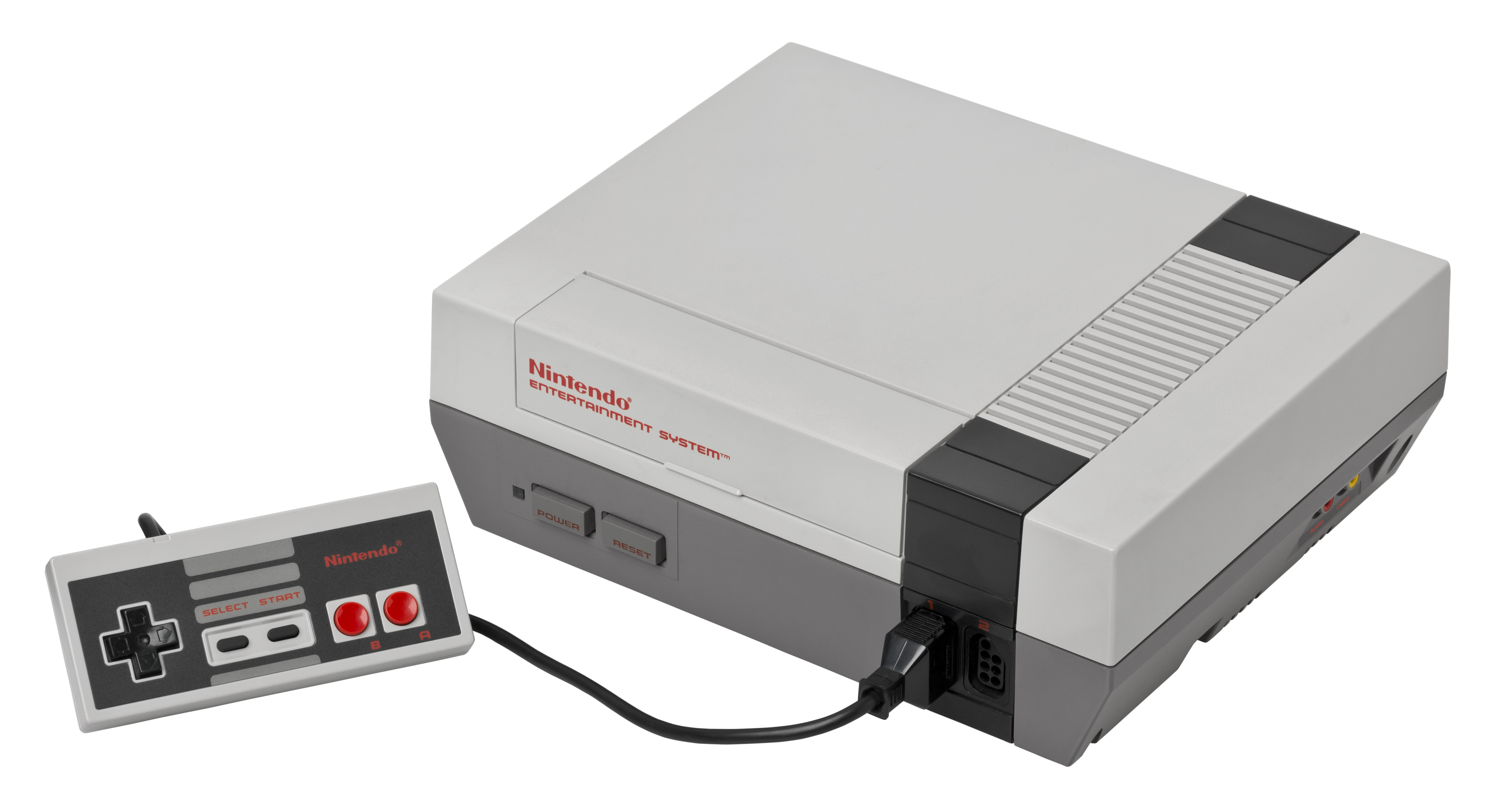
Ghosts 'n Goblins NES - mid-game gameplay demonstrating the demanding platformer design
Ghosts ‘n Goblins NES (1986). Directed by Tokuro Fujiwara. Music by Masashi Kageyama. The gameplay design demanded music that matched its relentless pressure.

NES Music Era Context

The NES sound chip - the Ricoh 2A03 APU, integrated into the 6502-based CPU - was the universal platform for game music across the NES’s commercial lifespan (1983–1995 in Japan; 1985–1995 in North America). Every NES composer worked within the same constraints.

The two pulse wave channels - Square 1 and Square 2 - were the primary melodic voices. They supported programmable duty cycles (12.5%, 25%, 50%, 75%) giving timbre variation, and hardware-assisted pitch sweeps enabling vibrato effects. Melody and countermelody were typically split between these two channels.

The triangle wave channel operated at fixed amplitude with no volume envelope - making it ideal for bass lines. Its stepped waveform produced an aliasing artefact at lower pitches that gave NES bass a characteristic gritty quality. The noise channel used a linear feedback shift register to generate pseudo-random noise used for percussion and sound effects.

The DPCM channel - Delta Pulse Code Modulation - could play back 1-bit delta-encoded PCM samples at selectable rates from approximately 4.2 kHz to 33.5 kHz. Memory and fidelity constraints limited its use in music, but it was employed for drum hits and short instrument patches.

“Five channels. Two pulse waves carrying the melody, a stepped triangle on the bass, noise for percussion, DPCM sparingly for impact. That’s the entire palette. Kageyama made it sound like a complete orchestra of dread.”

NES Music Community Analysis — VGMPF documentation notes

In this context, Kageyama’s use of borrowed chords in the Ghosts ‘n Goblins Stage 1 theme was notable. Most NES composers of 1985–1986 used straightforward diatonic harmony in major or relative minor. Modal mixture - borrowing chords from a parallel mode - was a more harmonically complex technique that gave the GnG NES soundtrack a sense of doom distinct from contemporaneous platformer soundtracks.
NES 2A03 APU Technical Breakdown — how the Ricoh 2A03 sound chip works, channel by channel. Essential context for understanding Kageyama’s compositional constraints.

Credit Opacity and Verification

Early Capcom NES titles operated in an era of systematic credit opacity. Internal team attribution was incomplete, unofficial, or entirely absent from release materials. The game industry of 1985–1988 treated composer and developer credits as internal business information rather than public attribution.

The Kageyama credit on Ghosts ‘n Goblins NES was confirmed primarily through the VGMPF (Video Game Music Preservation Foundation) Wiki, which documented the game’s in-game staff roll text. The in-game credits list Kageyama as the music composer - a primary source that the VGMPF community cross-referenced against other contemporary Capcom documentation.

For Kageyama’s other probable credits - Black Tiger (Famicom), Side Arms (Famicom), Section Z (NES) - the credit status requires per-title VGMPF verification. Community consensus and per-title VGMPF documentation have been assembled over years of dedicated research. Credit confidence is tracked on the Catalogue page.

“The NES and Famicom chip music community has documented Capcom composer credits since the mid-2000s. VGMPF, NSFC, and broader retro game music forums contributed to confirming credits for titles where developer interviews are unavailable.”

VGMPF Community — Credit documentation methodology notes