The Magnetic Scrolls Story
From a London attic in 1984 to the finest British interactive fiction of the era — and the dissolution that followed.
Founding
Magnetic Scrolls was founded in London in 1984 by Anita Sinclair and Ken Gordon, with Hugh Steers as a key early technical contributor. The founders shared a conviction that text adventures could be considerably more sophisticated than anything then available commercially — richer language, better writing, and genuine illustration rather than crude character-mode graphics.
The studio operated from modest premises while developing the engine and parser that would underpin their entire catalogue. Ken Gordon led technical development; Anita Sinclair handled business relationships and creative oversight. From the outset, the studio's aesthetic was literary — they hired proper authors, commissioned professional illustrators, and held their work to standards more common in publishing than in software.
The Rainbird Era
The partnership with Rainbird Software — a premium imprint of Telecomsoft, later absorbed into MicroProse UK — gave Magnetic Scrolls the publishing infrastructure and marketing reach to compete with Infocom and Level 9. Rainbird was itself a label associated with quality and ambition, making it a natural fit.
The Pawn (1985) launched under Rainbird to critical acclaim. Its combination of an advanced parser, Geoff Quilley's portraits rendered in full colour, and Rob Steggles's writing announced a new standard for the form. The press response was extraordinary: magazines that had grown jaded about text adventures found themselves genuinely excited.
Five more titles followed in quick succession: The Guild of Thieves (1987), Jinxter (1987), Corruption (1988), Fish! (1988), and Myth (1989). Each pushed in a different direction — deeper puzzles, darker tone, broader comedy, different illustrators — while maintaining the core Magnetic Scrolls quality.
Peak Output and the Magnetic Windows Engine
As the catalogue expanded, so did the technical ambition of the studio. Ken Gordon and his team were developing what would become known as Magnetic Windows: a proprietary display system capable of rendering multiple scrollable windows on screen simultaneously, combining text parser, illustrated panels, status bars, and eventually animation and music.
The system was demonstrated in partial form across several titles, but found its fullest expression in Wonderland (1990) — an adaptation of Lewis Carroll's Alice in Wonderland published through Virgin Games (the Rainbird imprint had been discontinued). Wonderland was Magnetic Scrolls' most graphically spectacular title, realising a vision of interactive fiction as richly produced as any illustrated novel.
The Guild of Thieves (1987) is generally regarded as the studio's critical peak — praised universally for its parser depth, puzzle design, and Quilley's illustrations. Corruption (1988) represented a significant tonal departure: set in the contemporary London financial world, co-written by Rob Steggles and Michael Bywater, it brought a dark realism to the form that few adventure games had attempted.
MicroProse Acquisition and Dissolution
MicroProse acquired Magnetic Scrolls around 1990–1992. The acquisition initially promised resources and stability; in practice, the text adventure market was contracting severely as graphical adventure games from Sierra and LucasArts came to dominate. MicroProse's priorities lay elsewhere.
After Wonderland, no further Magnetic Scrolls titles appeared. The studio was wound down following MicroProse restructuring, effectively ceasing operations in 1993. The team dispersed; the games went out of print; the catalogue entered the grey zone of effective abandonware.
Rob Steggles later wrote a detailed memoir of life at Magnetic Scrolls, now hosted on the Magnetic Scrolls Memorial — an invaluable primary source for the studio's internal history, working practices, and the personalities that shaped it.
The Strand Games Revival
In 2017, co-founder Ken Gordon launched Strand Games with the aim of producing enhanced remaster versions of the Magnetic Scrolls catalogue for iOS and Android. The first release was The Guild of Thieves — a lovingly updated version with new artwork, improved interface, and full contemporary mobile support. Further titles are in progress.
In 2024, a Magnetic Scrolls Compilation was released for the ZX Spectrum Next, bringing the classic titles to modern retro hardware. The Magnetic Scrolls Memorial continues to serve as the primary archive of development materials, artwork, and historical documentation.
The legacy of Magnetic Scrolls is felt wherever interactive fiction is discussed with seriousness. The Digital Antiquarian, Jimmy Maher's authoritative history of computer games, has devoted multiple articles to the studio's titles — situating them firmly in the canon of the form's greatest work.
See Modern Scene and Play Today for how to experience the catalogue now.
Recommended Viewing
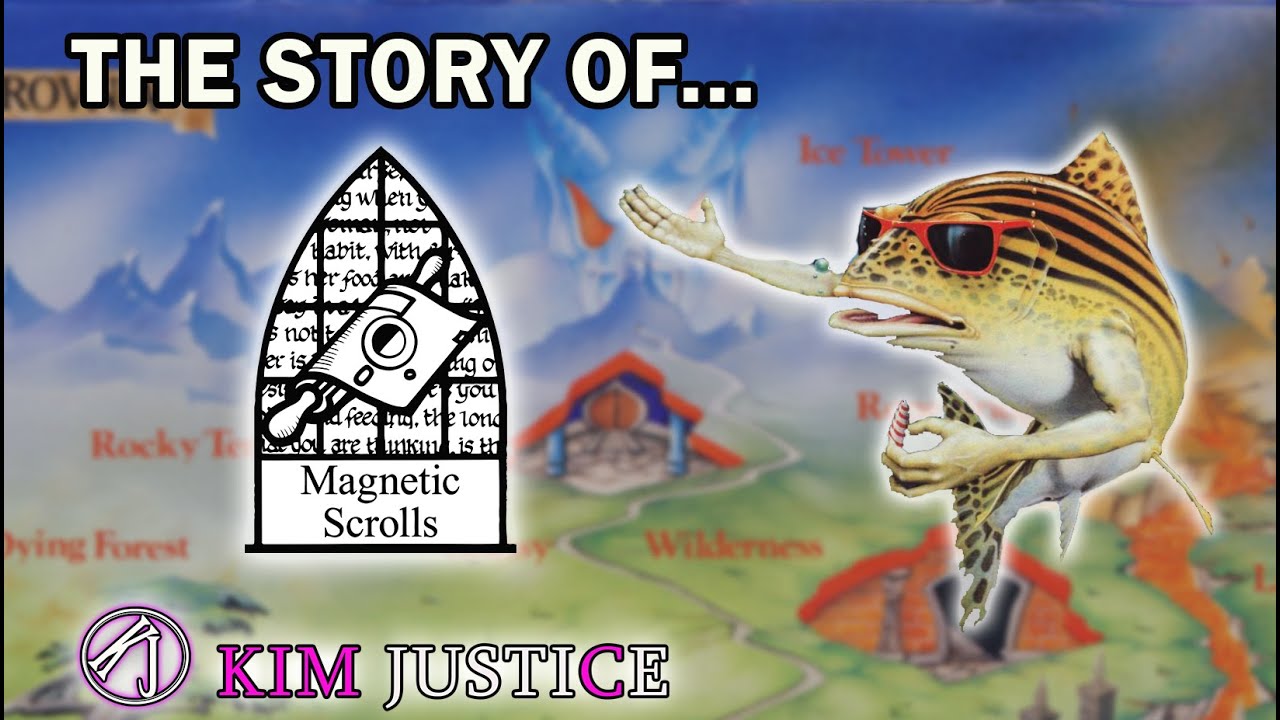
Kim Justice's documentary The Story of Magnetic Scrolls and The End of the Text Adventure (November 2022) is the definitive video survey of the studio — covering the full catalogue, development history, and critical reception.