The Secret of Monkey Island
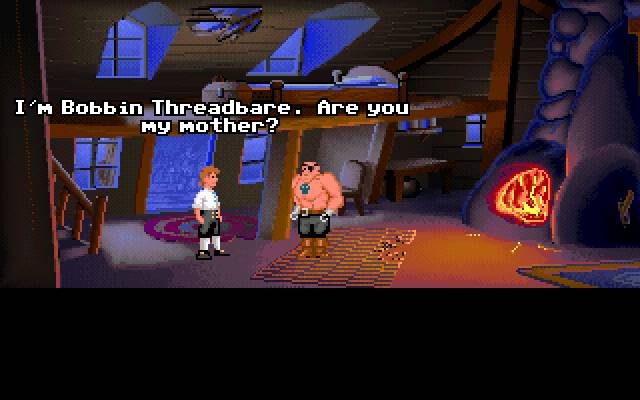
The Secret of Monkey Island arrived in 1990 and immediately established that adventure games did not have to be frustrating, dark, or punishing. Ron Gilbert's design philosophy -- no dead ends, no unfair deaths, puzzles solvable by logic alone -- gave the game a breezy confidence that made it feel unlike any adventure released before.
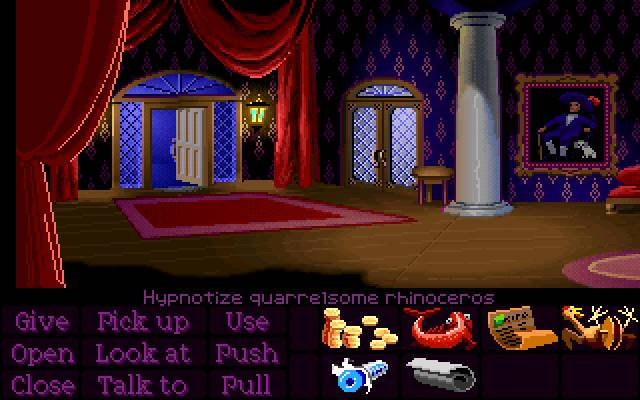
The story follows Guybrush Threepwood, aspiring pirate, as he completes three trials to prove himself on Melee Island, romances Governor Elaine Marley, and confronts the ghost pirate LeChuck. The tone was comedic -- a pirate pastiche seasoned with anachronistic jokes and fourth-wall glances -- but the emotional stakes were real.
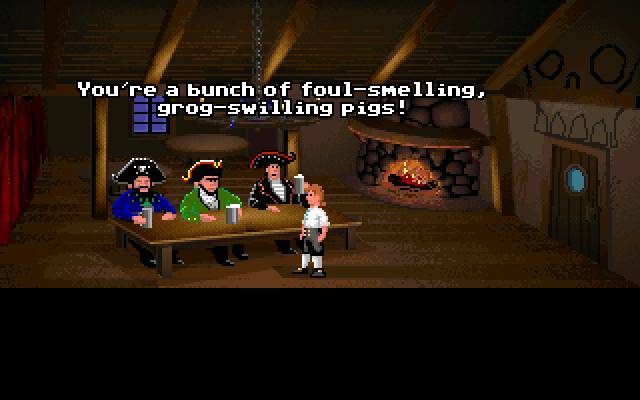
Monkey Island was supposed to be a swashbuckling comedy -- not a serious pirate game, not a grim tale. We wanted players to laugh. That was the design goal.
Ron Gilbert, Grumpy Gamer blog
The SCUMM v4 engine that powered Monkey Island allowed scrolling backgrounds for the first time, enabling the detailed Caribbean environments that gave the game its visual richness. The EGA and VGA versions looked different but both had character -- EGA's limited palette giving the nighttime Melee Island scenes an atmospheric quality that the richer VGA version traded for clarity.
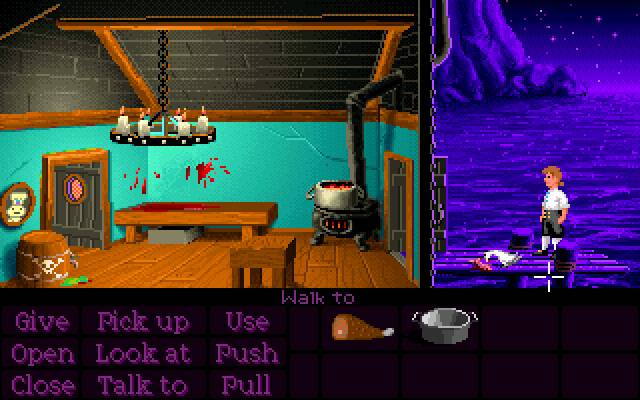
I never thought Monkey Island would last. I thought it was a funny little game and then we'd all move on. I was very wrong.
Ron Gilbert, GDC 2011
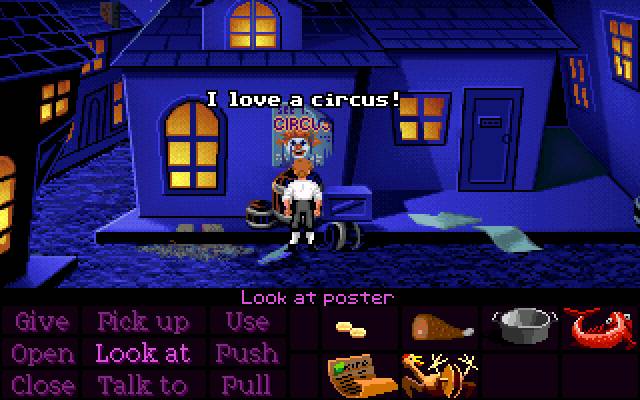
Critics Unanimous: A New Standard for the Genre
The Secret of Monkey Island received glowing reviews on release in October 1990. Computer Gaming World named it adventure game of the year and praised the verb interface as the most approachable point-and-click system yet designed -- the first time a reviewer noted that the genre no longer required a manual to enjoy. PC Gamer and the European gaming press were equally enthusiastic, with multiple publications crediting the insult sword-fighting system as the most inventive puzzle mechanic of the year. Critics who had tired of the parser-era adventure game found Monkey Island's accessibility a revelation.
The comedy writing drew particular attention. Reviewers noted that the jokes actually landed -- a distinction they felt previous comedy adventures had failed to earn. Gilbert, Schafer, and Grossman had written dialogue that felt natural rather than forced, and the comedic timing worked within the constraints of a static verb-and-noun interface in a way that surprised even experienced players. The game appeared in best-of-year lists across North America and Europe and drew new audiences to the adventure genre.
The Template Everyone Still Uses
The franchise Ron Gilbert created in 1990 has never stopped. LucasArts shipped five Monkey Island sequels, and in 2022 Gilbert returned to make Return to Monkey Island -- his first time back at the helm since 1991 -- after over thirty years away. That a designer could return to a franchise he invented three decades earlier and find an audience waiting is a measure of how deeply the original connected.
The game's design influence extended beyond the franchise. Telltale Games built an entire studio model on episodic adventure games that drew explicitly from the Monkey Island template. Broken Sword, Discworld, Simon the Sorcerer, and dozens of nineties comedy adventures used Gilbert's design rules as a foundation. Read about the designers at People and the full franchise at Games.
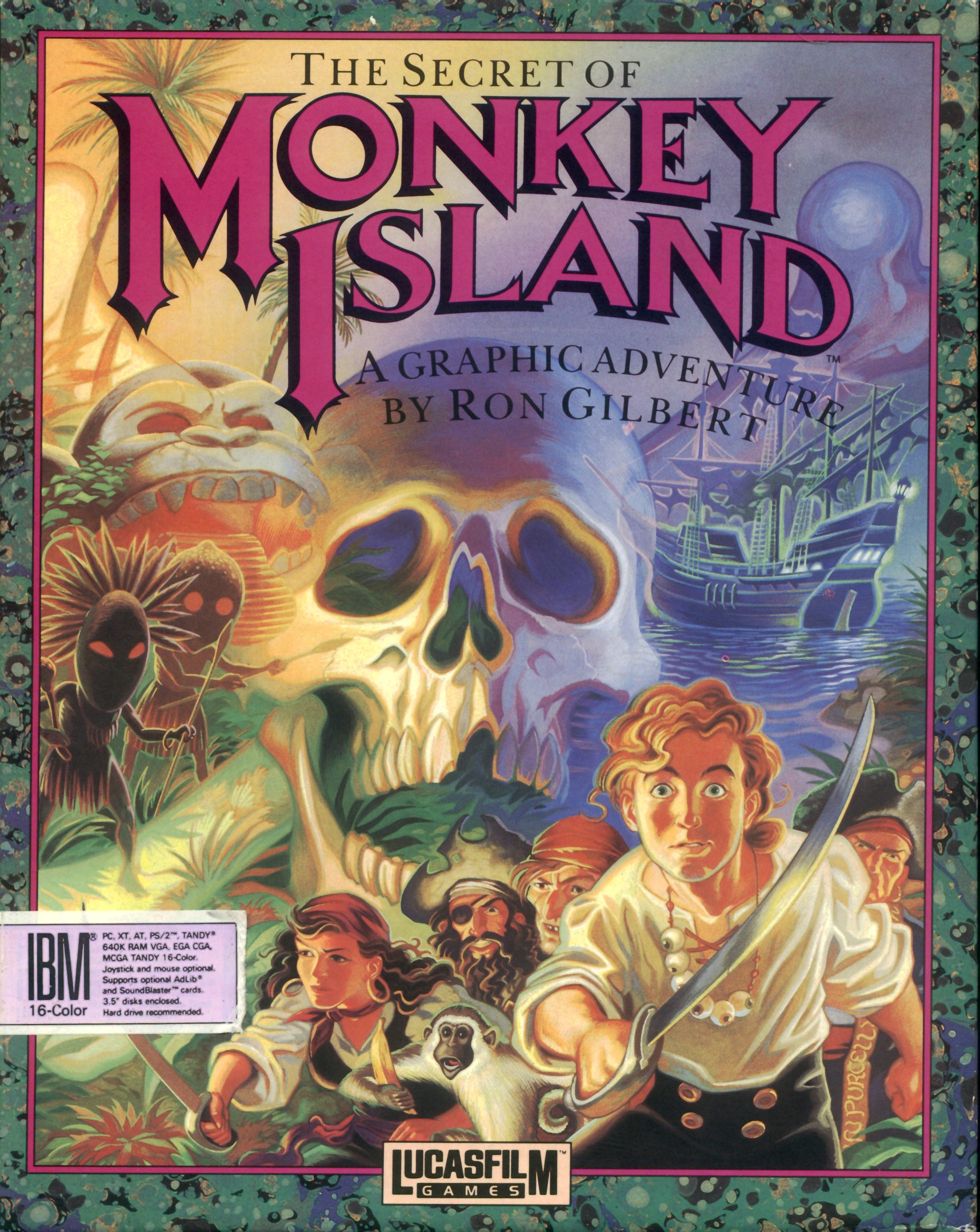
Year: 1990
Engine: SCUMM v4
Designer: Ron Gilbert
Platforms: DOS, Amiga
Day of the Tentacle
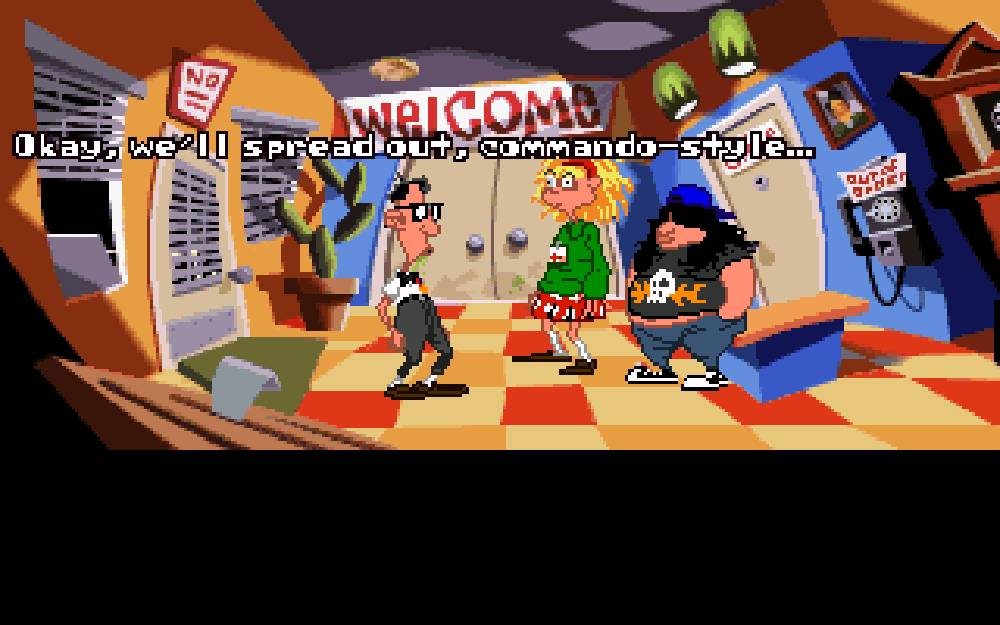
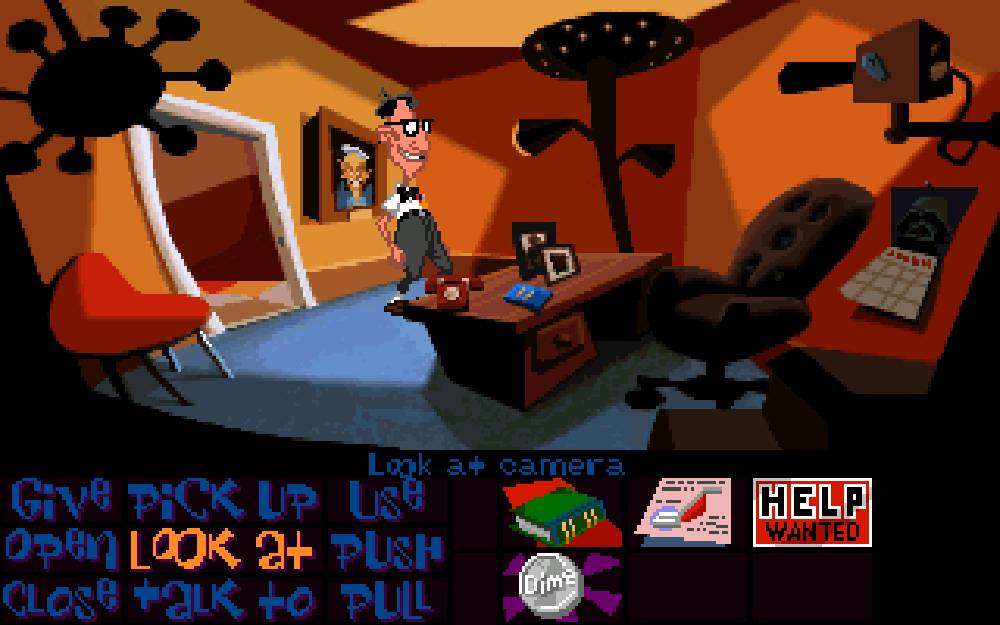
Day of the Tentacle arrived in 1993 as a sequel to Maniac Mansion and immediately exceeded it. Tim Schafer and Dave Grossman built a time-travel comedy in which three characters -- Bernard, Hoagie, and Laverne -- operate in different centuries simultaneously, with items and solutions crossing the temporal gaps.
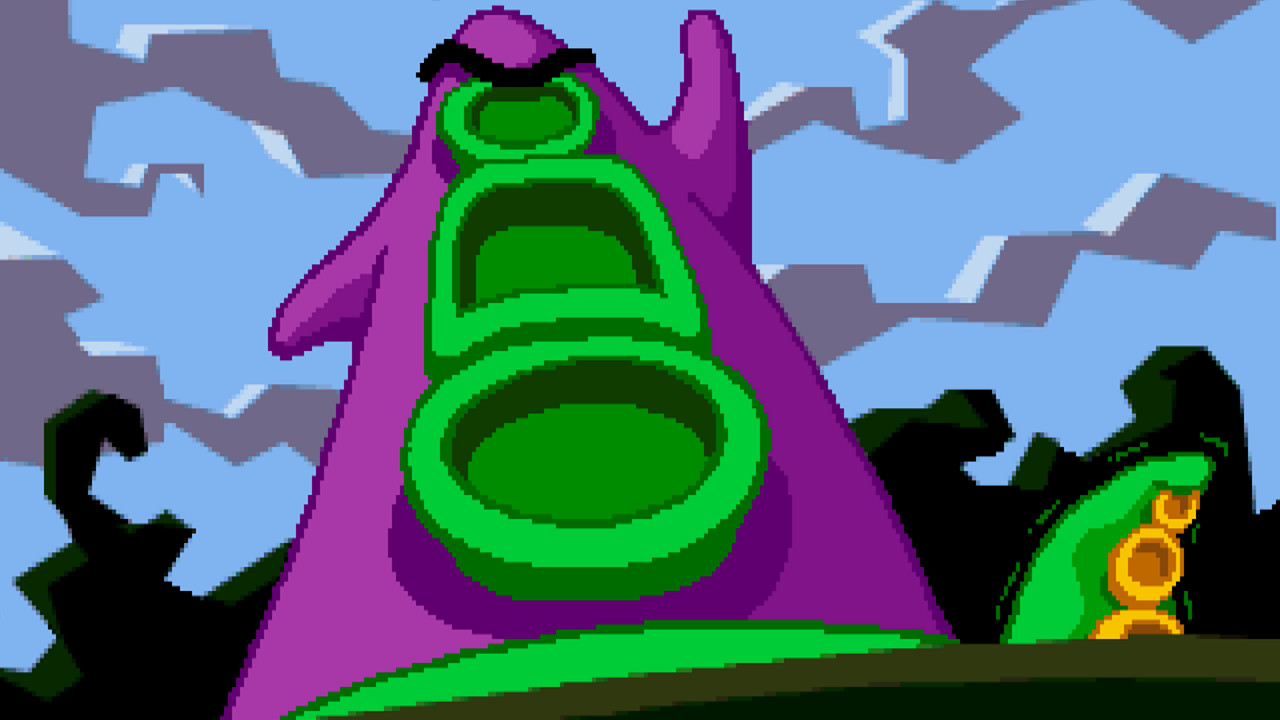
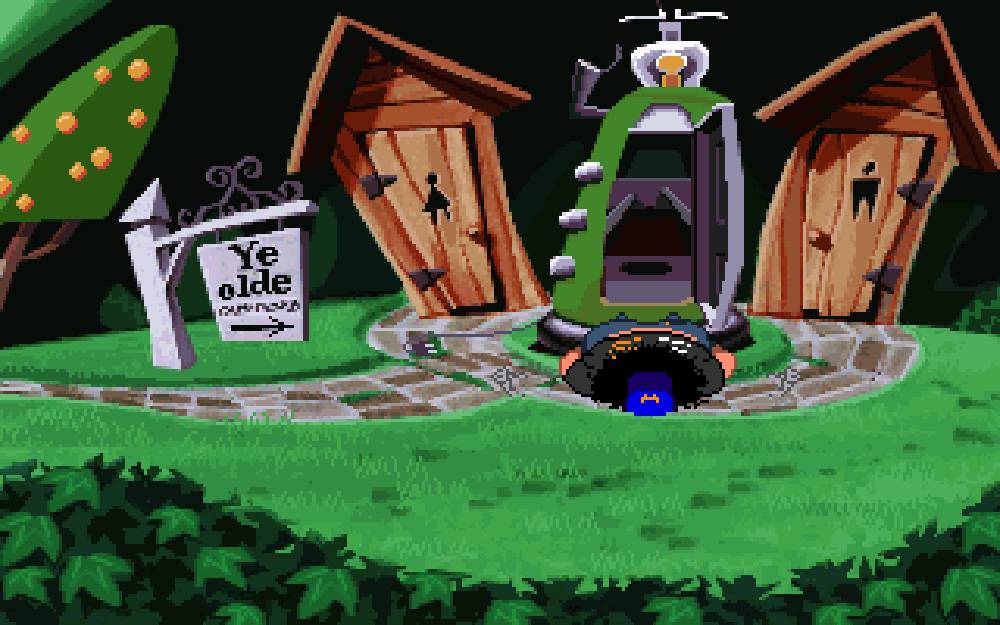
The design conceit of three simultaneous time periods was executed with remarkable elegance. The same mansion appeared in 1780 colonial America, present-day (1993), and a tentacle-ruled 2050. Puzzles often required players to place an object in one time period so it could be retrieved -- much aged -- in another.
The time travel mechanic meant that every puzzle could potentially involve any combination of three characters in three eras. That's nine interaction spaces to design across. It was very complicated to keep track of.
Tim Schafer, speaking at GDC
We wanted to show that adventure games could be genuinely funny. Not just clever. Fall-off-your-chair funny. That was the goal.
Dave Grossman, developer interview
The game shipped on three CD-ROM discs with full voice acting -- a luxury in 1993. The voice cast brought the characters to vivid life, and the cartoon-influenced art style by Larry Ahern gave the game a timeless visual quality that holds up today.
The Funniest Game Anyone Had Made
Day of the Tentacle arrived in June 1993 to unanimous critical praise. Computer Gaming World awarded it the title of best adventure game of the year and praised the time-travel puzzle design as an engineering achievement as much as a creative one -- reviewers recognised that maintaining internal consistency across three simultaneous timelines while keeping every puzzle fair and logical was a feat of structural game design that had not been attempted before.
The voice acting drew equal praise. In 1993, full CD voice acting for an adventure game was unusual enough that reviewers treated it as a major selling point, but what surprised them was the quality: the performances matched the cartoon exaggeration of the visuals without becoming grating. PC Gamer noted that Day of the Tentacle was not merely an adventure game that happened to be funny -- it was funnier than most comedies in any medium that year. It was an adventure game of the year winner across the board.
The Gold Standard That ScummVM Preserved
Day of the Tentacle was remastered by Double Fine in 2016, the second LucasArts classic to receive the treatment after Grim Fandango. The remaster maintained the original's cartoon art while adding redrawn HD assets and the now-standard old/new toggle. It introduced the game to a generation that had missed the nineties CD-ROM era.
The game's reputation in the adventure game community has never dimmed. It consistently appears at the top of "best adventure games ever" lists and is frequently cited by developers -- including Ron Gilbert, Tim Schafer, and the team at Terrible Toybox -- as the game that showed the genre was capable of genuine literary comedy. See the full team behind it at People and browse related titles at Games.
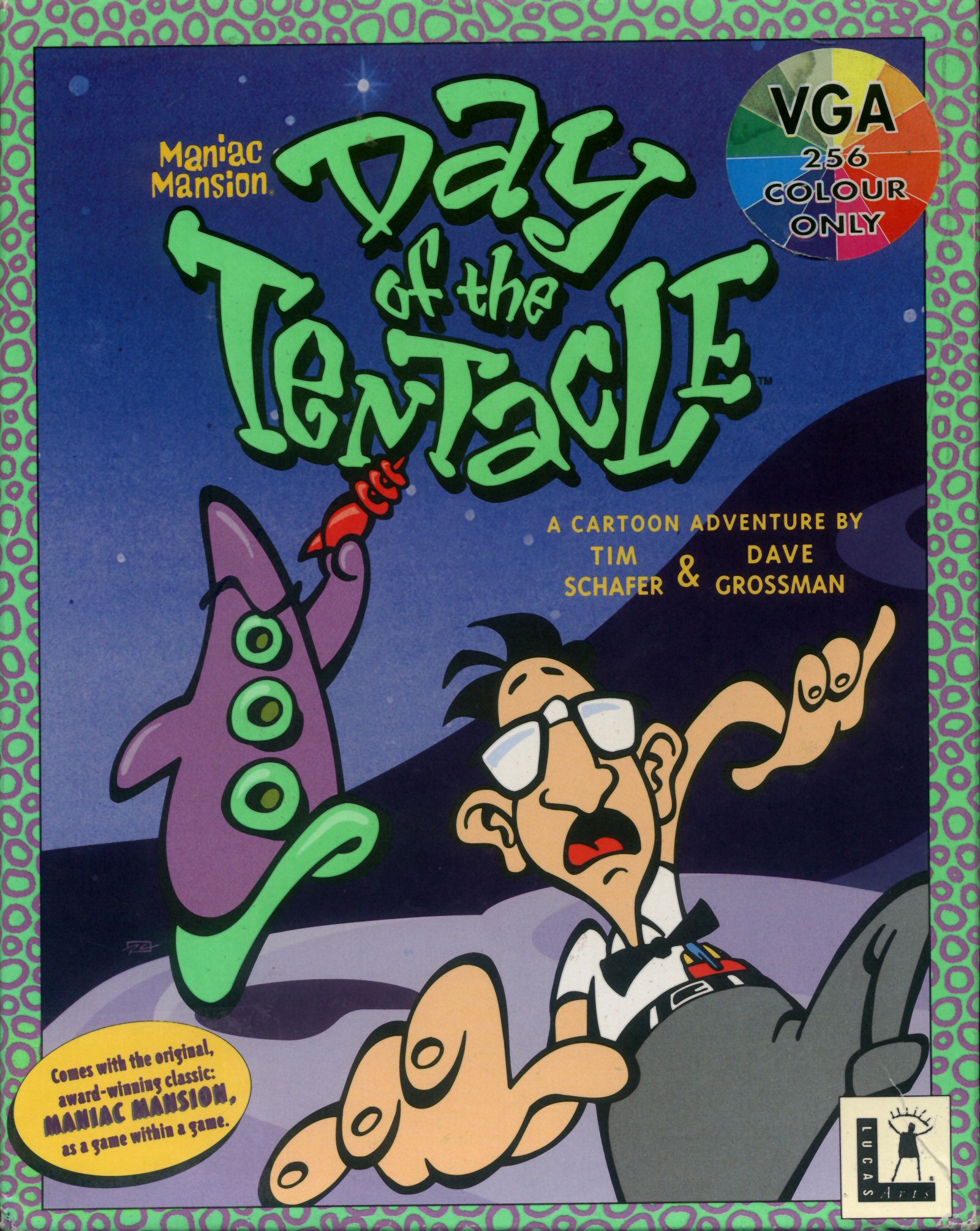
Year: 1993
Engine: SCUMM v6
Designers: Tim Schafer and Dave Grossman
Platforms: DOS
Full Throttle
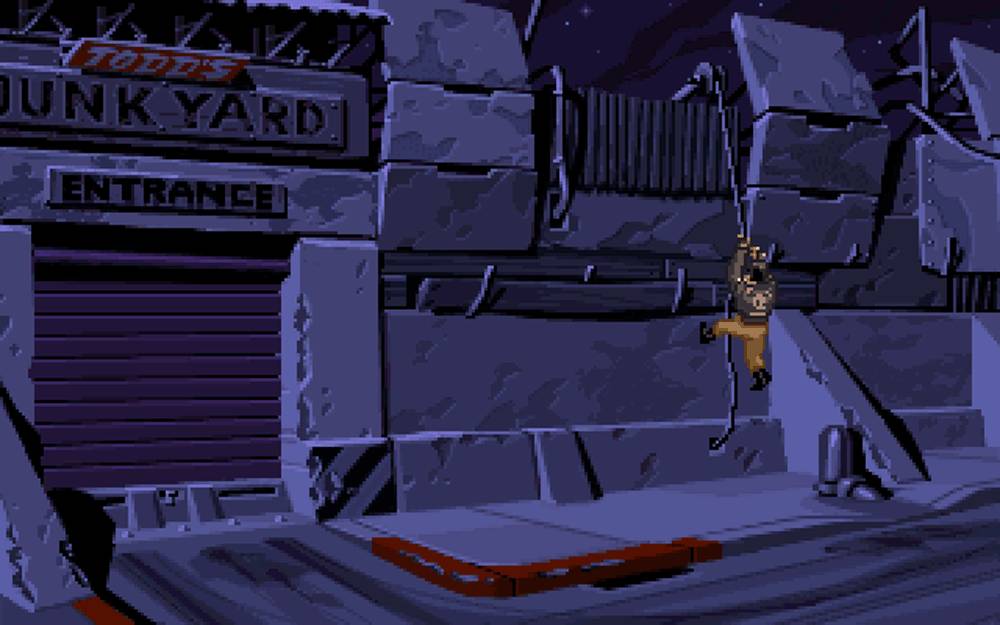
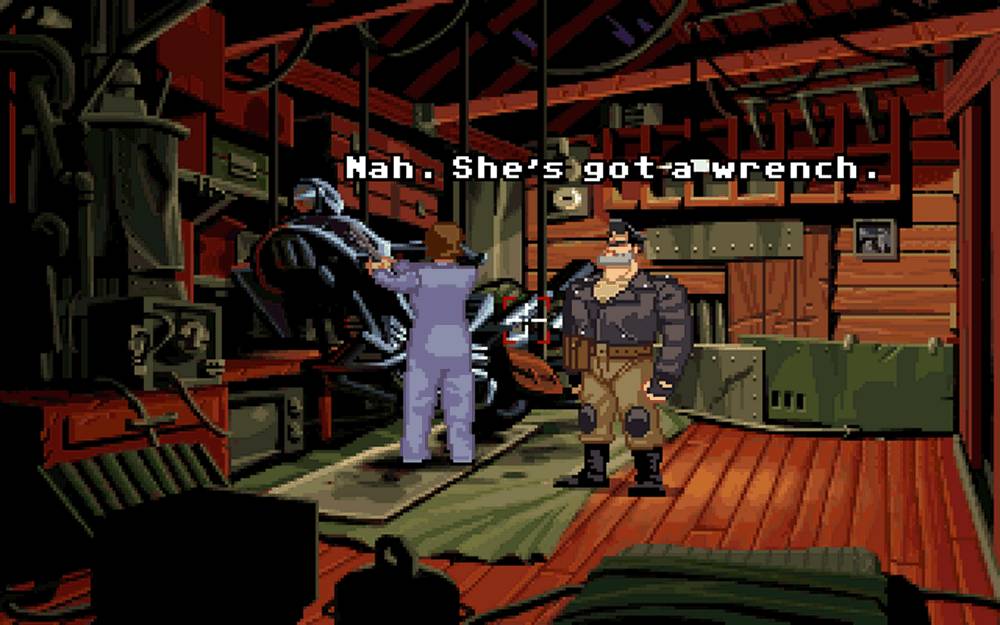
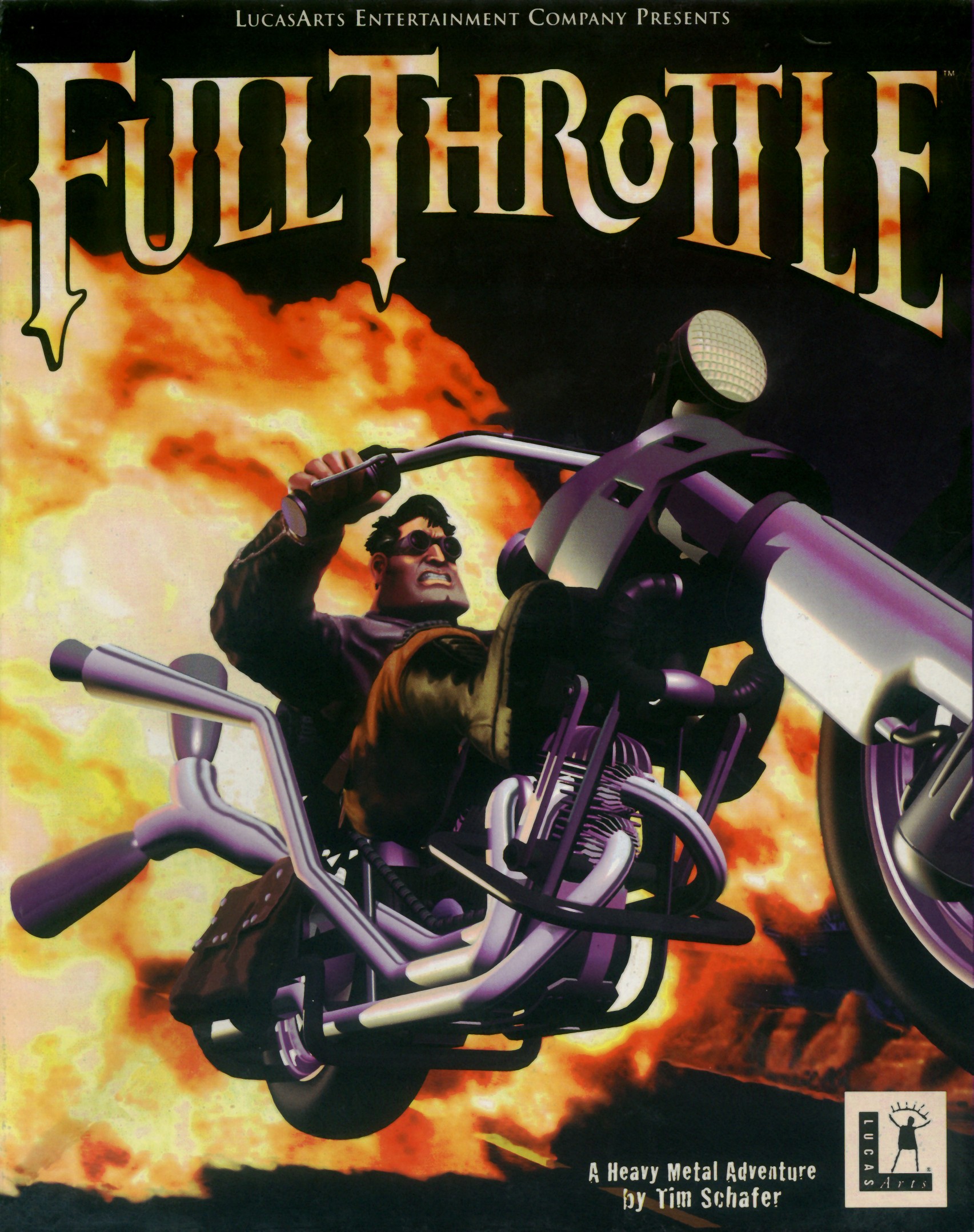
Full Throttle (1995) was Tim Schafer's solo directorial debut as lead designer at LucasArts. It was shorter than Monkey Island or Day of the Tentacle, but it was lean and tightly crafted -- every scene earned its place, every line of dialogue landed. Ben the biker leader of the Polecats was an immediately iconic protagonist.
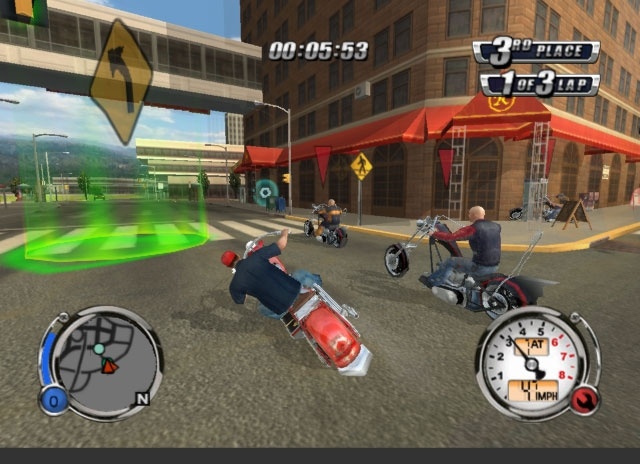
The game's neon-and-chrome aesthetic and near-future setting gave LucasArts something new -- a more cinematic, noir-inflected tone that departed from the Caribbean comedy of Monkey Island. The animation was fluid and expressive, with cutscenes that felt genuinely movie-like by 1995 standards.
Full Throttle was my attempt to make something that felt like a movie -- a real movie, not just a long cutscene. The adventure game parts had to earn their place in the story.
Tim Schafer, developer interview
Ben was a departure for us. He wasn't a bumbling hero or a funny everyman. He was tough and competent -- but vulnerable. That combination was what made the story work.
Tim Schafer, speaking at GDC
Full Throttle was remastered in 2017 by Double Fine Productions under Tim Schafer's supervision, with redrawn HD artwork, re-recorded audio, and the same old-or-new graphics toggle used in the Monkey Island Special Edition.
Ninety-Two Out of a Hundred: Short, Sharp, and Exactly Right
Full Throttle earned a 92 from PC Gamer US on release in April 1995 -- the highest score the magazine had given an adventure game. Reviewers praised the cinematic direction and Roy Conrad's voice performance as Ben as a rare case of an adventure game protagonist who felt genuinely characterful rather than functional. The animation quality and soundtrack also drew consistent attention: critics recognised the Gone Jackals tracks as an unusually sophisticated integration of licensed music into an interactive work.
The only consistent criticism was the game's length. At four to five hours, Full Throttle was substantially shorter than Monkey Island or Day of the Tentacle, and some reviewers felt it was over before it had fully developed. Schafer acknowledged this in later interviews but argued that the game's economy was deliberate -- every scene earned its place, and padding would have diluted what made it work. Computer Gaming World named it adventure game of the year for 1995.
Lean Enough to Remaster Twice
The 2017 Double Fine remaster introduced Full Throttle to players who had never owned a mid-nineties DOS machine and confirmed that the game's cinematic economy aged better than titles that padded their runtime. The licensed music rights were retained for the remaster -- an unusual outcome that preserved the soundtrack intact.
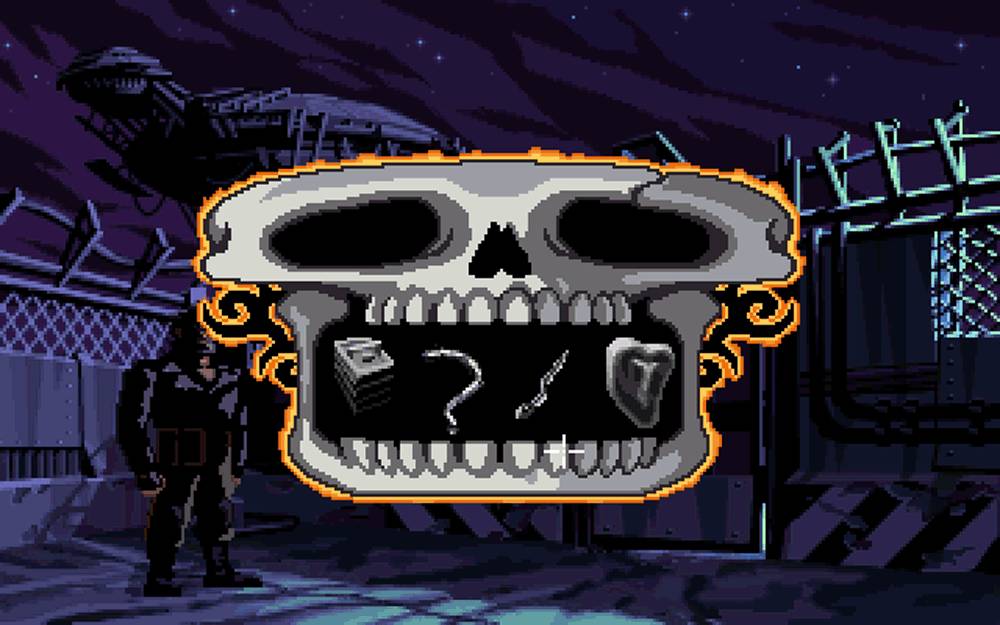
Full Throttle's influence on later adventure games was quieter than Monkey Island's but real: the verb coin interface it introduced shaped subsequent LucasArts adventure design and fed into the context-sensitive interaction systems that dominated adventure games through the 2000s. Read about Tim Schafer and the design team at People, and the soundtrack at Music.
Year: 1995
Engine: SCUMM v7
Designer: Tim Schafer
Platforms: DOS
Grim Fandango
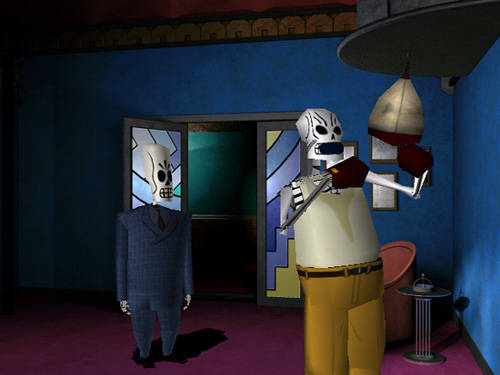
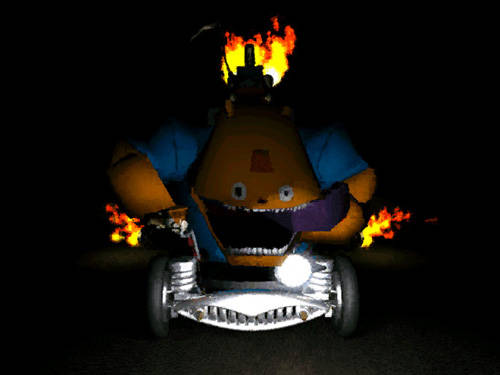
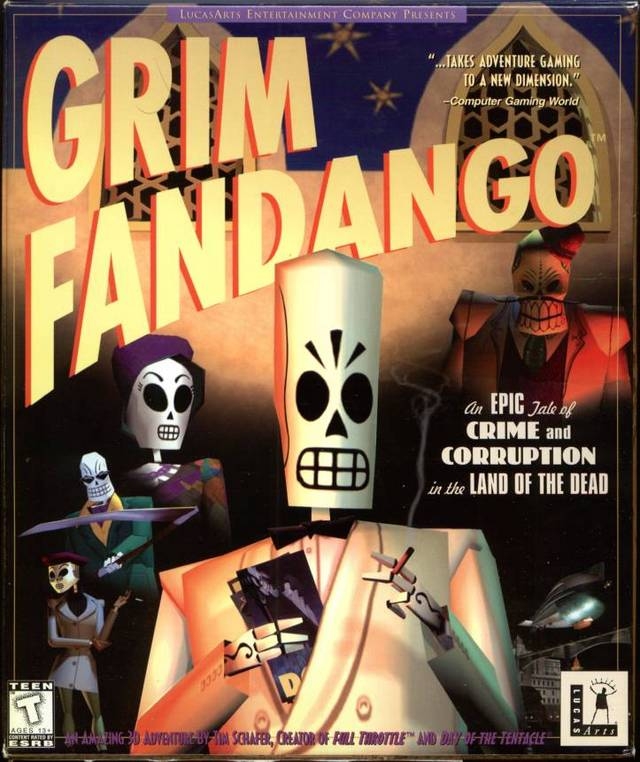
Grim Fandango (1998) was Tim Schafer's last LucasArts game and the first to abandon the SCUMM engine entirely. The new GrimE engine used 3D characters on pre-rendered 2D backgrounds, giving the game a visual style that referenced film noir, Art Deco, and Mesoamerican mythology simultaneously.
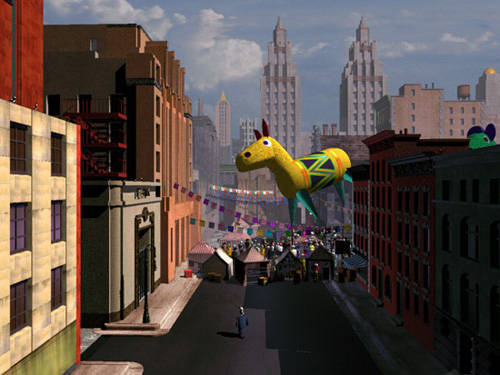
The story follows Manny Calavera, a travel agent for the dead who discovers a conspiracy in the Land of the Dead's bureaucratic afterlife. Over four years of in-game time, Manny investigates corruption, falls in love, and rides the No.9 underground train to the Ninth Underworld. It is structured like a noir novel, complete with a femme fatale, a corrupt official, and a protagonist whose soul is his own main antagonist.
Grim Fandango was the most ambitious thing we'd tried. We wanted to make a game that had the structure of a novel -- not just acts, but a genuine four-part narrative arc with real emotional weight at each stage.
Tim Schafer, Wired interview
The iMUSE system reached its zenith in Grim Fandango. Michael Land's score -- drawing on Cuban jazz, bossa nova, big band, and Mariachi -- transitioned seamlessly as Manny moved through environments, with leitmotifs evolving in emotional intensity to mirror the narrative. No LucasArts score before or after matched what Land achieved here.
Ten Out of Ten and Still It Didn't Sell
Grim Fandango received near-universal critical praise on release in October 1998. GameSpot awarded it 10/10 and named it Game of the Year. PC Gamer US gave it 95/100 and called it the best adventure game ever made. Publications across North America and Europe reached similar conclusions: the writing, the score, the visual design, and the structural ambition of a four-year narrative arc were treated as achievements that had not been matched in the genre.
The commercial outcome told a different story. Grim Fandango sold modestly in its first year -- far below what the critical reception suggested it deserved. The causes were structural: the game required hardware 3D acceleration that was not yet ubiquitous in 1998, and the adventure game genre had been contracting commercially since the mid-nineties as action and shooter titles absorbed the mass market. LucasArts took the sales figures as a signal to exit adventure games entirely, a decision the critical consensus never justified.
I'm still proud of Grim Fandango. I think it holds up. The fact that it failed commercially was devastating at the time, but now -- it's a game people still play and love. That matters more.
Tim Schafer, retrospective interview
Found Its Audience Twenty Years Late
Grim Fandango Remastered, released in 2015, was the project that proved the demand for LucasArts classics had survived their commercial failure intact. The remaster added director's commentary from Tim Schafer, improved lighting, and a fully remastered orchestral version of Michael Land's score. It was the first Double Fine remaster of a LucasArts title and led directly to the Day of the Tentacle and Full Throttle remasters that followed.
The game's reputation has only strengthened since 1998. It is regularly cited alongside Half-Life and Metal Gear Solid 3 as one of the strongest cases for games as a narrative medium, and its four-chapter structure influenced how subsequent adventure games -- including the entire Telltale model -- approached episodic storytelling. The iMUSE system that Michael Land designed for it, explored in depth at Music, has never been meaningfully surpassed. Read about the key people at People.
Year: 1998
Engine: GrimE
Designer: Tim Schafer
Platforms: Windows