Gridrunner (1982)
VIC-20 / C64 — 1982 / 1983 — Llamasoft
Gridrunner is where Llamasoft began in earnest. First released on the VIC-20 in 1982 and ported to the Commodore 64 the following year, it was a deliberate reworking of the Centipede/Millipede concept - enemy chains descending across a grid, the player confined to the lower portion of the screen. What made it a Llamasoft game rather than a clone was speed, density, and an aggressive sense of rhythm that no arcade original quite matched on home hardware. See the full catalogue listing at catalogue.html.
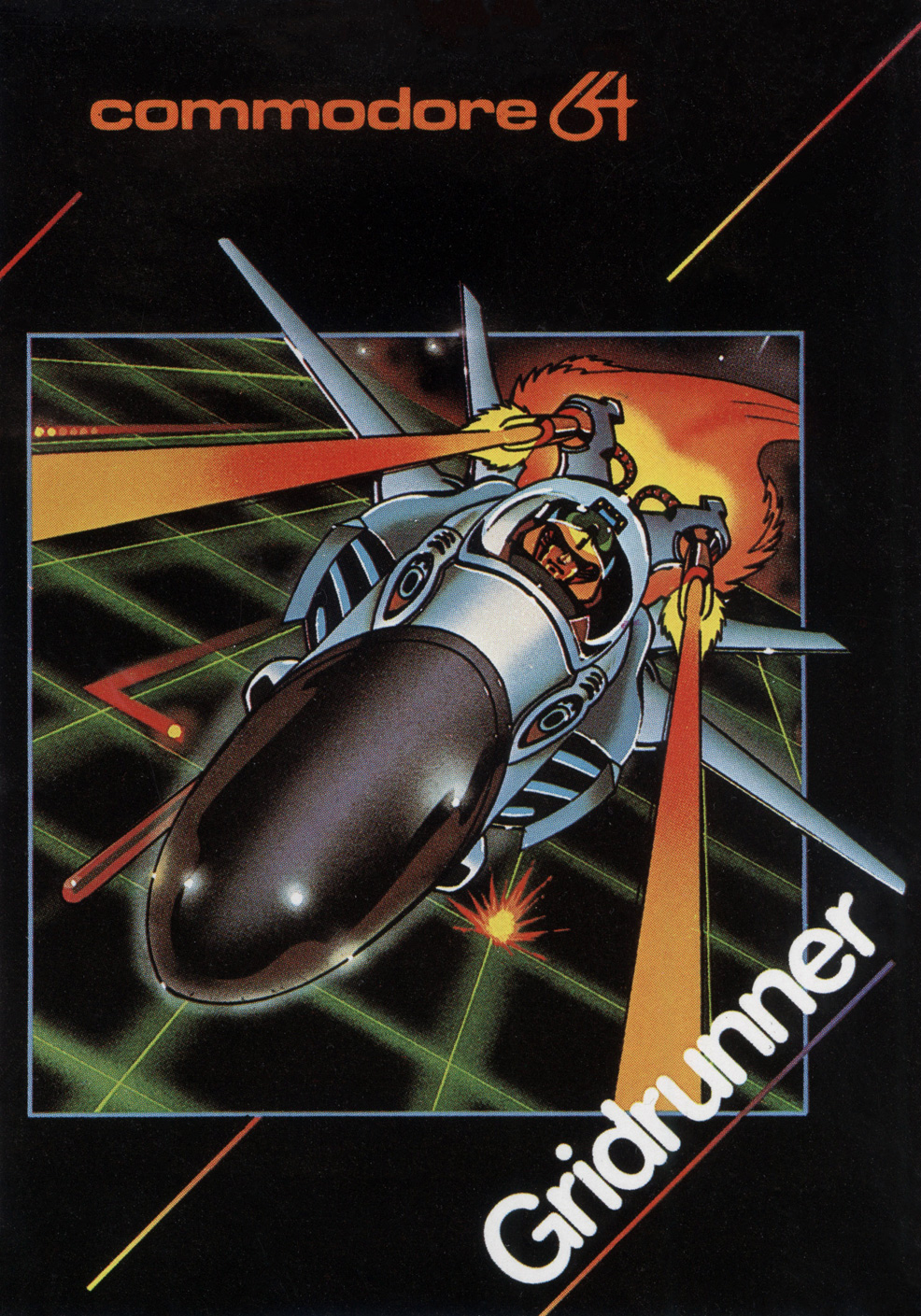
The Arcade at the End of the Street
Jeff Minter had been spending time at local arcades watching Centipede and Millipede. He owned a VIC-20 - the machine that was accessible, affordable, and technically limited in ways that made every optimisation a lesson. The challenge was to produce something that felt like what he had seen on the cabinet: fast enemy movement, the grid as a hazard-space rather than just a background, and a sense that the machine was working at its ceiling to produce what appeared on screen.
The result was Gridrunner: a fixed-screen shooter with segmented enemy chains that descended in patterns, lasers fired by those chains that crossed the playing field horizontally and vertically, and a player ship that could move across the bottom and sides of the grid to avoid everything while clearing the wave. Minter wrote it alone, as he wrote almost every Llamasoft game, and published it through Llamasoft's own mail-order operation.
"I'd been playing Centipede at the arcade and I thought: I can do this on the VIC-20. The first version was rough in places but it moved fast, and fast was what mattered. When the C64 version came out it was smoother, harder. That felt right - it was the game the original was always trying to be."
Jeff Minter and Patrick Minter, "A History of Llamasoft" (Llamasoft, 2004)
Read the Grid or Die Trying
The core mechanic is straightforward: enemy chains appear at the top and descend toward the player. What makes Gridrunner demanding is the behaviour of those chains. They do not simply move downward - they fire lasers that travel the full width or height of the grid, and the grid itself has moving elements that restrict the player's safe positions. At higher levels the screen becomes a puzzle of restricted space and crossing fire paths that demands precise movement and pattern recognition.
Gridrunner rewards memorisation of enemy behaviour without becoming a rote exercise. The patterns are learnable but the execution is unforgiving. The C64 version is faster and harder than the VIC-20 original and remains the definitive version: tight controls, more visual density, and a difficulty curve that punishes complacency precisely when the player thinks they have mastered a wave.
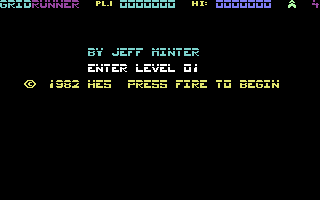
Speed as a Technical Statement
Getting a fixed-screen shooter to move at the pace Minter wanted on the VIC-20 required careful management of the machine's limited resources. The VIC-20 had 5KB of RAM in its standard configuration and a display chip designed for simple graphics; producing fast, multi-entity animation without hardware sprites demanded careful code. The C64 port had more memory and hardware sprite support but still required optimisation to maintain the speed that the game's feel depended on.
The absence of formal music was a deliberate consequence of this priority. Gridrunner uses sound effects only - there is no composed SID score. Every processor cycle that would have gone to music went to keeping the action at the pace Minter wanted. The sound design is functional and effective: the laser fire, explosions, and wave-clear sounds are sufficient to read the state of the game at a glance.
The Review That Made Llamasoft Real
The UK gaming press received Gridrunner warmly on both platforms. The C64 version in particular received attention in Zzap!64 and Commodore User as a strong demonstration of what independent developers could produce on the machine. Lemon64's community retrospectives consistently identify it as a technical and creative landmark for a first commercial shooter: fast, original in feel if not in concept, and evidence of a programmer with a distinctive voice.
The game sold well enough through Llamasoft's mail-order operation to establish the studio as a commercial presence. It was not the last word in the genre, but it was a confident opening statement from a one-man operation operating entirely outside the mainstream publisher system.
Forty Years of Gridrunner
Minter returned to Gridrunner repeatedly across his career. Gridrunner++ (2002) was an expanded PC version with new game modes and an updated visual style. Mobile versions followed across iOS and Android. The original game is preserved on the Internet Archive and is playable today via browser-based C64 emulation.
Most significantly, Gridrunner is one of the 42 titles in Llamasoft: The Jeff Minter Story (Digital Eclipse, 2024), the Gold Master Series compilation that brought the complete Llamasoft back catalogue to modern platforms with documentary context, designer commentary, and original archival materials. See the catalogue for play options and links.
Iridis Alpha (1986)
C64 — 1986 — Llamasoft
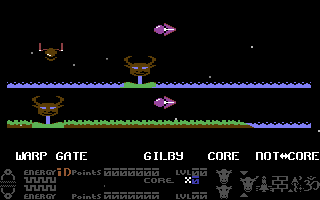
Iridis Alpha is the game that closes the C64 chapter of Llamasoft's history on the highest possible note. Released in 1986 after four years of increasingly ambitious C64 work, it is a shooter unlike anything else on the platform: two linked playfields occupy the screen simultaneously, the player navigating both at once, with actions on one affecting the state of the other. The Lemon64 community identifies it as among the finest technical achievements on the machine. See it in the catalogue.
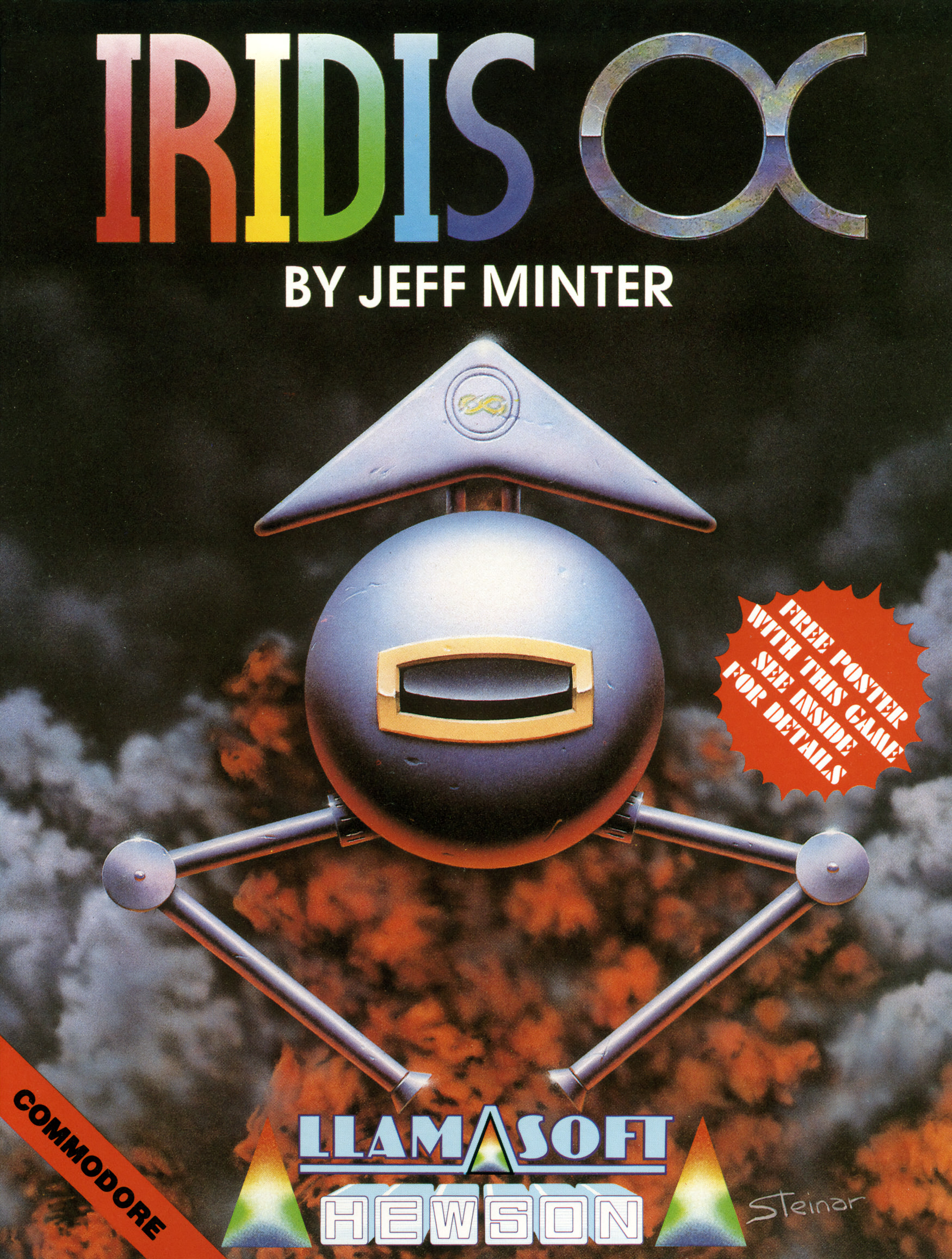
Forty-Eight Kilobytes and Four Years of Experience
By 1986 Minter had shipped more than a dozen C64 games. He understood the hardware with the intimacy that comes from years of pushing against its limits. Iridis Alpha was his attempt to produce something the machine was not supposed to be capable of: two genuinely separate playfields, each with their own game state, enemy behaviour, and visual character, running simultaneously and linked through the player's actions.
The game was published through Llamasoft's own mail-order operation and through a network of specialist retailers. It did not have a major label behind it - Minter was distributing his own work directly to the players who wanted it, which was how Llamasoft operated throughout the C64 era. See the studio background on the people page.
"The whole point of Iridis Alpha was the link between the two playfields. Whatever you did on one side affected the other. The C64 was working hard but it held up. By 1986 I knew every trick the machine had to offer, and Iridis Alpha was the game where I used all of them at once."
Jeff Minter and Patrick Minter, "A History of Llamasoft" (Llamasoft, 2004)
Keeping Two Plates Spinning
In Iridis Alpha, the player's ship occupies the bottom of the screen while the upper playfield operates as a separate game space with its own enemies. The two spaces are linked: destroying enemies on the upper field generates bonuses and affects the threat level on the lower field, and vice versa. The player must track both simultaneously - the lower field demands immediate reactions to incoming fire while the upper field rewards deliberate targeting.
The visual density of the screen is extraordinary. At any given moment the display is packed with moving, coloured entities: enemy formations, player projectiles, the player ship itself, and the various pickups and hazards that the two-playfield system generates. Reading the screen quickly enough to survive is itself a skill that the game teaches over time. It does not condescend to new players - the learning curve is steep and rewarding.
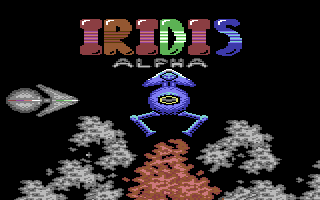
What the VIC-II Was Not Supposed to Do
The Commodore 64's VIC-II graphics chip had hardware sprite support, but managing sprites across two simultaneous playfields while maintaining acceptable frame rates required careful rasterline programming. Minter used rasterline interrupts to switch the display state mid-frame - a technique that allowed the illusion of two independent video regions on a chip that could only address one at a time.
The result is a game that genuinely stretches the C64 hardware. On a stock machine the action stays smooth; the optimisation is thorough enough that the technical ambition does not compromise the playing experience. This is Minter at his most technically disciplined, channelling four years of C64 expertise into the most complex single system he had attempted.
The Zzap!64 Consensus
Iridis Alpha was received as a technical showcase. Zzap!64 praised the dual-playfield system as genuinely innovative, noting that the execution matched the ambition - the game was not just technically interesting, it was playable and rewarding. The Lemon64 community has consistently rated it among the finest Llamasoft C64 releases, and retrospective coverage in Retro Gamer and similar publications identifies it as one of the peak achievements of the platform's golden era.
The Unrepeated Experiment
Iridis Alpha had no direct sequel. The dual-playfield concept did not reappear in Minter's subsequent work in any direct form - the Atari ST and Amiga years moved in different directions, and the Jaguar projects would pursue a different kind of technical ambition. Iridis Alpha stands as its own complete statement: the C64 game that showed exactly what Minter could do on the hardware, and then closed the chapter.
It is preserved on the Internet Archive and included in Llamasoft: The Jeff Minter Story (Digital Eclipse, 2024). The music available via the Music page includes the SID compositions from the broader Llamasoft C64 catalogue, providing the sonic context for the era Iridis Alpha represents.
Llamatron: 2112 (1991)
Amiga / Atari ST / DOS — 1991 — Llamasoft (freeware)
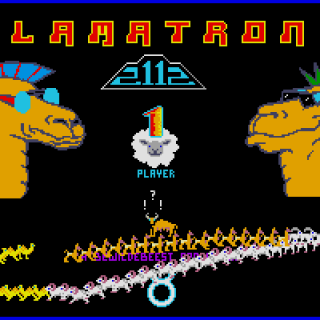
Llamatron: 2112 arrived in 1991 as both an unambiguous tribute and a genuine creative statement. The title acknowledged its debts openly: Robotron: 2084 was the inspiration, and "2112" placed it firmly in the Robotron lineage while nodding to Rush's album of the same name. What it delivered beyond the tribute was a twin-stick arena shooter full of Llamasoft's ungulate obsessions, running at relentless speed on Amiga, Atari ST, and DOS. And Minter chose to give it away - which changed how many people first encountered Llamasoft.
Robotron Gets a Farmyard
Robotron: 2084 (Williams Electronics, 1982) is a twin-stick arcade game where the player is surrounded by waves of robots and must survive while rescuing stranded humans. Minter took that framework and replaced the humans with llamas, camels, sheep, and various other ruminants - creatures that were, by 1991, firmly established as the Llamasoft signature. He kept the dual-joystick control scheme (or its keyboard equivalent), the relentless enemy spawning, and the essential feel of Robotron at full pressure.
Williams Entertainment was aware of Llamatron: 2112. They chose not to pursue any legal action. The game was too clearly a tribute rather than a commercial threat, and Minter's approach was transparent - the title itself announced what the game was. See the studio and distribution background on the people page.
"I gave it away because it seemed like the obvious thing to do. Williams hadn't sued - we weren't hiding what it was. If someone wanted to play it they should be able to. The shareware channels worked well enough that we got it into a lot of hands, which was the point. I'd rather have people playing it than not."
Jeff Minter, "Way of the Rodent" (2004), archived via Slashdot
Herd Management at One Thousand Iterations Per Second
Playing Llamatron: 2112 means managing two directional inputs at once: one for movement, one for firing. On keyboard this is handled via two separate key groups; on Amiga and ST the dual-joystick setup is the intended configuration. The arena fills rapidly with enemies - robotic creatures in waves of increasing complexity - and with friendly units that the player should not shoot. Rescuing llamas and other animals by moving near them contributes to a multiplier; killing them wastes the opportunity.
The Amiga version is the most celebrated. The machine's custom chips handled the sprite count without slowdown, giving Llamatron the feeling of controlled chaos that the game needed. The Atari ST version performed similarly; the DOS port reached a wider audience given the platform's install base. All three versions are functionally equivalent in gameplay.
The Best Free Game of 1991
Amiga Power reviewed Llamatron: 2112 as a major release despite its freeware status, noting that the production quality and game depth were indistinguishable from commercially priced titles. CU Amiga and other Amiga publications gave it substantial coverage. The combination of an accessible concept - arena shooter, clear objectives - with Llamasoft's visual excess made it an ideal introduction to Minter's work for players who had not previously encountered the C64 games.
The Gateway Game
Llamatron: 2112 is consistently cited by Llamasoft fans as the game that brought them to the studio. Its freeware status meant it circulated on floppy disks through user groups and BBS systems across Europe and North America, reaching people who had never used mail order and might never have encountered a Llamasoft game otherwise.
The game is preserved on the Internet Archive and is included in Llamasoft: The Jeff Minter Story (Digital Eclipse, 2024). The Amiga version remains the recommended play experience. See catalogue.html for play options.
Tempest 2000 (1994)
Atari Jaguar / DOS / Saturn — 1994 — Atari Corporation
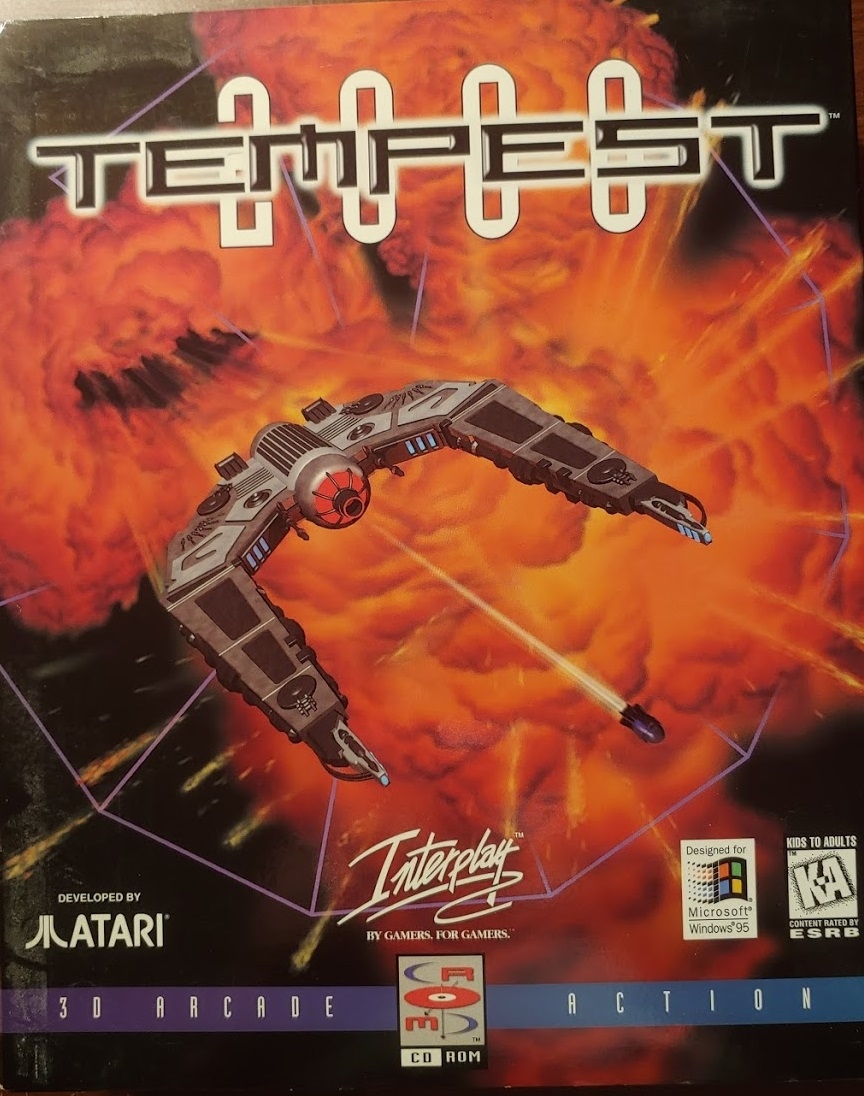
Tempest 2000 is the game that defines Llamasoft's place in gaming history. Published by Atari Corporation for the Jaguar in 1994, it is a reimagining of Dave Theurer's 1981 tube-shooter classic that surpasses its source in almost every dimension: in depth, in visual ambition, in the way its rave-era soundtrack turned a technical exercise into something culturally specific to its moment. It is the finest Jaguar game ever made and one of the finest games of the decade.
Making Theurer's Game Minter's Own
Atari Corporation approached Minter with the Jaguar hardware and a brief to produce a new Tempest. It was exactly the right moment: Minter had been developing the Virtual Light Machine concept - real-time music visualisation, psychedelic light synthesis - and the Jaguar's GPU gave him processing power to realise ideas that previous hardware had not supported. The original Tempest's tube-shooter geometry was a perfect canvas.
Minter retained the core structure - a player ship on the rim of a three-dimensional tube, shooting down toward enemies climbing toward the top - and added a system of power-ups that transformed the tactical layer: an AI Droid that follows the player and shoots autonomously, a Jump ability that allows the player to leap over oncoming hazards, and the Superzapper inherited from the original arcade. Bonus stages between levels gave the player a VLM-style breathing space before the next wave.
"Tempest is one of the all-time great games. When Atari came to me with the Jaguar and said do a Tempest - I didn't need much convincing. Everything I'd been developing with the VLM, the light synthesis ideas, all of that could go inside the tube. The Jaguar had the processing power for it. It was exactly the right project at exactly the right moment."
Jeff Minter, Nature of the Beast (Llamasoft newsletter), 1994
Riding the Web at Sixty Frames
At its core, Tempest 2000 plays as a refined version of the original: move the player ship along the top rim of the tube, fire downward, manage the flanks. What the power-up system adds is a second layer of decision-making that runs simultaneously with the reactive survival layer. The AI Droid turns the player into a dual threat; Jump creates moments of immunity that must be timed against the enemy spawn patterns; Superzapper is the panic button that must be conserved.
The speed at higher levels is remarkable. The tube geometry changes between levels - flat webs, curved surfaces, three-dimensional shapes that alter the enemy approach angles - and the pace increases consistently until the action becomes a test of pattern recognition and muscle memory that rewards mastery with a flow state few games of the era achieved. The rave soundtrack is not incidental to this: the music and the game state are designed to reinforce each other.
The Jaguar's One True Achievement
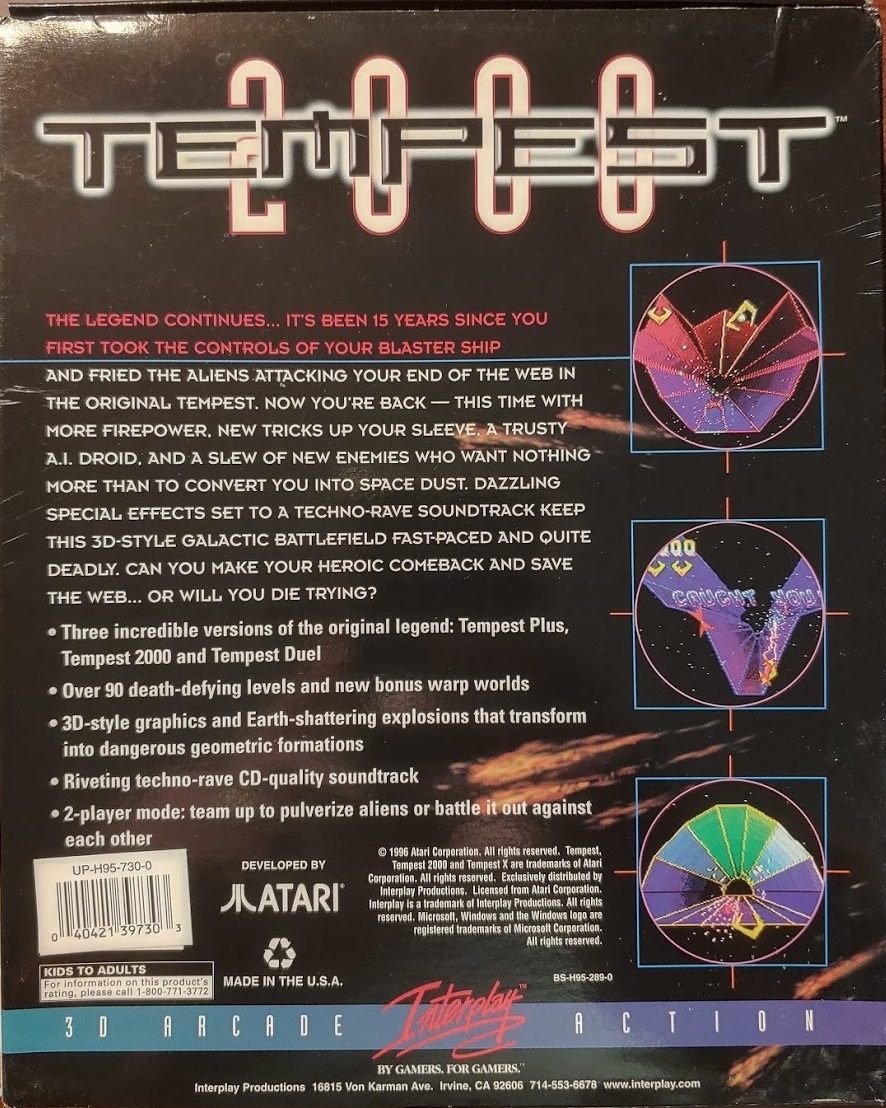
The Atari Jaguar was commercially struggling from launch. Its hardware - a 64-bit architecture that was difficult to program and limited in practice by its 32-bit buses - had produced few titles that justified the hardware. Tempest 2000 was the exception: Minter used the Jaguar's GPU for the tube geometry and the VLM-style visual effects in the bonus stages, producing a game that genuinely could not have existed on the Super Nintendo or Mega Drive at comparable quality.
The Jaguar CD version included the Virtual Light Machine as a standalone application - the first time any home console shipped with a real-time music visualiser as a built-in feature. That context makes Tempest 2000 doubly significant: it is both the best Jaguar game and the machine's best argument for what the hardware could do.
Ninety-Five Per Cent and a Thirty-Year Consensus
Jaguar Pro awarded Tempest 2000 95 per cent. Other Jaguar publications gave it comparable scores, and the critical consensus established at launch has not weakened in the thirty years since. Retrospective coverage in Edge, Retro Gamer, and Eurogamer consistently identifies it as not just the best Jaguar game but a genuine landmark - a case where a talented developer and a specific piece of hardware aligned perfectly to produce something that could not have existed otherwise.
See the reviews page for period coverage and modern retrospectives, and the music page for context on the rave soundtrack that defines the game's atmosphere.
The Version Theurer Would Recognise
DOS and Saturn ports followed the Jaguar original. The game is now playable on BigPEmu, the Jaguar emulator, and is included in Llamasoft: The Jeff Minter Story (Digital Eclipse, 2024), which brings it to PC, PlayStation, Xbox, and Nintendo Switch with developer commentary and archival materials.
Tempest 4000 (Llamasoft, 2018) is the direct sequel, carrying the Tempest 2000 formula to modern hardware. See the catalogue for both entries and play options.
Space Giraffe (2007)
Xbox 360 / PC — 2007 — Llamasoft
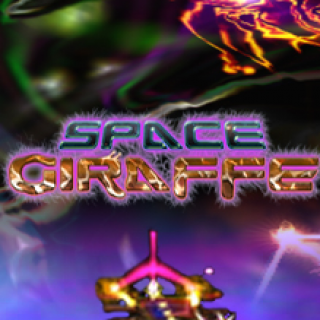
Space Giraffe is Llamasoft's most divisive game and, in retrospect, one of its most deliberate artistic statements. Released on Xbox Live Arcade in 2007 and subsequently on PC via Steam, it is a tube shooter in the Tempest tradition pushed to visual extremes that proved too much for many players at launch. Minter designed it for people who already understood Tempest. Everyone else found something they could not read. Both reactions were correct, and the divide between them is still unresolved.
Every Llamasoft Instinct Turned to Eleven
Space Giraffe extended the Tempest 2000 lineage with the VLM aesthetics pushed as far as the Xbox 360's processing power allowed. The tube geometry is present, the rim-shooting mechanic is present, the power-up philosophy is present - but the visual layer is substantially more dense than anything Minter had produced before. Every game element generates a corresponding visual response: enemy positions, power states, danger levels, score multipliers - all represented through procedurally generated colour, geometry, and motion.
Minter developed it over two years, and the accumulation of ideas is visible in the finished product. Space Giraffe is not a simple game presented with complex visuals - the visual complexity is the game's interface language, and the depth it represents is substantial. Understanding what the screen is showing takes time, and the game is not designed to accelerate that understanding for players who do not bring prior experience to it.
"The noise IS information. Players who understood Tempest could read it - the colours, the shapes, the way the field reacts. The ones who said they couldn't see what was happening were playing the wrong game, or hadn't given it enough time. I made it for people who've been playing this style of game for years. That's a small audience and I knew that."
Jeff Minter, llamasoftblog.blogspot.com, 2007
The Game That Requires a Vocabulary to Play
Space Giraffe's tube geometry functions similarly to Tempest 2000: the player ship moves along the rim, fires toward the far end, manages the flanks. The enemy types are more varied and their behaviours more complex. Critically, the visual language that represents all of this is procedurally generated from the game state - which means that a player who cannot read that language cannot effectively play the game.
Players who invest the time to learn the visual vocabulary describe the experience as one of the most satisfying games in the Tempest lineage: responsive, deep, with a skill ceiling high enough to reward extended mastery. The controversy around Space Giraffe is not about whether it is a good game - it is about whether a good game that only reveals itself to a specific kind of player can still make a claim to be widely recommended.
A Visualiser That Shoots Back
The Xbox 360's processing power allowed Minter to integrate the VLM aesthetic into the core gameplay in a way that the Jaguar hardware had not permitted. In Space Giraffe, the visual layer is not decorative - it is generated in real time from the game's state and communicates that state to the player. The game runs the visualiser and the shooter simultaneously, and they are the same program.
This is the realisation of an idea Minter had been developing since the Jaguar CD VLM in 1994: a game where the visualiser and the player experience are not separate things. Space Giraffe is the most complete implementation of that idea in his catalogue.
Seven Out of Ten and a Divided Community
Eurogamer awarded Space Giraffe 7/10, praising the design ambition while noting the accessibility concerns that the visual density created. The review represented the specialist gaming press fairly: critics who understood the genre context rated it highly; the general player community, reflected in Metacritic user scores significantly lower than the critic aggregate, found it impenetrable.
See the reviews page for period coverage and retrospective analysis. The divide between critical and commercial reception makes Space Giraffe one of the most documented cases in gaming of a game that succeeded artistically and struggled commercially for the same reason.
The Reappraisal Is Still Underway
Space Giraffe is available on Steam, where it has found a more receptive audience than the XBLA launch suggested was possible. Retrospective coverage in gaming press and YouTube criticism has consistently placed it in the "misunderstood classic" category - a game that rewards the investment its early reception discouraged players from making.
Its influence on Minter's subsequent work is visible in Polybius (2017, PlayStation 4) and Tempest 4000 (2018), both of which carry forward the VLM-integrated aesthetic in forms calibrated to be more immediately accessible than Space Giraffe proved. Space Giraffe is in the catalogue with platform and play details.