1961
Born in Nagoya, Aichi Prefecture
Koji Kondo was born on August 13, 1961, in Nagoya, the fourth-largest city in Japan. He grew up playing piano and was drawn to jazz, classical music, and popular music from an early age. His formative musical influences spanned ragtime, jazz harmony, and the Western classical tradition.
He went on to study at the Osaka University of Arts, majoring in industrial design with a focus on synthesizer music - a combination that would prove ideal for the emerging field of video game audio.
1984
Nintendo Hire - The First Sound Employee
Kondo joined Nintendo in 1984 as the company's first dedicated sound staff member. Before his arrival, audio at Nintendo was handled by hardware engineers and programmers working alongside their primary responsibilities. Kondo was hired specifically to bring musical expertise to game sound design.
His first credited work was on early arcade and Famicom titles. The role was new enough that Kondo effectively invented the position from scratch - establishing workflows, hardware constraints (the NES Ricoh 2A03 offered only four simultaneous sound channels), and a philosophy for game music that would shape the industry.
1985
Super Mario Bros. - The Breakthrough
Super Mario Bros. (Famicom / NES, 1985) was Kondo's breakthrough title and one of the most important game soundtracks ever composed. Working alongside Shigeru Miyamoto, who described the emotional requirements of each game section, Kondo composed five distinct musical environments:
- Overworld (Ground Theme) - major key, upbeat, adventurous
- Underground - chromatic, repetitive, subterranean tension
- Underwater - 3/4 waltz time, floating and dreamlike
- Castle / Boss - staccato, dissonant, threatening
- Starman - rapid ascending major figure, invincibility
Each theme was designed to loop without fatiguing the player - a level might be replayed many times, so the music had to sustain without becoming oppressive.
"I tried to make music that would not be annoying even after being heard many times. I wanted the music to be soothing and enjoyable, so that even if the player failed, they would still feel like trying again."
- Koji Kondo, paraphrased from Iwata Asks: Super Mario Bros. 25th Anniversary
1986
The Legend of Zelda - Adventure and Mystery
The Legend of Zelda (Famicom Disk System / NES, 1986) required a completely different approach: where Mario was bouncy and upbeat, Zelda needed to convey adventure, mystery, and the vastness of an open world. Kondo's overworld theme became one of the most recognisable pieces of music in video game history.
The Famicom Disk System version benefited from enhanced audio hardware, allowing richer texture than the standard NES cartridge. The Zelda main theme went through significant iteration before reaching its final form; the brief of "adventure and mystery" was the driving compositional goal throughout.
1987–1990
NES Golden Era - Zelda II, SMB2, SMB3
The late NES period produced a string of Kondo scores. Zelda II: The Adventure of Link (1987) featured a more rock-influenced, upbeat score - a deliberate departure from the original's orchestral grandeur that matched the side-scrolling action gameplay. Super Mario Bros. 2 (1988, North America) retained the musical language of the original while introducing new themes for the Doki Doki Panic-derived gameplay.
Super Mario Bros. 3 (1988 Japan, 1990 North America) represented the fullest expression of Kondo's NES work. The expanded world-map structure required distinct music for eight separate worlds plus the map screens, airship sequences, and fortress levels - pushing the NES audio hardware to its limit while maintaining the playful, upbeat identity of the Mario series.
1990–1995
SNES Era - Super Mario World, A Link to the Past, Yoshi's Island
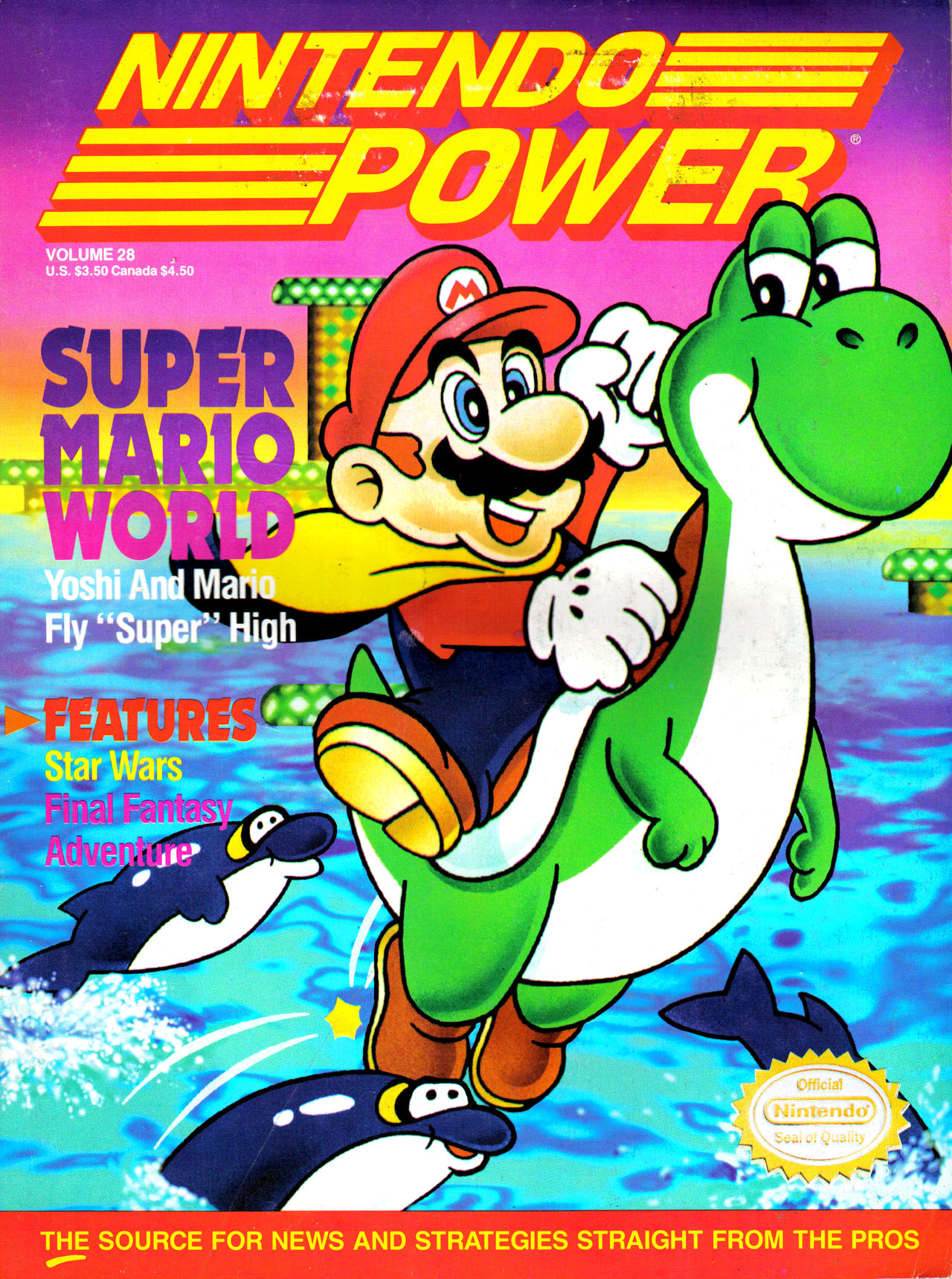
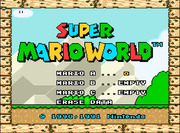
The Super Nintendo's Sony SPC700 audio chip was transformative: eight channels of sampled audio enabled Kondo to achieve richness and texture impossible on the NES. Super Mario World (1990) launched with the SNES as its pack-in title - a score that combined Mario's trademark cheerfulness with the new hardware's expressiveness, featuring sampled percussion and more sophisticated harmonic movement.
The Legend of Zelda: A Link to the Past (1991) is widely considered among the finest SNES scores. The Light World / Dark World dual-theme system - where each area had a corresponding "dark" version - was a compositional and structural achievement that served the game's story directly. The Hyrule Castle theme, the Dark World overworld, and Ganon's Tower remain some of the most celebrated tracks in game music.
Yoshi's Island (Super Mario World 2, 1995) represented Kondo's most distinctive creative departure: a deliberately acoustic, childlike score using xylophone, marimba, and toy-like timbres to match the game's crayon-drawn aesthetic. The score's unusual warmth and innocence remain unique in the Nintendo catalogue.
1996–1998
N64 Era - Super Mario 64, Ocarina of Time
The transition to 3D gameplay required a fundamental rethinking of game music's role. Super Mario 64 (1996) needed music that could sustain open exploration without driving the player mad - ambient, looping tracks that supported the sense of space without demanding attention. Kondo adapted his compositional style significantly: Bob-omb Battlefield's bouncy energy, Dire Dire Docks's atmospheric calm, and the Bowser battle's menacing urgency showed the range now expected.

The Legend of Zelda: Ocarina of Time (1998) is widely regarded as one of the greatest video games ever made - and its score is central to that reputation. Co-composed by Kondo, Toru Minegishi, and Shinobu Tanaka, it introduced the Ocarina as a gameplay mechanic: songs such as Saria's Song, the Song of Time, and Epona's Song were designed as both story beats and playable musical pieces, creating an unprecedented integration of music and gameplay.
2000 – present
Modern Era - Supervisor, Fellow, Legacy
From the 2000s onwards, Kondo moved into a supervisory and senior compositional role at Nintendo, contributing to and overseeing scores for the Super Mario Galaxy series, Wii Sports, and later Nintendo Switch titles. As Nintendo's in-house sound team expanded, Kondo trained and mentored new composers while maintaining direct creative involvement in flagship titles.
He holds the title of Senior Officer at Nintendo's Entertainment Planning & Development division as of the early 2020s - a recognition of his foundational contribution to the company's creative identity. The Super Mario Bros. overworld theme was included in the United States National Recording Registry in 2023, making it the first video game music to receive that honour.
"I always try to make music that serves the game - music that makes the player feel what the game needs them to feel, rather than music that stands apart and says 'listen to me.'"
- Koji Kondo, paraphrased from various Nintendo interviews
Kondo in Context
A retrospective on Nintendo's audio history and Koji Kondo's role in shaping game music as a discipline.