Super Mario Bros. - Five Themes, One Discipline
Super Mario Bros. (Nintendo, 1985) was not the first game with music. It was the first game where music was a designed system - every theme deliberately engineered for a specific psychological function and a specific gameplay context. Koji Kondo composed five distinct environments: Overworld, Underground, Underwater, Castle, and Starman, plus a Victory Fanfare. Together they constitute one of the most studied and performed soundtracks in music history.
The NES hardware imposed extreme constraints: the Ricoh 2A03 processor offered two pulse-wave channels, one triangle-wave channel, one noise/percussion channel, and a DPCM sample channel. Every note had to earn its place. What emerged from those constraints was not a compromise but a discipline - music of remarkable efficiency and emotional precision.
See the complete works catalogue for Kondo's full discography, and the People page for his biography and collaborators. The Music page covers the broader musical legacy.
The Twenty-Two-Year-Old's First Major Assignment
Kondo joined Nintendo in 1984 aged 22 as the company's first dedicated sound employee. His first major project was Super Mario Bros., then in development under Shigeru Miyamoto at Nintendo R&D4. Miyamoto's process was to describe the emotional atmosphere of each game section before Kondo composed a note. In the Iwata Asks interview for the 25th anniversary of Super Mario Bros., Kondo described this approach: Miyamoto gave him an image of what each area should feel like - what the underground conveyed, what the overworld meant - and Kondo translated those images into music.
"Miyamoto told me what image each area was supposed to convey. For the overworld, he wanted something wide open and bright - like going outside to play. For the underground, something cramped and tense. I composed each piece to match that image."
- Koji Kondo, Iwata Asks: Super Mario Bros. 25th Anniversary, Nintendo, 2010
The result was a score in which every musical decision traces back to a gameplay or emotional function. Nothing in the Super Mario Bros. soundtrack exists for compositional self-expression alone.
Eight Seconds to Hook You - The Five Themes
Theme 1 - Overworld (Ground Theme)
C major · 4/4 · approx. 80 secondsThe Ground Theme is written in C major, upbeat, and precisely structured to loop without betraying where it restarts. It has been performed by orchestras, covered by thousands of musicians, and is now part of the United States National Recording Registry. At typical NES play speed, the approximately 80-second loop completes without the player noticing the join.
The major key was a deliberate psychological choice: when a player dies or fails, cheerful background music reduces the sense of hopelessness and encourages another attempt. The music's positivity directly serves replayability.
Theme 2 - Underground
Minor · 4/4 · chromatic bass lineThe Underground theme is built on a chromatic, repetitive descending bass line that creates subterranean unease without being explicitly threatening. Where the Overworld is open and optimistic, the Underground is cramped and claustrophobic - exactly the brief Miyamoto gave Kondo for the underground levels.
The chromatic bass line (movement by half-steps rather than diatonic steps) produces tension through harmonic ambiguity. The listener cannot be certain where the music is heading - mirroring the player's uncertainty in the darker, more enclosed underground stages.
Theme 3 - Underwater
3/4 waltz time · floating qualityThe Underwater theme is unique among the five in using 3/4 time - a waltz meter that gives it a floating, dreamlike quality quite different from the driving 4/4 of the other themes. The slower harmonic movement and legato melodic lines convey the resistance and weightlessness of movement through water.
The choice of 3/4 was a direct compositional response to the gameplay: swimming in Super Mario Bros. is slower and more deliberate than running on land. The music's rhythmic identity mirrors the physical sensation of moving through water.
Theme 4 - Castle / Boss
Staccato · dissonant intervals · chromaticThe Castle theme escalates the tension of the Underground theme into something more explicitly threatening. Staccato chromatic figures and dissonant intervals create a sense of industrial dread - the castle levels are the game's most dangerous environments, and the music communicates that unmistakably.
Like the Underground theme, Kondo calibrated the Castle music to be threatening without being oppressive. A player who finds the music hopeless will disengage; a player who feels challenged and tense will lean in. The Castle theme walks that line precisely.
Theme 5 - Starman (Invincibility)
Rapid ascending major figure · accelerated tempoThe Starman theme is among the most effective pieces of functional music ever written. When Mario touches a Super Star and becomes temporarily invincible, the music shifts to a rapid, ascending major-key figure at a dramatically faster tempo. The effect on the player is immediate: aggression rises, confidence soars, the desire to destroy everything in sight spikes.
This is music functioning as a psychological trigger. The major key signals safety and opportunity; the faster tempo creates urgency and exhilaration; the ascending figure suggests ascent, power, and invulnerability. Every compositional element reinforces the game state.
Victory Fanfare - Under Three Seconds of Dopamine
The Victory Fanfare lasts under three seconds. In that time it delivers a complete emotional reward: a rising figure that resolves triumphantly, timed to fire at the exact moment of achievement. Its brevity is essential - a longer celebration would slow the game's pace and reduce tension. Under three seconds is enough to feel rewarded, not enough to disengage.
Sold Out, Studied Forever
Super Mario Bros. sold approximately 40 million copies on the NES - the best-selling cartridge game in history at the time. Contemporary reviews praised the game but rarely singled out the music specifically; in 1985, game music was not yet a critical category. The soundtrack's significance was understood in retrospect. By the 2000s, the Overworld theme was being performed in orchestral concerts and written about by musicologists.
In 2023, the Super Mario Bros. Overworld theme became the first piece of video game music included in the United States National Recording Registry - recognising its cultural, aesthetic, and historical significance. The Registry cited the theme's "indelible mark on American culture." It was composed in 1985 on a four-channel NES chip by a 23-year-old who had been hired as Nintendo's first sound employee the previous year.
First into the National Recording Registry
The Super Mario Bros. Overworld theme has been performed at the BBC Proms, at Carnegie Hall, at Video Games Live concerts worldwide, and by orchestras on every continent. OverClocked ReMix hosts hundreds of Super Mario Bros. arrangements by fans across forty years. The theme's harmonic and melodic structure is sturdy enough to support radical reinterpretation without losing recognisability - a mark of compositional strength rarely achieved.
The Legend of Zelda - Adventure in Nine-Eight Time
Twelve months after Super Mario Bros. shipped, Kondo composed another score that would prove equally enduring. The Legend of Zelda (Nintendo, NES/Famicom Disk System, 1986) was a completely different kind of game - open-world, non-linear, exploration-driven - and it demanded a completely different kind of music.
Where Super Mario Bros. is propulsive and reactive, Zelda is expansive and atmospheric. The main overworld theme does not push the player forward; it opens the world up and lets them feel its scale. It is music composed for wonder rather than momentum.
See the catalogue for the full Zelda discography, and the Music page for its orchestral legacy.
Two Hardware Versions, One Theme
The Legend of Zelda was originally designed for the Famicom Disk System in Japan, which included a wavetable synthesis expansion channel not present on the NES cartridge. Kondo composed the original FDS version using this additional channel, which could produce warmer and more orchestral timbres than the standard NES pulse waves. When the game was adapted to NES cartridge format for Western markets, the score had to be rearranged to work within standard hardware constraints.
The main overworld theme survived the transition intact in structure, but lost the FDS channel's warmth. The NES cartridge version is the version most players know - thinner in timbre, but no less effective in function.
"For Zelda, the music had to convey the feeling of looking out over a vast world you hadn't explored yet - the excitement of what lay ahead before the adventure had properly begun."
- Koji Kondo, Nintendo
An Irregular Meter for an Open World
The Zelda main overworld theme runs in 9/8 time - three groups of three eighth notes, a meter almost never used in game music of the era. Standard game music sat firmly in 4/4. Kondo's choice of 9/8 gives the Zelda theme an inherent restlessness: it does not settle into a predictable groove, always pulling forward in its unusual triple groupings.
This was a deliberate compositional choice to convey the spirit of exploration. A 4/4 theme would feel like a march - purposeful, directional. The 9/8 meter feels like discovery: no obvious destination, always moving, something new over every bar.
The dungeon music takes a contrasting approach: a repetitive, chromatic loop with an oppressive, enclosed character. The juxtaposition reinforces the structure of the game itself - freedom in the overworld, danger in the dungeons. The triforce fanfare is brief and triumphant, functional music at its most efficiently rewarding.
Nintendo Power's First Cover Game
The Legend of Zelda was one of the first games covered by Nintendo Power magazine, which launched in 1988 with a heavy focus on the game. Contemporary reviews in Japanese gaming magazines praised its scope and originality; Western coverage focused on its non-linear structure, which was genuinely novel in console gaming. The music was not yet reviewed separately, but the overworld theme entered popular consciousness almost immediately alongside the Mario theme.
A Theme Nintendo Has Never Retired
Every Legend of Zelda game since the 1986 original has used or referenced Kondo's main theme. It has appeared in orchestrated form in The Wind Waker, Twilight Princess, and Breath of the Wild. Nintendo performs it at every major Zelda concert event. The melody is now an official symbol of the franchise, as recognisable as the Triforce. Its 9/8 time signature - unusual in 1986 - has been preserved across every arrangement for forty years.
Super Mario World - Eight Channels and a Reverb Unit
When the Super Nintendo launched in Japan in November 1990, it launched with Super Mario World - and with Kondo's first score for 16-bit hardware. The jump from NES to SNES was not just technical. It was the first time Kondo had stereo output, eight audio channels, sampled instruments, and a built-in reverb unit to work with. The question was what to do with all of it.
The answer Kondo gave was not to use every new capability loudly. Super Mario World's soundtrack is more varied and richer than its NES predecessors, but it retains the same functional discipline: every piece serves a gameplay state, every loop is designed not to fatigue.
See the complete works catalogue for the full SMWorld soundtrack listing.
Sony's Chip, Kondo's Score
The SNES SPC700 audio chip, designed by Sony, was a significant departure from the NES's Ricoh 2A03. It supported eight channels of ADPCM (Adaptive Differential Pulse-Code Modulation) sample playback and a DSP with built-in reverb effects. Kondo could use recorded instrument samples rather than synthesized waveforms for the first time - sampled brass, strings, and percussion rather than pure square waves.
The reverb unit was applied contextually across the game. Different areas use different reverb settings to reinforce the sense of environment. The Cape theme's open, flowing quality was partly achieved through the SNES DSP's stereo reverb applied to sustained chords - a technique that would have been impossible on NES hardware.
"With the SNES, we could use sampled sounds - recorded instrument sounds - for the first time. The question was how to use that capability in a way that still felt like Mario."
- Koji Kondo, Nintendo
Six Overworld Variations and a Cape in the Wind
Super Mario World does not have a single overworld theme - it has a system of overworld variations. The main theme (Yoshi's Island) establishes the cheerful baseline. The Forest of Illusion variant is more mysterious and muted. The Star World theme is dreamy and detached. Each variation maintains melodic kinship with the others while adapting to its area's character.
The standout original piece is the Cape theme, which plays only when Mario gains the Cape powerup and sustains extended flight. The music shifts to an open, soaring arrangement - flowing in a way that the standard overworld does not. It is conditional music tied directly to the player's moment of triumph and freedom, playing only while that freedom lasts.
The Athletic theme is the other major set-piece: propulsive, rhythmically inventive, pushing the player forward through the game's timed and athletic platforming sections.
Twenty Million Cartridges
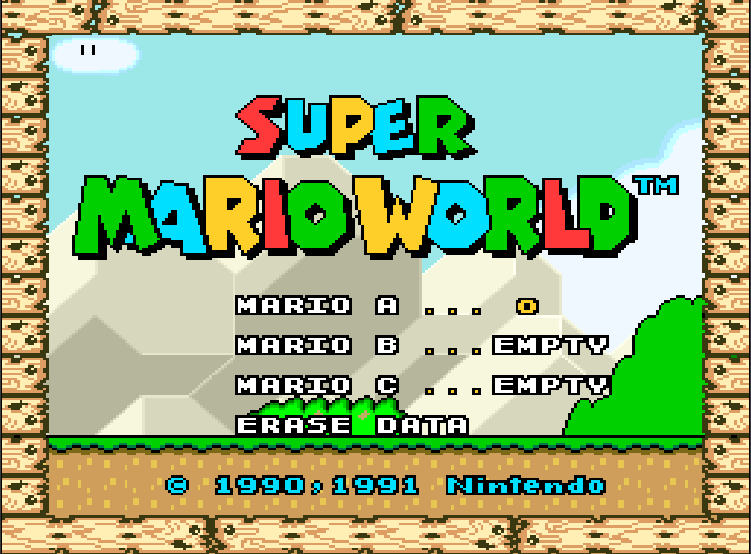
Super Mario World sold approximately 20 million copies lifetime, making it one of the best-selling SNES games. Contemporary reviews praised the game as a definitive demonstration of the SNES's capabilities. The music was cited as part of the hardware's technical demonstration - reviewers who had spent years with NES audio noted the audible leap in quality and richness.
The Athletic Theme That Kept Running
The Athletic theme from Super Mario World has appeared in multiple subsequent Mario games, making it one of the most reused pieces of music in the franchise outside the original SMB themes. The Cape theme became a fan favourite specifically for its connection to the sense of free flight - the only Mario game moment where the music exists exclusively to reward a specific kind of mastery.
Super Mario 64 - Music Without a Stage
Super Mario 64 (Nintendo, N64, 1996) was the first 3D Mario and one of the first 3D platformers of any kind. Kondo had to invent an approach to music for three-dimensional space - a problem that did not exist in 2D game design. In 2D Mario, music ties cleanly to a stage: one theme per level, looping until the level ends. In 3D, the player moves continuously through space. There are no clear stage boundaries.
The solution Kondo developed for SM64 was an early form of adaptive audio: musical elements that shift based on game state, proximity to hazards, and the player's position within a course. It was primitive by modern standards, but it was among the first console games to implement dynamic music in a meaningful way.
See the catalogue for the full SM64 soundtrack, and the People page for Kondo's biography.
Composing for Three Dimensions
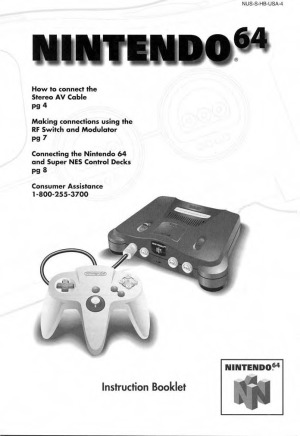
SM64 development ran from approximately 1995 to 1996 at Nintendo EAD under Shigeru Miyamoto. The N64's hardware used the Roland SFX audio engine, which offered 100-channel polyphony and ADPCM sample playback - substantially more capable than the SNES SPC700. Kondo had more voices and higher-quality samples than ever. The challenge was not capability but structure.
In the older model, the player is always in a clearly defined space: this level, this theme. In SM64, the player enters a course through a painting and can roam freely. There is no "level beginning." Kondo adapted by composing themes that could sustain themselves as ambient presences rather than foregrounded tracks - music that the player could exist inside rather than listen to.
"In 2D games, there's a clear beginning and end to each stage. In Super Mario 64, you explore freely. The music had to work in a completely different way - not a loop tied to a stage, but something that could breathe with the space."
- Koji Kondo, Nintendo
Bob-omb Battlefield to Dire Dire Docks
Each SM64 course has a distinct musical identity matched to its visual and gameplay character. Bob-omb Battlefield - the first course players enter - is bright, energetic, and propulsive: an announcement that 3D Mario has arrived and is ready. Dire Dire Docks, the underwater course, is the opposite: slow, ambient, contemplative. Its looping arpeggio and sparse melody create an almost meditative atmosphere.
The Bowser encounter themes escalate through the game's three meetings, each more ominous and industrial than the last. Koopa's Road - the approach to the final Bowser - is relentless and chromatic, signalling that the game's long adventure is ending. The hub world, Peach's Castle, uses a gentle exploratory theme that makes the central space feel safe and expansive.
Part of an Impossible Leap
Super Mario 64 received a 9.8/10 from Nintendo Power, 98/100 from GameFan, and near-universal critical acclaim as a landmark in game design. The music was praised as part of the total N64 leap - audible as well as visible. Critics noted that the N64's audio capabilities, as demonstrated in SM64, were as significant as its graphical jump.
Dire Dire Docks Never Gets Old
Super Mario 64's soundtrack has accumulated a long legacy of arrangements and re-recordings. Dire Dire Docks, in particular, became a cultural phenomenon for its ambient quality - remixed thousands of times, used in video essays and relaxation playlists, and regularly cited as a reference point for peaceful game music. Bob-omb Battlefield is widely recognised as the sonic identity of early 3D gaming. The SM64 score proved that Kondo's compositional discipline was not hardware-specific: the same design thinking that worked on four NES channels worked on the N64's far more capable audio engine.