Japan's Biggest Day Off
Dragon Quest III: The Seeds of Salvation was released in Japan on February 10, 1988. It sold approximately 3.8 million copies in Japan - the best-selling Famicom RPG at that time. What distinguished its release from every previous game was the degree to which it disrupted daily Japanese life: students skipped school, police managed queues outside game stores, and the Japanese government subsequently recommended that major game releases occur on Sundays or school holidays. The event was termed the "Dragon Quest riots" in the Japanese press.
The music was part of this. Dragon Quest III's score was already known before the game shipped: the Symphonic Suite Dragon Quest III, performed by the NHK Symphony Orchestra and conducted by Sugiyama, had been released as a commercial album. Players came to the Famicom version already knowing Loto's Theme. The opening Overture was a reunion with music they had encountered on the concert hall stage.
Sugiyama's score for Dragon Quest III is the fullest expression of his compositional approach within the Famicom's hardware constraints - every theme conceived orchestrally first, then arranged for the Ricoh 2A03's five channels. It is the game that made the Dragon Quest Overture Japan's most recognised piece of video game music.

Dragon Quest NES era - the overworld that players explored while Voyage played. See the complete works catalogue for all titles.
Three Correspondents, One Franchise
Dragon Quest III was built by the same creative triumvirate that had delivered the first two games: Yuji Horii (scenario and game design), Akira Toriyama (character and monster design), and Koichi Sugiyama (music). None of them worked at the same company. They were commissioned collaborators - Horii and Toriyama with Enix, Sugiyama brought in as an outside contractor. By Dragon Quest III, this working relationship was an established practice with shared expectations. Read more about all three collaborators on the people page.
Sugiyama's entry into the Dragon Quest project had begun with a fan letter. He had sent correspondence praising the Portopia Serial Murder Case (1983, Chunsoft) - the same Chunsoft whose lead programmer, Koichi Nakamura, would be essential to the Dragon Quest engine. Enix followed up with a form letter inviting composers to submit material for their new RPG project. Sugiyama was 55, already one of Japan's most productive commercial composers. He replied, submitted a theme, and received the commission. The accidental nature of the introduction only makes the 35-year relationship that followed more striking.

For Dragon Quest III, Sugiyama composed each theme to serve a specific gameplay function. Horii's briefs to Sugiyama were emotional rather than musical - he described what each context should feel like, not what notes to use. Sugiyama, trained in classical composition and experienced in writing functional music for television and advertising, understood the approach. The Overture needed to communicate heroism and arrival. The Dungeon needed confinement. Voyage needed freedom. Battle for Glory needed urgency that could sustain fifty repetitions without inducing fatigue.
The score was composed as full orchestral writing and then arranged down to the Famicom's five audio channels. The NHK Symphony Orchestra recorded the orchestral version before the game shipped - releasing the Symphonic Suite Dragon Quest III as a commercial album in 1988. Players could hear the music as Sugiyama had originally conceived it before they encountered the chip arrangement in the game.
"Possibly the most famous piece of video game music in Japan."
Dragon Quest fan wiki, on Loto's Theme - the Dragon Quest Overture first stated in full in Dragon Quest III
A Theme for Every Place You Go
Dragon Quest III is a turn-based RPG in which the player creates a party of adventurers and travels a world modelled loosely on the real Earth - a structural conceit that pays off at the game's conclusion, when the world is revealed to be a prequel to Dragon Quest I's setting. Combat is menu-driven and triggered by random encounters in the field. The game has a day-night cycle and a character class respecialisation system - mechanics ahead of most RPGs of the period.
Sugiyama composed a distinct theme for each gameplay context. The town theme plays in populated settlements. The castle theme plays in royal courts. The Overture plays at the title screen. Voyage plays at sea. The Dungeon theme plays underground. Battle for Glory plays in random encounters. The boss battle, the ending sequence - each has its own music. This granularity of musical context was unusual for the Famicom era and created strong emotional associations: players formed a conditioned response to each theme based on what it had come to mean in play.
Battle for Glory - Combat Music
Duple Metre - Minor Key Centre - Ostinato Bass"Battle for Glory" is the random-encounter battle theme for Dragon Quest III. It contrasts sharply with the Overture's triumphant major key: the battle music is urgent, propulsive, and rhythmically insistent. Sugiyama uses an ostinato bass pattern to create a sense of unrelenting forward motion - the fight must continue, there is no pause.
The harmonic language shifts between minor and relative major, creating a pattern of tension and partial resolution that mirrors the combat loop: danger, action, and the possibility of survival. The theme loops without fully resolving - each repetition suggests the fight is still ongoing, which is functionally accurate. A player who fights fifty battles hears this theme fifty times. Sugiyama designed it to sustain tension without inducing fatigue.
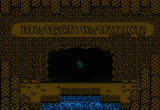
Voyage - Sea Travel Theme
Major Key - 6/8 Compound Metre - Rolling Bass"Voyage" is the theme that plays when the heroes sail the open sea. It is in 6/8 time - compound duple metre that physically evokes the rolling of waves. The bass line moves with a rocking motion; the melody rises and falls like a ship on water.
The choice of major key for sea travel is deliberate: in Dragon Quest III, acquiring the ship is a major story milestone. After hours in dungeons and towns, reaching the ocean means open possibility. Voyage is the most expansive and optimistic theme in the score. In Dragon Quest III's world, the ocean is freedom - and the music makes that unmistakable.
Five Channels, Forty Musicians
The Famicom/NES used the Ricoh 2A03 audio processor with five channels: two square-wave (pulse), one triangle-wave, one noise, and one DPCM (sample) channel. Every Dragon Quest piece from I through IV was arranged for this hardware. The triangle-wave channel provided the bass register - a rounded, continuous tone that Sugiyama used for melodic bass lines in the Overture. The two pulse channels carried the principal melody and countermelody. The noise channel provided drums and atmospheric texture.
The Overture - "Loto's Theme"
March - Major Key - Sonata FormThe Dragon Quest Overture opens every Dragon Quest game. In Dragon Quest III, it appears in its most complete form - the piece that establishes it as the series' primary leitmotif rather than a supporting motif as in the first two games.
Structurally, the Overture is a march in major key with brass-style fanfare writing adapted for the Famicom's channels. What distinguishes it from functional game music is its completeness as a composition: introduction, main theme, contrasting middle section, return, and coda - a compressed sonata form in under two minutes.
- Brass fanfare introduction - signals the start of adventure
- Main theme in major key - heroic, confident, forward-moving
- Contrasting middle section - briefly lyrical and introspective
- Return of main theme - affirmation of the heroic character
- Coda - decisive close, ready for the game to begin
Dungeon - Underground Exploration
Minor Key - Slow Tempo - Sparse Texture"Dungeon" is the most atmospherically distinct theme in the score. Where the Overture is grand and Battle for Glory is urgent, Dungeon is claustrophobic. Sugiyama uses slow tempo, minor key, and a deliberately sparse texture - fewer simultaneous voices - to suggest underground confinement.
The noise channel is used more prominently here than in any other theme: subtle percussive elements that suggest the echoing drip of cave water. This is a skilled arrangement working with a constraint - the noise channel's limited timbral range - rather than against it.

The Overture is performed at the start of every Dragon Quest game - a consistent use of a leitmotif maintained from 1986 through 2017. No other video game composer has applied a single theme with this consistency across four decades of a franchise.
The Government Wrote a Letter
Dragon Quest III sold approximately 3.8 million copies in Japan in 1988, making it the best-selling Famicom RPG at that time. The scale of day-one demand created a public order situation: police were deployed at major retail stores to manage queues. Reports of minor incidents - theft, altercations - appeared in the Japanese press. The Japanese government subsequently issued guidance recommending that major game releases occur on Sundays or school holidays to prevent children skipping school to queue. This guidance was addressed directly to Enix. No Western game publisher had received such attention from any government before. [Source: Wikipedia - Dragon Quest III]
Western reception was substantially different. Dragon Warrior III arrived in North America in 1992, four years after the Japanese Famicom original, localised and published by Nintendo of America. Nintendo Power covered the release and reviewed it positively. Music-specific critical commentary was limited: Western game reviews of the period did not typically engage with game soundtracks at the level of compositional analysis. The cultural gap in the reception of Dragon Quest III is significant - in Japan it was a national event; in North America it was a well-reviewed RPG with a limited audience.

From the Famicom to Carnegie Hall
The Dragon Quest Overture - as stated in full in Dragon Quest III - has opened every Dragon Quest game since. Dragon Quest IV (1990), V (1992), VI (1995), VII (2000), VIII (2004), IX (2009), X (2012), XI (2017): all begin with the same Overture that players first heard as a complete theme in Dragon Quest III. This structural consistency, maintained for 35 years across ten main-series titles, is a design decision as much as a musical one. Each new Dragon Quest game starts with a familiar greeting.
The Dragon Quest Overture has been performed at Beethoven Hall in Bonn and Carnegie Hall in New York. Sugiyama conducted both performances personally. These concerts placed a piece of video game music in the same venues as the European classical repertoire - not as a curiosity, but as a scheduled item in a concert programme. For Sugiyama, this was always the point: the Famicom arrangement was the reduction; the orchestral form was the original.
Dragon Quest III received a full remake as Dragon Quest III HD-2D Remake, released in November 2024. Sugiyama's score was re-recorded for the release - among the last Dragon Quest work he completed before his death in September 2021. The remake's critical reception confirmed the original's standing: three decades on, Dragon Quest III is the reference point for what a Famicom RPG can be.
The larger legacy is compositional. Sugiyama's method - conceive orchestrally, arrange for hardware - established that video game music could be approached with the same rigour as any other compositional form. Composers working in games after him inherited a higher standard of ambition. The Symphonic Suite format he popularised continues in Japan and internationally. See the music page for the full Symphonic Suite discography.
Dragon Quest III in Context
Hear the full Dragon Quest III OST in gameplay context, and watch Sugiyama conduct the NHK Symphony's orchestral version that players heard before they played the game.
Dragon Quest in the Famicom Years

See the full image gallery on the catalogue page.