Flagship Titles
In-depth articles on Kaiko's three most significant games: the bee shooter that defined the studio, the debut that established its visual identity, and the port that kept a franchise alive on the Amiga.
Apidya (1992)
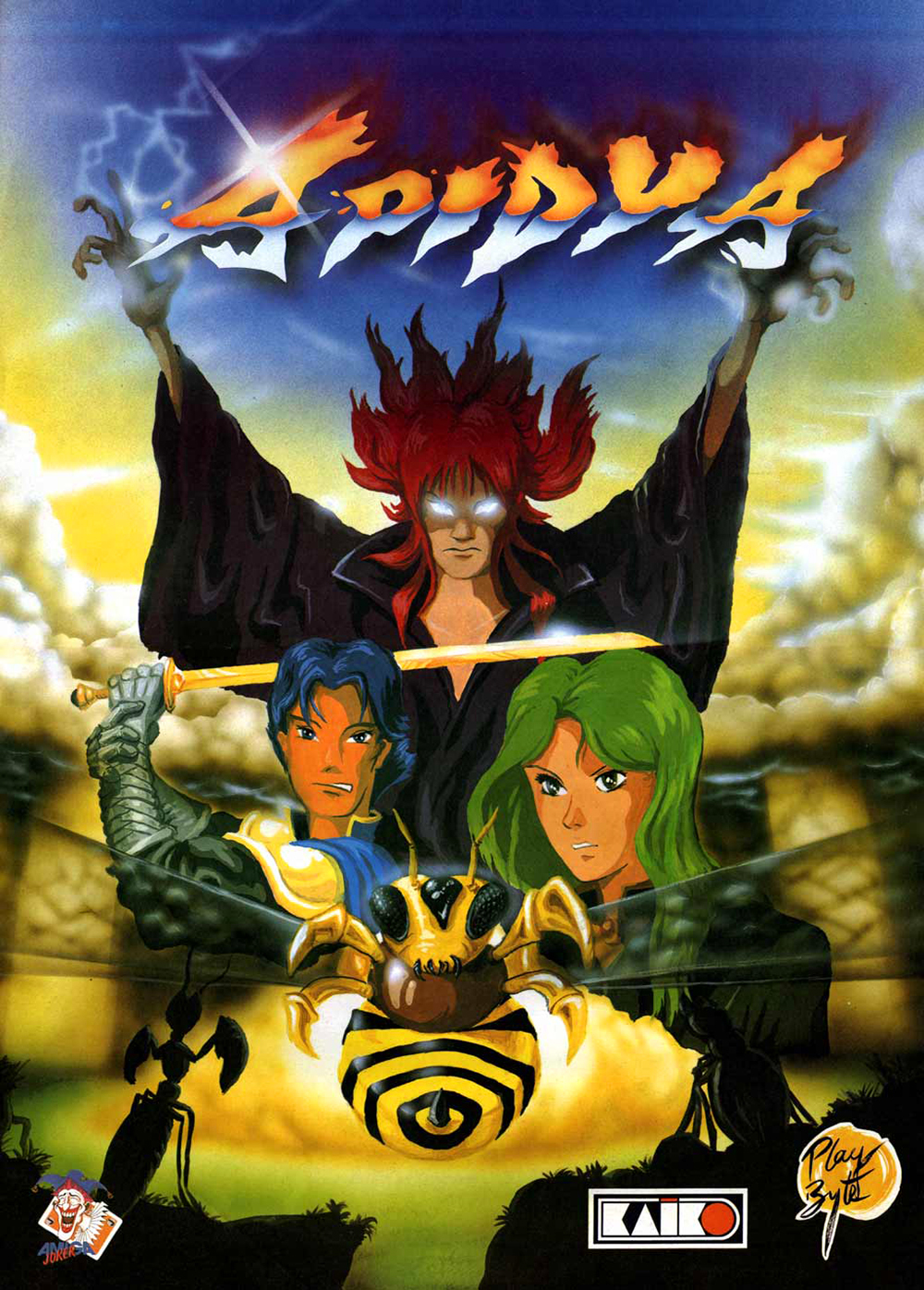
Apidya is a 1992 horizontal shoot-'em-up for the Amiga in which the player controls a bee. That premise alone signals what kind of game this is: not a military shooter, not a space opera, but something stranger and more considered - a game built on Japanese anime aesthetics, an extraordinary TFMX soundtrack, and five stages of increasingly difficult enemy design. It is the game Kaiko is remembered for, and for good reason. No other Amiga shmup matched its combination of visual craft and musical ambition in the same package.
Spring 1990, Before Kaiko Had a Name
Apidya's origins predate Kaiko itself. Frank Matzke confirmed in the nemmelheim.de interview that "the first starts in point of APIDYA however are already from spring '90" - months before the studio was formally established in autumn 1990. The game was conceived by the same three people who would become Kaiko's core: Peter Thierolf (programming), Frank Matzke (graphics and art direction), and Chris Hülsbeck (music and audio).
The creative wellspring was Japanese arcade and console gaming. Matzke brought an unusually deep knowledge of Japanese anime and manga culture to the studio at a time when that aesthetic was barely known in Western Europe outside science fiction fandom. The team looked east for both their visual vocabulary and their gameplay models.
"Quite basically were above all many, many of the classical sega megadrive, pc engine and coin/ops of taito, jaleco, namco, sega, etc - and otherwise stylistic absolutely the, in the western lands at that time still very unknown (at least beyond of 'captain future'), animes and mangas!"
Frank Matzke, Kaiko developer interview - nemmelheim.de
Chris Hülsbeck, who had already established himself as one of the foremost composers for home computer games through his SID and Amiga work, joined the project from its earliest stages. The name Kaiko was chosen as a marketing label while the founding legal entity continued as A.U.D.I.O.S - a distinction that mattered internally but was invisible to players. See the history page for the full account of how A.U.D.I.O.S became Kaiko.
"The idea came from Frank, our graphic-artist (or Art Director ;), who is a big fan of the japanese comic-culture. Additionally the best action- and thinking-games to this time in our opinion came from japan."
Chris Hülsbeck, Kaiko developer interview - nemmelheim.de
Five Stages, One Bee, Escalating Everything
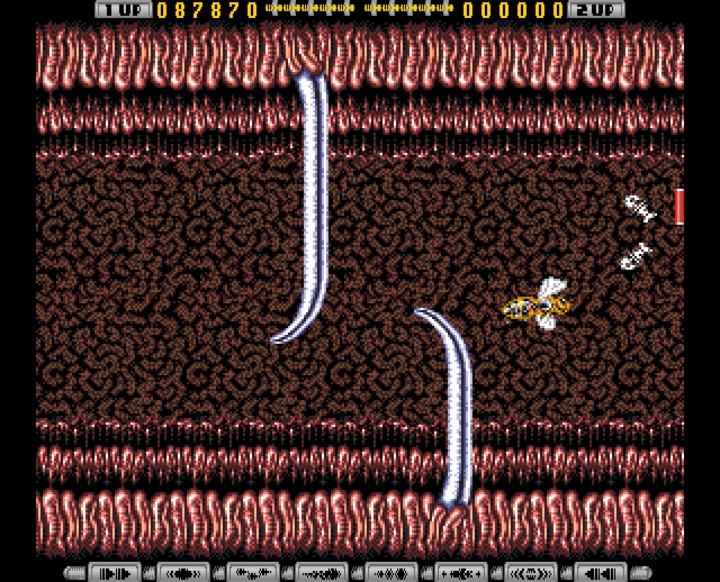
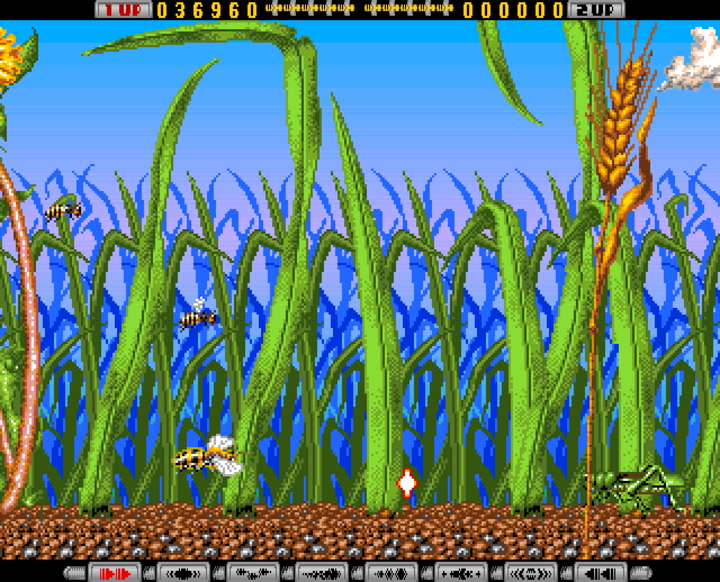
Apidya's premise is precise: Kay, a man transformed into a bee by a witch as punishment for his pride, must recover a magical crystal and break the curse. This narrative - lifted from Japanese anime rather than European fantasy - gave Matzke permission to build a complete visual vocabulary around the natural world seen from insect scale. The result is a game whose environments have genuine internal logic: a flower meadow opening stage, underground mushroom worlds, aquatic passages, and an industrial techno-organic final stage. Every enemy is a creature that belongs in its section. The organic coherence is total.
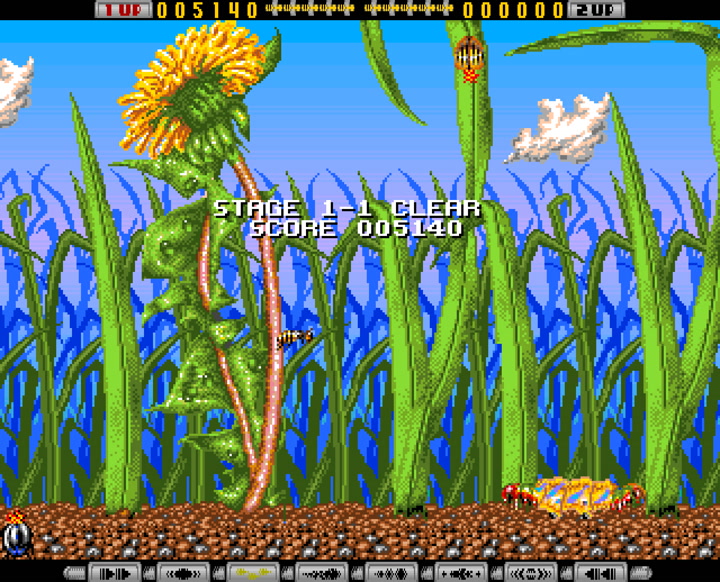
The gameplay structure is in the Japanese shmup tradition - horizontally scrolling stages, a standard shot and a charged shot, dense enemy formations, pattern-based boss encounters. Power-ups transform the bee's weapon into different organic projectiles that maintain visual coherence with the game world: you are not firing bullets, you are firing things a bee might plausibly fire. Weapon loss on death creates tension that rewards careful play - a player who survives will be rewarded; a player who absorbs too many hits will find themselves stripped back to a basic weapon at the worst possible moment.
The difficulty is deliberate and significant. Apidya was aimed at the Amiga enthusiast market, not a mass audience. Enemy patterns require memorisation. The final stages demand patience and precision. This was a conscious design choice rather than a failure of balancing. The Amiga press, who covered the enthusiast market, recognised and rewarded it.
TFMX and the Sound of a Bee in Danger
Chris Hülsbeck's soundtrack for Apidya is the aspect of the game most consistently cited decades after its release. The TFMX format - Hülsbeck's own Amiga tracker format, which he had developed and refined through his earlier game work - allowed sampled instruments to be combined with pattern-based sequencing. The result was a sound closer to a real studio recording than the chip-tuned music typical of the period. Where most Amiga game soundtracks of 1992 used the Paula chip's four channels for melodic sequences, Apidya used them to produce something resembling a small ensemble.
The title theme establishes the game's emotional register immediately: melodic, slightly melancholic, with an underlying urgency that suits Kay's predicament. Each stage has its own musical identity - the flower meadow opening is appropriately peaceful; the industrial final stage is threatening and mechanical. The compositions hold together as a whole: this is a score, not a collection of background loops.
The Mod Archive preserves the TFMX files (IDs: 59145 for Apidya5.TFX, 53218 for Apidya2.TFX). The full soundtrack is available commercially on Bandcamp. See the music page for links and further detail on the TFMX format.
The Amiga Press Was Hard to Impress in 1992
By 1992 the Amiga press had seen years of strong shmup releases. R-Type, Xenon 2, and Turrican had set a high bar. Apidya landed above it. Amiga Power covered the game positively, praising the music and the Japanese aesthetic in terms that reflected genuine enthusiasm rather than routine coverage - this was the publication that distinguished between a technically proficient game and one that had something to say. CU Amiga and ACE gave similarly positive assessments.
The game's Japanese aesthetic was noted as genuinely unusual. Reviewers who had seen hundreds of Amiga titles recognised that Matzke's art direction came from a different tradition - one that most European studios were not drawing from. The combination of that visual identity with Hülsbeck's soundtrack made Apidya identifiable in a crowded market. Not every shmup had a face; this one did.
German-market publications - given Kaiko's Bochum origin - also covered the game. Amiga Games and Powerplay were the key German monthlies for the period, and both had reason to give a German studio's flagship title particular attention.
From Bochum to the Orchestra Pit
Apidya's legacy extends well beyond the Amiga community. Hülsbeck's score was performed at the Symphonic Game Music Concert in Leipzig in 2003, at PLAY! A Video Game Symphony in Stockholm in 2006, and at Symphonic Shades with the WDR Funkhausorchester in 2008. The last of these was a significant production - a major German public broadcaster presenting game music as a concert programme, with Apidya among the selected works. The choice reflects how the game's music had been reassessed over the intervening decade: not as Amiga curiosity, but as substantive composition.
In 2026, ININ Games released Apidya' Special - a remake for PC, PlayStation 5, Xbox Series, and Nintendo Switch. The existence of a commercial remake thirty-four years after the original is an unusual recognition of a game that was, by any commercial measure, a niche Amiga title. See the Modern page for full coverage of Apidya' Special.
For the complete release history across platforms, see the catalogue entry. For Chris Hülsbeck's Kaiko-specific work, see the music page. For Peter Thierolf and Frank Matzke's roles, see the people page.
Gem'X (1991)
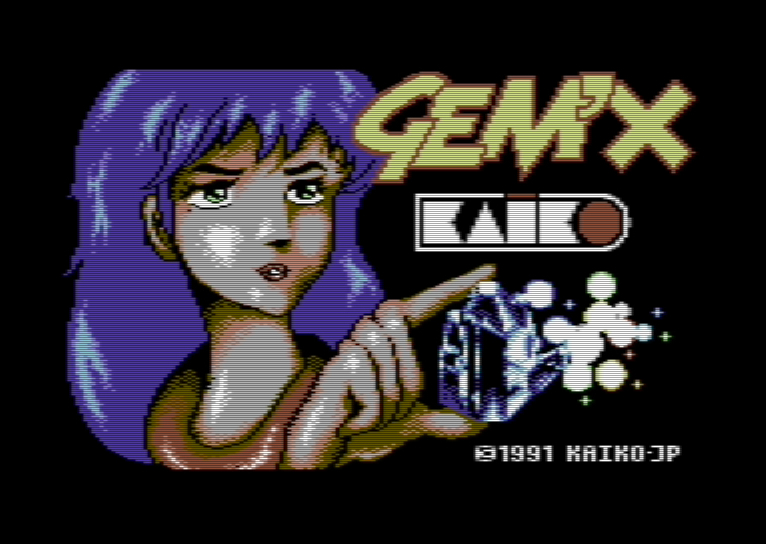
Gem'X was Kaiko's first commercial release and the game that introduced Frank Matzke's anime art direction to the Amiga market. A puzzle-action game built around gem collection, it was commercially successful enough to prompt ports to two additional platforms - and its sequel, Gem'Z, had progressed far enough in development to reach master-disk stage before the project was derailed. The circumstances of that derailment are among the stranger stories in Amiga game history.
Four Platforms, Three That Reached the Shops
Gem'X was published by Demonware - a publishing arrangement that predated the longer-term relationship with Software 2000. Kaiko developed versions for four platforms: Amiga, C64, Atari ST, and PC. All four versions were completed. Only two reached commercial release.
"Gem'X was the first real KAIKO-game and was published via DEMONWARE... developed for c64, atari st, pc and of course Amiga... all Versions were finished, but to my knowledge only the amiga and C64-discs actually reached the stores."
Frank Matzke, Kaiko developer interview - nemmelheim.de
The Amiga version was the definitive release: Matzke's art at full resolution, the Amiga's Paula chip driving Hülsbeck's music, and the platform's four-channel audio giving the soundtrack the texture it needed. The C64 version reached stores alongside it. The Atari ST and PC versions - completed but apparently not commercially distributed - represent a portion of the studio's work that effectively disappeared. See the catalogue for the full platform breakdown.
Gem Collection as a Precise, Spatial Puzzle
Gem'X is not an action game with puzzle elements. The puzzle element is primary: the challenge is understanding how to move through an enclosed stage, collect gems in the correct sequence, and avoid enemy encounters that are governed by deterministic AI patterns. The action comes from executing that understanding quickly and correctly under pressure.
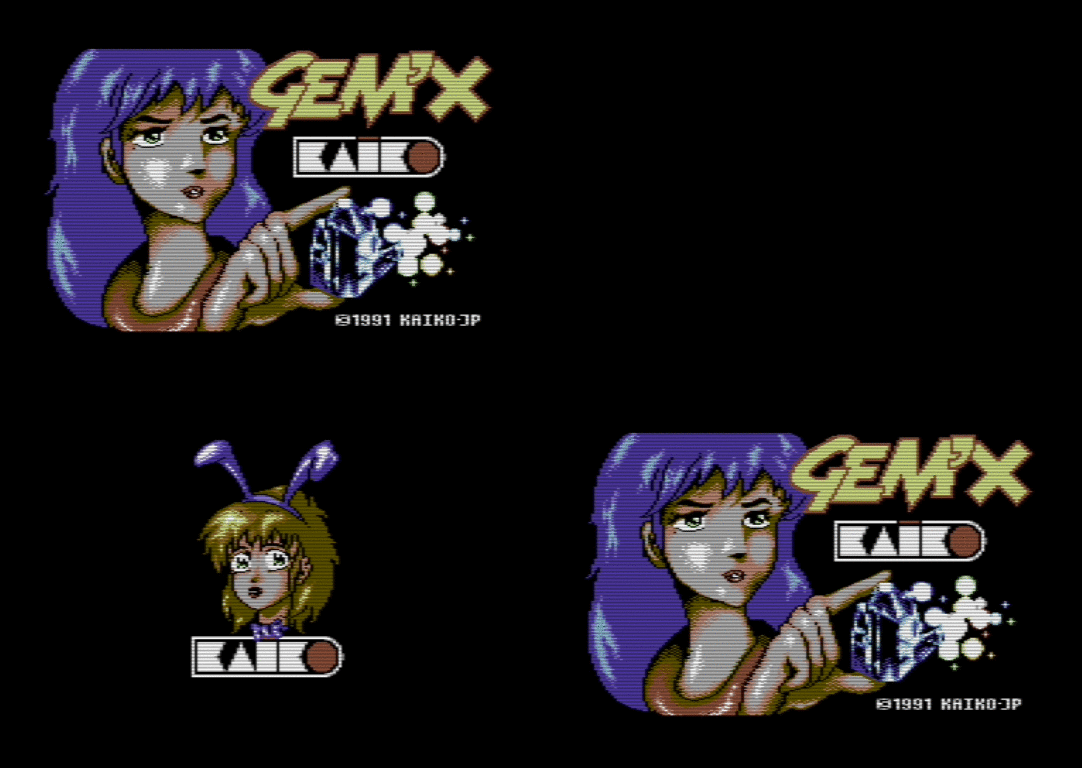
The enemy AI moves predictably but requires careful observation to read. A player who understands the patterns can route through a stage efficiently. A player who does not will encounter enemies at the worst possible moments. This is the design philosophy of the Japanese puzzle-action game - the same games Matzke and Hülsbeck cited as their reference points - translated for Amiga hardware.
The game's abstract gem aesthetic - bright geometric shapes against contained stage backgrounds - gave Matzke room to demonstrate what his art direction could do without the constraints of a specific setting or genre. The stages are visually clean in a way that suggests confidence: no clutter, no ornamentation for its own sake, design in service of readability.
Anime Art on Amiga Before Anyone Else Was Doing It
The Amiga's game aesthetics in 1991 were dominated by two schools: Psygnosis's dark, Rodney Matthews-influenced sci-fi grandeur, and the Bitmap Brothers' clean, metallic style. Both had European roots. Matzke's art direction for Gem'X came from somewhere else entirely - from Japanese animation, from manga character design, from the visual vocabulary of Osamu Tezuka and the studios that followed him.
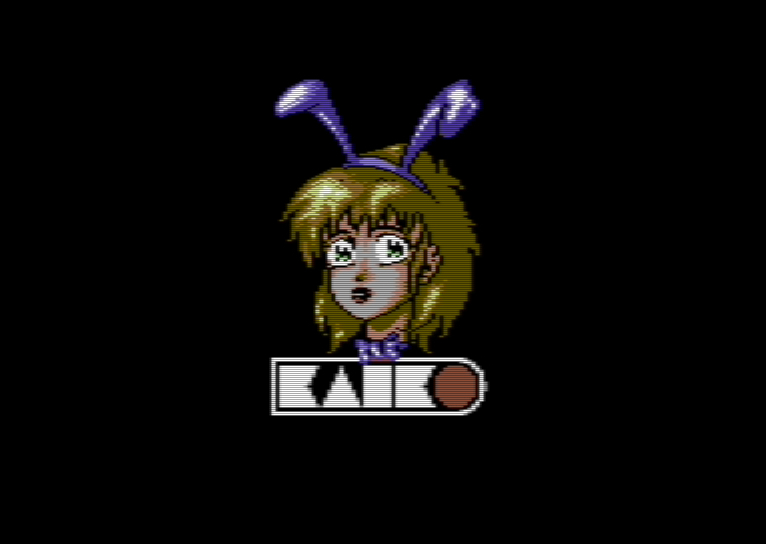
Bold outline work, expressive proportions, saturated palette - these were the signals of a designer who had studied a tradition that Western developers were largely ignoring. For the Amiga market in 1991, this was genuinely unusual. Reviewers noted the Japanese aesthetic; some found it distinctive, some found it surprising, but all found it recognisable as something different. Matzke had no precedent to follow in the European Amiga scene. He was importing a visual language from elsewhere.
This template would be refined in Apidya - more elaborate environments, a more complete world built on the same visual grammar - but Gem'X established that the approach was commercially viable. A small German studio could make an Amiga game that looked like nothing else in the European market and find a paying audience for it.
Commercial Enough to Cross the Channel
The measurement of commercial success for a 1991 Amiga game is imprecise: sales data for most small European studios from the period is not available. The proxy measurement is distribution. Gem'X was developed for four platforms - not two, not three. A studio does not develop four simultaneous versions of a game without expectation of meaningful sales. The decision to complete all four versions simultaneously, even if only two reached market, reflects commercial confidence.
The multi-platform distribution was also a demonstration of technical capability: Kaiko could target multiple hardware architectures in a single project. This made the studio attractive for port work - which is exactly the kind of work they would take on with Turrican 3 two years later.
The Sequel They Never Got to Finish
Gem'Z was planned as the direct sequel to Gem'X. Development progressed far enough to produce complete Amiga and PC versions. The Amiga master disk - the finished production master that would have been duplicated for commercial release - was stolen at a trade fair in Cologne. Software 2000, the publishing partner for this stage of Kaiko's output, declined to continue the project without the Amiga master.
"GEM'Z existed as PC- and Amiga-version. After the amiga-master was stolen us at one of the fairs in cologne, SOFTWARE 2000 refused to still publish the product."
Frank Matzke, Kaiko developer interview - nemmelheim.de
The theft of a master disk was not unprecedented in the games industry, but the consequences in this case were unusually severe. The completed work was lost, and the commercial relationship that might have funded a re-creation of the lost assets did not survive the loss. Gem'Z was never released. The underlying design concept was later acquired by Vision Media, who developed a different game from it for UBI-SOFT on PlayStation - but that project is not Gem'Z and is not Kaiko's work.
See the catalogue for the full list of Kaiko's released and unreleased titles, including Gem'Z and the other projects that did not reach commercial release.
Turrican 3: Payment Day - Amiga Port (1993)
Turrican 3: Payment Day is Kaiko's Amiga port of Mega Turrican, the Mega Drive entry in Factor 5's franchise developed for Rainbow Arts. Kaiko did not create the game - they reproduced it. That distinction matters for understanding what the port demonstrates: not creative vision, but technical competence. Taking a complex, graphically ambitious Mega Drive title and rebuilding it for the Amiga's different hardware required specific skills. Kaiko had them.

Contracted to Move a Mega Drive Game to Amiga
Factor 5 developed Mega Turrican for the Sega Mega Drive, releasing it in 1993. The Mega Drive hardware - a 68000 CPU running at 7.67 MHz, a dedicated video display processor handling sprites, planes, and colour, and the Yamaha YM2612 sound chip with its six FM synthesis channels - was capable of a particular visual and audio style that the platform had developed as its signature. Mega Turrican pushed that hardware hard: large, fast-scrolling levels, detailed sprite work, and a Hülsbeck score that exploited the YM2612's FM channels.
Kaiko's brief was to produce the Amiga version. The Amiga's hardware constraints were different in almost every respect: the OCS chipset handled sprites differently, the colour depth was lower, scrolling required software management rather than hardware plane support, and the Paula chip produced sound through sampled playback rather than FM synthesis. Every system the Mega Drive version relied on had a different analogue on the Amiga.
By 1993, Kaiko was operating under significant financial pressure. Chris Hülsbeck described the period in the nemmelheim.de interview: the company had moved into the red in 1993, partially due to business management problems, and had sought external support that instead resulted in the studio being, in his words, "dismantled systematically." Turrican 3 was produced against this backdrop - a port contract undertaken by a studio fighting for its financial survival.
"1993, the company was deep in the red numbers, what mainly was because of the bad business-management. [...] Instead of helping, finally a well-known German software house dismantled us systematically. I feeled rather used and have thereupon made myself independently. It still lasted to in the middle of 1999, before I finally was able to pay off my debts."
Chris Hülsbeck, Kaiko developer interview - nemmelheim.de
Run-and-Gun at Amiga Speed

The core gameplay of Turrican 3 transferred intact: the run-and-gun structure, the multi-directional scrolling levels, the weapons system, and the boss encounters. Players on the Amiga received the same game structure as Mega Drive owners. The movement, the pacing, the level architecture - all of this was preserved. Kaiko were faithful to the source material in the respects that mattered most to the player experience.
Compromises appeared in the visual detail. The Mega Drive's colour capabilities produced richer gradients and more precise colour in backgrounds and sprites. The Amiga version operated at lower colour depth in several sections, and some animation frames were reduced. These are the honest consequences of the hardware difference: not failures of craft, but the visible cost of conversion between platforms with different graphical capabilities.
The Turrican franchise had begun on the Amiga - the original Turrican was an Amiga game before it was anything else. Bringing the third mainline entry back to the platform had a certain symmetry. Amiga owners who had followed the series from its beginning could now play the continuation on the machine where they had started.
Colour Depth, Sprites, and a Sound Chip Conversion
The specific technical challenge of the Amiga conversion centred on three areas. First, colour depth: the Mega Drive's VDP could display 64 simultaneous colours from a palette of 512. The Amiga's OCS chipset offered up to 32 colours in standard modes. Backgrounds and sprites that relied on colour richness for their visual impact required reworking. In some cases, dithering substituted for colour resolution. In others, palette management meant selecting which visual elements received priority.
Second, sprite handling: the Mega Drive VDP managed up to 80 sprites per frame in hardware. The Amiga's custom chips handled sprites through the blitter and Copper, a more flexible system but one that required careful programming to approach the Mega Drive's sprite throughput. Peter Thierolf's programming work on the port was the core of making the Amiga hardware perform at the level the game required.
Third, the audio conversion described above. All three conversion challenges were resolved to a standard that produced a recognisable, playable Amiga game - not a degraded approximation, but a version of Turrican 3 that an Amiga owner could play and recognise as the same game.
Reviewed on Its Own Terms
The Amiga press approached Turrican 3 as what it was: a port of a Mega Drive game by a studio known for their own original work. The comparison to the Mega Drive original was inevitable and present in most reviews - the platform differences made direct comparisons the natural framing. On those terms, the port was broadly successful: it was Turrican 3, with the expected hardware caveats, on the Amiga.
Amiga Power and CU Amiga both covered the release. The Turrican name carried weight with the Amiga audience - the franchise had begun there - and the port met the expectations that weight implied. A bad Amiga Turrican port would have been noticed and criticised sharply. A competent one, which is what Kaiko delivered, received competent praise.
The Last Amiga Turrican
By 1993, the Amiga as a gaming platform was in decline. The CD32 had launched but would not recover the platform's market position. PC gaming was accelerating. The Mega Drive and Super Nintendo had consolidated the console market. Kaiko's Turrican 3 port was among the last significant Amiga releases in the franchise. After 1993, Turrican moved definitively to other formats.
Kaiko dissolved in 1995. Peter Thierolf went on to co-found Neon, a PlayStation and Game Boy developer. Frank Matzke moved into marketing at Havas Germany. Chris Hülsbeck emigrated to California in 1998 and joined Factor 5 - the studio that had created Turrican - as Music Director and composer. The three partners who had built Kaiko from spring 1990 dispersed into the industry they had worked in, carrying the skills they had developed in Bochum into their next projects.
For the full platform history of Turrican 3, see the catalogue. For Chris Hülsbeck's music work for the port, see the music page. For gallery screenshots comparing Amiga and Mega Drive visuals, see the gallery.