Flagship Titles
Five compositions that define the Jeroen Tel canon. Full editorial treatments. Cross-references to the music catalogue and gallery throughout.
Cybernoid: The Fighting Machine (1988)
Platform: C64, Amiga, Atari ST, Spectrum, Amstrad, DOS · Publisher: Hewson Consultants · Developer: Raffaele Cecco · Music: Jeroen Tel
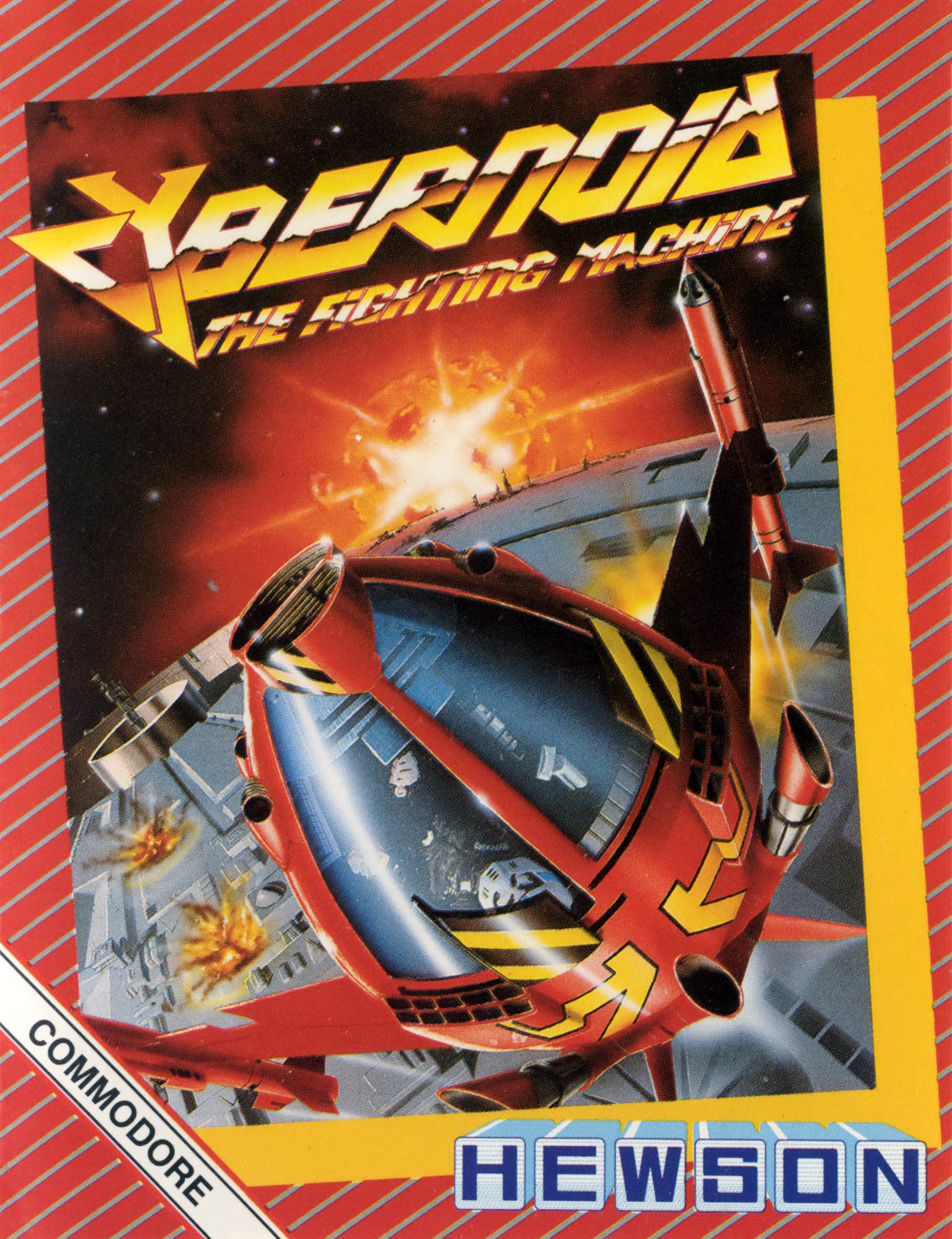
The Fifteen-Year-Old Who Stopped Zzap!64 Cold
In the spring of 1988, a 16-year-old Dutch teenager handed Hewson Consultants a title theme that stopped the Zzap!64 reviewers mid-sentence. Cybernoid: The Fighting Machine was a shoot-’em-up of real sophistication - single-screen stages, a punishing shield system, smart bombs, and Raffaele Cecco’s signature precision programming. But the Zzap!64 panel spent as much of their review talking about the music as anything else. Jeroen Tel had arrived.
The game is set in the year 2991. The player controls a lone armed transport ship tasked with recovering cargo stolen by space pirates. Eight stages, each with its own room layout and enemy pattern, culminate in a final confrontation. The premise is simple; the execution precise. The gameplay demanded music that was assertive without being distracting - and Tel delivered exactly that.
Raffaele Cecco’s Machine, Jeroen Tel’s Voice
Raffaele Cecco was already known for tight, technically impressive C64 programming before Cybernoid - his earlier Exolon for Hewson had demonstrated his control of the hardware. For Cybernoid, Hewson brought in Jeroen Tel, then still operating primarily through the Dutch demo scene under the handle WAVE, to provide the soundtrack. Tel was 16 years old and this was his first major commercial commission.
The brief was a commercial game on a tight platform. Tel had no dedicated tracker software in the modern sense - he was working close to the metal, entering values for the SID’s three voices and shaping the ADSR envelopes by ear and by register. What he produced was a four-subtune score: title theme, in-game music, bonus screen cue, and game over jingle. Each one demonstrates a different side of his developing technique.
The SID chip has three voices, but if you use them cleverly - the filter, the ring modulation, the pulse-width modulation - you can create the impression of something much richer. That was always the challenge and the pleasure of it.
Jeroen Tel on SID composition, The Retro Hour EP114
Eight Levels and a Title Theme They Couldn’t Forget
The title theme is the centrepiece. It opens with a rhythmic bass pulse that establishes the tempo before a strong melodic line enters - unmistakably Tel in its precision and confidence. The second voice carries a countermelody that fills the harmonic space the lead leaves open, while the third provides rhythmic and bass support. The SID’s filter sweeps subtly through the texture, widening and narrowing the sonic space in a way that creates a sense of motion without literal change.
The in-game music maintains energy throughout the gameplay sessions without the melodic ambition of the title. It is functional chip music at its best - energising rather than distracting, with a tempo that suits the action without fighting it. The bonus screen cue demonstrates Tel’s range: shorter, more playful, a deliberate gear-change from the intensity of the main stages.
What Three Voices Can Do
The SID chip in the Commodore 64 - the MOS Technology 6581, later the 8580 - provides three independent voice oscillators, each with its own envelope (attack, decay, sustain, release), waveform selector, and filter routing. Ring modulation and hard synchronisation between voices add further harmonic possibilities. Tel exploited all of it.
In the Cybernoid title theme, ring modulation appears at structural moments to add metallic texture - a bell-like harmonic series that broadens the sound beyond what a single oscillator produces. The filter is set to low-pass and opened gradually across the opening bars, giving the track a sense of emerging from silence into full sonic brightness. It is a compositional effect as much as a technical one.
A Gold Medal in Issue 37
Zzap!64 reviewed Cybernoid in issue 37, dated May 1988, and awarded it a Gold Medal - the magazine’s highest recognition. The review singled out the sound as exceptional, noting the quality of Tel’s music as part of the overall package. For Hewson, it was further validation of their approach; for Tel, it was the beginning of a commercial reputation that would define his career.
The game was a strong seller in the UK market, Hewson’s home territory. The C64 version reached the Gallup software charts. It was a success by any measure - and the music was consistently cited alongside the gameplay as a reason to buy.
The Template Everything Built On
The significance of Cybernoid in Tel’s career cannot be overstated. It was the first major commercial release that demonstrated what he could do to the wider market. It led directly to further Hewson commissions - including Cybernoid II: The Revenge, the following year - and established the relationship with Raffaele Cecco that would produce two of the most celebrated C64 soundtracks ever written.
The SID file remains in the High Voltage SID Collection under
/MUSICIANS/T/Tel_Jeroen/Cybernoid.sid,
where it continues to attract new listeners. The Remix64 community has
produced multiple arrangements. The title theme, 38 years after its
release, is still immediately recognisable.
All four Cybernoid subtunes in the music catalogue · Cybernoid box art and screenshots in the gallery
Cybernoid II: The Revenge (1989)
Platform: C64, Amiga, Atari ST, Spectrum, Amstrad · Publisher: Hewson Consultants · Developer: Raffaele Cecco · Music: Jeroen Tel
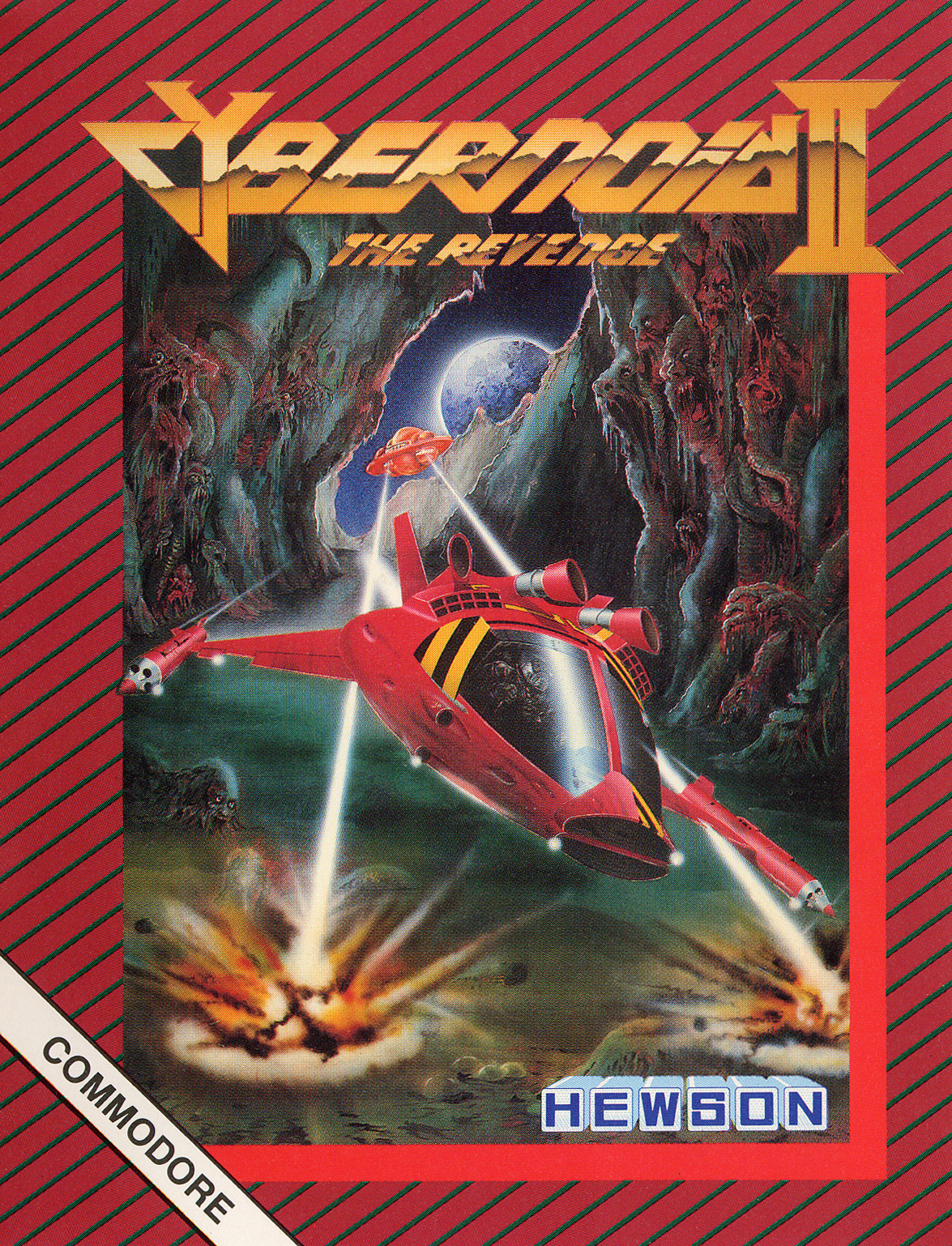
Five Subtunes That Defined a Genre
Cybernoid II: The Revenge is the benchmark. Among the community of SID music listeners who have spent decades evaluating what three voices can achieve, there is a working consensus: Cybernoid II is as good as it gets. Five subtunes, 208 seconds of main theme, a compositional architecture that holds up under scrutiny thirty-five years after the fact.
Released by Hewson Consultants in 1989, the sequel to Cecco’s Cybernoid expanded the formula in every direction. More weapon types, more tactical depth, more enemy variety - and Tel matched the ambition with a score that pushed the SID chip further than he had in the original.
One Year On, One Bar Higher
Tel was 17 when he composed Cybernoid II. Between the first game and the sequel, he had continued working commercially - Hawkeye for Thalamus appeared in 1988, the same year as Cybernoid - and his technique had developed accordingly. The structures in Cybernoid II are more complex than in the original: longer phrases, more elaborate counterpoint, more sophisticated use of the filter as a compositional tool rather than just a timbral one.
The development timeline for the sequel was tight - Hewson wanted the follow-up out in 1989, a year after the first. Cecco delivered the programming; Tel delivered the music. The speed at which Tel could produce work of this quality was part of what made him commercially valuable.
I love the SID chip. It’s like a beast you have to tame - three voices, a filter, and your imagination. The limitation is also the freedom. When you know exactly what the hardware can do, you know exactly what you can get away with.
Jeroen Tel, The Retro Hour EP496, "The SID Chip Was My First Love"
Why the Main Theme Sustains for 208 Seconds
Most C64 game music loops within 60-90 seconds. The Cybernoid II main theme runs to 3 minutes and 28 seconds before repeating. This is not padding - it is a structural decision. Tel builds through the piece, developing themes and motifs before resolving them, then introducing new material that connects back to the opening. The result is a composition that rewards being heard as a piece of music, not just as a game soundtrack.
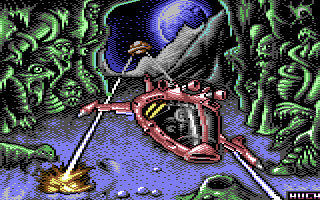
The counterpoint in the main theme is the most technically sophisticated aspect of the score. Three voices are in constant dialogue - the lead melody is never left unsupported, but neither is it overwhelmed. The second voice provides harmonic fill and occasional counter-melody; the third carries the rhythmic and bass function. The filter opens and closes through the piece, and this movement creates a sense of dynamic shape that pure ADSR work cannot achieve.
The Filter as a Fourth Instrument
The SID chip’s filter section - low-pass, band-pass, and high-pass modes, with a resonance control and a cutoff frequency register - is a single shared resource for all three voices. Tel routes different voices through it at different points in the Cybernoid II score, using the filter as a compositional device rather than just a sound-shaping tool.
When the filter sweeps open on the lead voice in the main theme’s climactic passages, it creates a sensation of increasing brightness and intensity that works like a dynamic crescendo. When it closes, the sound recedes. This technique - using the cutoff frequency as a musical expression control - is one of the distinguishing features of Tel’s SID work. It is the reason his music sounds different from contemporaries who were writing equally intricate melodies but not thinking of the filter as part of the musical language.
Community Consensus, Thirty-Five Years On
Zzap!64 awarded Cybernoid II a Gold Medal on release in 1989. The sound was noted as exceptional even within a publication that reviewed chip music favourably as a category. But the more significant verdict has been the community’s long-term assessment.
On Lemon64, Cybernoid II consistently ranks among the highest-rated C64 games. The Remix64 community has produced dozens of arrangements of the Cybernoid II theme - a count that reflects sustained interest across decades, not a single moment of enthusiasm. In the SID community, where debate about the finest compositions is perpetual and specific, Cybernoid II is one of the titles that appears near the top of nearly every list.
Jeroen Tel performs Cybernoid II live in 2024 - the C64 masterwork brought into the room.
Still Unmatched on the SID Chip
In 2024, Jeroen Tel performed Cybernoid II live in concert - a demonstration that a composition written for a three-voice chip in 1989 has the musical substance to hold a room three and a half decades later. The Commodore C64 Orchestra has also performed it. These performances are not nostalgia exercises; they are recognitions that the music is compositionally strong enough to survive translation out of its original context.
The SID file remains among the most-downloaded in HVSC. New listeners discover it regularly; the old ones return to it. It is, in the plainest sense, a great piece of music that happens to have been written for a three-voice chip in a bedroom in Eindhoven in 1989.
All five Cybernoid II subtunes in the music catalogue · Cybernoid II box art and screenshots in the gallery
Hawkeye (1988)
Platform: C64 · Publisher: Thalamus · Music: Jeroen Tel
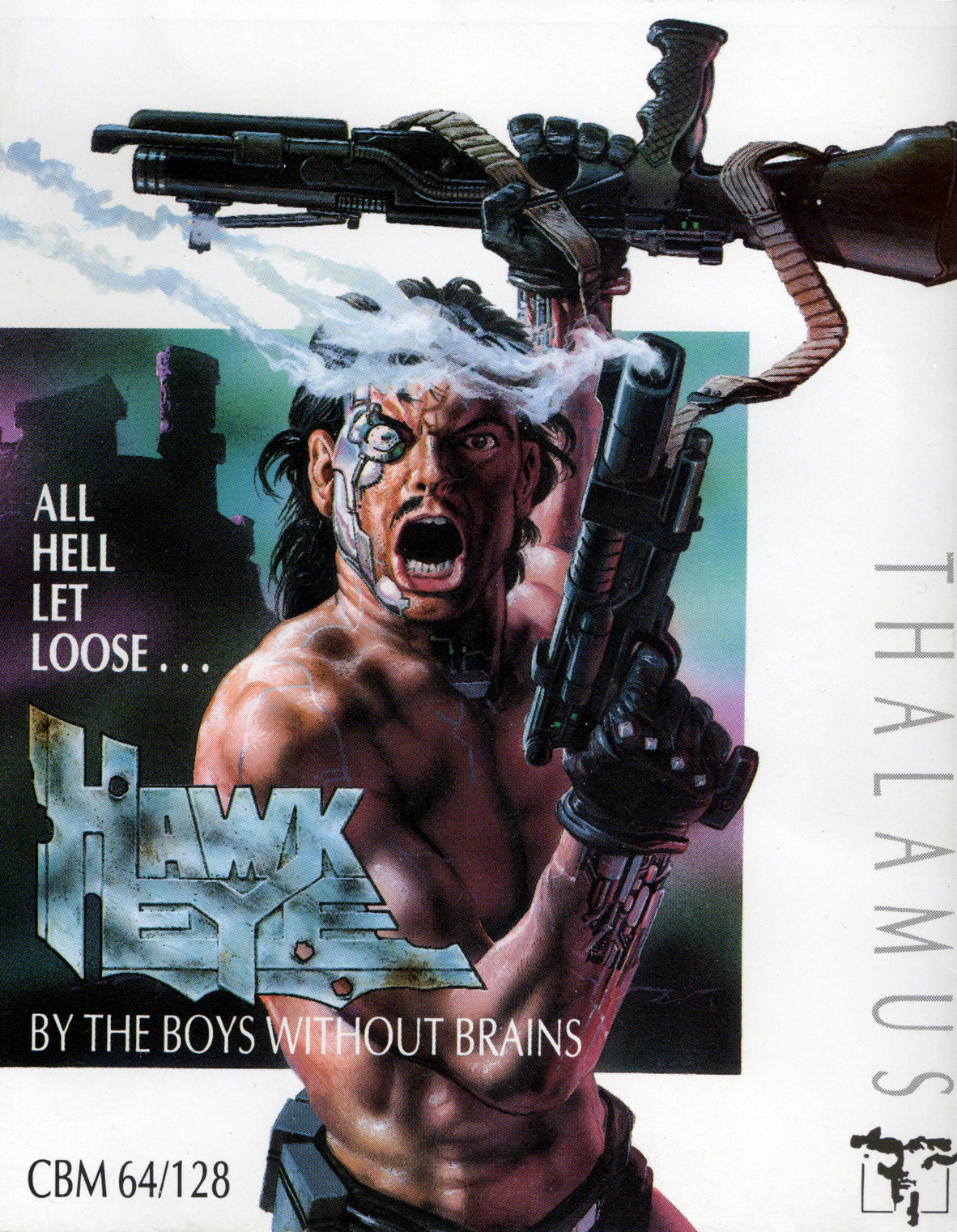
Same Year, Different Planet
In 1988 Jeroen Tel scored two significant C64 games: Cybernoid for Hewson and Hawkeye for Thalamus. The two soundtracks could not be more different in character. Where Cybernoid is melodic and expansive, Hawkeye is tight, aggressive, and rhythmically driven. The contrast between them shows the range Tel had already developed at 16.
Hawkeye is a multi-directional shooter - the player pilots a spacecraft through five levels of action, collecting items and destroying enemies. Thalamus were known for high-quality C64 titles; their releases typically sat at the top of the Zzap!64 scoring table. Hawkeye was no exception, and Tel’s music was a significant part of the package.
The House That Thalamus Built
Thalamus was a small UK publisher with an unusually strong track record for C64 releases in the late 1980s. Titles like Katakis, Delta, and Sanxion had established their reputation for combining excellent programming with strong audio. The soundtrack to Hawkeye was part of that tradition.
Tel was commissioned directly for the Hawkeye soundtrack - at 16, already operating as a professional composer while still developing his craft. The Thalamus relationship demonstrated that his commercial reputation was spreading beyond Hewson: he was becoming the C64 composer that publishers wanted.
When I was starting out, I was listening to everything - classical, electronic, film scores. Jean-Michel Jarre, Tangerine Dream. I wanted to bring that sense of atmosphere into chip music. The SID chip could do atmosphere if you knew how to use the filter.
Jeroen Tel on his musical influences, The Retro Hour EP114
Pulse-Width Against the Clock
The Hawkeye title theme sets its stall out immediately. A fast, rhythmically urgent figure establishes the tempo in the first bar; the lead melody enters with a harder, more metallic character than the Cybernoid themes. This is deliberate: the game is more frenetic, and the music matches.
Five stage themes follow the title, each maintaining the rhythmic energy while varying the melodic material. Tel allocates the SID’s voices differently here than in Cybernoid - harder waveforms, shorter attack times, more percussive use of the noise channel. The result is a score that drives the gameplay rather than commenting on it.
Hard Sync as a Weapon
Hard sync between oscillators - where one voice’s frequency is forced to reset by another’s - produces a rich, buzzing tone that sits between a sawtooth wave and a distorted lead. Tel uses it in Hawkeye to create the harder, more industrial character that separates the soundtrack sonically from the softer Cybernoid tones.
Pulse-width modulation - varying the duty cycle of the pulse wave rapidly to create a chorus-like thickening effect - is used more aggressively in Hawkeye than in most of Tel’s 1988 work. The combination of hard sync and PWM gives the lead voices a physical intensity that suits a more demanding shooter.
The Zzap!64 Response
Zzap!64 reviewed Hawkeye favourably - a Sizzler award (their second tier below Gold Medal) - and the music was consistently mentioned in contemporary coverage as a strong element of the package. The Thalamus house style demanded strong audio, and Tel delivered.
In the retrospective community, Hawkeye is sometimes overlooked against the two Cybernoid soundtracks. This is understandable but reductive. The Hawkeye score is a different tool for a different purpose, and within its own terms it is exactly right. It demonstrates that Tel’s skill was not limited to one mode of chip composition.
Tel in a Minor Key
The Hawkeye score sits in Tel’s catalogue as proof that he was not simply a melodist. He could write driving, aggressive game music when the brief demanded it - and he could produce it quickly enough to score two major C64 releases in the same calendar year.
The SID file is in HVSC under
/MUSICIANS/T/Tel_Jeroen/Hawkeye.sid.
Five subtunes: title, and four stage themes.
Hawkeye subtunes in the music catalogue · Hawkeye box art in the gallery
Myth: History in the Making (1989)
Platform: C64, Amiga · Publisher: System 3 · Music: Jeroen Tel
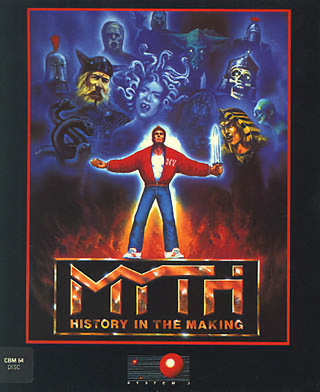
Greece, Egypt, Camelot - On Three Voices
Myth: History in the Making is the most compositionally ambitious brief Tel received in his C64 era: write music that evokes ancient Greece, ancient Egypt, and Arthurian legend - in sequence, within the constraints of three SID chip voices. System 3 published the game in 1989; Tel was 17. The result is one of the most remarkable C64 soundtracks of the period.
The game sends the player through three mythological ages as a warrior confronting the monsters of each era - the Cyclops and Medusa in Greece, Anubis and Ra in Egypt, the Black Knight in Camelot. The scope is unusual for a C64 game, and the scoring demands are correspondingly ambitious.
System 3’s Most Ambitious Brief
System 3 were best known for the Last Ninja series, which had set a high bar for C64 presentation in 1987. Myth was an attempt to match that ambition in a different genre - action platformer rather than isometric adventure. The production values were strong, and the commission to Tel reflected a desire for a soundtrack at the same level.
Tel worked with the game’s mythological structure to create distinct musical identities for each age. The title theme serves as an overture, establishing the epic register that the level themes will inhabit. Then each individual world gets its own piece - compositionally related to the title theme but harmonically and rhythmically distinct.
I always tried to make the music serve the game. If you’re in ancient Greece or Egypt, the music has to help you feel like you’re there. Within three voices you can still create atmosphere - it’s about choosing the right notes, the right tempo, the right filter setting.
Jeroen Tel on game scoring, The Retro Hour EP114
Three Worlds, Three Soundscapes
The Greece theme establishes the classical feel that the game’s visual design is working towards - a melodic line that feels appropriately ancient without being a pastiche of film score Hellenism. Tel achieves this through mode and scale choice: a modal harmony that avoids the triadic simplicity of major-key game music without becoming obscure.
The Egypt theme is harder and more rhythmically emphatic - a driving bass and a lead with more angular intervals. The Camelot theme is the most European in character, with a stronger sense of tonal harmony and a melody that feels closer to the medieval European tradition that Arthurian legend belongs to. That Tel can produce three distinct musical identities within the constraint of a single chip’s three voices is the achievement.
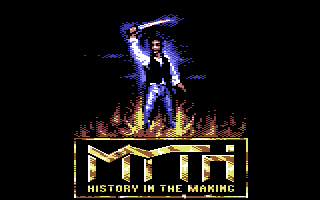
Cultural Identity Within Chip Constraints
The technical challenge in Myth is not polyphonic complexity - that challenge Tel had already solved in Cybernoid II. Here the challenge is using the available harmonic space to suggest three historically and geographically distinct cultures, while maintaining a compositional coherence that ties them together as parts of a single game.
Tel’s solution is largely a modal and scalar one. By choosing characteristic intervals and scales for each world - modal for Greece, pentatonic and augmented for Egypt, functional tonal harmony for Camelot - he creates cultural coding within the three-voice constraint. The filter and envelope settings reinforce each identity: the Egypt theme has a harder, shorter attack; the Greece theme has a more legato envelope shape.
The Soundtrack Critics Couldn’t Ignore
Zzap!64 covered Myth and praised the music alongside the visuals. System 3 games were events in the UK C64 market - they received full reviews and high coverage, and Myth was no exception. Tel’s score was noted as a strong element of the package.
In the retrospective community, Myth has a devoted following. The SID community rates it highly as a compositional achievement, and the game itself is remembered as one of the more ambitious C64 action platformers of the period. Both reputations reinforce each other.
The Compositional Range Nobody Else Had
In 1989, the year Myth appeared, Tel also scored Cybernoid II. The two soundtracks represent opposite poles of his C64 work: Cybernoid II is concentrated and architecturally complex; Myth is wide-ranging and culturally diverse. Together they demonstrate a range that very few composers working in chip music at the time could match.
The SID file is at
/MUSICIANS/T/Tel_Jeroen/Myth.sid
in HVSC. Five subtunes, covering the title theme and level themes.
Myth subtunes in the music catalogue · Myth box art in the gallery
Supremacy: Your Will Is Our Command (1990)
Platform: Amiga, Atari ST, DOS · Publisher: Virgin Games · Music: Jeroen Tel (Amiga version)
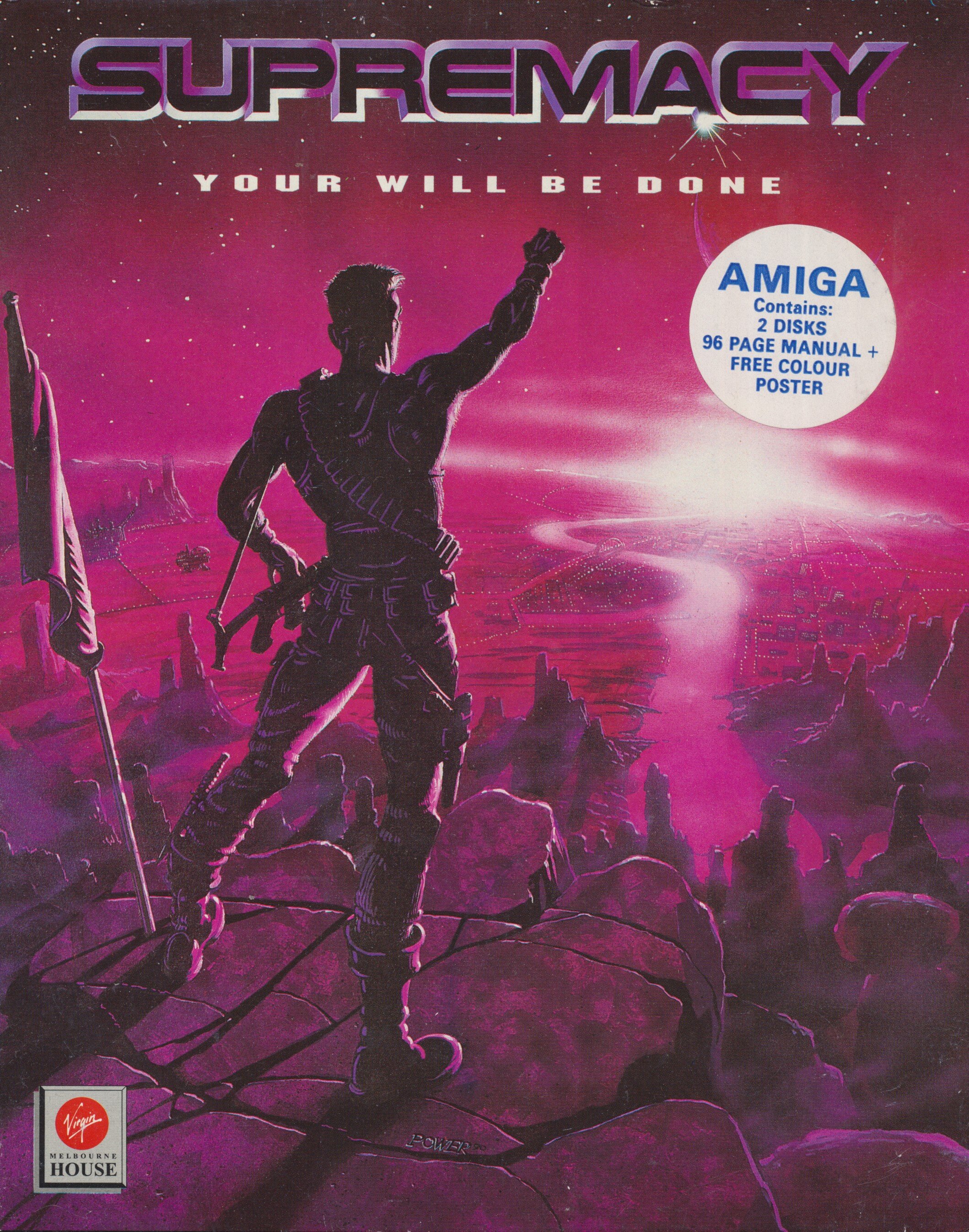
Four Minutes Before the First Move
Supremacy: Your Will Is Our Command opens with four minutes of Jeroen Tel’s music before the player does anything at all. This is the opening statement of Tel’s Amiga career: a piece of electronic music that establishes the scale of a galactic conquest game in a way that pure gameplay mechanics cannot. It is confident, precisely constructed, and uncompromising in its demand that the player wait and listen.
Published by Virgin Games in 1990, Supremacy is a turn-based space strategy game with an expansive scope. The player manages a galactic empire - resources, fleets, colonies, combat. The design is complex and the game runs long. The music had to establish the right frame for that experience from the first moment.
When the SID Chip Was No Longer Enough
By 1990, the centre of gravity in UK game development had shifted. The Amiga - with its Paula sound chip, four independent channels, and capability for 8-bit sample playback - offered possibilities that the SID chip’s three analogue voices could not match. Tel had been working on C64 throughout 1987-1989; Supremacy was a significant Amiga commission that marked his transition into tracker-based composition.
The MOD tracker format used on the Amiga allowed composers to sequence pre-recorded 8-bit samples - real instrument sounds, synth patches, drum hits - across four channels at different pitches and volumes. It was a fundamentally different compositional environment from the SID: closer to a sequencer than a synthesis engine, and capable of a different kind of sonic richness.
Moving to the Amiga was exciting. You had samples, real sounds. But the discipline was the same - you still had four channels, you still had to think polyphonically, you still had to make the music work within real hardware constraints. The mindset transferred even if the tools were different.
Jeroen Tel on the Amiga transition, The Retro Hour EP114
Music as Strategic Frame
The Supremacy score is functional in the most precise sense: it provides the temporal and emotional frame within which strategy games require players to think. The tempo is measured, not urgent; the harmonic language is spacious rather than dense. This is not action game music - it is music for deliberation, for looking at a galactic map and deciding where to commit resources.
The four-minute opening is followed by shorter in-game cues that maintain the same electronic character without demanding the same concentrated attention. Tel treats the soundtrack as a layered experience: the opening is an experience in itself, the in-game music is a background that supports rather than foregrounds.
The Same Precision, A Richer Canvas
What the Supremacy score demonstrates above all else is that Tel’s compositional instincts - his sense of phrase length, his approach to harmonic progression, his understanding of how music relates to the experience it accompanies - are independent of the hardware he is writing for. The SID chip disciplines him in one way; the Amiga tracker disciplines him in another. The musical intelligence that produces a 3-minute SID composition of Cybernoid II’s quality is the same intelligence that produces the Supremacy opening cue.
The use of sampled instruments gives the Supremacy score a sonic weight that SID music cannot achieve. Real brass, electronic bass, synthesiser pads with genuine spatial depth - the Amiga’s four channels carry a different kind of sonic presence than the SID’s three analogue oscillators. Tel uses that weight to establish the game’s galactic register with an authority that would not be possible on the C64.
Amiga Press Took Notice
Supremacy received strong coverage in the UK Amiga press on release. CU Amiga and Amiga Power both reviewed it as a significant strategy release, and the music was noted as a strong element. Strategy games in 1990 often had functional but undistinguished soundtracks; Supremacy was different.
The Lemon Amiga community has kept the game’s memory alive through detailed reviews and ratings. The music continues to be the most consistently praised aspect of the experience in retrospective community discussion.
Tel at 1990 - Still Ahead of the Room
By the time Supremacy appeared, Jeroen Tel was 18. He had already produced the score that most of his contemporaries would consider their masterwork - Cybernoid II was behind him. Supremacy shows that he was not resting on that achievement: he was actively developing as a composer, learning a new medium, and delivering work that matched his SID output in quality if not in hardware intimacy.
The Supremacy module is archived at Amiga Music Preservation and Mod Archive. It appears in the music catalogue.
Supremacy box art and screenshots in the gallery · Meet the Music on Noise collective
Beyond the Flagship Five
The five titles above are the critical landmarks, but the full Jeroen Tel catalogue is deep. The music catalogue covers all known commercial credits - from Eliminator and Savage (both 1988) through to OutRun Europa (1992) and beyond. The gallery holds box art and screenshots for most major titles. The demo page covers MoN’s scene releases including Cybernoid Music (1988) and Echofied 6581 (2010).