Credits & Creators

People

The known faces behind Irem's output - with all credit caveats documented. Irem was notoriously opaque about staff credits; many creators remain unnamed.

A Note on Credits

Irem's practice of omitting credit screens - consistent with the broader Japanese arcade industry of the 1980s - means the authorship of many of their most important games remains unknown or unconfirmed. Credits below are sourced from Wikipedia (citing in-game credit documentation), MobyGames, and cross-referenced against longplay videos.

Entries marked [CONFIRMED] are sourced from in-game credits or confirmed secondary sources. Entries marked [FAN RESEARCH] are attributed by fan researchers but not confirmed by Irem directly.

Creators

TAKASHI
NISHIYAMA

No portrait
available

Takashi Nishiyama

Designer · Irem 1980–1985 · [CONFIRMED]

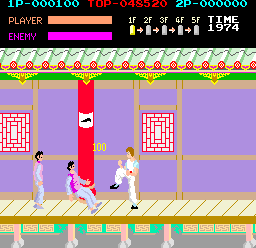
Takashi Nishiyama is the most consequential figure to have passed through Irem's design department - and one of the most consequential in the entire history of arcade gaming. At Irem he designed both Moon Patrol (1982) and Kung-Fu Master (1984/Spartan X): Moon Patrol introduced three-layer parallax scrolling; Kung-Fu Master invented the beat ‘em up genre.

Nishiyama left Irem in 1985 to join Capcom, where he designed Street Fighter (1987). His boss battles from Kung-Fu Master were the direct conceptual ancestor of Street Fighter's one-on-one format. He later founded SNK's game design efforts before leaving the industry.
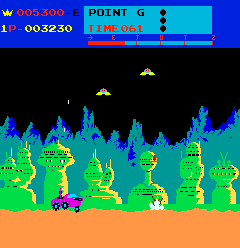
Moon Patrol arcade screenshot Kung-Fu Master gameplay photograph
MASATO
ISHIZAKI

No portrait
available

Masato Ishizaki

Composer · Irem 1984–1987 · [CONFIRMED]

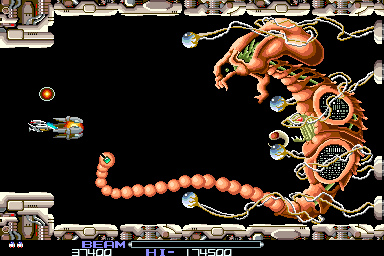
Masato Ishizaki composed the music for both Kung-Fu Master (1984) and the original R-Type arcade (1987). The Kung-Fu Master soundtrack - upbeat, driving, rhythmically precise - set a tone for Irem's early arcade identity. R-Type's soundtrack was darker and more atmospheric, matching the biomechanical horror of the Bydo enemies.

Ishizaki's work on R-Type stands as one of the finest arcade soundtracks of the era. The music for Stage 4 in particular - the spaceship level - is frequently cited in retrospective coverage as a high point of mid-1980s arcade composition.

Kung-Fu Master arcade screenshot R-Type arcade screenshot
ABIKO
(pen name)

No portrait
available

Abiko

Designer, R-Type · Irem 1987 · [CONFIRMED - in-game credit, pen name]

Credited in R-Type's in-game screen as the game's designer - likely under a pen name or partial name, consistent with Irem's industry-wide practice. Abiko's design work on R-Type introduced the Force device: an indestructible, detachable auxiliary unit that could be deployed as a shield, weapon platform, or power source for the Wave Cannon.

In documented interviews, Abiko cited the behaviour of dung beetles as the conceptual basis for the Force mechanic - the idea of a creature manipulating an object it can push, carry, or ride. This single design decision is what distinguishes R-Type from every other horizontal shooter of the era.

"The Force was inspired by a dung beetle - a creature that carries and pushes something. I wanted the player to have that relationship with their weapon."

- Abiko, R-Type designer (attributed, via documented interviews)
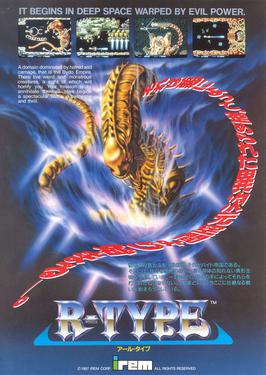
R-Type showing the Force device R-Type arcade flyer artwork
AKIO
OYABU

No portrait
available

Akio Oyabu

Artist / Character designer · R-Type (1987), In the Hunt (1993) · [CONFIRMED]

Akio Oyabu is credited on both R-Type (1987, as character designer) and In the Hunt (1993, as artist). His visual sensibility - biomechanical enemy forms inspired by H.R. Giger's aesthetic, dense carapaced textures, and organic mechanical fusions - defined Irem's visual identity during its most creative period.

After the 1994 restructuring, Oyabu joined the departing team that formed Nazca Corporation, where he contributed to the visual design of Metal Slug (1996) for SNK. His character work on Metal Slug - exaggerated soldier designs, comical enemy animations - shows a different side of the talent behind R-Type's horrors.

R-Type - Oyabu's enemy designs In the Hunt - Oyabu's submarine world
KAZUMA
KUJO

No portrait
confirmed
in accessible sources

Kazuma Kujo

Designer, In the Hunt · Irem 1993, Nazca 1994, Granzella 2011 · [CONFIRMED]

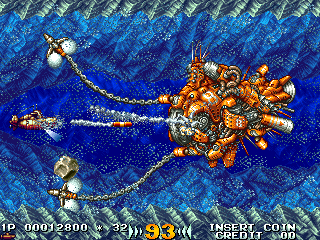
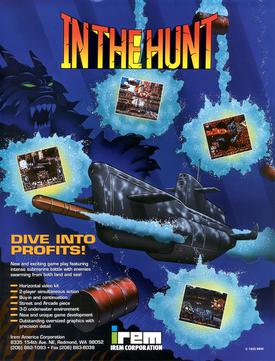
Kazuma Kujo is confirmed as the designer of In the Hunt (1993), the submarine scrolling shooter that preceded Metal Slug as the creative work of Irem's most ambitious late-period team. After the 1994 restructuring, Kujo led the departing team that formed Nazca Corporation, which created the Metal Slug franchise for SNK - one of the most beloved arcade game series of all time.

After Irem Software Engineering's withdrawal from game development following the 2011 Tōhoku earthquake, Kujo co-founded Granzella, an independent studio that has continued development including sequels to the Disaster Report franchise.

Credit note: No publicly accessible portrait of Kazuma Kujo has been identified in English-language or Wikimedia Commons sources. The Granzella website may contain developer photos but was not confirmed as having accessible high-resolution portraits during research.

In the Hunt arcade flyer - Kujo's design In the Hunt arcade screenshot
CHRIS
HUELSBECK

No portrait
available

Chris Huelsbeck

Composer (Amiga / C64 R-Type ports) · Rainbow Arts / Factor 5 · [CONFIRMED]

Chris Huelsbeck is one of the most celebrated composers of the 8-bit and 16-bit era - responsible for Turrican, Star Wars: Rogue Squadron, and many more. His connection to Irem comes through the Amiga and C64 ports of R-Type: he composed the Amiga title theme and collaborated with Ramiro Vaca on the C64 theme.

The Amiga R-Type title music - a slow, epic, melancholic composition - is considered one of Huelsbeck's finest single-game pieces, perfectly capturing the biomechanical dread of the Bydo universe. It has been performed in concert as part of multiple Huelsbeck retrospective events.

R-Type arcade flyer
IKUKO
MIMORI

No portrait
available

Ikuko Mimori

Composer, R-Type III · Tamtex / Irem · [CONFIRMED]

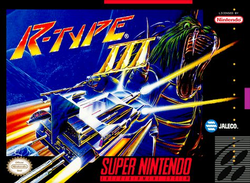
Ikuko Mimori composed the soundtrack for R-Type III: The Third Lightning (1993, Super Famicom), developed by Tamtex. The R-Type III soundtrack is one of the finest SNES shooter soundtracks - atmospheric, technically sophisticated, and firmly in the biomechanical aesthetic of the series while taking advantage of the SNES's more capable sound chip compared to the original arcade hardware.

EGM named R-Type III Best Shooter of 1994 and ranked it #23 in their list of the best console games of all time (1997 issue).

R-Type III SNES cover