1969–1979 - Origins: IPM and the Rename

The company that would become Irem was founded in 1969 by Kenzo Tsujimoto in Osaka Prefecture, initially as a distributor of cotton candy machines. The pivot to electronic entertainment came with the early arcade wave: in 1974, Tsujimoto formally established IPM Co. Ltd - International Playing Machine - to build and install video game machines for small Japanese retail locations.
Nanao Corporation, an electronics manufacturer based in Ishikawa Prefecture, became a key early partner - Nanao manufactured CRT monitors for IPM's arcade cabinets, a relationship that would eventually make Nanao the controlling shareholder of Irem.
In 1978, IPM released their first video game: IPM Invader, a Space Invaders clone. The following year, IBM objected to the company name as too similar to their own. IPM renamed itself Irem Corporation in 1979 - the new acronym standing for "International Rental Electronics Machines." Nanao became majority shareholder in 1980.
1980–1984 - Early Arcade Era: Moon Patrol
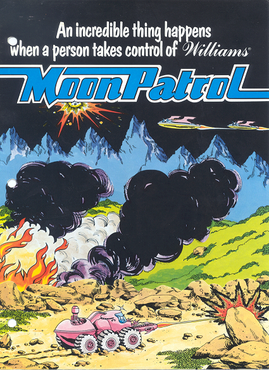
Moon Patrol (1982) was Irem's breakthrough. Designed by Takashi Nishiyama, it was one of the first games to use full parallax scrolling across three background layers - the crater foreground, mid-ground terrain, and star-field background all moved at different speeds, creating a genuine sense of depth never before seen in a side-scrolling game. Running on Irem's M52 hardware (Z80 CPU), it was licensed to Williams Electronics for North American distribution, giving Irem its first international footprint.
10-Yard Fight (1983) - an American football arcade game - and Tropical Angel (1983) followed. These years established Irem's pattern: technically ambitious games with clean, legible gameplay across diverse genres.
1984 - Kung-Fu Master: Inventing the Beat ’em Up
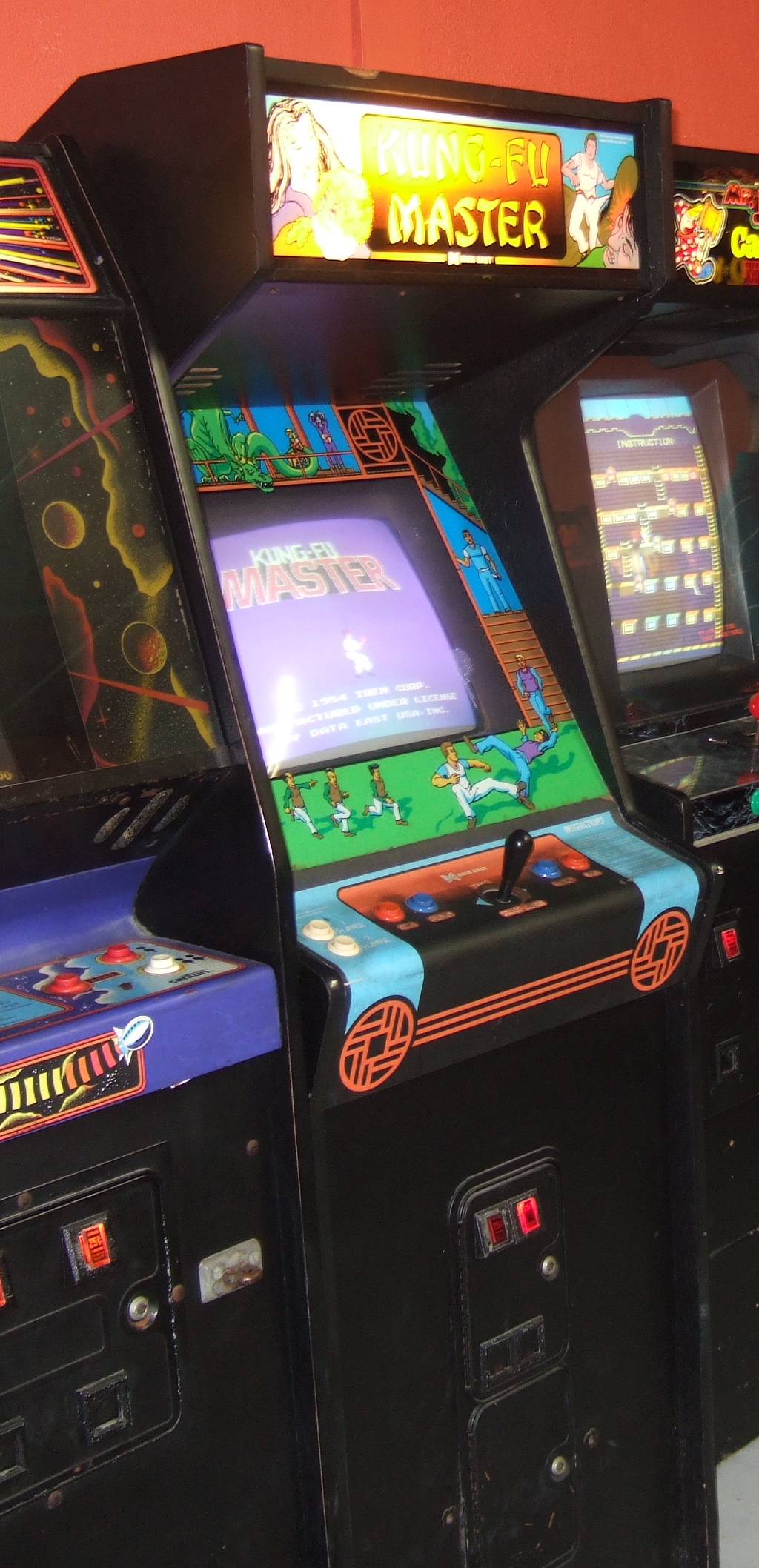
Kung-Fu Master (released in Japan as Spartan X), designed by Takashi Nishiyama and composed by Masato Ishizaki, was released in December 1984. It is widely credited as the first beat ‘em up video game - introducing health meters, side-scrolling brawler mechanics, and end-of-level boss fights in a single package.
The game loosely adapted the Jackie Chan film Wheels on Meals (1984, Golden Harvest), with protagonist Thomas matching Chan's character name and the five-floor pagoda structure echoing Game of Death. Shigeru Miyamoto later cited Kung-Fu Master as foundational to Super Mario Bros. Takashi Nishiyama used its boss battles as the conceptual basis for Street Fighter. The NES version sold 3.5 million copies worldwide.
"Kung-Fu Master was a huge influence on me when I was designing Street Fighter. The idea that you could have a one-on-one confrontation with a boss character at the end of each stage - that was the core of what I took from it."
- Takashi Nishiyama, designer of Kung-Fu Master and Street Fighter (via interview, attributed)
1987–1989 - R-Type Era: The M72 Revolution
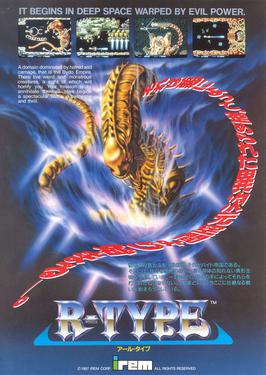
R-Type was released in arcades in 1987, running on Irem's new 16-bit M72 hardware - the first game to use it. The game represented a step-change in the horizontal shooter genre: denser sprite work, a persistent physics object (the Force device), biomechanical enemy designs, and a difficulty philosophy built on pattern memorisation rather than reflexes. It was Japan's highest-grossing table arcade game of 1987 and distributed in North America by Nintendo - their last arcade distribution deal.
Image Fight (1988) extended Irem's shooter excellence - described as "the most successful table arcade unit" in Japan for December 1988 by Game Machine magazine. Vigilante (1988) and Spelunker (1985) rounded out a remarkably consistent catalogue.
R-Type Era Retrospective
Coverage of Irem's 1987–1989 output and the M72 hardware generation.
1989–1993 - Console Port Years and Final Output
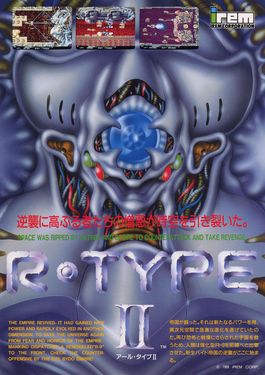
R-Type II (1989, M82/M84 boards) upgraded the formula with the R-9C spacecraft, five weapon types (up from three), anti-ground bombs, and a "true ending" that required clearing the game twice. It won Best Graphics at the Gamest Awards and was the second most successful table arcade game of December 1989 in Japan.
The early 1990s saw Irem's most diverse output. Hammerin’ Harry (1990), Ninja Spirit (1988/1992 SNES port), Undercover Cops (1992), and Gunforce (1991) showed a studio exploring beat ‘em ups, action, and shooters simultaneously. Console ports were largely handled by Tamtex, an Irem/Nanao subsidiary.
In the Hunt (1993) - a submarine scrolling shooter designed by Kazuma Kujo with art by Akio Oyabu - was the creative peak of Irem's final years. The team that made it would go on to create Metal Slug for SNK.
1994 - Exit from Game Development
In 1994, Irem entirely ceased video game development. The development department transferred to Nanao headquarters in Ishikawa Prefecture. A group of departing employees - including Kazuma Kujo's team - formed Nazca Corporation, which subsequently developed SNK's Metal Slug franchise.
Gussun Paradise (1996) was the last game Irem Corporation itself shipped. On 15 April 1997, Nanao established Irem Software Engineering Inc. to absorb the transferred development department. Irem Software Engineering took ownership of all Irem video game IP, including R-Type.
The original Irem Corporation was sold to Yubis Corporation in 1997 and renamed Apies Corporation in 1998 to avoid brand confusion. It passed through Atlus ownership before becoming independent - and as of 2018 controlled approximately 80% of Japan's domestic fortune-telling vending machine market.
1997–2011 - Irem Software Engineering
Irem Software Engineering continued the R-Type franchise through the late 1990s and 2000s: R-Type Delta (PS1, 1998), R-Type Final (PS2, 2003), and R-Type Command (PSP, 2007). They also developed Steambot Chronicles (2005) and the Disaster Report series.
In 2017, Irem Software Engineering sold rights to certain arcade titles to Hamster Corporation for Arcade Archives re-releases on Nintendo Switch and PlayStation 4 - including the M72 version of R-Type. Irem Software Engineering now operates primarily as an IP licensor, focused on slot machines and pachinko, and is a wholly owned subsidiary of Eizo Corporation (formerly Nanao).