The Bydo Empire
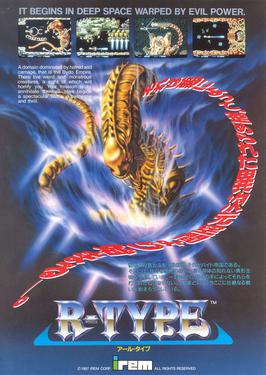
R-Type arrived in Japanese arcades in July 1987 and changed the horizontal shoot-em-up permanently. Running on Irem's brand-new 16-bit M72 hardware, it offered graphical fidelity no contemporary shooter could match - dense enemy sprites with fluid animation, multilayer parallax scrolling, and large, elaborately designed bosses. But the visuals were the least of it. R-Type introduced the Force device, a physics-driven indestructible satellite weapon that transformed how the genre thought about secondary armament. And it framed everything within one of gaming's most memorable fictional universes: the Bydo.
The Bydo are described in-game as "a powerful alien race bent on wiping out all of mankind." Unlike the alien swarms of Galaga or the mechanical drones of Gradius, the Bydo feel genuinely hostile in a biological, visceral way. They arrive in R-Type not as mechanical constructs but as organic growth - pulsing, expanding, corrupting. The environments share this quality: stage 3 takes the player through what feels like the interior of a living creature, ribbed corridors and membrane-like surfaces surrounding the tiny R-9 spacecraft. Stage 4 opens on a colossal mechanical installation that turns out to be the exterior of a Bydo mothership.
The development team drew creative inspiration from several sources. The dominant template for horizontal shooters was Gradius (Konami, 1985) - R-Type's team set out to make something that felt fundamentally different in tone and play. The film Aliens (Cameron, 1986) was in Japanese cinemas during R-Type's development, bringing swarm-based alien hostility and claustrophobic stage design into the cultural conversation. And the work of artist H.R. Giger - the biomechanical aesthetic fusing organic and mechanical forms - is visible throughout the enemy and environmental designs: tentacled carapaced forms, ribbed corridors that feel like the inside of a living creature, enemies that look grown rather than built.
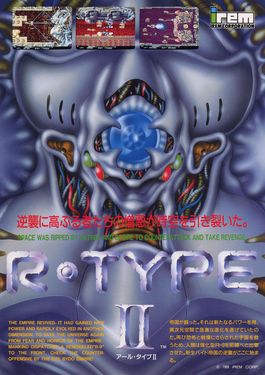
The R-Type mythology was expanded in sequels and spinoffs. R-Type II (1989) introduced a "true ending" accessible only by clearing the game twice. R-Type Final (2003) brought the series to a conclusion with an extended narrative of humanity's final confrontation with the Bydo. The full catalogue of R-Type titles is covered on the games page.
Building R-Type: The M72 Team
R-Type was produced by a small team working under producer Kinte, with Abiko as designer, Sum and Misachin as programmers, and Akio Oyabu and Yoshige as artists. Masato Ishizaki composed the soundtrack - the same composer responsible for Kung-Fu Master (1984). Irem was historically opaque about developer credits, rarely using credit screens on arcade releases, so these names survive largely through the game's own in-game credits - an unusual degree of attribution for the era. More on Irem's known personnel is on the people page.
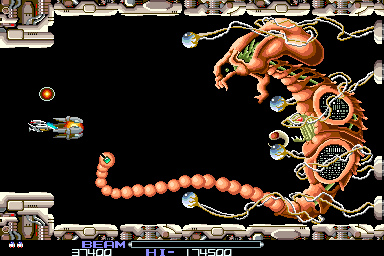
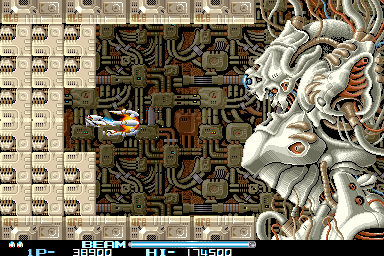
The game was built on Irem's new M72 hardware, a 16-bit system board that represented a significant generational leap from the Z80-based M52 that had run Moon Patrol. The M72 allowed dense sprite work - multiple large enemy sprites with detailed animation, hardware-scrolling backgrounds at multiple layers, and the Force device as a persistent physics object that could interact with the game environment in real time. R-Type was the first title to run on the M72; Image Fight (1988), Dragon Breed (1989), and Air Duel (1990) followed on the same board. The hardware's sprite capacity is directly visible in the Bydo enemy designs - creatures like the Dobkeratops boss occupy much of the screen and animate with a level of detail that contemporaries on older hardware could not approach.
Development began with Abiko's central design question: how to make a shooter that felt different from Gradius. Konami's game had popularised a power-up system based on collecting items and purchasing upgrades in sequence; R-Type would give the player one permanent indestructible companion and build the entire weapon system around managing it. The decision to make the Force completely invulnerable - when every other game gave players destructible shields - was a deliberate inversion of shooter conventions.
"The Force was inspired by a dung beetle - a creature that carries and pushes something. I wanted the player to have that relationship with their weapon: something you carry, something you can deploy, something that's part of you but can also be independent."
- Abiko, R-Type designer (attributed, via documented interviews)
The enemy art by Akio Oyabu established the biomechanical visual language that would define the R-Type franchise through all its sequels. Oyabu later contributed as artist on In the Hunt (1993) before leaving with the Nazca Corporation group that created Metal Slug.
The Force Device
The Force is the defining mechanic of R-Type - a "glowing orange ball" auxiliary device that attaches to the R-9 spacecraft and changes everything about how the game is played. It has three states:
- Front-docked: attached to the ship's front; powers the front weapon array
- Rear-docked: attached to the ship's rear; powers a rear weapon set
- Detached: floats independently; the ship loses primary weapons but can fire remotely; the Force can block projectiles and damage enemies by contact
The Force is completely indestructible - it cannot be destroyed by enemy fire, making it a deployable shield in a game where everything else will kill you. The main weapon - the Wave Cannon - charges by holding the fire button, releasing a powerful beam proportional to charge time. The Force's position determines what the Wave Cannon does: docked front gives a forward beam; docked rear gives rear coverage. Detached, the Force absorbs shots aimed at the ship while the player repositions it with precise forward and backward inputs.
The Force introduces a strategic layer that no horizontal shooter before it had: the player must constantly decide where to position the Force relative to incoming threats, what weapon mode is active, when to detach for defense, and when to reattach for offensive power. Losing the Force changes the game substantially - the ship is weaker, slower, and exposed. Advanced players develop precise routines for Force management across each stage's specific enemy placement, treating it not as a bonus item but as a core tool requiring as much attention as the ship itself.
Weapon pods (collected as power-ups) transform the Force's offensive output, adding missiles, lasers, and reflection shots to the base Wave Cannon. Three weapon types were available in the original arcade version; R-Type II expanded this to five. Each weapon type interacts differently with the Force's three positions, and advanced play involves choosing weapon types that complement planned Force placement for specific stages.
Pattern and Precision
R-Type comprises eight levels, each concluding with a boss. The game is widely described as "infamous for its relentless difficulty" - but the nature of that difficulty is frequently misunderstood. R-Type is not a bullet-hell game. It is not a reaction-speed test. It is a memorisation and strategy game.
Enemies in R-Type follow precise, repeatable patterns. The stage layouts are fixed. The bosses have identifiable weak points and attack sequences. The game "emphasises enemy pattern memorisation as much as player speed" - which distinguishes it fundamentally from the reflex-based demands of later bullet-hell games. R-Type rewards study and precision rather than speed and evasion capacity. A player who has learned stage 5's enemy placement can navigate it methodically; a player encountering it blind will fail repeatedly until they have.
Stage pacing is deliberately slower than the Gradius model. The player ship has no invincibility frames after losing the Force. Death typically sends the player back to a checkpoint - sometimes many screens back - without the weapon pod they had collected. The game assumes players will die repeatedly and learn. It is structured as a puzzle game with spatial precision requirements, not a shooter in the conventional sense.
Technically, R-Type achieved things its contemporaries could not. The M72 hardware supported a level of sprite density that made the Bydo swarms credible as swarming organisms rather than token enemies. The Dobkeratops boss in stage 1 is composed of multiple independently animated sprite segments - a technique that gives it organic quality absent from the single-sprite bosses of most contemporaries. The hardware's dual-playfield background scrolling produced the game's sense of depth through layered environments rather than simple single-plane scrolling.
Version History
| Entry | Year | Platform | Key Changes |
|---|---|---|---|
| R-Type | 1987 | Arcade (M72) | Original; 3 weapon types; Force device; 8 stages; distributed by Nintendo (NA) |
| R-Type (TurboGrafx-16) | 1988 JP / 1989 NA | TG-16 / PC Engine | Hudson Soft port; JP split into two HuCards; widely considered best home port |
| R-Type (Amiga, C64, ST) | 1988 | Amiga, C64, Atari ST | Electric Dreams/Rainbow Arts; C64 port by Manfred Trenz in six weeks; Chris Huelsbeck Amiga title theme |
| R-Type (Master System) | 1988 | Sega Master System | Compile port; considered one of the best SMS library games |
| R-Type II | 1989 | Arcade (M82/M84) | R-9C spacecraft; 5 weapon types; anti-ground bomb; "true ending" requires two clears; Gamest Best Graphics |
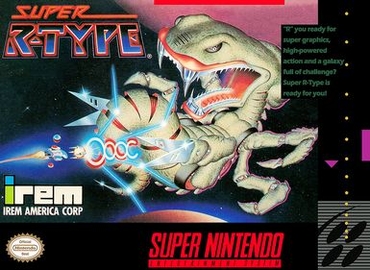
| Super R-Type | 1991 | Super Famicom / SNES | Developed by Tamtex; SNES-exclusive; cannot continue from any checkpoint |
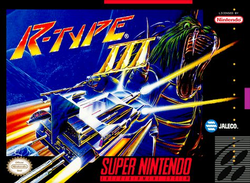
| R-Type III: The Third Lightning | 1993 | Super Famicom / SNES | Three Force types (Round/Shadow/Cyclone); Hyper Wave Cannon; developed by Tamtex; composer Ikuko Mimori; EGM Best Shooter 1994 |
| R-Type (Game Boy) | 1991 | Game Boy | Reduced handheld port |
| R-Type DX | 1999 | Game Boy Color | Enhanced GBC version combining R-Type and R-Type II material |
| R-Type Dimensions | 2009 | Xbox Live Arcade, PS3, PC | R-Type + R-Type II; includes 3D mode and co-op; toggle between original and enhanced graphics |
R-Type Arcade - Complete Longplay
All eight stages on the original Irem M72 hardware, including the final Bydo confrontation.
Critical Reception
R-Type was an immediate commercial success on release in Japan. It was the highest-grossing table arcade game in Japan in 1987 and the third highest-grossing conversion kit in 1988, according to Game Machine magazine. In an era when arcade success was measured by coin-drop rates in a highly competitive market, these figures represented genuine dominance.
The critical reception in the Western press was equally strong, concentrated in the home port reviews that began appearing from 1988. Computer and Video Games awarded the arcade version a near-perfect 900. When the Spectrum and other home computer versions arrived, Crash magazine gave the ZX Spectrum port 92%. The Master System version earned 92% from Mean Machines. AllGame rated the game 4/5. The TurboGrafx-16 port - widely considered the best home conversion - was described in Next Generation magazine (1995) as "the system's definitive contribution to the shoot 'em up genre."
"R-Type is one of those rare games that gives players the sense that the machine is working against them from the start - not because it cheats, but because the Bydo genuinely seem like a threat the player has no right to overcome."
- Next Generation magazine, 1996
Both the original arcade game and the TurboGrafx-16 port were ranked #98 in Next Generation magazine's top 100 games of all time (1996 issue). The TurboGrafx-16 version received the Golden Joystick Award (runner-up, Best 8-bit Coin-Op Conversion) and a Crash Smash designation from Crash magazine. R-Type III for SNES was awarded Best Shooter of 1994 by Electronic Gaming Monthly and ranked #23 in their all-time best console games list in 1997.
The critical reception was not universal praise for difficulty - several reviewers noted that R-Type's memorisation demands placed it closer to a puzzle game than a conventional shooter, and that players who bounced off its checkpoint system would find little to enjoy. The game was polarising precisely because it was uncompromising: it did not offer an easy mode, it did not smooth its checkpoint deaths, and it did not reward players who wanted to play it casually.
Influence and Legacy
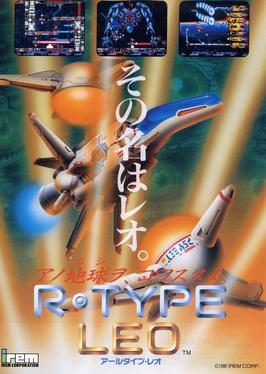
R-Type's influence on the horizontal shooter genre is direct and documented. The Force device mechanic - an indestructible physics-driven satellite weapon - was widely imitated in the late 1980s and early 1990s, appearing in modified forms in numerous subsequent shooters. Its enemy design vocabulary, the biomechanical fusion of organic and mechanical forms, established visual standards that defined the genre's aesthetic through the 16-bit era. Irem itself built four more R-Type titles on the back of the original's success, each incrementally expanding the Force mechanic.
The internal legacy matters as much as the external. Akio Oyabu, R-Type's character and environment artist, was part of the team that produced In the Hunt (1993). When that team departed Irem after the 1994 restructuring to form Nazca Corporation, Oyabu's visual sensibility - large, elaborately animated sprites with organic detail - carried directly into the Metal Slug franchise. Metal Slug's grotesque enemy infantry, ballistic physicality, and dense sprite animation all trace to the Irem work. Metal Slug and R-Type share more than a development lineage; they share an artistic philosophy.
Modern availability: the original M72 arcade version of R-Type was licensed to Hamster Corporation in 2017 for the Arcade Archives series, bringing it to Nintendo Switch and PlayStation 4 with original hardware emulation and online leaderboards. R-Type Dimensions (2009, Xbox Live Arcade; later PC and PS3) packages the arcade versions of R-Type and R-Type II with a real-time toggle between original and 3D-rendered graphics and a co-operative mode - the most accessible entry point for modern players. More on Irem's catalogue is on the games page.
Irem Software Engineering retained the R-Type IP through successive corporate restructurings and continues to license it. A spiritual successor, R-Type Final 2 (2021), was developed by Granzella - the studio co-founded by In the Hunt designer Kazuma Kujo. The circle closed: the game that launched from Irem in 1987 was kept alive by the people who had learned their craft there.