History of Interplay
From a garage in Irvine to the post-nuclear RPG that shaped Western game design — nineteen years of creative ambition.
We always wanted to make games that mattered - games that would be remembered. Not just entertainment, but something that stuck with you.
— Brian Fargo, founder, Interplay Productions
1983 — 1985
Founding and Early Years
In 1983, Brian Fargo — then just 19 years old — co-founded Interplay Productions in Irvine, California, alongside Troy Worrell, Jay Patel, and Rebecca Ann Heineman (also known as Burger Becky), a programmer who had won the first National Space Invaders Championship in 1980.
The company's early work consisted of licensed titles for larger publishers: conversions and original games developed for Activision and Electronic Arts. This contract work built Interplay's technical reputation and provided the financial foundation for more ambitious original titles.
1985 — 1990
The PC RPG Golden Age
Interplay's creative breakthrough came with The Bard's Tale (1985), published by Electronic Arts. Designed by Michael Cranford, the game was one of the defining CRPGs of the mid-1980s — a dungeon-crawling RPG of exceptional polish that sold across Apple II, DOS, Amiga, Atari ST, and NES. The Bard's Tale trilogy would cement Interplay's reputation as the premier PC RPG developer of its era.
Three pivotal titles followed in 1988, each defining a different dimension of Interplay's creative ambition. Wasteland invented the post-nuclear RPG and introduced the skill-based character system. Battle Chess combined strategic gameplay with unprecedented animation quality, selling over a million copies. And Neuromancer — based on William Gibson's seminal cyberpunk novel — translated the genre's aesthetic and ideas into interactive form.
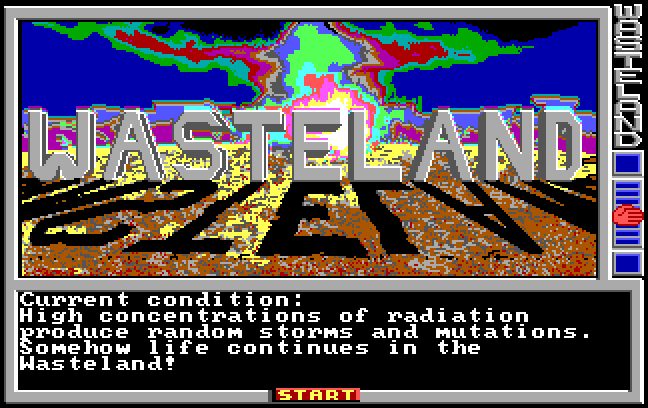
Wasteland's design team — Brian Fargo, Ken St. Andre, Michael Stackpole, and Alan Pavlish — created something genuinely new: a game in which choices had permanent, irreversible consequences; where characters could die and stay dead; where the world responded to the player's actions and remembered them. Post-nuclear Arizona was rendered with bleak authenticity. The skill system replaced class-based advancement with granular individual abilities. Every subsequent Fallout game owes its fundamental design language to Wasteland.
1991 — 1995
Console Era and Third-Party Publishing
As home consoles rose to commercial dominance in the early 1990s, Interplay evolved from pure developer into a significant publisher — funding and distributing titles developed by contracted studios. The results included some of the most celebrated games of the SNES and Genesis era.
Out of This World (1991), developed entirely by Éric Chahi at Delphine Software, was published by Interplay for North American audiences. The game's rotoscoped animation, cinematic camera work, and wordless narrative represented a profound aesthetic breakthrough.
Rock 'n Roll Racing (1993) was developed by Silicon & Synapse — a company that would shortly rename itself to Blizzard Entertainment. The game's licensed rock soundtrack (Deep Purple, Black Sabbath, George Thorogood) and isometric combat racing became iconic. Blackthorne (1994), also from Silicon & Synapse, followed with a more atmospheric platform-action approach.
Earthworm Jim (1994), developed by Shiny Entertainment under Dave Perry, was the console era's most distinctive title. The character of Jim was conceived by Doug TenNapel over a weekend; the resulting game combined surreal humour, innovative animation, and exceptional level design into one of the period's most memorable platformers.

1996 — 1999
The Fallout Era - Black Isle's Golden Years
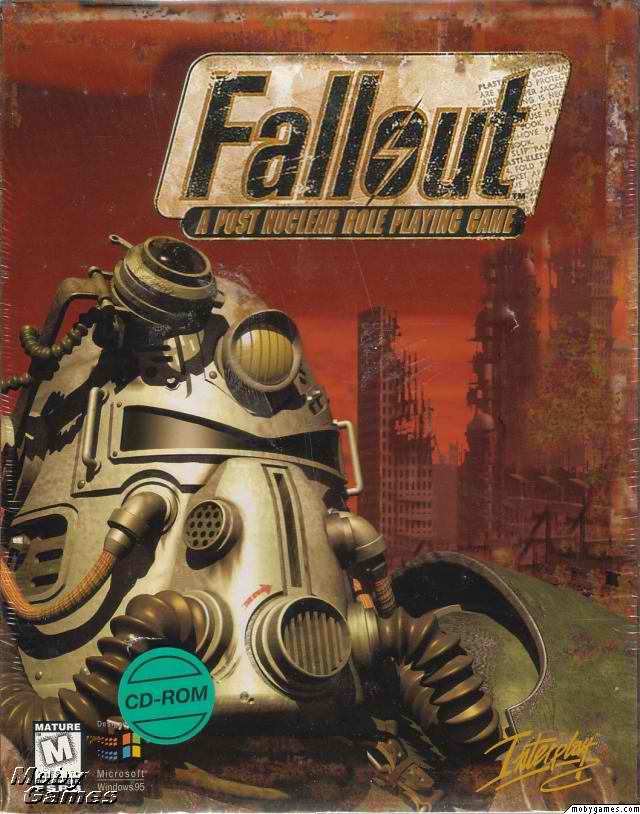
The mid-to-late 1990s represented Interplay's creative peak. Black Isle Studios, an internal division led by Feargus Urquhart, produced a series of Western RPGs that remain benchmarks of the genre. Fallout (1997), led by Tim Cain and Chris Taylor with Brian Fargo as executive producer, was the culmination of everything Interplay had learned since Wasteland.
Post-nuclear California, rendered in isometric 3D with a 1950s atomic-age aesthetic, became one of the most distinctive settings in gaming. The SPECIAL attribute system — devised by Tim Cain after the original GURPS licence was dropped — provided deep character customisation while remaining accessible. Fallout's branching narrative, moral complexity, and permanent consequences translated Wasteland's design philosophy into an incomparably richer form.
Fallout 2 (1998) expanded the world and deepened the lore. Then came Planescape: Torment (1999), designed by Colin McComb and Chris Avellone, widely regarded as the most philosophically ambitious RPG ever made. The question at its centre — "What can change the nature of a man?" — remains the most memorable opening premise in the genre.
I always saw Fallout as the spiritual successor to Wasteland. We were finally able to make the game we'd been imagining since 1988.
— Brian Fargo
2000 — 2004
Financial Decline and the End of an Era
The early 2000s brought severe financial difficulty. Several large projects — including an ambitious Fallout 3 prototype that would eventually be cancelled — consumed resources without generating returns. Key creative talent departed: Tim Cain left after Fallout to co-found Troika Games; Brian Fargo himself resigned in 2002 to found inXile Entertainment.
Black Isle Studios was shuttered in December 2003, ending the creative division responsible for Fallout, Fallout 2, Planescape: Torment, and Icewind Dale. Interplay ceased retail game development by 2004. In 2007, the Fallout intellectual property was sold to Bethesda Softworks, which developed Fallout 3 (2008) and all subsequent entries in the series.
Brian Fargo: My History with Interplay (2012)
Key Dates
- 1983 - Interplay Productions founded, Irvine CA
- 1985 - The Bard's Tale (published by EA)
- 1988 - Wasteland, Battle Chess, Neuromancer
- 1991 - Out of This World (North America)
- 1993 - Rock 'n Roll Racing (Silicon & Synapse)
- 1994 - Earthworm Jim, Blackthorne
- 1994 - Rebranded as Interplay Entertainment Corp
- 1997 - Fallout (Black Isle Studios)
- 1998 - Fallout 2
- 1999 - Planescape: Torment
- 2002 - Brian Fargo founds inXile
- 2003 - Black Isle Studios shuttered
- 2007 - Fallout IP sold to Bethesda
Platforms Served
- Apple II / Apple IIgs
- Commodore 64
- DOS / IBM PC
- Amiga
- Atari ST
- SNES / Super Famicom
- Mega Drive / Genesis
- Game Boy / Game Boy Advance
- PlayStation / PS2
- Windows (Win95 onwards)
- Mac OS
Key Studios Under Interplay
- Black Isle Studios - internal division; Fallout, Planescape: Torment
- Shiny Entertainment - Earthworm Jim (contracted)
- Silicon & Synapse - Rock 'n Roll Racing (contracted)