Takahashi Meijin
Gaming’s first genuine celebrity - a man whose skill was measurable, documented, and made into a franchise.
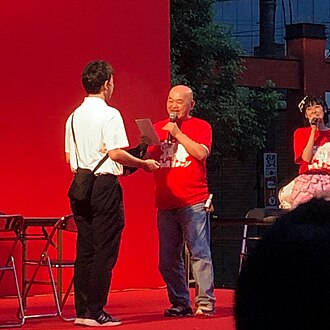
Takahashi Meijin
Hudson Soft Spokesperson · Gaming Icon · 1986 – 1994
Hiroshi Takahashi - known universally by his honorific title Meijin (Master) - was Hudson Soft’s public face throughout the golden era of Japanese gaming. Born in 1959, he joined Hudson Soft as an employee in the early 1980s and was discovered to possess an extraordinary ability: he could press a game controller button 16 times per second, a verified physical feat that became central to his public persona.
Hudson documented and publicized this ability extensively, turning it into a marketing asset at precisely the moment when the Famicom was establishing gaming as a mainstream Japanese pastime. Takahashi Meijin appeared in television commercials, at gaming events, and in print campaigns - demonstrating not just the games, but a human benchmark for what gaming mastery could look like.
His fame was not merely promotional. When Hudson developed Adventure Island (1986) - known in Japan as Takahashi Meijin no Bōken Jima (Takahashi Master’s Adventure Island) - the protagonist Master Higgins was explicitly modelled on Takahashi himself, including the straw hat and the rapid-fire ability that allowed the character to throw weapons in rapid succession. The game sold strongly in part because Japanese players already knew and trusted the face attached to it.
Takahashi Meijin is one of the few real individuals in gaming history to be directly incorporated into a game character - a crossover between real-world personality and fictional avatar that predates modern influencer marketing by nearly four decades.
Yuji Toyoda
Portrait
Yuji Toyoda
Game Designer · Star Soldier Series
Yuji Toyoda was the principal designer behind Hudson Soft’s Star Soldier (1986), one of the most technically accomplished vertical shooters of the Famicom era. Where many contemporaries produced serviceable shoot-em-ups, Star Soldier distinguished itself through the density and precision of its enemy formations, the visual complexity of its sprite work, and a progression system that rewarded mastery over brute persistence.
Star Soldier became a flagship title in Hudson’s Famicom catalogue and spawned a direct franchise: Super Star Soldier (1990) on PC Engine, Soldier Blade (1992), and several follow-up entries. The “Star Soldier” series represented Hudson’s commitment to the vertical shooter genre through the late 1980s and early 1990s - a genre in which they competed directly with Konami’s Gradius team.
Toyoda’s design philosophy emphasised the shooter as a game of memorisation and pattern recognition - a philosophy that aligned with the contemporary Japanese high-score culture and Hudson’s public association with competitive play through Takahashi Meijin.
Takeaki Kunimoto
Composer
Takeaki Kunimoto
Composer · PC Engine Era Soundtracks
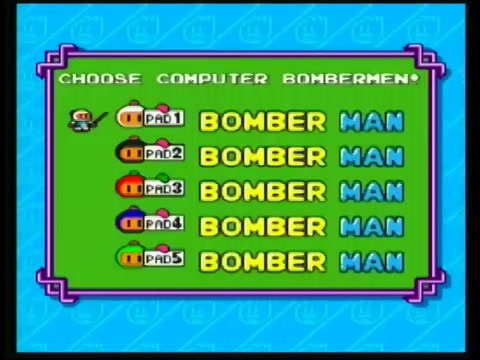
Takeaki Kunimoto was one of Hudson Soft’s primary composers during the PC Engine era, responsible for soundtracks that pushed the hardware’s audio capabilities to their limits. His work on titles including Bomberman ’93 and various PC Engine HuCard releases demonstrated an understanding of both the technical constraints of game audio and the musical requirements of games designed for sustained play.
Kunimoto worked in an era when the distinction between “video game music” and “proper music” was actively being challenged by the CD-ROM² format - a format that allowed composers to write full redbook audio tracks rather than chip-music approximations. His work sits at the intersection of these two approaches, producing music that was both technically sophisticated within the HuCard’s sound chip limitations and conceptually ambitious.
The PC Engine era produced some of gaming’s most celebrated soundtracks, particularly on CD-ROM². Hudson’s publishing relationships meant their composers worked alongside - and in some cases with - composers from other studios, creating a shared aesthetic that defined the platform’s musical identity.