The Universe in 32 Kilobytes
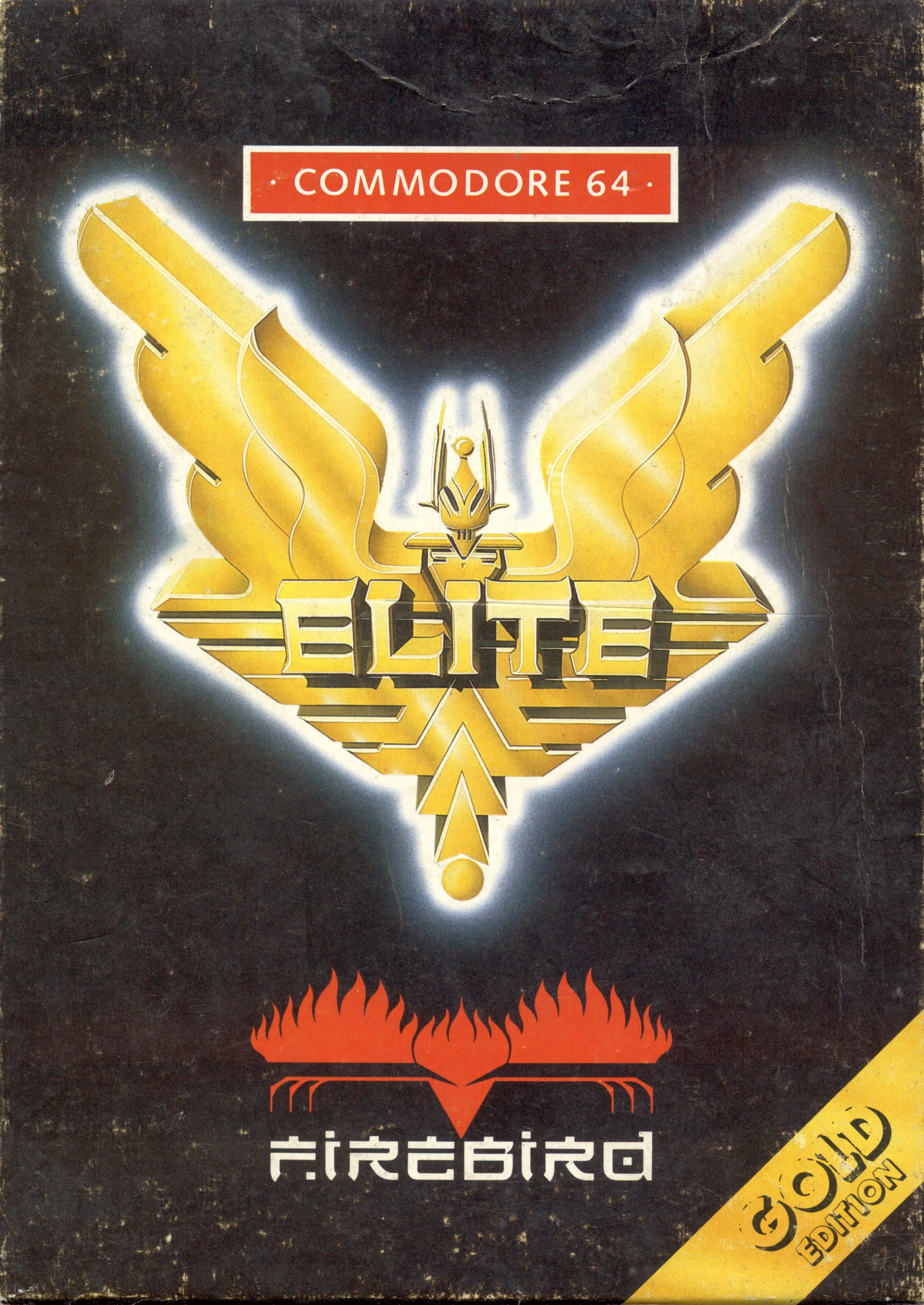
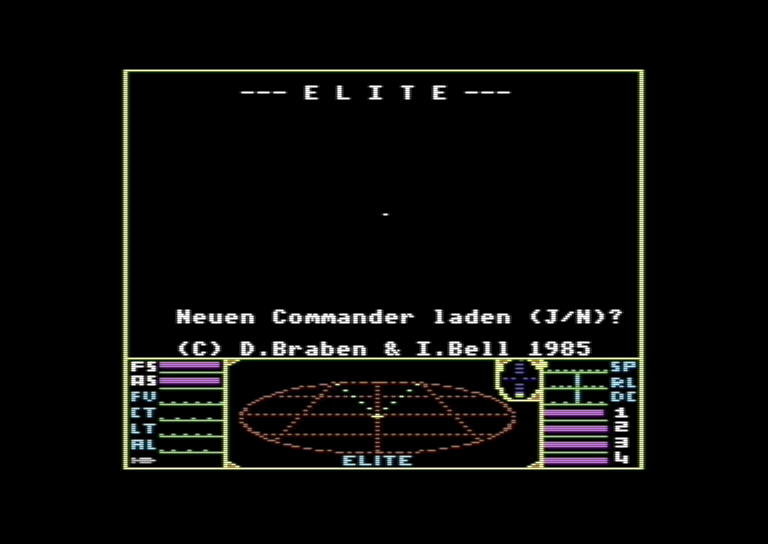
No game in the Telecomsoft catalogue matters more than Elite. David Braben and Ian Bell began it at Cambridge University in 1982, writing it for the BBC Micro - a machine with 32 kilobytes of RAM and no floating-point unit. By 1984 they had their answer to a design problem nobody had attempted: eight galaxies, 2,048 star systems, a working economy, a trading engine, a combat system, and complete freedom for the player. Acornsoft published the BBC Micro version in 1984. Firebird acquired the C64 rights and published that port in 1985, opening Elite to a far wider audience and cementing the game's legendary status across the home computing market.
The development story begins with a single constraint: how do you store an inhabited galaxy in a few kilobytes? Braben and Bell's solution was mathematical. Each star system in Elite is not stored - it is computed. A small seed number, processed through a deterministic sequence, generates the same planet name, government type, economy, tech level, and population description every time, on every machine, in every version of the game. The entire eight-galaxy universe is described by a handful of bytes. The 2,048 planets exist in the arithmetic, not in memory.
"We worked backwards from what we wanted the player to feel - that they were actually in space, that the galaxy was real. The constraint of 32K forced us to be clever. You couldn't store the data, so you had to compute it. Every star system in Elite generates itself from a seed. The planet is never stored anywhere - it just appears, correctly, every time you look."
David Braben, BAFTA "A Life in Pixels" interview (2013)
Acornsoft was initially reluctant to publish. The game had no fixed goal, no end state, no lives counter. It was unlike anything in their catalogue. Braben and Bell persisted; the BBC version sold 150,000 copies in its first year - transforming Acornsoft's fortunes and establishing what an open-world design could be. Firebird saw the opportunity on the C64, which had a larger installed base, and the 1985 port became the version that most of a generation encountered first.
A Cobra, 100 Credits, and No Instructions
The player begins with a Cobra MkIII spacecraft, 100 credits, and a galaxy. No tutorial, no prescribed path. Trade cargo between star systems to accumulate wealth; upgrade the ship's weapons, shields, and equipment; hunt pirates for bounty; engage in piracy yourself; mine asteroids; explore. The game imposes no moral framework and suggests no particular career. The only goal with mechanical weight is reaching the combat rating of Elite - which requires destroying more than 6,400 enemy ships. Very few players achieved it.
Trade was sophisticated for its time. Each of the 256 star systems in the first galaxy had an economic profile - agricultural, industrial, rich, poor - which determined which commodities were cheap to buy and which were profitable to sell. A player learning which routes were most efficient could become wealthy quickly; a player who ignored economics and focused on combat would scrape by. The game rewarded study of its own systems.
Integer Arithmetic in Three Dimensions
The BBC Micro had no floating-point coprocessor. Every 3D calculation in Elite - rotation matrices, perspective projection, depth sorting for the hidden-line removal - was performed in fixed-point integer arithmetic, hand-optimised in 6502 assembly language. Braben handled the 3D engine and flight model; Bell wrote the trading system, the galaxy generator, and the combat AI. The division of labour was clean and complementary.
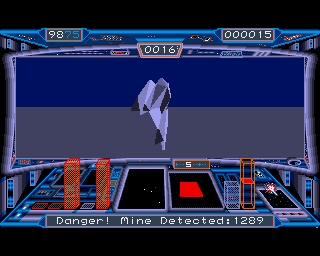
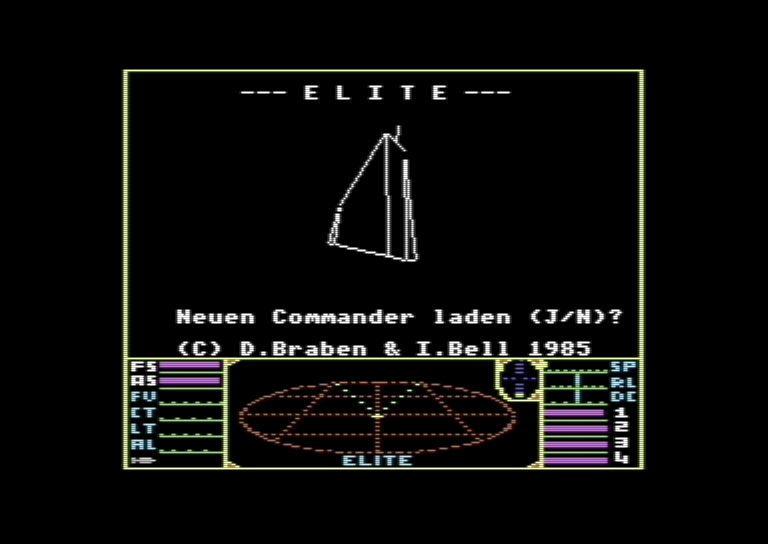
The wireframe visuals, while simple by any later standard, were genuinely spatial in a way no home computer game had managed before. The cockpit view, the scanner, the HUD - all contributed to a sense of inhabiting a ship in a universe. The ship designs were functional-looking in a way that felt real: the Cobra MkIII was a working freighter, not a starfighter fantasy. The Thargoids, when they appeared in hyperspace, were geometrically alien in a way that was unsettling.
Every Magazine Ran Out of Superlatives
The critical reception to Elite in 1984 and 1985 was extraordinary. Zzap!64 awarded the C64 version a Gold Medal and 96%, writing: "Elite is beyond description. It is the most staggering, most complex, most addictive and most satisfying game ever written for the Commodore 64." (Zzap!64, issue 5, September 1985). CRASH awarded the ZX Spectrum version 93% and its highest rating. Personal Computer Games described it as "the game that proves home computers have finally grown up."
Contemporary reviewers struggled to categorise it. It was simultaneously a space trading game, a combat simulation, an exploration title, and a career progression system. Most settled on "unlike anything else" and left the genre question open. The BBC Micro original won the Golden Joystick Award in 1984 and was listed in every end-of-year best-of summary for 1985.
From 32K to a Living Galaxy
Elite's influence on game design is structural. The open-world sandbox - where the player chooses their own goals in a populated universe - is now so common it barely registers as a genre. In 1984 it was a radical proposition. The trajectory from Elite to GTA to No Man's Sky to Star Citizen is direct and traceable. Sean Murray (Hello Games, No Man's Sky) has cited Elite repeatedly as the founding reference for procedural world generation. Peter Molyneux has described Elite as the game that taught him what games could aspire to be.
Braben founded Frontier Developments and returned to Elite with Frontier: Elite II (1993), adding Newtonian flight mechanics and a physically modelled solar system. Frontier: First Encounters followed in 1995. In 2012, Braben launched a Kickstarter for Elite Dangerous, raising more than 1.5 million pounds in its initial campaign. The game launched in 2014 and is still in active development, with a player base running into millions. Bell did not participate in the sequels; his original Elite source code is published on the Ian Bell Elite Homepage.
See Modern Legacy for Elite Dangerous coverage, and People for profiles of Braben and Bell. The full platform history is in the Catalogue.