Anti-Gravity Racing
F-Zero is a futuristic racing series created by Nintendo EAD, debuting in November 1990 as a launch title for the Super Nintendo Entertainment System. Set in the year 2560, the game placed players in F-machines - anti-gravity hovercrafts powered by electromagnetic circuits - competing in the F-Zero Grand Prix across circuits built on dedicated racing platforms above city skylines, ocean surfaces, and alien worlds.
The series was explicitly designed to demonstrate Mode 7 - the SNES hardware's ability to rotate and scale a flat texture plane in real time, simulating a three-dimensional perspective. Producer Shigeru Miyamoto and the EAD team chose racing because a flat track viewed from above maps perfectly onto Mode 7's tile-rotation: every corner and chicane could be rendered without polygon counts or sprite multiplication, running at 60 frames per second on 16-bit hardware. The result was unlike anything on consoles at the time. The games catalogue covers all series entries; the racers page profiles every pilot from Captain Falcon to the F-Zero X generation.
Videos
Longplay
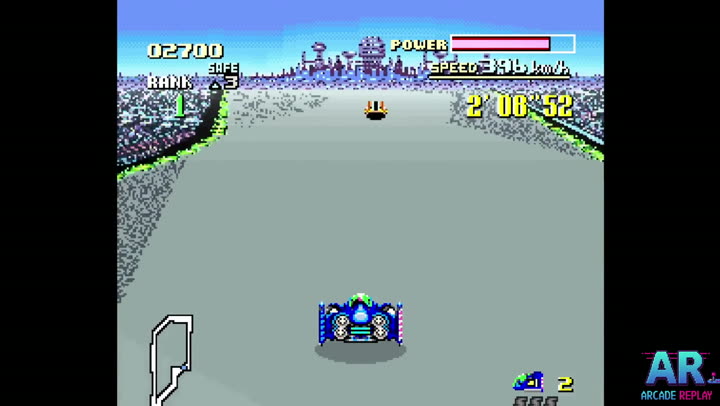
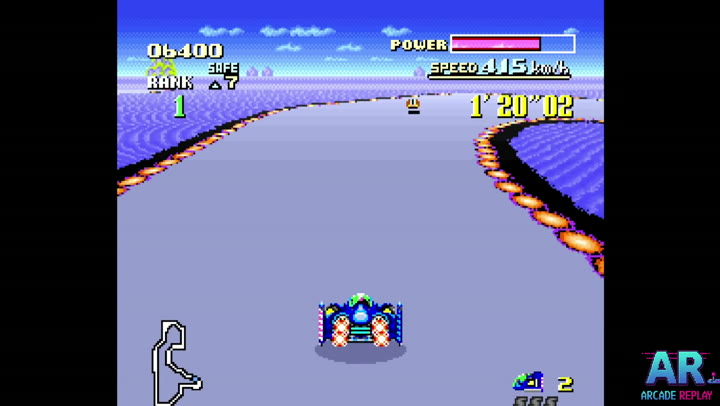
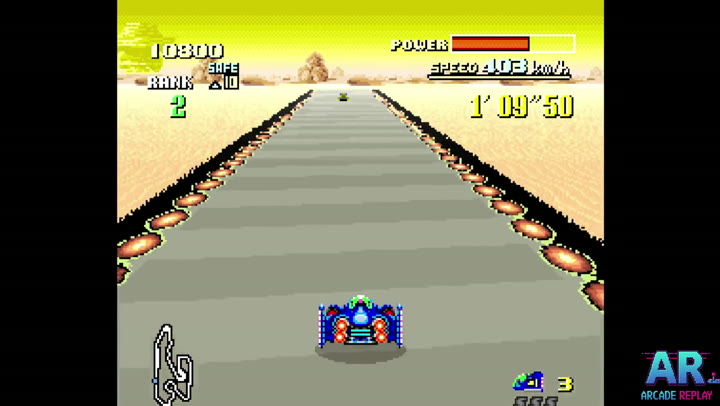
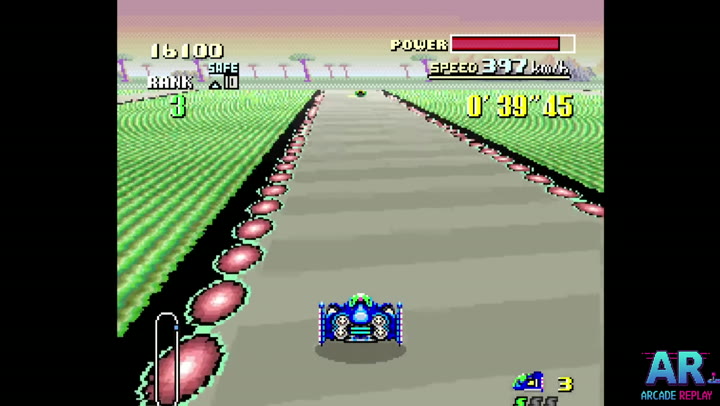
F-Zero SNES - Full Longplay
All 15 tracks across every circuit, completed end to end on the hardest difficulty.
Retrospective
F-Zero Retrospective
A look back at the series that invented the futuristic racing genre and showcased the SNES's most dramatic hardware feature.
The Grand Prix
Original Game
15
F-Zero SNES launched with 15 tracks across five circuits - Mute City, Big Blue, Sand Ocean, Death Wind, Silence, Port Town, Red Canyon, White Land, Mutiple City, and Fire Field - set across four difficulty classes: Knight, Queen, King, and Master.
F-Zero X
30
F-Zero X on Nintendo 64 ran 30 simultaneous racers at 60 frames per second on genuine 3D hardware - the most racers on screen in any racing game at the time, achieved by stripping all trackside scenery from the game.
The Series
2560
The F-Zero Grand Prix takes place in the year 2560. Humanity has made contact with alien civilisations, and the Grand Prix is an interplanetary sporting event drawing pilots, machines, and spectators from across the galaxy.