Three games that between them define what Earth Defense Force is: its appeal, its
design philosophy, and its enduring hold on a devoted community.
Earth Defense Force 2017: The Western Breakthrough (Xbox 360, 2007)
EDF 2017 - Xbox 360, 2007
Earth Defense Force 2017 arrived in North America in March 2007, and the
Western gaming landscape has not been the same since. It was the third mainline Sandlot
entry - internally Chikyuu Boueigun 3 - and the first to reach Western audiences
in a form that could generate a genuine following. The Xbox 360 exclusivity that made this
possible was not an accident; it was the direct result of Microsoft's push to secure
Japanese developers for their console, and the bet paid off more than anyone anticipated.
Before 2007, EDF was an obscure budget franchise with no Western presence worth speaking of.
After 2007, it had a devoted cult audience primed for every sequel. Two-player co-op,
hundreds of giant enemies, and a total disregard for production value above a certain
floor - all of it was already in place, all of it was exactly right.
From the Simple Series to Microsoft's Japan Initiative
Sandlot was founded in March 2001 by veterans of Human Entertainment, the developer
behind the Fire Pro Wrestling series. Their first title was
Robot Alchemic Drive (2002), a giant-mech game on PlayStation 2 that
anticipated EDF's approach to scale and spectacle. The EDF series itself began
in December 2003 as Simple 2000 Series Vol. 31: The Earth Defense Force -
a budget PlayStation 2 release in D3 Publisher's low-cost game line, priced for
mass-market accessibility rather than premium retail.
Two entries followed on PS2 before EDF 2017 moved to Xbox 360. The platform shift
was driven by Microsoft's concerted effort to gain traction in the Japanese market:
they funded Japanese developers to build 360 exclusives, and D3 Publisher's EDF
franchise was among the titles greenlit for the initiative. The move gave EDF
exposure to North American players who had never encountered the series, and at a
price point that encouraged impulse purchases and gift copies between friends.
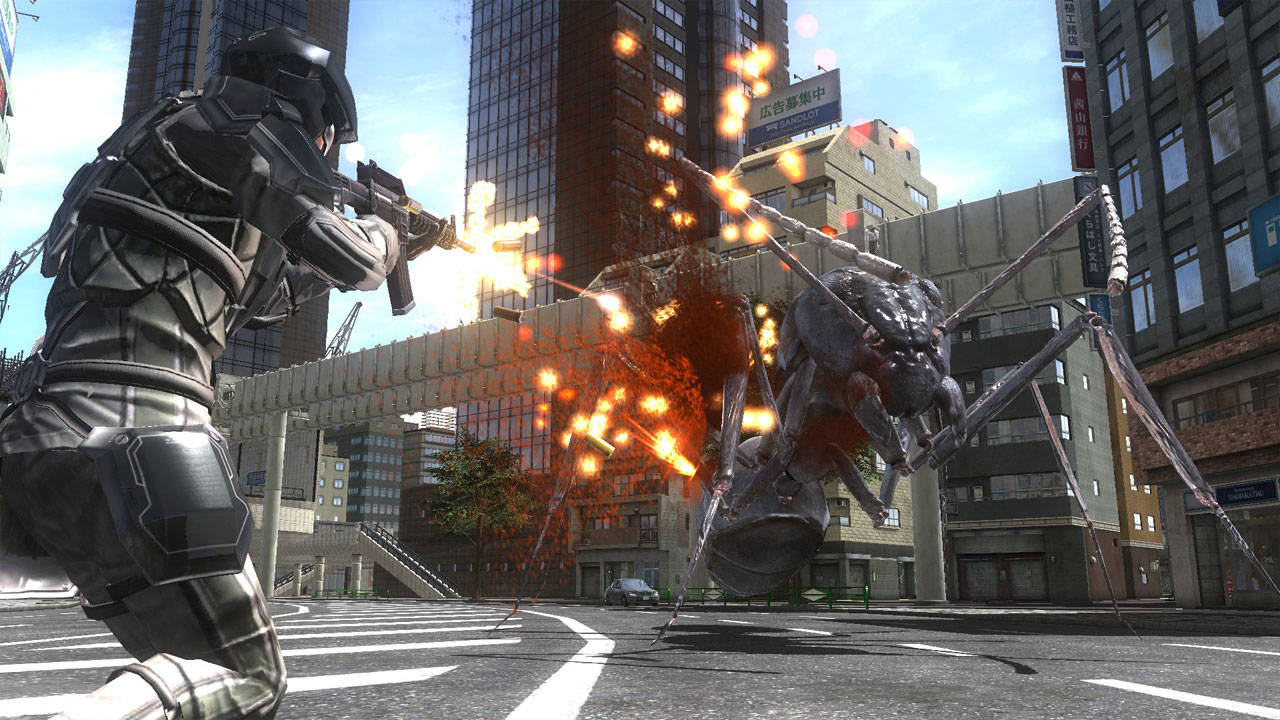
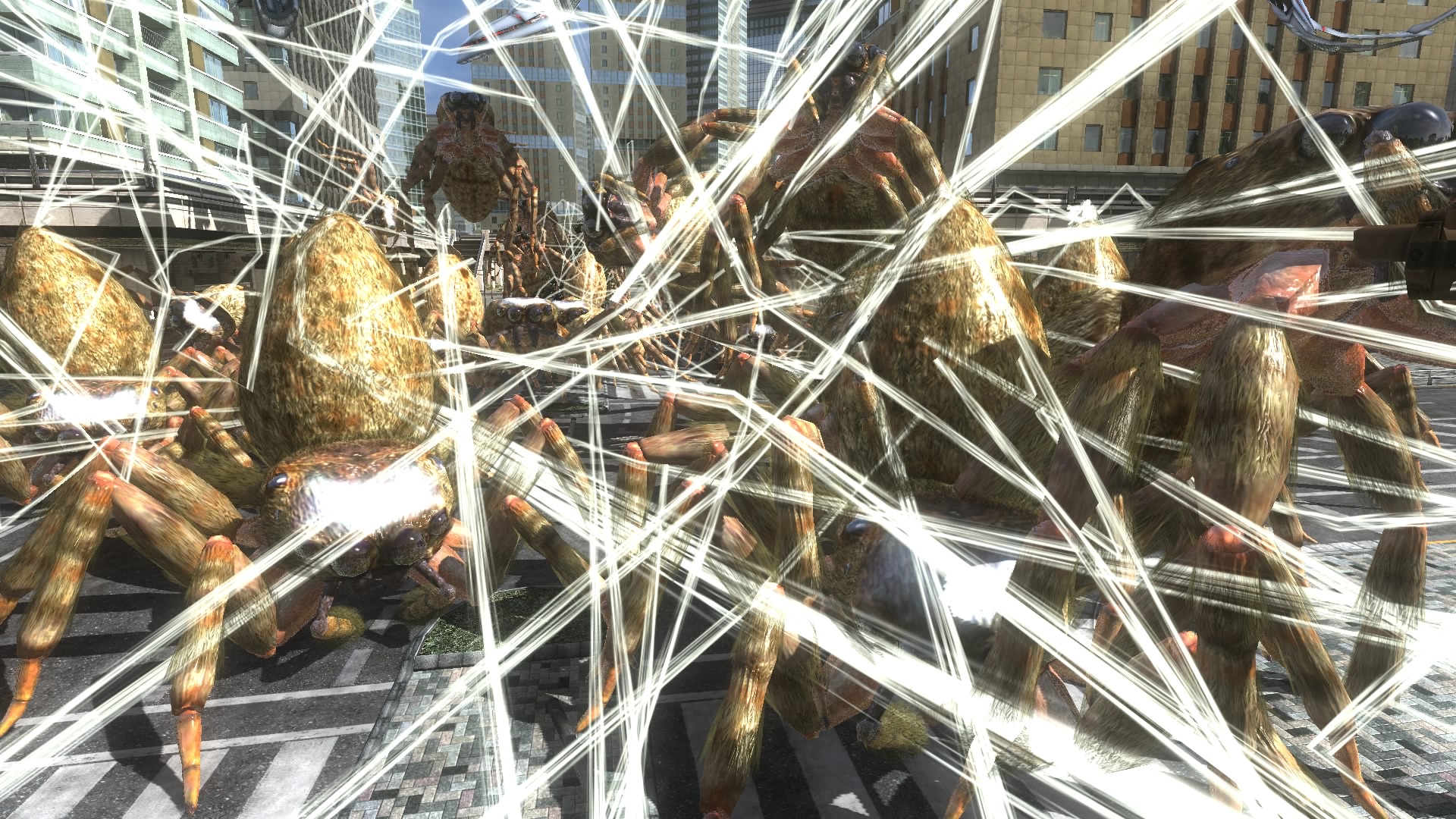
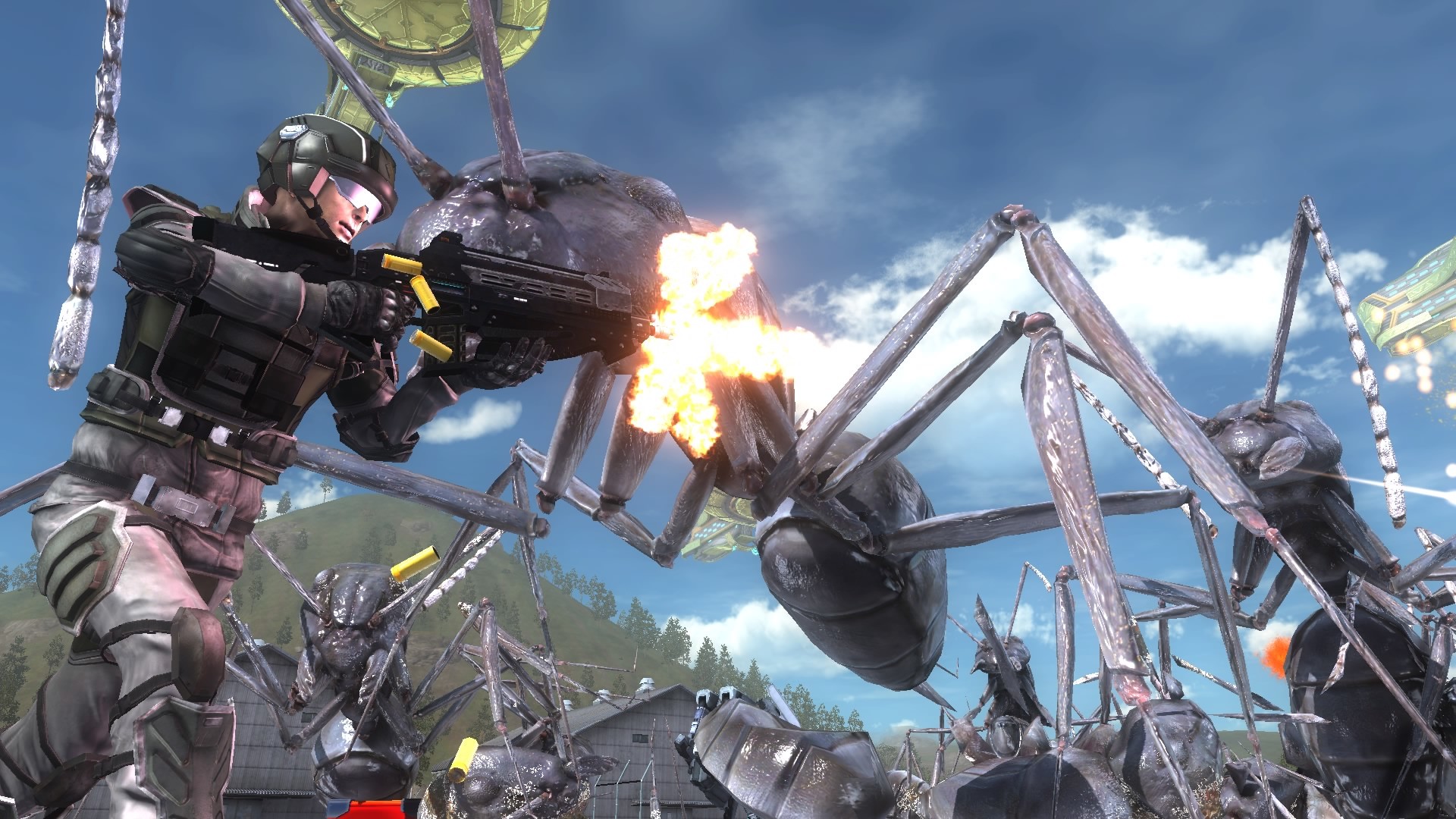
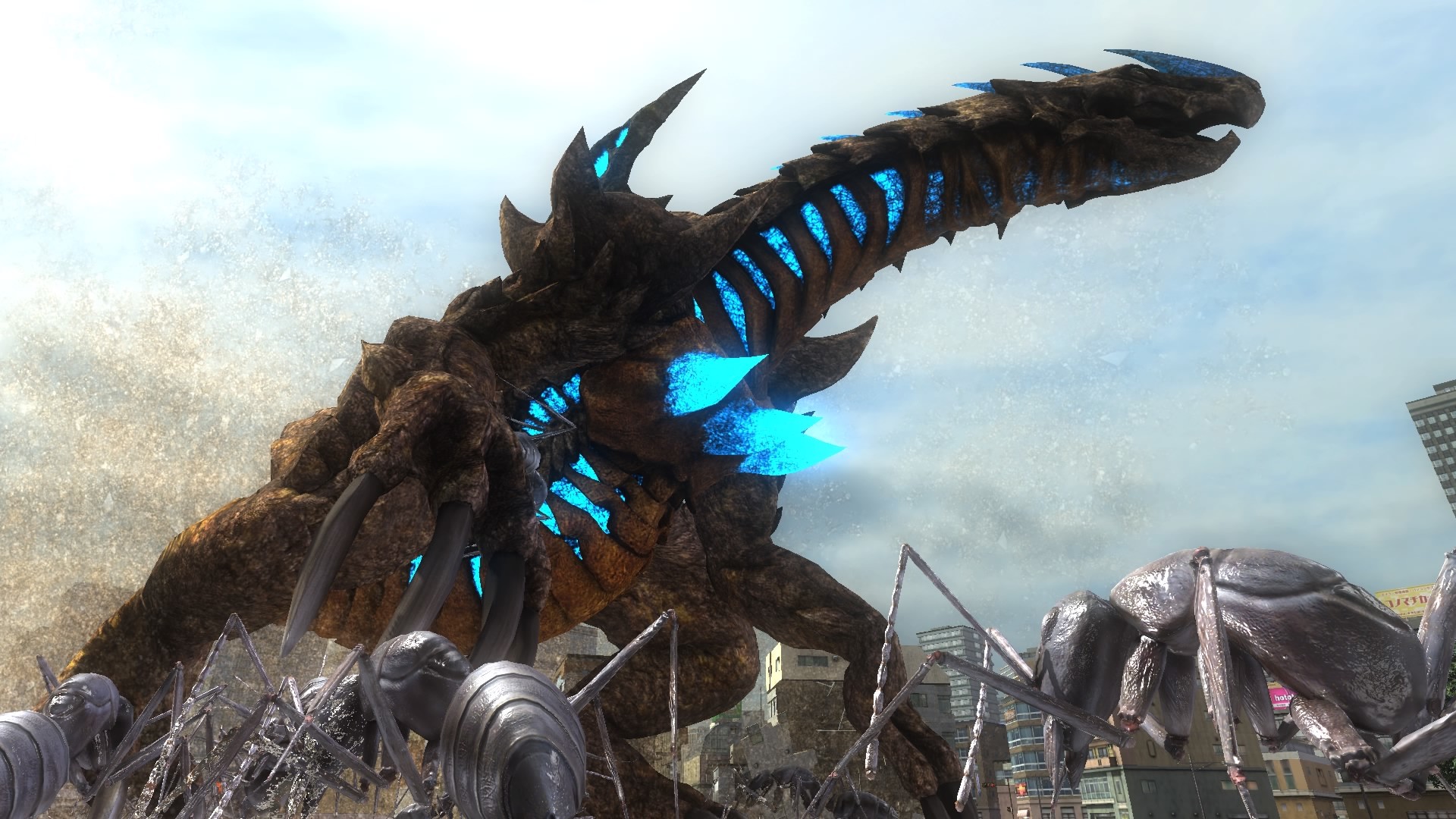
EDF 2017's ant encounters defined the series' appeal for an entire generation of Western players
One Rifle, One Partner, and a Collapsing City
EDF 2017 has one playable class: the Ranger. You carry two weapons from a pool that
expands with every completed mission. The objectives vary across 53 missions, but the
core loop never changes - find the enemy, shoot the enemy, collect the weapon drop,
survive. The game never offers anything more complicated than that, and the honesty
of its design is part of what makes it work.
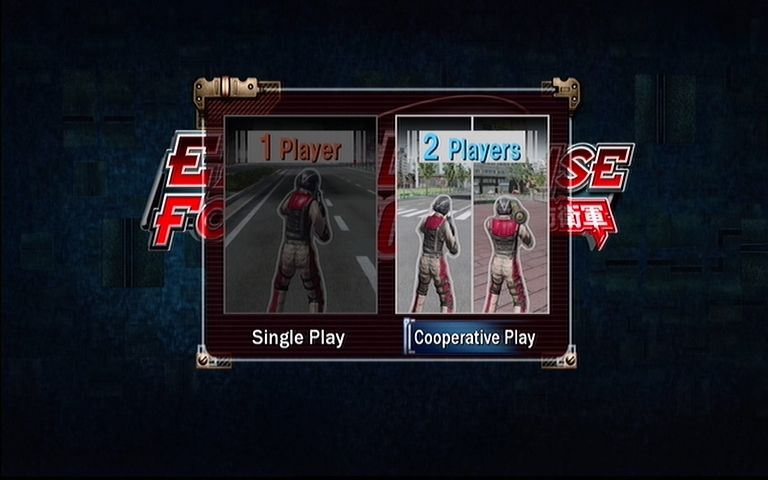
Two-player split-screen co-op is the game's centre of gravity. The missions play
differently with a partner - not just easier, but more dynamic. Cover becomes
meaningful when your partner can draw fire. Weapon specialisation makes sense when
one of you handles aerial threats while the other handles the ground swarms. The
game designs around this from the ground up: enemy placement, spawn locations, and
attack patterns are calibrated for two-player chaos.
The buildings are as important as the enemies. Tokyo's city blocks collapse under
sustained fire from both sides - your rockets hit the insects, the insects ram through
office towers, the debris adds physics to the battlefield. By the end of a late-game
mission, the map looks like a crater. The destruction is not a technical showcase;
it is load-bearing gameplay, creating cover and open ground in real time.
City missions become progressively more chaotic as buildings collapse under combined fire
Fifty Enemies at Once on a Budget Game's Budget
What EDF 2017 achieved technically was not glamorous, but it was real. Fifty or more
enemies on screen simultaneously, each with independent movement, attack, and collision
logic, running on 2006-era Xbox 360 hardware. The game's technical limits were
deliberate: simplified geometry, recycled animations, minimal environmental detail
outside the buildings. Every optimisation freed processing power for enemies, which
is where the game needed it.
Jun Fukuda's score is the game's most enduring contribution to the franchise's audio
identity. His orchestral themes - part 1950s B-movie, part military march - are
immediately recognisable to anyone who has played EDF. The main theme in particular
became the franchise's signature sound, reprised and remixed across multiple sequels.
The score understood the tone: earnest heroism, no irony, the EDF and their mission.
"Earth Defense Force 2017 is pure, unapologetic, and wonderfully low-tech fun... the thrill of watching skyscrapers crumble never gets old."
IGN, March 2007 - EDF 2017 review
Critics Noted the Seams and Played Anyway
The reviews were measured but positive. IGN awarded 7.0/10, noting the technical
limitations alongside the irresistible fun. Eurogamer gave 8/10. GameSpot matched
IGN at 7.0. Famitsu scored the Japanese release 29/40 in December 2006. No outlet
called it a masterpiece; all recommended it to the right audience, and the right
audience turned out to be larger than anyone expected.
"There are no story highlights, no cut-scenes to speak of - just you, waves of giant insects, and the city of Tokyo."
Eurogamer, 2007 - EDF 2017 review
The game sold primarily on word of mouth. Players who found it in bargain bins or
received it as gifts became evangelical about it, pressing copies on friends who had
never heard of EDF and watching their reactions in real time. That process built
the Western fanbase from nothing.
The lo-fi presentation became a feature rather than a limitation
The Western EDF Audience Started Here
EDF 2025, EDF 4.1, and EDF 5 all exist in the West because EDF 2017 built the
audience. The word-of-mouth loop that started in 2007 - try it, love it, force your
friends to try it - repeated with every subsequent entry. The franchise's cult
following is traceable directly to that first Xbox 360 release and the specific
type of player it found.
See the full entry in the games catalogue,
review scores in reviews, and Jun Fukuda's
soundtrack on VGMdb.
The creators of EDF 2017 are covered on the people page.
EDF 2017 - Review and Retrospective
EDF 4.1: The Shadow of New Despair - The Entry Everyone Recommends (PS4 / PC, 2015 / 2016)
EDF 4.1 - PS4 / PC
Ask any EDF fan where a new player should start, and the answer is almost always
EDF 4.1: The Shadow of New Despair. It is the PS4-enhanced version
of EDF 2025, built on the four-class system that defined the series' middle era, and
the version that most PC players encountered first via Steam in December 2016. The
combination of four radically different classes, hundreds of weapons per class, and
a mission structure that rewards replay for hundreds of hours makes it the series'
most complete single package.
A PS4 Upgrade Built From the Best 360 Entry
EDF 2025 launched on PlayStation 3 and Xbox 360 in Japan on July 4, 2013, reaching
North America and Europe in February 2014. It introduced the four-class system -
Ranger, Wing Diver, Air Raider, and Fencer - expanding the single-class simplicity
of EDF 2017 into a framework where each class plays as a substantially different
game within the same missions. EDF 2025 was well-received but showed its PS3/360
hardware roots in its technical presentation.
EDF 4.1 is the PS4-enhanced version, released in Japan on April 2, 2015, and in
the West on August 4, 2015. The enhancements include additional missions, graphical
improvements, and technical refinements that made the experience meaningfully better
on PS4 hardware. The Steam release in December 2016 opened EDF to PC players who
had never encountered the series on console, and Steam's review system gave the game
the visibility to build a second audience from scratch.
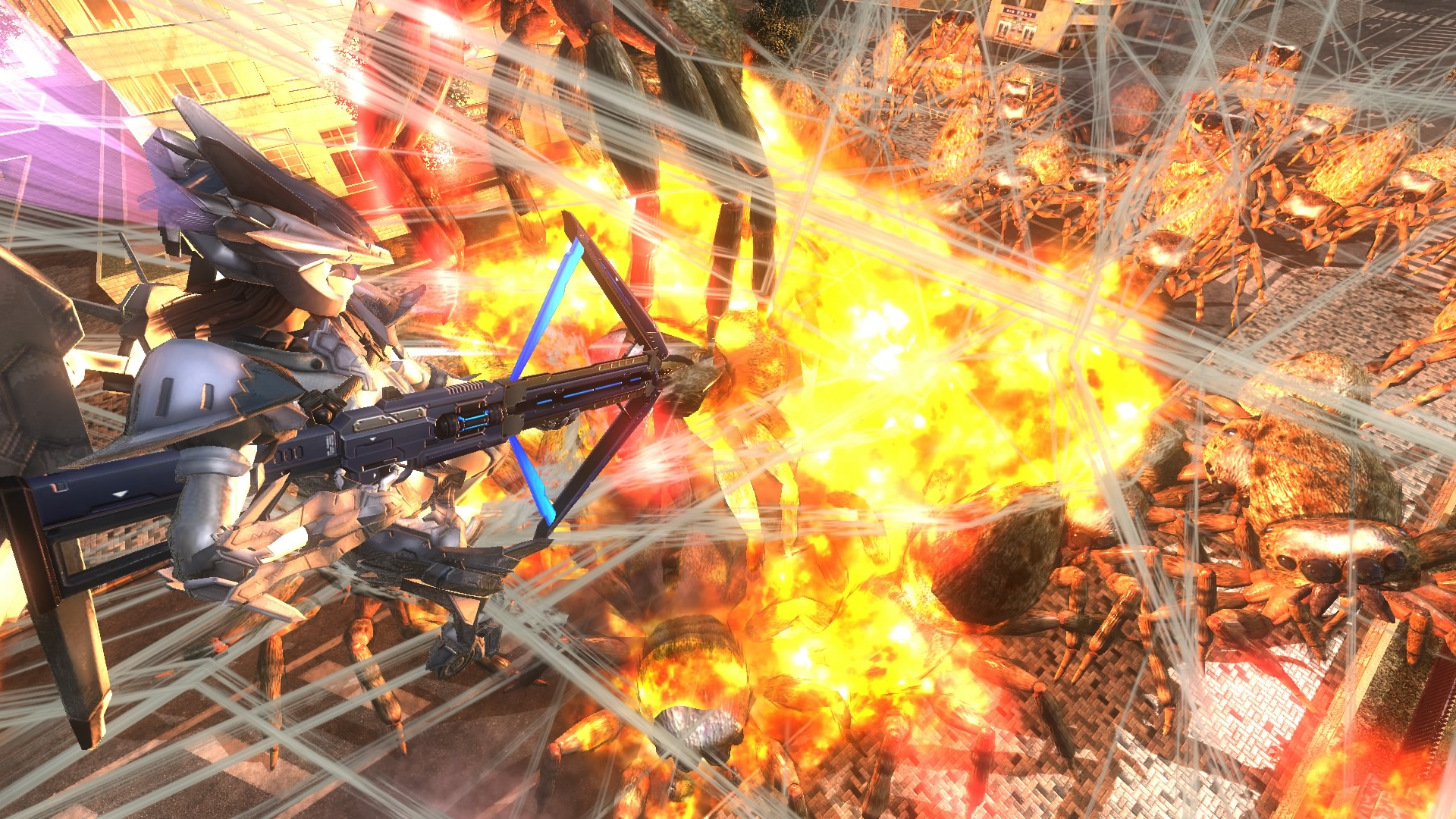
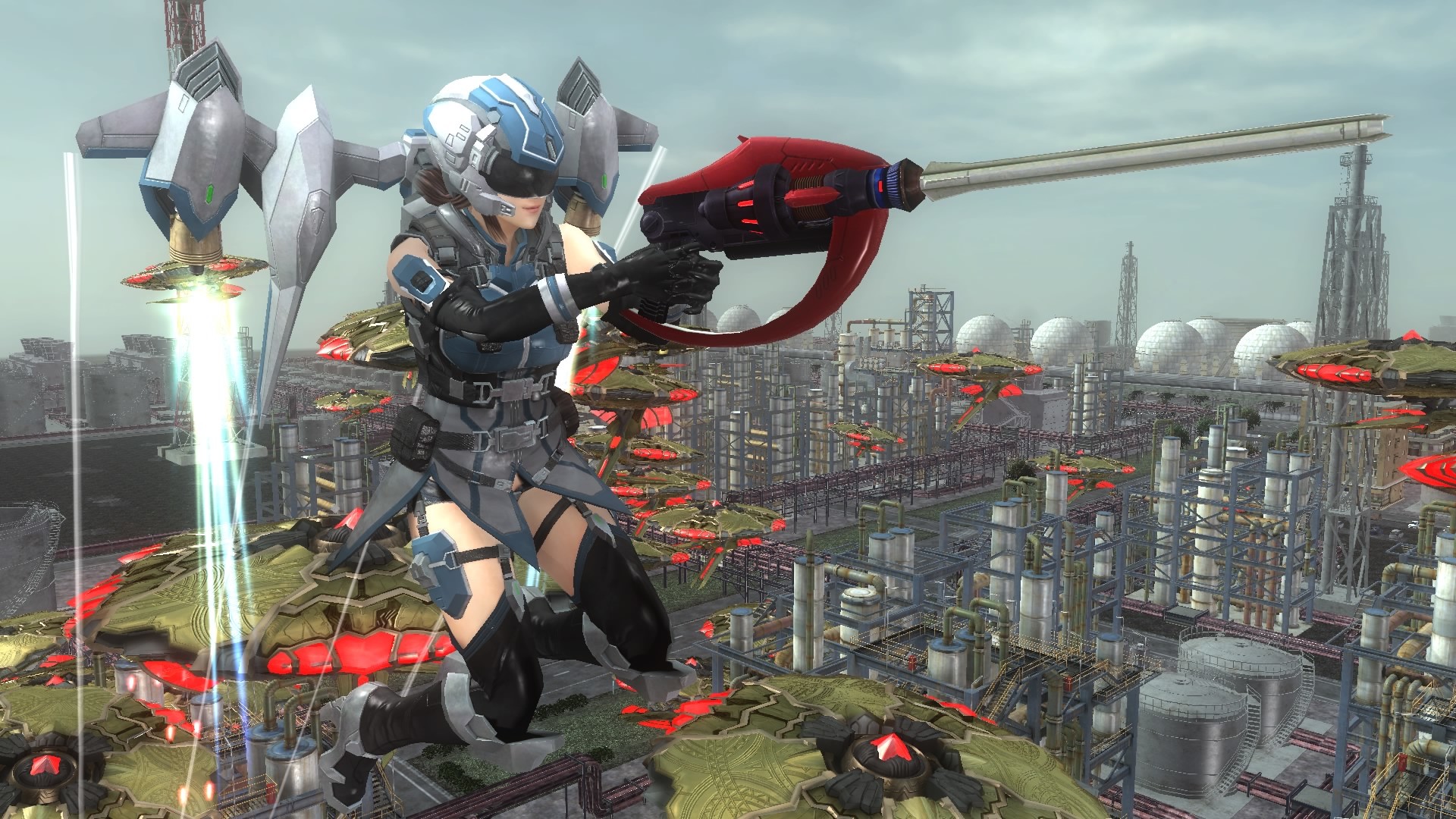
The Wing Diver's aerial combat is a fundamentally different game from the Ranger's ground war
Four Ways to Fight the Same Invasion
The four classes are not variations on a theme. They are distinct play styles with
different weapons, movement systems, and strategic roles that share the same maps
and objectives while playing entirely differently:
The Ranger is the starting class: a soldier with conventional
weapons, accessible on every difficulty level and effective from the first mission
to the last. The Wing Diver runs on an energy system, flying freely
and using weapons that draw from the same pool as movement - positioning decisions
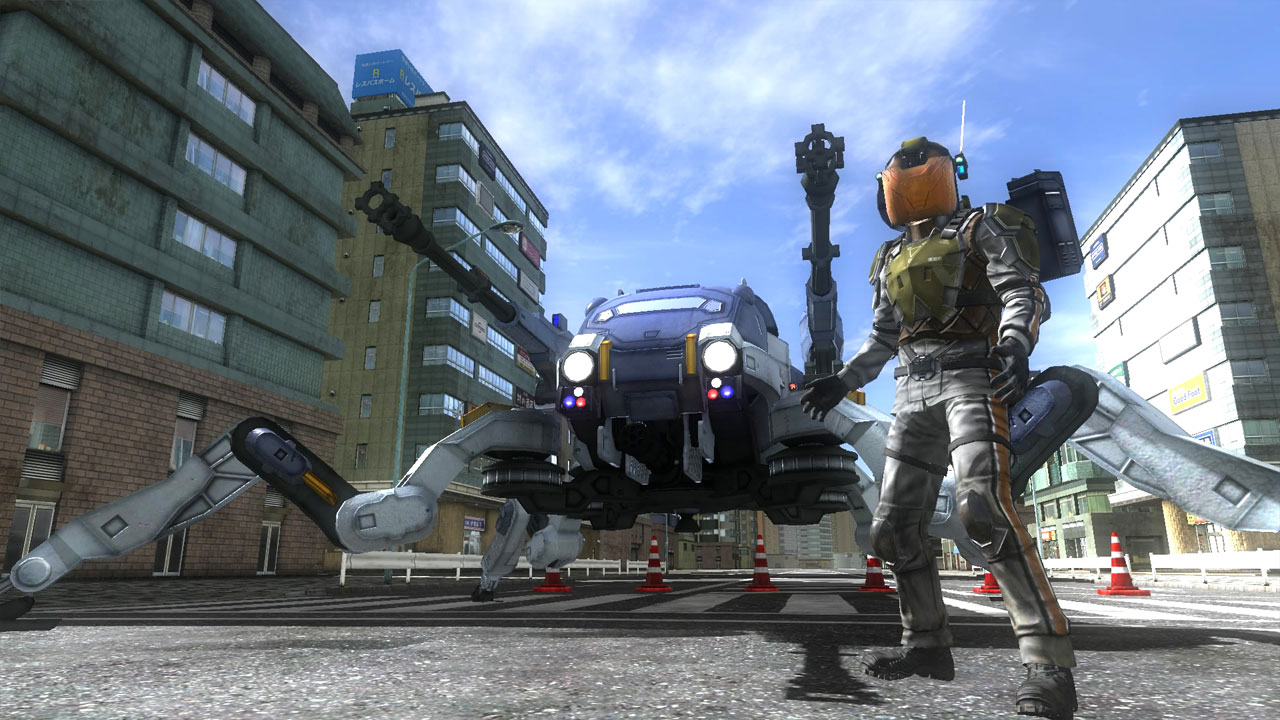
become resource management decisions simultaneously. The Air Raider
calls in vehicles, air strikes, and support equipment, playing as a battlefield
commander rather than a frontline soldier; in solo play this is awkward, in co-op
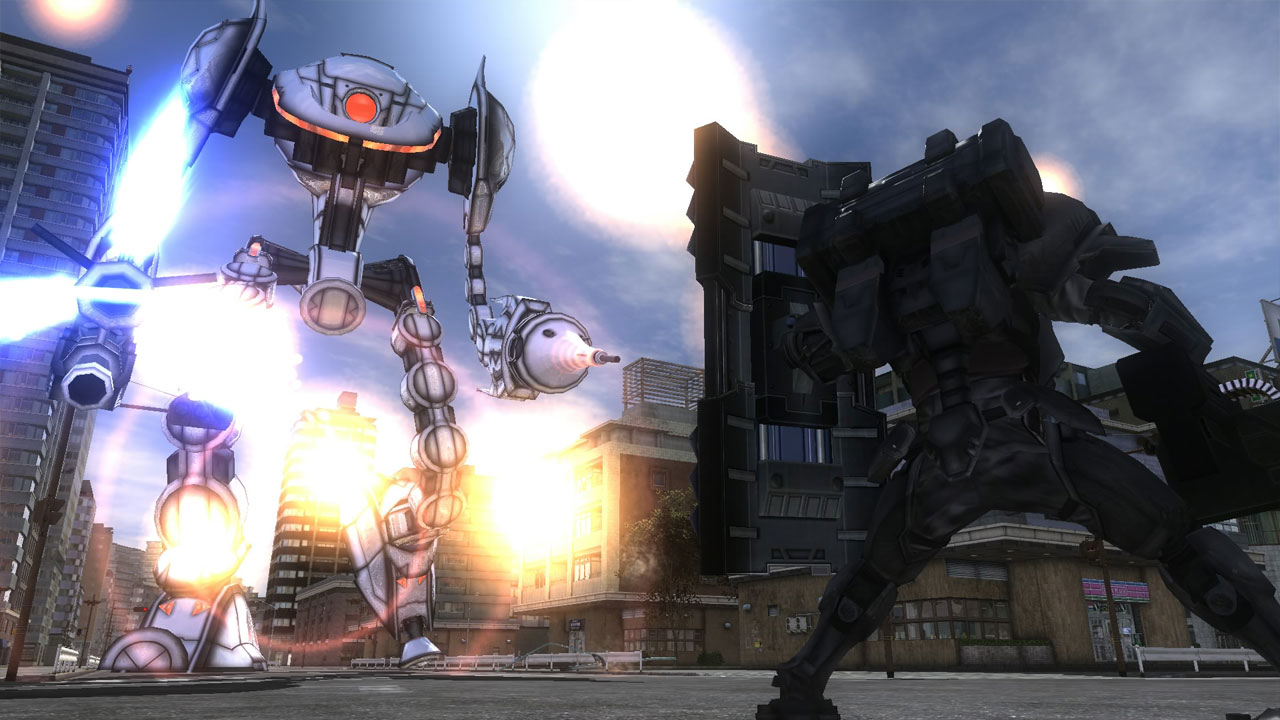
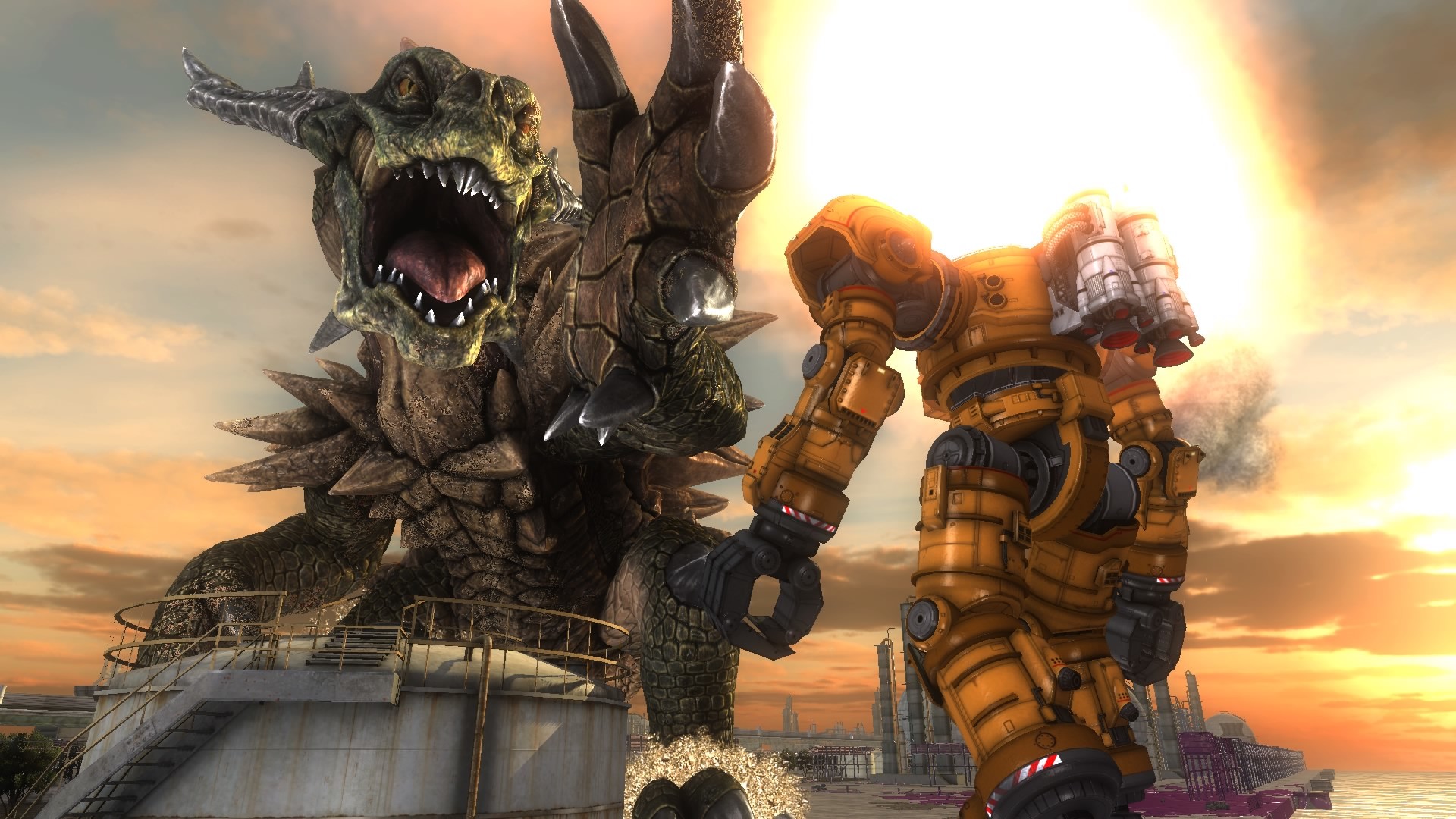
it is devastating. The Fencer is heavily armoured and heavily armed,
moving in short dashes between firing positions, capable of absorbing and delivering
damage that would destroy any other class in seconds.
Each class has hundreds of weapons available, discovered through random drops at the
end of missions. The loot system - weapons drop from enemies and crates at random -
drives repeat play in the way action RPGs drive their audiences. Players return to
earlier missions on higher difficulties specifically to find weapon loadouts they
have been building toward for hours.
The Fencer class sacrifices mobility for firepower and does not regret it
Hundreds of Weapons, One Loot System, Endless Replay
EDF 4.1 has 85 missions across four difficulty levels: Easy, Normal, Hard, and
Hardest. Completing missions on higher difficulties unlocks weapons with higher
damage ratings; the best weapons in the game drop only on Hardest. A player who
clears the campaign on Easy has seen all the missions but has not seen the weapons.
The content is layered across difficulties in a way that makes replaying mandatory
for players who want to build toward specific loadouts.
Online co-op supports four players simultaneously. The Air Raider class, which plays
awkwardly in solo, becomes the backbone of organised co-op runs. A well-coordinated
four-player team with an Air Raider calling in vehicle drops and artillery strikes,
two Rangers handling crowd control, and a Fencer on the heavy targets is EDF at its
most tactical.
Four-player online co-op transforms the class dynamics into something approaching genuine strategy
"The absurd joy of mowing down alien hordes has never been better realised... a gleeful celebration of B-movie excess."
Eurogamer, Recommended - EDF 4.1 review, 2015
The Review Verdict That Matched the Word of Mouth
Eurogamer awarded EDF 4.1 its Recommended badge - the publication's marker for games
worth buying rather than merely experiencing. IGN gave 7.8/10. GameSpot gave 7/10.
Metacritic aggregated the PS4 reviews to approximately 72/100. No outlet placed it
among the year's best games; all acknowledged that what it does, it does better than
anything else doing the same thing.
The Ranger handles spiders and UFOs with equal indifference across 85 missions
The PC Version Changed Who Plays EDF
Before EDF 4.1 on Steam, EDF was a console franchise with no meaningful PC presence.
After December 2016, it had a community of Steam players reviewing, discussing, and
spreading enthusiasm about giant insects. The Steam version of EDF 4.1 directly
enabled the Western success of EDF 5 on PC in 2019 - players who discovered 4.1 on
Steam in 2017 and 2018 were anticipating EDF 5 before it was confirmed for a PC release.
Late-game missions stack enemy types in configurations that demand class coordination
Earth Defense Force 5: The Peak (PS4 / PC, 2017 / 2019)
EDF 5 - PS4 / PC
Earth Defense Force 5 is the series at its best. Released in Japan
on December 7, 2017 - exactly eleven years after EDF 2017's Japanese launch - it
took everything the franchise had built and pushed it further simultaneously: more
enemies, a new composer, two new alien factions, a darker narrative register, and a
cover mechanic the series had never attempted before. The result works for long-time
players and newcomers with equal generosity.
The Western PS4 release arrived on December 11, 2018. The PC version followed on
July 11, 2019. By the time Steam players got their hands on EDF 5, expectations
from the EDF 4.1 community were high, and the game met them.
Giant Frogs, Armored Aliens, and a New Composer
EDF 5 introduces two new alien factions alongside the familiar giant insects.
The Colonists - sometimes called Cosmonauts in localisation - are frog-like bipeds
in environmental suits. The Primers are enormous humanoid beings who communicate
with humans before escalating their assault to something genuinely threatening.
Both factions are played completely straight by the in-game EDF soldiers, which is
where the comedy comes from.
The score is by Masafumi Takada, composer of Danganronpa,
No More Heroes, and killer7. Takada's EDF 5 soundtrack departs
from Jun Fukuda's heroic orchestral style - it is tenser, more atmospheric, and
willing to sit in genuine unease. The result does not abandon the series' identity
but reframes it: EDF 5 feels like a franchise that has grown up while remaining
committed to the same premise.
The Colonist enemies provoked full existential crisis from the EDF's rank and file
When the Buildings Started Fighting Back
EDF 5 introduced a cover mechanic that changed the game's tactical vocabulary at a
fundamental level. The Colonist enemies use city buildings for cover, ducking behind
walls and flanking from alleys. Players respond in kind - crouching behind corners,
flanking around blocks, using urban geometry as a tactical resource rather than
just a backdrop.
This is not cover-shooting in the conventional sense. EDF has too many enemies
moving too fast for conventional cover to be reliable. What the mechanic adds is a
spatial vocabulary to encounters that earlier EDF games lacked - the city becomes a
war zone with meaningful geometry rather than just a surface for enemies to emerge from.
Urban combat in EDF 5 uses building cover in ways the series had never previously attempted
B-Movie Premise, Cover-Based Execution
What EDF 5 achieves is the marriage of the franchise's chaos with mechanical depth
that rewards attention. The Colonist AI uses buildings for cover, requiring Sandlot
to implement pathfinding that previous EDF games did not need. The Colonist enemy
type - a ground-based infantry fighter rather than a swarming insect - demanded
different tactical responses and forced the class-based co-op system to be used
with more deliberation.
Four-player online co-op was fully designed-in from launch, not added as a port
feature. At EDF 5's peak in 2018 and 2019, players were coordinating class loadouts,
assigning roles, and running high-difficulty missions with the kind of pre-game
organisation more typically associated with MMO raids than third-person shooters.
Four-player co-op is where EDF 5's class system finds its highest expression
"EDF 5 is the series at its most polished and funniest - the co-op remains as riotous as ever."
IGN, December 2018 - EDF 5 review, 8.5/10
The Best Review Scores the Series Has Ever Received
IGN awarded EDF 5 an 8.5/10 - the highest score the series has received from that
publication. GameSpot gave 8/10. Eurogamer awarded Recommended. Metacritic
aggregated the PS4 reviews to approximately 78/100. Famitsu scored the Japanese
release 31/40 in December 2017. Across all major outlets, EDF 5 received coverage
that treated it as a serious game rather than a cult curiosity.
"Five is the best EDF yet... if you've ever wanted to know what it feels like to punch through a city block while being swarmed by frogs, here's your answer."
Eurogamer - EDF 5 review, Recommended
The Primer faction brought genuine science fiction menace to EDF's B-movie stage
The Blueprint EDF 6 Followed
EDF 6 - released in Japan in August 2022 and in the West in July 2024 - builds
directly on EDF 5's foundation. The four-class system, the two-new-faction structure,
the online co-op framework, and Masafumi Takada's involvement as composer all
carried forward. EDF 5 defined what the modern EDF game looks like.
For players who have not yet played EDF 5, it is the standard recommendation for
the modern franchise - deeper than EDF 4.1's loot loop, more varied than earlier
entries, and more polished than anything that came before it. The PC version on
Steam is the most accessible entry point available in 2026.