Rare Before Donkey Kong 1982 – 1992
Tim and Chris Stamper founded Ultimate Play the Game in 1982 in the English Midlands - a self-funded venture that would eventually become one of the most important British game development studios of its era. Operating initially from their home, the brothers built a reputation for technically ambitious Sinclair Spectrum games: Jetpac, Atic Atac, Sabre Wulf, and a string of others that demonstrated hardware mastery well beyond what most developers achieved on the ZX Spectrum's 48KB of RAM.
By 1985, the brothers had rebranded as Rare and pivoted to Nintendo hardware. They secured a direct developer licence with Nintendo of America - one of the few Western studios to do so - giving them privileged access to development tools and a direct publishing relationship that would prove foundational to the DKC era. On the NES, Rare produced Battletoads in 1991: a notoriously difficult beat-em-up that showcased the studio's ability to push Nintendo hardware to its limits, with animation quality that impressed Nintendo engineers.
The ACM Breakthrough 1993 – 1994
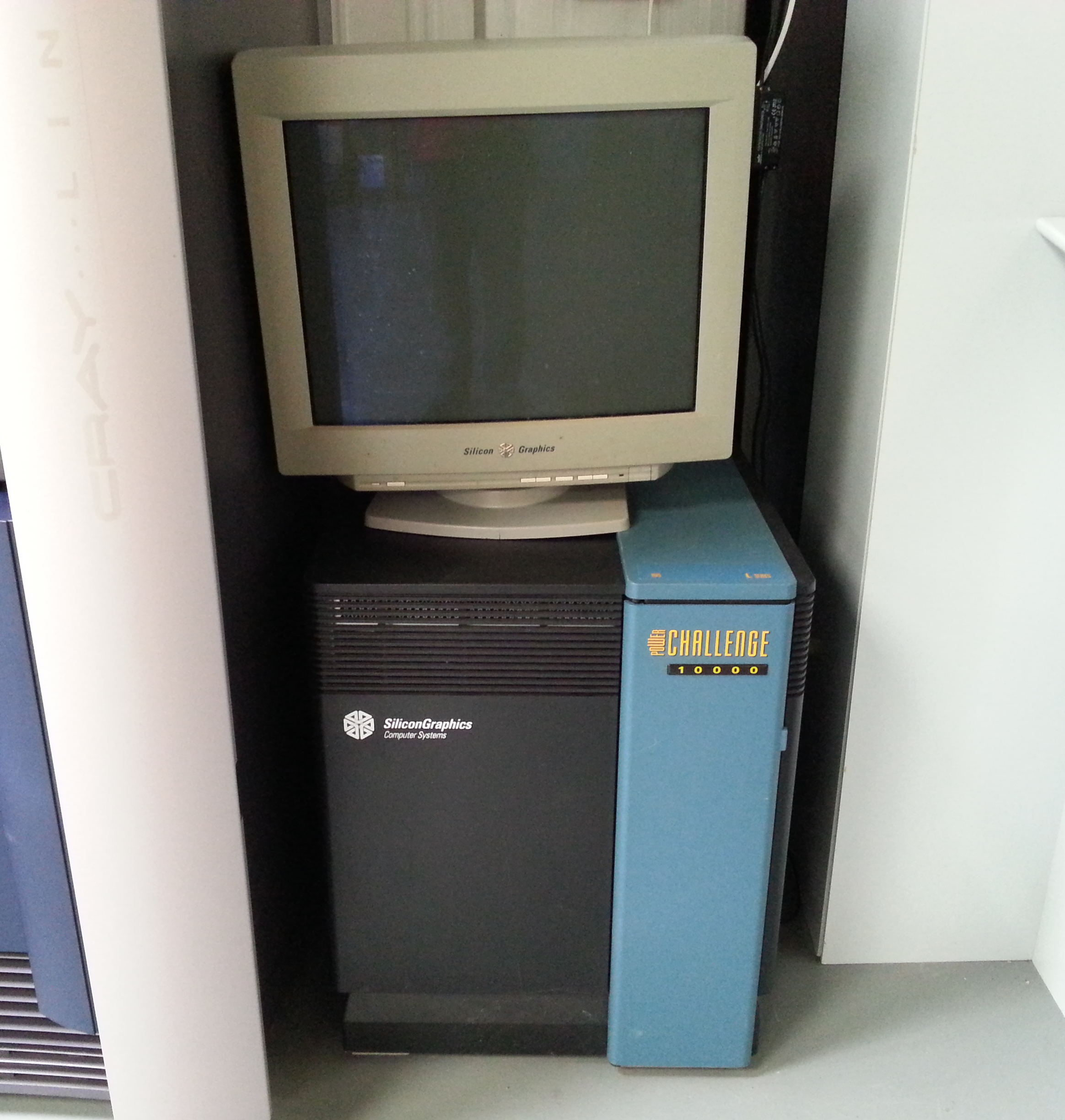
The pivotal insight came from Hollywood. When the Stamper brothers saw what Silicon Graphics workstations could produce for films - most visibly in Jurassic Park (1993) - they identified a novel application: render 3D models at high quality on the SGI hardware, capture the renders as sprites, compress them for SNES display, and achieve a visual depth and shading quality impossible to reproduce through conventional 2D art. Rare called this technique Advanced Computer Modelling, or ACM.
The ACM pipeline required SGI workstations that cost over £100,000 each - an enormous capital investment for a studio of Rare's size. The Stampers committed to the purchase. The results vindicated the decision: DKC's pre-rendered characters and environments achieved a level of visual fidelity that made competing SNES titles look flat and dated by comparison. When Rare demonstrated a prototype to Nintendo, reportedly Shigeru Miyamoto - initially sceptical about a Western studio handling a Nintendo licence - reversed his position upon seeing the SGI-powered visuals.
"When Miyamoto-san saw what we were doing with the SGI pipeline, his reaction changed completely. He said it was the most impressive thing he had seen on SNES hardware." - Account of the Nintendo demonstration, reported in multiple retrospective interviews with Rare staff
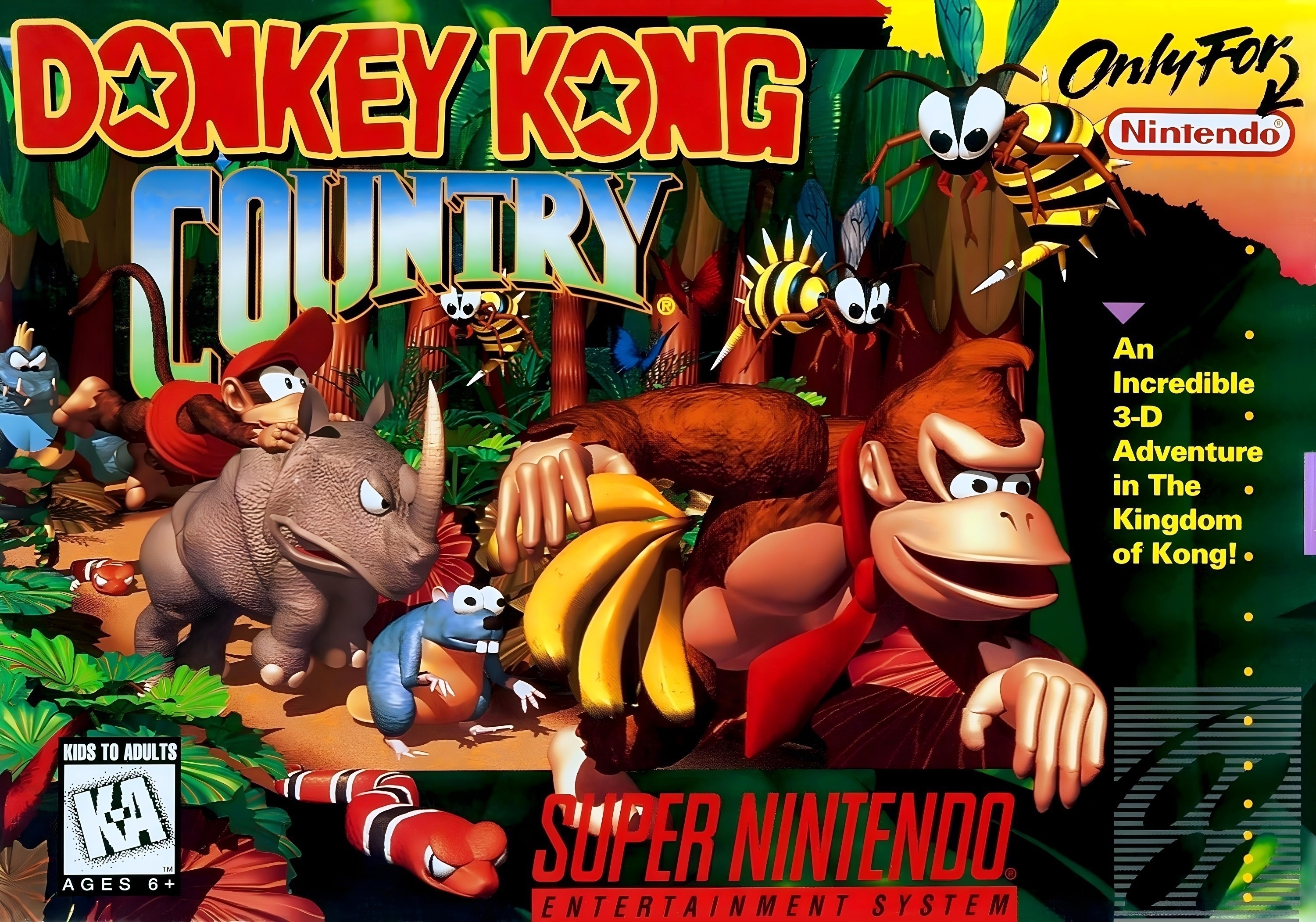
Development of DKC lasted 18 months, carried out by a team of fewer than 20 people. The game shipped in November 1994 to extraordinary commercial success: Nintendo received over a million pre-orders before launch, and DKC sold 9.3 million copies over its lifetime, becoming the second best-selling SNES game of all time. More significantly, it established Rare as one of Nintendo's most trusted external development partners.
The Masterwork 1995
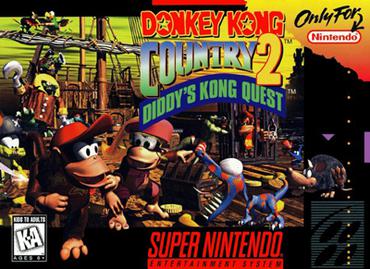
Donkey Kong Country 2: Diddy's Kong Quest arrived in November 1995 and surpassed the original in almost every respect. Lead designer Gregg Mayles chose a pirate world aesthetic, allowing for tonal variety that the jungle-centric DKC1 couldn't achieve: rusted pirate ships, bramble-choked fortresses, lava-world factories, eerie haunted amusement parks. Each world had its own visual identity and atmospheric logic.
Dixie Kong's helicopter spin - a button-hold that slowed descent and extended airborne time - added a second layer of platforming depth on top of DKC1's established systems. DK Coins and Kremcoins introduced a robust collectible layer that rewarded thorough exploration with access to the Lost World: five bonus stages of extraordinary difficulty. David Wise's score for DKC2 is widely regarded as the finest video game music ever composed for a SNES title.
"Stickerbush Symphony came from a particular state of mind. I was in a reflective place and I think that came through in the piece. It's probably the most personal music I wrote for any game." - David Wise, composer of the DKC trilogy
The Ambitious Finale 1996
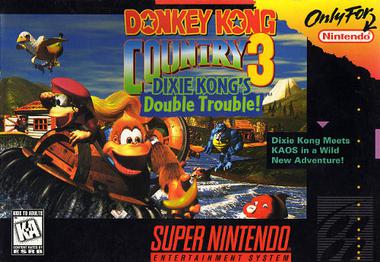
Donkey Kong Country 3: Dixie Kong's Double Trouble! arrived in November 1996, developed simultaneously with Rare's primary focus on GoldenEye 007 for the Nintendo 64. A secondary Rare team carried DKC3 across the finish line, and the game reflected both the ambition of a studio pushing its creative vocabulary and the reality of divided resources.
DKC3 introduced Kiddy Kong, added the Brothers Bear NPC network across the Northern Kremisphere overworld, and built a Banana Bird sub-quest requiring players to collect all 85 birds for the true ending. The KAOS robot boss - whose internal power source revealed in the final act is a genuinely memorable plot beat - gives the trilogy's villain arc a satisfying finale. Eveline Fischer's experimental score took a deliberately different direction from Wise's first two soundtracks, incorporating unusual harmonic choices and rhythmic textures that divided opinion at the time but have since found appreciation.
Rare retrospective - the making of Donkey Kong Country
With DKC3's release, Rare's attention shifted entirely to the Nintendo 64. GoldenEye 007 shipped in 1997 and became one of the most significant console games ever made. The SNES era was over. The Donkey Kong Country trilogy had defined it.