Flagship Titles
Deep dives into the four greatest Dizzy adventures - Fantasy World, Spellbound, Magicland, and Crystal Kingdom.
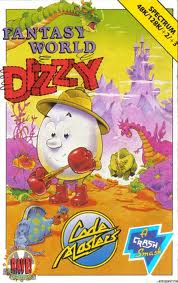
The Game That Found the Balance (1989)
Fantasy World Dizzy is widely regarded as the finest entry in the entire Dizzy series. Released in 1989 by Codemasters on ZX Spectrum, Amstrad CPC, C64, Amiga, and NES, it marks the moment The Oliver Twins found the right combination of accessibility and puzzle depth. Where the preceding Treasure Island Dizzy had frustrated players with a single-life system, Fantasy World rebuilt the experience around three lives, a larger world, and a difficulty curve that rewards exploration rather than punishing failure.
When One Life Was One Too Many
Treasure Island Dizzy shipped with a brutal constraint: one life. Die once - from a fall, a creature, a mistimed jump - and you start the whole game over. For a format built around careful item management and deliberate exploration, this made the experience punishing in ways that felt arbitrary rather than fair. Reviews noted the issue; players wrote in to magazines.
The Oliver Twins listened. Fantasy World introduced three lives and was designed from the outset to be replayed without feeling like punishment. They were still teenagers when they made this decision, but the structural clarity they brought to the redesign is impressive. The world is generous; puzzles have context; solutions feel discoverable rather than random. The format arrived at its mature form here.
"Dizzy was designed to be a simple egg shape for ease of animation on 8-bit hardware. The character could bounce, rotate, and roll without complex sprite work - the shape made everything possible."
Philip Oliver, The Oliver Twins - series retrospective (The Oliver Twins YouTube channel)
Carry Three Things, Think One Step Ahead
The three-item inventory sits at the centre of Fantasy World's design. You cannot carry everything - you must observe what the world contains, think about where objects are needed, and plan your routes accordingly. Dizzy's friends, the Yolkfolk, are imprisoned by Zaks the Wizard throughout the map. Each Yolkfolk character requires a specific item or sequence of items to rescue. Free the right person in the right order and the world opens further.
The result is a game where exploration and puzzle-solving are inseparable. You walk through an area, note what it contains, consider what you are carrying, and decide whether to continue forward or go back for something specific. It is an unhurried loop that rewards patience and observation without demanding a walkthrough. The world design is transparent enough that most players can navigate it without external help if they pay attention to what the game shows them.
ZX Spectrum Limits, Used with Care
The ZX Spectrum version fits an impressive amount of world into 48K of RAM. The map is large enough to feel genuinely explorable without becoming disorienting; screens connect logically; each area - forest, castle, caves, clouds - has a distinct visual identity within the Spectrum's constrained palette. Getting all of that into the machine without the world becoming visually confusing is an achievement.
The C64 version, with music by David Whittaker, is particularly celebrated. Whittaker's SID compositions give the C64 version an energy that elevates the whole experience - the title theme is one of the most recognisable tunes in Codemasters' 8-bit catalogue. The music is archived and playable on the music page. An NES version also exists, making Fantasy World one of only a handful of Dizzy titles to reach that platform.
Nine Out of Ten, First Read
Your Sinclair awarded the ZX Spectrum version 9/10 - an enthusiastic score that reflected genuine delight rather than faint praise. Zzap!64 scored the C64 port 84%. Both reviews recognised that Fantasy World was a meaningful step up from its predecessors: not just another Dizzy game, but the series finding its best form. The accessible price point (Codemasters priced all their games at £1.99 or £2.99) made a genuinely good game available to a huge audience.
The Template Every Sequel Used
Every main-series Dizzy game that followed Fantasy World used the same core structure: a large interconnected world, a limited inventory, the Yolkfolk to rescue, Zaks as the antagonist. The game defined the formula so precisely that its successors could innovate within the structure rather than rebuild it. Spellbound pushed the scale of the world. Magicland refined the puzzle integration. Crystal Kingdom polished everything. None of them reinvented what Fantasy World established.
For new players approaching the series, Fantasy World is the right starting point - the game that best represents what Dizzy is and why it mattered. See the full catalogue for platform details, the people page for profiles of the Oliver Twins and composers, and the modern legacy page for the story of the NES revival.
Sources: Wikipedia - Fantasy World Dizzy; MobyGames - Fantasy World Dizzy
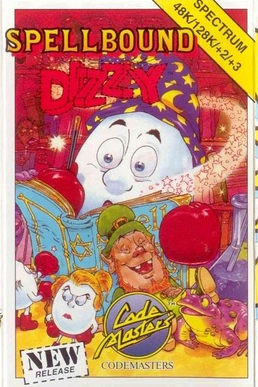
The Largest World 8-bit Dizzy Ever Showed (1990)
Spellbound Dizzy is the most ambitious game in the main Dizzy series. Released in 1990 on ZX Spectrum, Amstrad CPC, C64, Amiga, and Atari ST, it takes the formula established by Fantasy World and scales it to the limit of what 8-bit hardware can hold. The world is larger, the item list is longer, and the puzzle chains are more complex than anything The Oliver Twins had attempted before. It is also one of two main series Dizzy adventures released in the same calendar year, making 1990 the most remarkable year in the series' history.
A Game Built Bigger Than Originally Planned
The story follows Dizzy accidentally casting a spell that imprisons the Yolkfolk - he must gather spell ingredients scattered across a vast, interconnected world to undo it. That premise gives The Oliver Twins licence for a map with genuine geographic ambition: a haunted house, a snow-covered mountain, an underwater zone, a desert, a fairground. Each area has its own visual identity and its own internal puzzle logic.
"We were making games every few weeks at Codemasters. Spellbound was our chance to stop and really go big - to take everything we knew about the format and build the largest world we possibly could within the hardware limits."
Andrew Oliver, retrospective interview (Retro Gamer, Oliver Twins career feature)
1990 was an extraordinary year for Codemasters' Dizzy output. The Oliver Twins published Kwik Snax (a puzzle spin-off), Magicland Dizzy, and Spellbound Dizzy all within a few months of each other. Of the three, Spellbound was by far the most complex main-series adventure - the one where scale was the explicit design goal.
More Places, More Problems, More Payoff
The gameplay loop is the same one established by Fantasy World: explore, collect items, solve puzzles, rescue Yolkfolk, progress through a world that opens as you solve it. But the number of items and locations in Spellbound means that tracking what you need and where to use it requires real mental effort - and real engagement with the world map.
The game rewards players who take time to map the world and note what they find. With so many locations and items in play simultaneously, casual exploration will frequently leave you stuck - not because puzzles are unfair, but because the answer to your current problem sits on the other side of a map you have not yet fully explored. Spellbound is a patient game that requires patience in return. It is not a good starting point for the series precisely because of its scale, but it is a superb destination for anyone who loved Fantasy World and wants more of everything.
Matt Gray and the Sound of Scale
The C64 version of Spellbound Dizzy features a SID soundtrack by Matt Gray - widely regarded as one of his finest contributions to the series. Gray's Dizzy music on C64 is celebrated by the SID community for its melodic quality and mood-setting within the tight constraints of the SID chip. The Spellbound themes are among his most ambitious, with a main tune that carries a sense of genuine adventure. Listen on the music page.
Recognised at the Time, Remembered Since
Contemporary reviews in Your Sinclair and Zzap!64 acknowledged the scale of what The Oliver Twins had achieved. The game was positioned at the time as the definitive Dizzy adventure - the one that used the formula to its full potential. That reputation has persisted. Community polls at Yolkfolk.com consistently place Spellbound among the top two or three titles in the series, alongside Fantasy World.
The Other Half of the Fan Argument
Fantasy World versus Spellbound is the defining debate in the Dizzy community. Fantasy World partisans point to its balance and accessibility; Spellbound advocates cite its depth and ambition. Both positions are defensible. What they agree on is that the two games together represent 8-bit Dizzy at its highest level. See the full listing on the catalogue page, and browse the C64 soundtrack on the music page.
Sources: MobyGames - Spellbound Dizzy; Wikipedia - Spellbound Dizzy
Smaller World, Better Puzzles (1990)
Magicland Dizzy arrived in 1990, published alongside Spellbound in what became the most prolific year in the series' history. Where Spellbound pursued scale, Magicland pursued coherence - tighter integration between objects and environments, a more focused world, and a difficulty curve calibrated to feel genuinely challenging without becoming frustrating. Many players who have worked through all four flagship titles rate Magicland the most satisfying puzzle experience of the main series.
Three Main Dizzy Games in Twelve Months
The 1990 output was remarkable: Kwik Snax, Magicland Dizzy, and Spellbound Dizzy all published within the same calendar year. Each is a distinct experience. Kwik Snax is a puzzle spin-off. Spellbound is the largest adventure. Magicland is the most refined. Publishing three games of this quality within twelve months reflects both the Oliver Twins' design efficiency and their deep familiarity with the Dizzy format by this point in the series.
"By 1990 we knew the format well enough to focus on making every puzzle feel natural. Objects should belong in the world - they should make sense where they're found and where they're used. Magicland was where we really nailed that."
Philip Oliver, retrospective interview (Retro Gamer, Dizzy series feature)
The story is familiar: Zaks returns, imprisons the Yolkfolk, and Dizzy must navigate a magical land to free them. The world Dizzy traverses in Magicland is smaller than Spellbound's but arranged with greater care. Progress feels natural because the map is scaled precisely to the number of puzzles it contains.
Objects That Belong Where They Are Found
The distinguishing quality of Magicland's puzzle design is coherence. Items feel like natural parts of their environments rather than arbitrary collectibles. A shovel found near a garden area is, logically, used in that same area. A rope near a tall wall suggests a use without needing a hint. The game rarely asks you to make a logical leap that cannot be grounded in the world's own internal logic.
This approach makes Magicland more accessible than Spellbound without being easier. The difficulty is real - some of the puzzle chains require careful thought - but the path to solutions is cleaner. Your Sinclair praised the map design and puzzle integration in its contemporary review, a judgement that the game's reputation has borne out in the decades since.
Four Platforms, One Coherent Vision
Magicland Dizzy ran on ZX Spectrum, Amstrad CPC, C64, and NES - four machines with substantially different capabilities. Getting a game that played consistently well across all four was a significant technical task. The C64 version features music by Matt Gray - sweeping, adventurous themes that complement the magical setting and match the quality of his Spellbound work. Listen on the music page.
The Third Point of the Trilogy
Contemporary reviews were positive across platforms, recognising Magicland as a confident entry in a reliable series - refined rather than radical, but genuinely accomplished on its own terms. Its place in series history is as the third spoke of what fans now call the definitive trilogy: Fantasy World, Spellbound, Magicland. Each of the three brings something different to the format; together they represent 8-bit Dizzy at its best.
The full platform listing is on the catalogue page. The people page profiles Matt Gray and the other composers who shaped the sound of the Dizzy series on C64 and other platforms.
Sources: MobyGames - Magicland Dizzy; Wikipedia - Magicland Dizzy
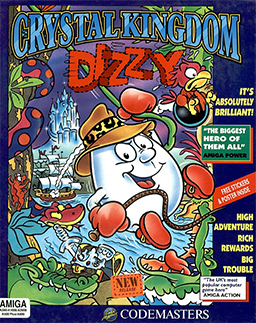
Five Years of Learning, One Final Game (1992)
Crystal Kingdom Dizzy is the last main-series Dizzy game from the original Codemasters run, and it went out on a high. Released in 1992 across ZX Spectrum, Amstrad CPC, C64, Amiga, Atari ST, and DOS, it is the most polished and technically accomplished of the main-series adventures. Everything The Oliver Twins had learned across five years and over a dozen Dizzy releases is evident in Crystal Kingdom - and the Amiga version in particular demonstrates what that accumulated knowledge could produce when the hardware allowed it.
The Amiga Gets Its Turn
By 1992, the Amiga was the primary platform for quality 16-bit gaming in Europe. Crystal Kingdom Dizzy was designed with this in mind. The Amiga version's visuals - full palette, smooth scrolling, detailed sprites - represent a dramatically different experience from the Spectrum original while preserving the same world and puzzle structure. The crystal-themed environments benefit especially from the Amiga's colour range: where the Spectrum version communicates the setting through clever use of attribute blocks, the Amiga version makes the crystal kingdom genuinely beautiful.
"By Crystal Kingdom we'd made Dizzy games on almost every platform available. We knew exactly what the hardware could do and we wanted to use all of it - especially on the Amiga, which could really show what the series was capable of."
Philip Oliver, retrospective (The Oliver Twins YouTube channel)
Every System Refined, Nothing Left Loose
Crystal Kingdom's puzzle design is the most confident in the series. Object interactions feel natural and logical - the result of five years of iteration on the same core systems. The world is well-sized: large enough to require genuine investment but not so large that tracking your progress becomes a burden. The Yolkfolk are well distributed through the map. The difficulty curve is properly calibrated. The game feels finished in a way that some of its predecessors, produced under tighter time pressure, do not.
The crystal-world setting also gives the environments a visual coherence that distinguishes Crystal Kingdom from earlier entries. Where Fantasy World was a colourful mix of biomes and Spellbound leaned into variety for its own sake, Crystal Kingdom has a unified aesthetic. The world feels like a place with its own logic rather than a collection of themed zones assembled for the puzzles.
What the Amiga Could Show That the Spectrum Could Not
Compare the Crystal Kingdom Dizzy Amiga screenshots against the ZX Spectrum version of the original Dizzy from 1987 and you see the full arc of the series: from attribute-block characters on black backgrounds to fluid colour and sound on genuine 16-bit hardware. The Amiga version is the definitive way to experience Crystal Kingdom. The C64 version, true to the series' form, features strong SID music - hear it on the music page.
Critics Found a Fitting Finale
Contemporary reviews recognised Crystal Kingdom as a polished, accomplished entry. The Amiga press noted the visual quality in particular. The game sold well and left the series on good terms with its audience - a warm exit from a franchise that had delivered consistently good work across five years of releases.
The Long Silence, and What Came After
After Crystal Kingdom, no new main-series Dizzy adventure appeared for over two decades. The Oliver Twins went on to found Interactive Studios - later renamed Blitz Games - where they developed a wide range of titles across multiple platforms before the studio closed in 2013. Their full careers are profiled on the people page.
The silence finally broke in 2015 when a Kickstarter campaign led to two previously unreleased NES Dizzy games - Wonderland Dizzy and Mystery World Dizzy - being made available as free ROM downloads. Fast Food Dizzy appeared on Nintendo Switch in 2022. The modern legacy page tells the full story of the long gap and the revival. For platform details on Crystal Kingdom, see the catalogue page.
Sources: MobyGames - Crystal Kingdom Dizzy; Wikipedia - Crystal Kingdom Dizzy