Five titles spanning 1992 to 1995 — three pinball simulations, one platformer,
and one breakout clone.
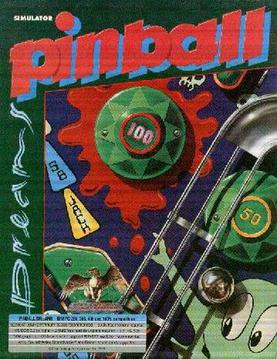
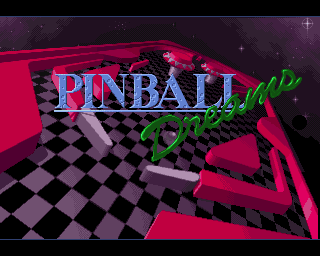
Pinball Dreams
1992
Developer: Digital Illusions
Publisher: 21st Century Entertainment
Music: Olof Gustafsson (Blaizer)
Genre: Pinball Simulation
Digital Illusions’ debut commercial release, Pinball Dreams set an immediate
benchmark for Amiga physics simulation. The game’s ball movement convinced players they
were watching a real pinball, a feat of programming from the former demoscene crew.
Four tables offered distinct play styles: Steel Wheel (industrial mechanics),
Ignition (racing theme), Nightmare (gothic horror), and
Beat Box (music theme). Each table had its own Protracker MOD score by
Olof Gustafsson. Ported to multiple platforms following its Amiga success.
AmigaDOSCD32Atari STGame Boy
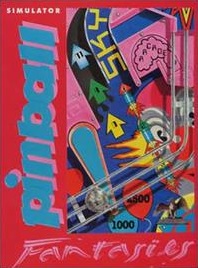
Pinball Fantasies
1992
Developer: Digital Illusions
Publisher: 21st Century Entertainment
Music: Olof Gustafsson (Blaizer)
Genre: Pinball Simulation
The follow-up surpassed Pinball Dreams in every respect. Four new tables with
greater variety and mechanical depth: Partyland (fairground theme),
Speed Devils (motorsport), Billion Dollar Gameshow
(game show parody), and Stones ‘n’ Bones (rock & roll).
The physics engine was refined further, and Gustafsson’s compositions grew more
ambitious. A DOS port appeared in 1993 and the game was ported to CD32, Atari ST,
Game Boy, and Super Nintendo — reaching audiences well beyond the Amiga faithful.
Considered by many to be the finest game in the trilogy.
AmigaDOSCD32Atari STGame BoySNES
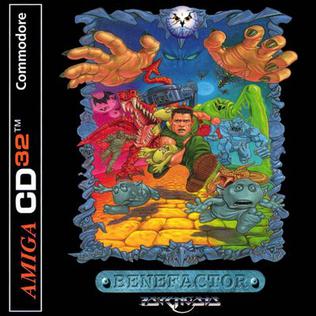
Benefactor
1994
Developer: Digital Illusions
Publisher: Psygnosis
Music: Olof Gustafsson (Blaizer); Magnus Walterstad (CD32)
Genre: Puzzle Platformer
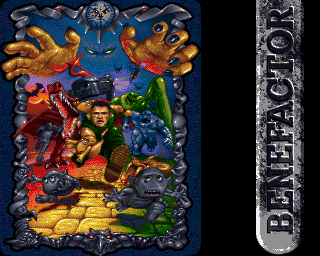
Published by Psygnosis, Benefactor proved Digital Illusions was not a one-genre
studio. Players navigate 60+ levels as a rescuer retrieving captured workers from
increasingly hazardous environments. The game combines precise platforming with
puzzle elements: switches, lifts, moveable blocks, and enemies demanding tactical
thinking rather than reflexes alone. The CD32 version featured an extended soundtrack
by Magnus Walterstad alongside Gustafsson’s main compositions.
CU Amiga awarded the game 87% in their July 1994 review, praising the level design
and responsive controls.
AmigaCD32
Pinball Illusions
1995
Developer: Digital Illusions
Publisher: 21st Century Entertainment
Music: Olof Gustafsson (Blaizer)
Genre: Pinball Simulation
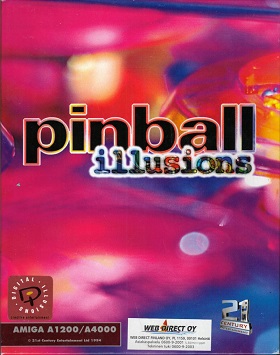
The trilogy conclusion was built to showcase the Amiga AGA chipset’s expanded
256-colour palette and enhanced graphical capabilities. Three tables of ambitious
scope: Addiction, Babewatch, and
Steel Wheel (revisiting the name from Pinball Dreams with an entirely
new design). DOS and CD32 versions followed the Amiga AGA release. Pinball Illusions
stands as the definitive Amiga AGA pinball game and a fitting conclusion to the trilogy
that defined Digital Illusions’ Amiga era.
Amiganoid is a Breakout/Arkanoid-style clone developed by Digital Illusions
for the Amiga. Whether it was released as freeware or as a commercial product requires
verification against Hall of Light and Lemon Amiga records. As a breakout clone it
represents the studio in its earliest form, before the commercial pinball titles
established their reputation.