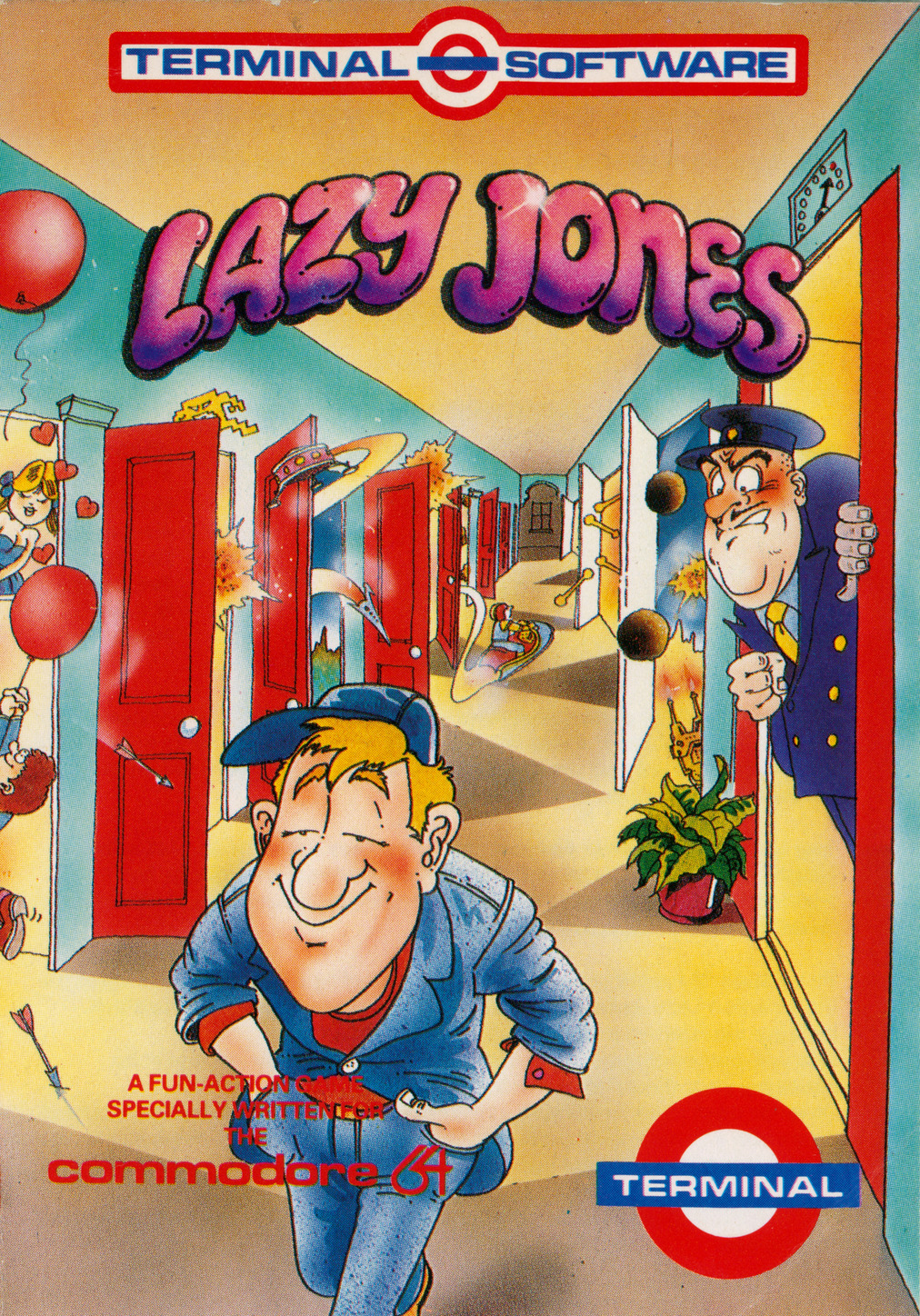
Lazy Jones
The subtune that became a #2 UK hit fifteen years later.
1984 · C64 · Terminal Software · 21 subtunes
C641984
Lazy Jones (1984) - C64 - Terminal Software
Lazy Jones (Terminal Software, 1984) is an omnibus of 21 mini-games
collected inside a single C64 title. The player navigates a hotel corridor as the
work-shy Jones, ducking into room after room - each containing a parody of an arcade
classic. Breakout, Frogger, Space Invaders analogues come and go in quick succession.
What made the game extraordinary was not the gameplay variety but the music: Whittaker
provided a distinct, fully realised SID composition for every one of those 21 rooms.
Whittaker’s First Major Credit
When Terminal Software commissioned Whittaker in 1984, his custom SID player driver
was still a year from completion. Lazy Jones was composed using earlier tools, before
the assembly-language driver that would underpin 280+ subsequent titles. Even so, the
game demonstrates the full range of what Whittaker had already learned to pull from
the SID chip: walking basslines that use the third voice as a rhythmic anchor,
arpeggiated chord figures that create the illusion of harmony from a single oscillator,
and melodic leads that step cleanly through the chip’s notoriously unstable filter.
Each subtune is self-contained and complete - not a loop variant but a different
composition with its own character. The result is a SID showcase that plays as a
set of miniatures: none over two minutes, none repeating the previous room’s
approach. Whittaker was 27 years old. It was not a tentative debut.
A Room for Every Genre, a Tune for Every Room
The design of Lazy Jones places the music in an unusual structural role. Because each
mini-game is short - typically 60 to 90 seconds of play before the player is ejected
back to the corridor - the subtune for that room acts as a complete sonic identity
rather than background wallpaper. The player hears a full statement of theme, perhaps
a repeat, and then it is gone. The brevity forces each piece to make its hook
immediate. Subtune 21, Stardust, opens with that descending four-note figure in the
first bar. There is no build-up, no intro. It simply begins.
Twenty-One Arguments for the SID Chip
The SID chip (MOS Technology 6581) has three oscillator voices, a noise channel, and
a multimode filter. Composing 21 pieces that each exploit the chip differently was not
a formal brief from Terminal Software - it was Whittaker’s approach to the commission.
Some subtunes lean on the filter for sweeping timbral changes. Others use ring
modulation between voices to create metallic percussive textures. Several use simple
two-voice writing, leaving the third voice silent, achieving a cleaner sound at the
cost of harmonic density. The variety across the 21 pieces amounts to a working
survey of SID composition techniques as Whittaker understood them in 1984.
A Cult Classic Hidden in Plain Sight
Lazy Jones was received well by C64 users and the gaming press of 1984, though its
profile was modest relative to contemporary titles by Rob Hubbard. The game was
reviewed as a competent, entertaining multi-game collection with strong music. It did
not immediately single out Stardust as a landmark composition - that assessment came
later, as the HVSC (High Voltage SID Collection) community catalogued and discussed
the tune and its remarkable melodic clarity.
By the mid-1990s, Stardust had become well-known among SID music fans as a prime
example of the early Whittaker style. The HVSC entry for Lazy Jones documents
all 21 subtunes, with STIL notes confirming Whittaker’s authorship and the
Stardust connection.
“I didn’t know anything about it until a friend phoned me and said
‘there’s a number two in the charts and it’s your tune’.”
David Whittaker on the Kernkraft 400 sampling of Stardust, widely reported;
original source: Lemon64 forum / press coverage
The Forty-Year Reach of a 1984 SID File
In 1999, Zombie Nation - German DJ duo Florian Senfter and Emanuel Guenther - released
Kernkraft 400 on the label Gang Go Music. The track was built around
an unauthorised sample of Stardust. It reached #2 on the UK Singles Chart, spending
multiple weeks in the top ten and becoming a fixture of football stadiums, sports events,
and club nights worldwide. It has been used in hundreds of sporting broadcasts and film
trailers since.
Whittaker received a settlement payment for the unauthorised use. The exact figure has
not been confirmed in any verifiable primary source, though it has been widely reported
as a modest sum given the track’s commercial success. The settlement acknowledged
his authorship. Kernkraft 400 is now among the most-played stadium anthems in European
football, and the SID file that spawned it - Lazy Jones - is one of the most downloaded
entries in the HVSC.
Shadow of the Beast (1989, Psygnosis) - Sega Genesis port cover, 1991
Shadow of the Beast (Psygnosis, 1989) arrived at the precise moment
the Amiga 500 needed a game that justified everything its hardware could do. Developed
by Martin Edmondson and Paul Howarth at Reflections, the title was built from the
outset as an audiovisual statement: 12 parallax-scrolling background layers, 132 frames
of character animation, and a musical score that Psygnosis commissioned Whittaker to
build at the same scale of ambition. The game was not primarily designed to be won.
It was designed to be experienced.
A Custom Format for an Impossible Requirement
The Amiga’s Paula chip provides four DMA audio channels, each capable of playing
8-bit PCM samples. The standard MOD format of the era - as used by ProTracker and
NoiseTracker - was well-suited to four-voice arrangements of the sequencer variety.
Whittaker’s score for Shadow of the Beast required something beyond this. The
orchestral ambition of the main theme - its sustained strings, its shifting brass
voicings, its rhythmic underpinning - could not be achieved within a standard four-channel
framework without significant compromise.
His solution was the DW format: a proprietary sample-based music
system documented by ExoticA as distinct from all contemporaneous Amiga formats. By
scheduling samples across channels with precise timing and overlapping voices, Whittaker
achieved an effective 22-channel playback from the four hardware channels. The format
demanded a custom player routine and careful memory management, but it delivered an
orchestral weight that no MOD-based approach of 1989 could match.
The DW format is a proprietary, sample-based music format used exclusively by David
Whittaker. Unlike standard ProTracker and NoiseTracker MODs, it uses a custom sample
scheduling mechanism to achieve an effective multi-channel sound from the Amiga’s
four-channel Paula hardware - a technique documented as unique in the Amiga format landscape.
ExoticA Wiki - David Whittaker (format), exotica.org.uk
Shadow of the Beast - the 12-layer parallax background Whittaker’s score was built to match
Platform Action as Spectacle
Gameplay in Shadow of the Beast is secondary to presentation - deliberately so. The
protagonist Aarbron, a human transformed into a beast-servant by the demon lord Maletoth,
runs left and right across enormous landscapes, fighting enemies with a limited moveset
and very little margin for error. The game was critically noted as being very hard; many
players never progressed past the first few screens. The design was later acknowledged
as heavily weighted toward visual impact over playability.
This made the music’s role unusual. In most action games of the period, the score
provides background energy during play. In Shadow of the Beast, the score IS the game
for a significant portion of players - the experience of moving through those layered
landscapes with Whittaker’s main theme playing is the primary memory most players
retain. The six movements shift in character from the opening orchestral statement
through more aggressive, rhythmic sections, then into atmospheric passages that match
the game’s varied environments.
The Benchmark That Lived for Years
UK Amiga press received Shadow of the Beast with exceptional scores. CU Amiga and
Amiga Power both cited the audiovisual combination as a new standard for the platform.
The game demonstrated that Amiga audio, handled by a composer with custom tooling,
could produce something qualitatively different from what contemporaneous home computer
formats could offer. The score entered the Amiga community’s canon almost
immediately: it was the benchmark against which other Amiga composers’ work
was compared.
Shadow of the Beast - Sega Genesis port, 1991
Legacy and the Orchestral Inheritance
Shadow of the Beast was ported to the Sega Genesis (1991), PC Engine, Atari ST, Amiga
CD32, and several other platforms over the following years. None of the ports achieved
the full scope of the original Amiga score due to hardware limitations. The game
received a PS4 remake in 2016 (developed by Heavy Spectrum), which reimagined the
score with a full orchestral arrangement while retaining the structure of Whittaker’s
original compositions.
Allister Brimble, a long-time colleague of Whittaker’s, released
David Whittaker Amiga Works on Bandcamp - an album of orchestral arrangements
of Whittaker’s key Amiga scores. The Shadow of the Beast theme is among the
most prominent treatments on the record, demonstrating how the original DW format
compositions translate to full orchestration without structural changes.
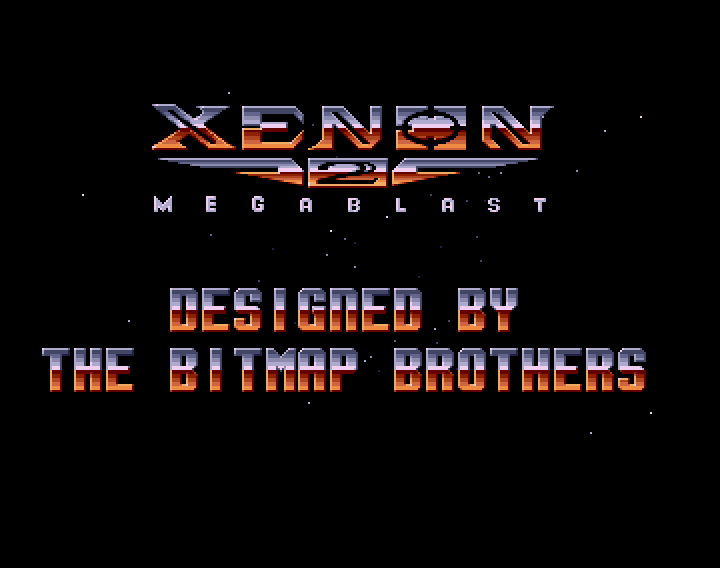
Xenon 2: Megablast (Bitmap Brothers, 1989) was the sequel to the
Bitmap Brothers’ first title, and it announced a design philosophy that would
define the studio: everything - the graphics, the sound, the game feel - had to be
exceptional. On this occasion, exceptional meant licensed. The title screen of
Xenon 2 plays “Megablast (Hip Hop on Precinct 13)”
by Bomb the Bass - a contemporary UK chart act - in a direct and
confident assertion that video game audio could compete with pop music for
production value. Whittaker’s original compositions cover the in-game
experience.
Where a Licensed Title Track and an Original Score Had to Coexist
The Bitmap Brothers’ decision to license Bomb the Bass was both a marketing
statement and an engineering challenge for Whittaker. His in-game tracks could not
afford to sound like a step down from the licensed title theme - the player would
hear Bomb the Bass first and then Whittaker for the next hour of play. The solution
was to push the DW format hard in the direction of the licensed track’s register:
synth-heavy, driving, with a rhythmic aggression that suited the game’s futuristic
vertical-scrolling structure.
The C64 version - which also carries Whittaker’s name in the credits - required
adapting the Amiga compositions for the SID chip. The two platforms have fundamentally
different audio architectures: Paula’s sample-based system versus the SID’s
synthesis oscillators. Achieving consistent musical character across both was a
compositional problem as much as a technical one.
MobyGames documents the dual music credit for Xenon 2: Megablast as “Bomb the
Bass (title screen, licensed) / David Whittaker (in-game compositions)” - one of
the earliest examples of a commercial computer game explicitly crediting both a licensed
chart act and an original composer in the same title.
Xenon 2 is a downward-scrolling shoot-em-up with a substantial weapon upgrade system.
Between levels, players visit a shop to purchase firepower extensions, shields, and
special weapons using credits collected from enemies. The structure gives the game
more pacing variation than the unbroken action of a Gradius-style title: the
brief respite of the shop punctuates the intensity of the shooting sections.
Whittaker’s in-game tracks play during the shooting sequences, providing
relentless rhythmic forward momentum.
Reception and the Audio-as-Statement Approach
Xenon 2 received strong reviews across the UK Amiga press in 1989. The licensed
music choice was widely praised as audacious - reviewers noted that it positioned
Bitmap Brothers as a studio willing to spend money on production quality in the
same way a film producer would. The game sold well and contributed to the studio’s
reputation as the premium imprint of Amiga action gaming.
Xenon 2: Megablast - Amiga, later level
What the Bitmap Brothers Established
Xenon 2 was not the first game to use a licensed music track, but it was among the
first to make the licensed track central to its marketing identity. The Bitmap Brothers
would continue this strategy on subsequent titles (Gods used a Milton Keynes rock band;
Magic Pockets had an original score by Allister Brimble positioned at pop-track quality).
Whittaker’s willingness to produce in-game compositions that complemented rather
than competed with a chart-quality title track demonstrated a professional adaptability
that extended beyond technical skill.
The C64 SID version of the Xenon 2 soundtrack is catalogued in the HVSC with full
composer attribution and is one of the more frequently referenced examples of Whittaker’s
cross-platform compositional range.
Speedball (1988) - MS-DOS port cover; original release on Amiga
Speedball (Bitmap Brothers, 1988) arrived two years before its
considerably more celebrated sequel, Speedball 2: Brutal Deluxe, but it introduced
the series’ core idea: armoured athletes on a steel pitch, scoring goals and
physically dismantling opponents, in a near-future sports dystopia. It was the first
Bitmap Brothers title, and Whittaker’s music for it established both his
working relationship with the studio and a technical precedent that would outlast
the game itself.
First Collaboration with the Bitmap Brothers
The Bitmap Brothers - founded by Mike Montgomery, Steve Kelly, and Eric Matthews - were
known from their first release for demanding that their games look and sound as accomplished
as possible. Montgomery later described the studio’s output as needing to feel like
“glossy magazine covers” compared to the competition. Whittaker’s
brief for Speedball reflected this: produce music for the Amiga, C64, and Atari ST that
matched the game’s aggressive futurism without feeling generic.
The C64 title theme for Speedball - driving, percussive, with a harmonic density that
exploits the SID’s three voices tightly - is widely cited by C64 music communities
as one of the more effective examples of Whittaker’s rhythmic approach. The Amiga
version, using the DW format’s sample-based technique, adds a physical weight to
the sound that the SID chip’s synthesis cannot directly replicate.
Speedball - MS-DOS gameplay screenshot, 1988
What the SMS Driver Meant
The decision to port Speedball to the Sega Master System and Game Gear opened a new
hardware frontier for Whittaker’s driver technology. Where his C64, Amiga, and
Atari ST drivers all addressed different variants of early home computer audio,
the SMS/Game Gear driver was his first consumer console and first handheld work.
Each new platform required a bespoke assembly routine: there was no cross-platform
audio library in 1988 that could abstract the differences between a SID chip and
an SN76489A. Whittaker wrote the driver from scratch.
VGMPF documents the SMS/Game Gear driver as first used on the Speedball port,
with the driver subsequently deployed across further Sega platform titles in
Whittaker’s catalogue.
VGMPF records Speedball as the first title to use Whittaker’s custom Sega
Master System / Game Gear driver - a player routine written for the TI SN76489A chip
that subsequently appeared in further Sega platform titles. The driver extended
Whittaker’s hardware coverage from C64, Amiga, and Atari ST into the
console and handheld market for the first time.
VGMPF - David Whittaker, vgmpf.com (accessed 2026-05-29)
Speedball - MS-DOS version, showing the futuristic arena aesthetic
Reception and the Shadow of the Sequel
Speedball was well-received in 1988, though it has been somewhat overshadowed historically
by its 1990 sequel, Speedball 2: Brutal Deluxe - considered one of the finest sports
games in Amiga history. The original holds up as a tighter, faster game; the sequel
added depth and refinement. Whittaker composed both. The original’s music is
less analysed than Speedball 2’s, but it demonstrates the same compositional
approach: short, energetic pieces that do their job without overstaying their welcome.
A Starting Point That Outlasted the Game
Speedball matters in Whittaker’s career less for what it achieved on its own
terms and more for what it established. The Bitmap Brothers partnership continued
through Xenon 2, Speedball 2, and Gods. The SMS/Game Gear driver established a
technical capability that expanded his portfolio significantly. The C64 composition
remains a strong example of his SID work.
Gremlin’s answer to Sonic - and Whittaker’s Amiga farewell.
1992 · Amiga · Gremlin Graphics · 7 tracks
Amiga1992
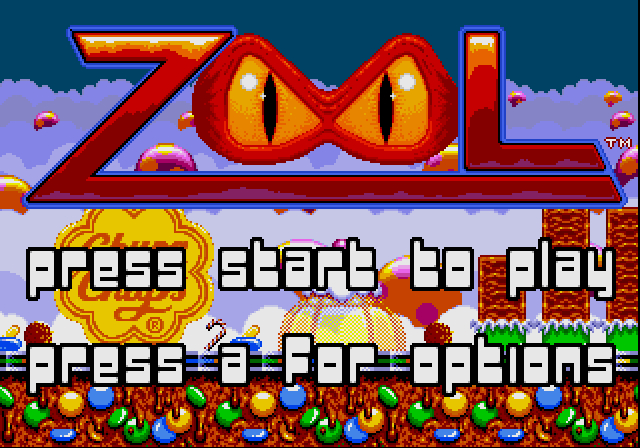
Zool (1992) - Sega Genesis US release, 1993 (Electronic Arts / Gremlin Graphics)
Zool (Gremlin Graphics, 1992) was a deliberate attempt by a Sheffield-based
publisher to give the Amiga a mascot platformer that could hold its own against Sonic
the Hedgehog on the Mega Drive. Gremlin had built up considerable Amiga expertise
through the late 1980s, and Zool - an ant from the Nth dimension who moves at
extraordinary speed through candy-themed levels - was their best commercial shot
at the mascot format. They commissioned Whittaker to give it the music it needed.
Designed to Go Fast
The brief Gremlin gave Whittaker for Zool is straightforward to infer from the game
itself: high tempo, constant energy, no respite. The title theme opens at full pace
and stays there. The in-game tracks follow the same principle - they were composed
to underpin a game where standing still was a losing strategy. Sonic the Hedgehog’s
music, composed by Masato Nakamura, had established a template for mascot platformer
audio: melodically catchy, rhythmically driven, immediately exciting. Whittaker’s
Zool score meets that standard on its own terms.
The DW format Whittaker had developed over three years of Amiga work was by 1992 mature
and efficient. The technical processes that had required careful experimentation for
Shadow of the Beast (1989) were now a known quantity. The Zool score was executed with
professional confidence rather than experimental reach.
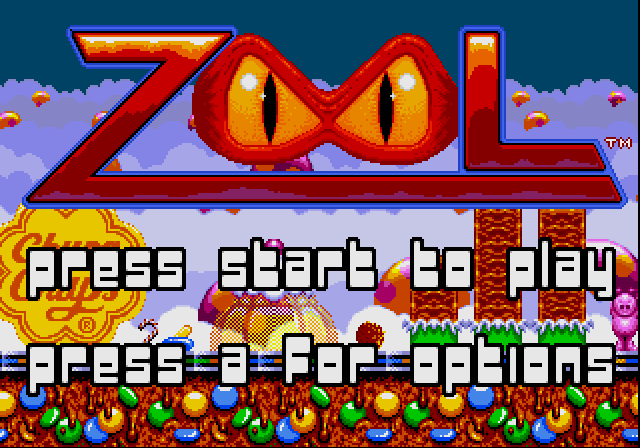
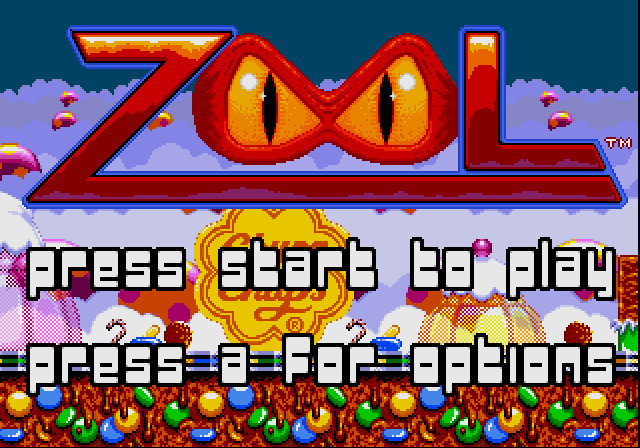
Zool - fast-paced platform action through candy-themed levels
Matching the Competition
Zool reached reviewers in late 1992 and received strong marks from UK Amiga press.
The speed was praised; the level design was occasionally criticised as chaotic; the
music was consistently cited as one of the game’s strongest elements. Amiga Power
and CU Amiga both positioned the game as a credible Amiga-native alternative to the
Mega Drive’s Sonic titles, even if the comparison ultimately exposed some limitations
in the level design.
MobyGames credits Zool (Amiga, 1992) as David Whittaker’s music composition,
noting that the title was ported to 12 platforms over 1992-1994, including Amiga CD32,
Atari ST, MS-DOS, Game Boy, and Game Gear - each requiring adapted audio to match the
target hardware.
Zool marked the close of Whittaker’s concentrated Amiga period. Shortly after its
release, he relocated to the United States to join Electronic Arts, Redwood
Shores as an in-house composer - a position he would hold through approximately
2004. The shift from freelance European game composer to salaried American studio employee
was a significant career inflection. It produced a substantial additional catalogue of
console titles, but it effectively ended the period of concentrated creative output on
Amiga hardware that had defined his reputation.
Zool received a sequel (Zool 2, 1993) and a 2021 remake (Zool Redimensioned, published
by Sumo Digital) that revisited the original’s levels with updated graphics.
The original Amiga score’s influence on the remake’s audio direction is
acknowledged in the remake’s liner notes.