1976 - Founding

Data East Corporation (データイースト株式会社) was established in 1976 in Tokyo, Japan. The company began in consumer electronics before pivoting to arcade game manufacturing as the video game industry began its rapid growth.
The company’s early years coincided with the birth of the commercial video game industry. Data East positioned itself as a hardware manufacturer and software publisher, developing both arcade boards and the games that ran on them.
1980–1988 - Arcade Golden Era
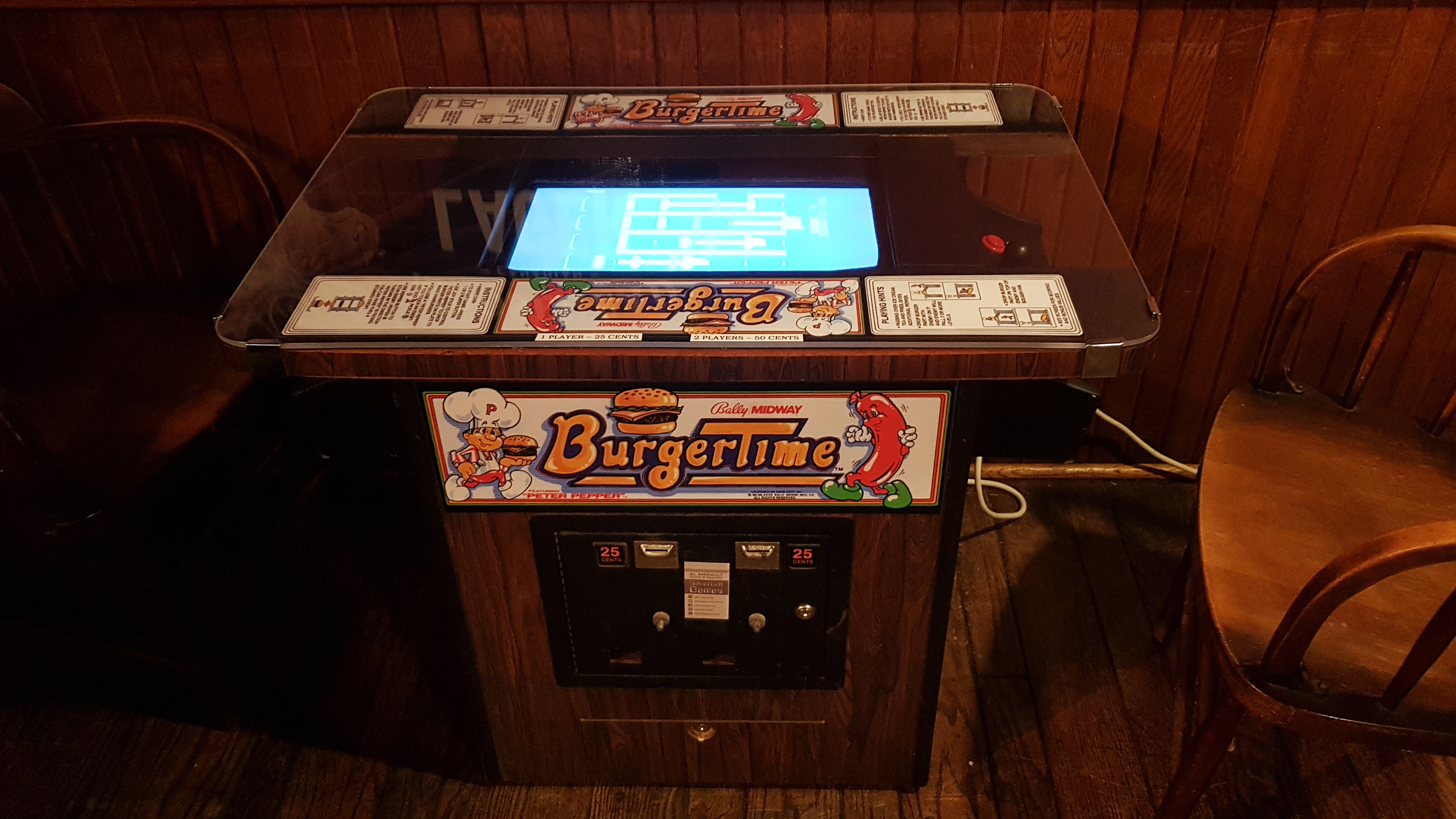
Data East’s golden period produced some of the most recognisable arcade titles of the era. Lock ‘n’ Chase (1981), a Pac-Man variant with a detective premise, showed the company’s willingness to adapt popular templates with its own personality.
BurgerTime (1982) - released in Japan as Hamburger - became Data East’s first international breakout. Chef Peter Pepper must walk across giant burger ingredients while evading living food enemies. The game’s food-themed premise and maze-action structure made it immediately legible and endlessly playable, earning ports to ColecoVision, Intellivision, Atari 2600, and eventually NES.
Karate Champ (1984) was a landmark: widely recognised as the first commercially successful one-on-one fighting game. Its dual-joystick control scheme and point-scoring kumite format directly influenced the genre that would later produce Street Fighter and Mortal Kombat. Data East published a notice in Play Meter magazine asserting IP rights over the title in December 1984.

Bad Dudes vs. DragonNinja (1988) capped the arcade golden era with Data East’s most iconic release. Two brawlers fight through ninjas to rescue a presidential figure unmistakably based on Ronald Reagan. The game’s earnest B-movie energy - delivered without irony - became a template for everything that made Data East unique.
1985–1992 - NES & Home Console Era
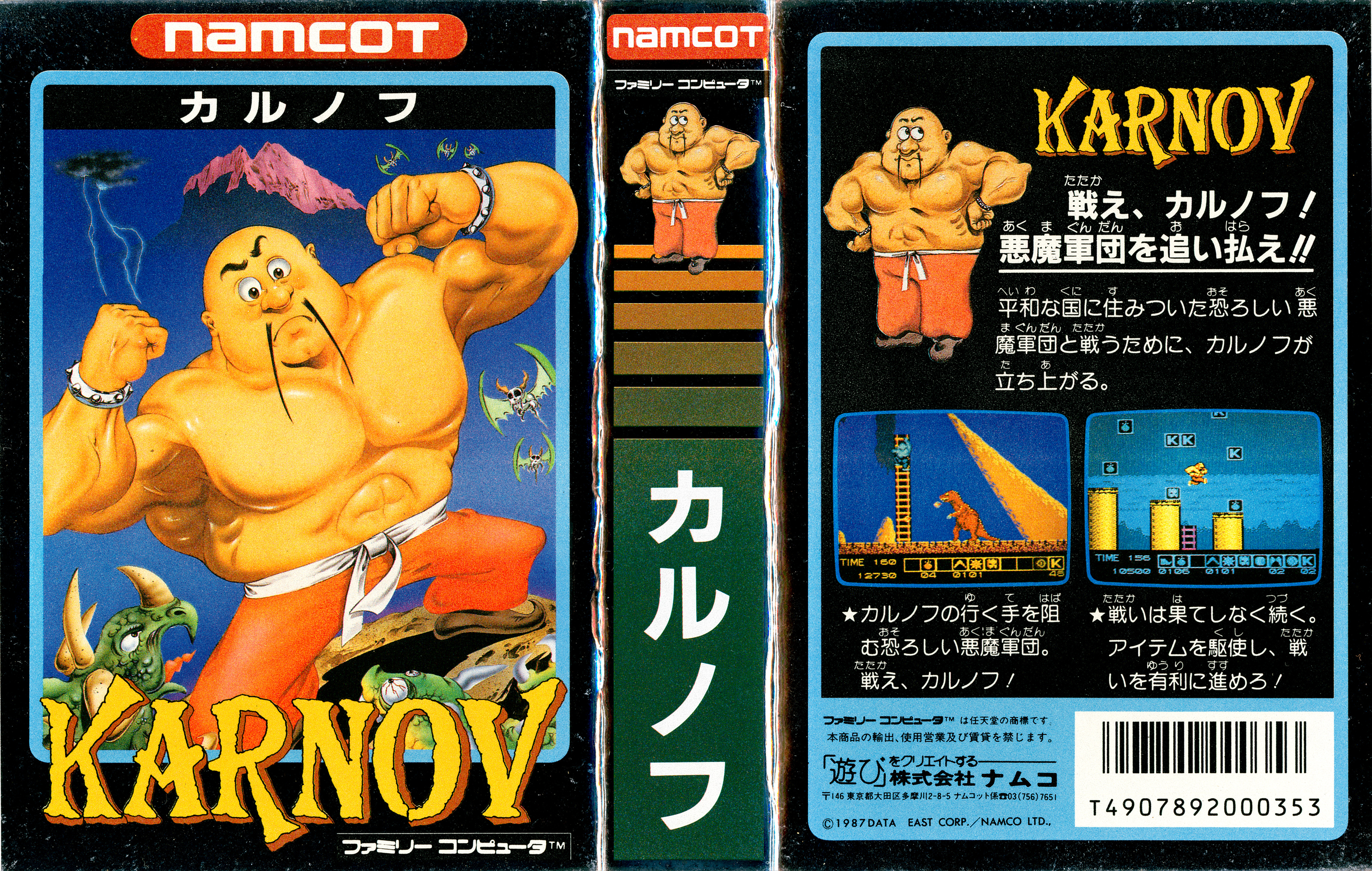
As the NES established itself as the dominant home platform, Data East pursued aggressive licensing for their arcade titles. BurgerTime, Karnov, Heavy Barrel, and Bad Dudes all received NES ports, with varying degrees of fidelity to the originals.
Karnov (1987 arcade, 1988 NES) introduced one of gaming’s most unusual protagonists: Jinborov Karnovski, a stout, heavily tattooed, fire-breathing Russian circus strongman. The game’s anti-hero aesthetic and its deliberate weirdness - fighting through ancient ruins, collecting stars to upgrade abilities - embodied Data East’s creative willingness to ignore convention.
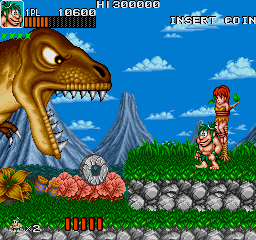
Joe & Mac: Caveman Ninja (1991) became a crossover hit, popular in arcades and on home platforms. TumblePop (1991) and Nitro Ball (1992) continued the arcade output alongside increased home console development.
Side Pocket (1986 arcade, 1987 NES) proved Data East could succeed in the casual sports genre alongside their action output. The pool game’s clean presentation and accessible gameplay earned it a loyal following on NES, Game Boy, and eventually 16-bit platforms.
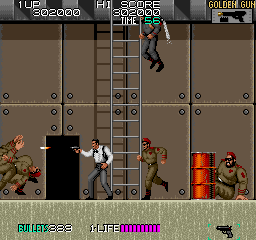
1993–1994 - Fighter’s History Lawsuit
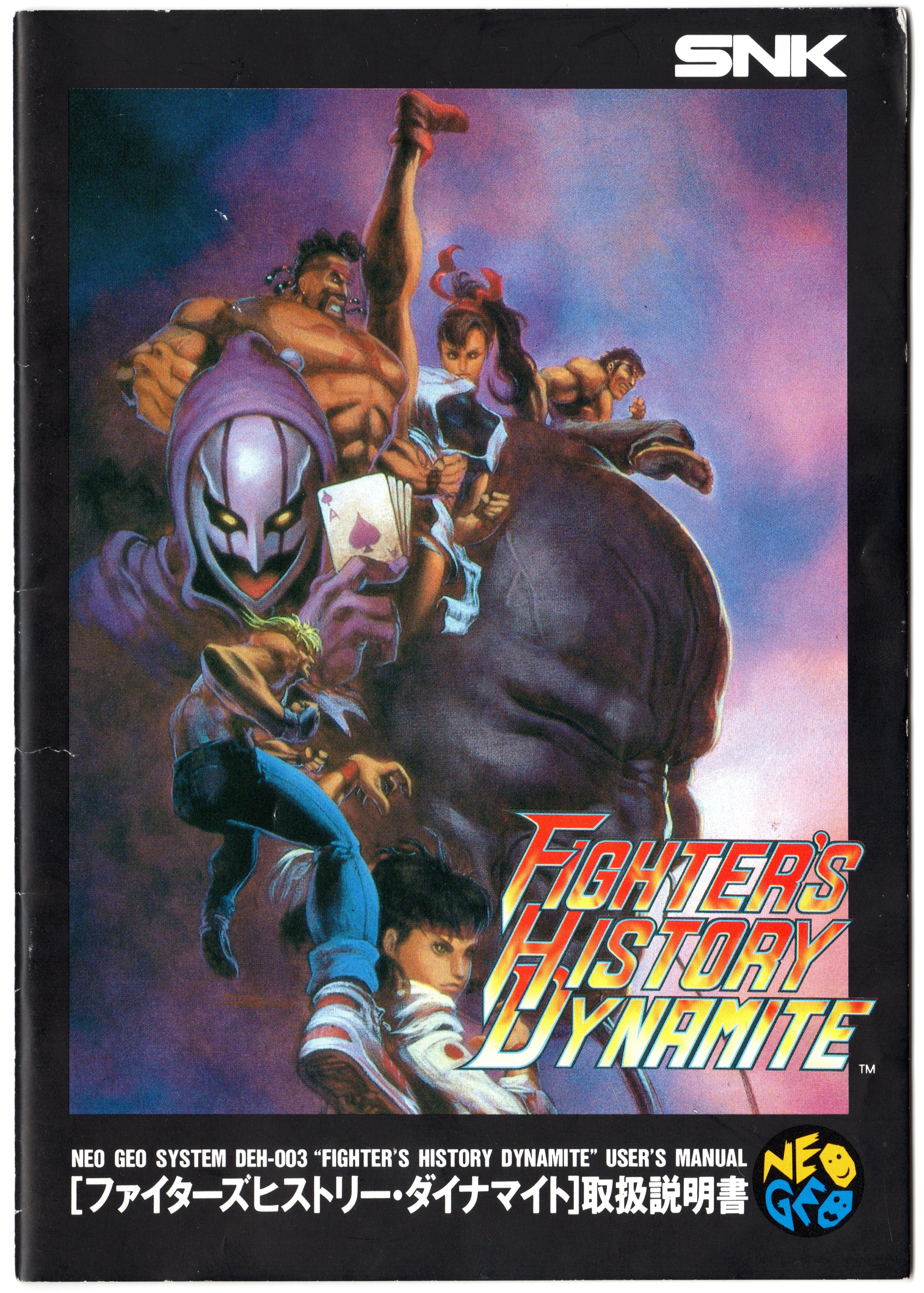
In 1993, Data East released Fighter’s History - a direct competitor to Capcom’s dominant Street Fighter II (1991). The game featured a roster of international fighters with special moves and combo systems visually similar to SF2. Capcom responded swiftly.
Capcom filed suit in the US District Court, Northern District of California, alleging trade dress infringement, unfair competition, and copyright infringement of Street Fighter II character designs. Specific characters challenged included Ray (alleged copy of Ryu), Matlok (Guile), and Marstorius (Zangief).
The characters are sufficiently distinct and the gameplay elements are not protectable expression.
- Paraphrase of Judge William Orrick’s reasoning, US District Court, N.D. Cal., 1994. Full citation: Capcom Co., Ltd. v. Data East Corp., 1994 WL 1751455.
Judge William Orrick granted summary judgment for Data East in 1994. The ruling held that while surface similarities existed, they did not rise to the level of copyright infringement - the characters were sufficiently distinct and fighting game tropes (the fireball, the grappler, the military fighter) were genre conventions rather than protectable expression.
The legal victory was a Pyrrhic one. Legal costs compounded financial difficulties already emerging as the industry shifted toward 3D gaming. In the marketplace, Street Fighter II remained the dominant fighting franchise regardless of the court’s finding.
Fighter’s History and the Capcom lawsuit - retrospective coverage
1994–2003 - Decline & Dissolution

The mid-to-late 1990s were difficult for companies built on 2D arcade gaming. The industry’s rapid shift toward 3D graphics and home console dominance reduced the commercial viability of the arcade business model that had sustained Data East for nearly two decades.
Windjammers (1994) - a disc-sport game for Neo Geo - proved one of Data East’s finest late-era releases, though its commercial reach was limited by the Neo Geo’s expensive hardware. The game’s competitive depth would only be recognised years later, after the emulation community rediscovered it.
Data East attempted PlayStation and Saturn releases through the late 1990s, including updates to their fighting game catalogue. The company continued development at reduced scale, but could not sustain operations into the new century.
Data East Corporation filed for bankruptcy in 2003 and ceased operations. The company’s game library was acquired by G-Mode, which has released some titles on mobile platforms. The Windjammers licence was acquired by DotEmu, who released a faithful remaster in 2017 and Windjammers 2 in 2022.