Cabinets · Hardware · Culture

Arcade

Data East’s relationship with the coin-op arcade - the hardware that powered their games, the cabinets that held them, and the B-movie aesthetic that defined them.

DECO Cassette System

Data East’s first significant hardware innovation was the DECO Cassette System, introduced in 1980. Rather than shipping entire new PCBs for each game title, the system allowed operators to load different games from a cassette tape.

The concept was elegant for its time: a single cabinet could run multiple games, reducing the operator’s hardware investment. The cassette contained the game software; the cabinet provided the universal hardware substrate. This was an early attempt at a platform model for arcade hardware - predating the modular board swapping that later became common.

In practice, the DECO system had limitations. The cassettes were slow to load and the hardware was prone to failure. By the mid-1980s, Data East had moved to discrete PCB designs for individual titles, following the industry standard. The DECO Cassette System is remembered primarily as a historically interesting experiment rather than a commercially dominant platform.
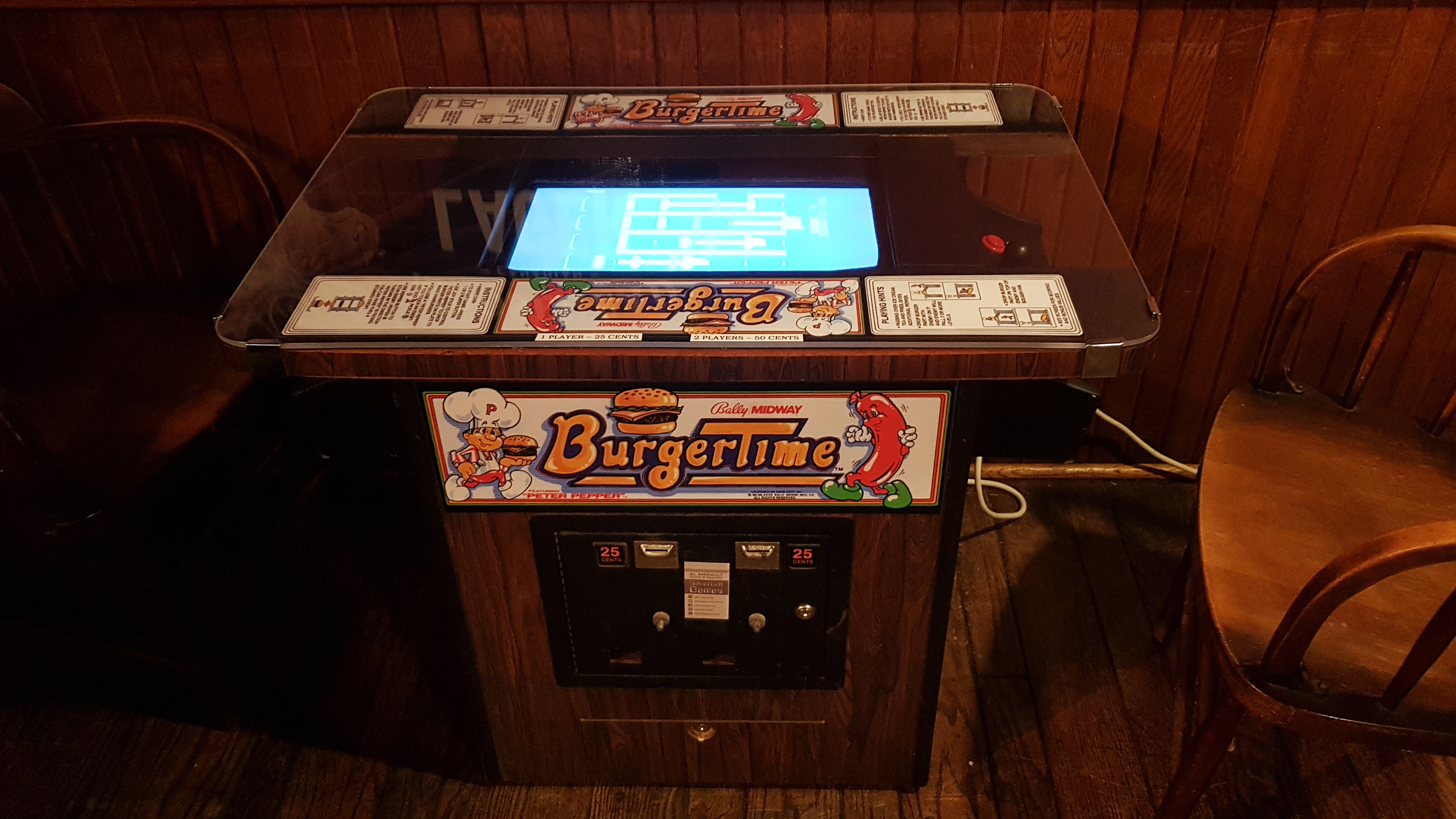
BurgerTime original arcade cabinet, circa 1982
BurgerTime cabinet (c.1982) - one of Data East’s most iconic coin-op presentations

The B-Movie Philosophy

If Capcom pursued prestige and Nintendo pursued family universality, Data East pursued something harder to define: the energy of a midnight double-feature at a drive-in cinema. Their arcade titles are not high art. They are confident, colourful, slightly absurd, and thoroughly entertaining.

The B-movie aesthetic runs through Data East’s entire output:

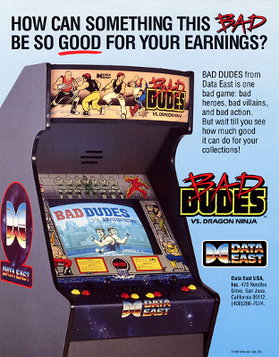
  • Bad Dudes - ninjas in contemporary America, kidnapped president, burger reward
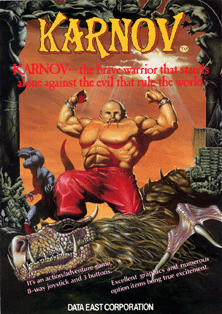
  • Karnov - Russian circus strongman as the hero of an ancient ruins platformer
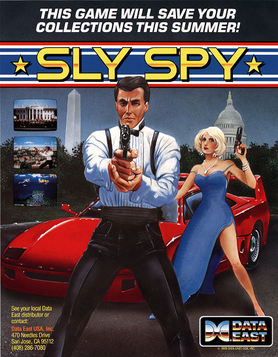
  • Sly Spy - a straight James Bond pastiche, down to the tuxedo and the gadgets
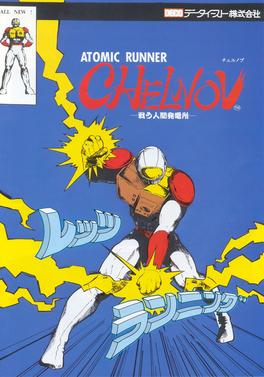
  • Chelnov - a Chernobyl disaster survivor who gains superpowers and fights monsters
  • Joe & Mac - prehistoric cavemen fighting dinosaurs with clubs and boomerangs

These premises share a quality: they are ridiculous, and they know it, but they never wink. The games are played straight. The dialogue is sincere. The endings are earned. This is the B-movie approach: you do not transcend the genre, you execute it faithfully and completely.

Chelnov arcade flyer Sly Spy arcade flyer Joe and Mac arcade gameplay

The company was comfortable with campy Western cultural references aimed at US arcade audiences. They capitalised on the late-1980s obsession with ninja imagery, James Bond pastiche, and Cold War-era anxieties - delivered with complete sincerity.

- Phase 1 Research Notes, Data East Fan Page, 2026

Cabinet Art & Flyers

Hardware Notes

After the DECO Cassette System, Data East developed discrete PCBs for individual titles. Their mid-to-late 1980s hardware ranged from straightforward boards capable of delivering the scrolling action of Bad Dudes to the more complex hardware needed for multi-plane scrolling in games like Vapor Trail and Midnight Resistance.

Data East never developed the equivalent of Capcom’s CP System - a standardised, high-performance arcade board that could run multiple titles to a consistent standard. Each Data East game tends to run on bespoke hardware or a loose family of related boards, making MAME emulation and hardware preservation more complex than for publishers with standardised platforms.

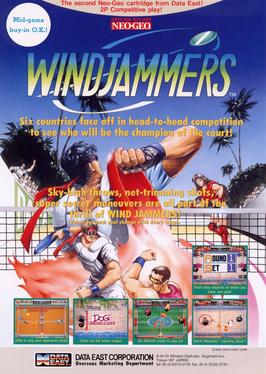

The Neo Geo releases (Fighter’s History Dynamite, Windjammers, Karnov’s Revenge) are exceptions - all ran on SNK’s Neo Geo MVS/AES hardware, which had strong arcade and home console support and is now well-preserved by the emulation community.

Windjammers Neo Geo AES box art
Windjammers - one of three Data East Neo Geo titles