The Great Giana Sisters
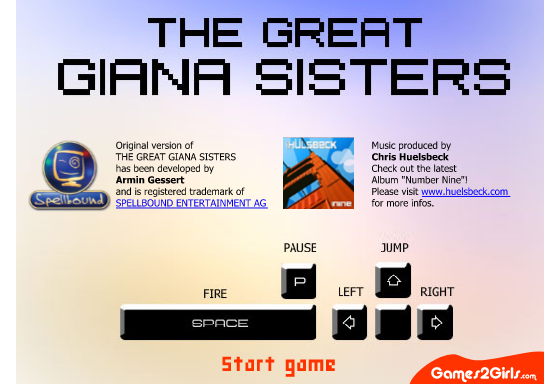
In August 1987, The Great Giana Sisters arrived in West German software shops. It offered the most polished C64 platformer released that year - and the most legally precarious. Rainbow Arts had built a direct response to Super Mario Bros.: the same underground caves, the same bouncing on enemies, the same collectible items arranged in arching patterns. What distinguished it immediately was not its gameplay but the music that started playing before the first level loaded. Chris Hülsbeck's score deployed the SID chip's three oscillators with a compositional intelligence that turned a potential Nintendo clone into a showcase for what the Commodore 64 could do at nineteen years old.
A Score Written Under Legal Pressure
Hülsbeck composed Giana Sisters shortly after his 1986 entry "Shades" won the prestigious 64'er magazine competition - a debut that brought him to the attention of Rainbow Arts co-founder Thomas Hertzler. The development moved quickly: Manfred Trenz handled the graphics, Hertzler the design, and Hülsbeck the music. Because the visual design borrowed so directly from Nintendo, the entire project carried risk from the outset. Nintendo of America's legal response was swift after UK and German release: a cease-and-desist that sent the game off shelves within weeks. Total sales never exceeded thirty thousand units, making surviving cartridges collector's items.
The controversy had a paradoxical effect on Hülsbeck's score. Because the game was pulled so rapidly, its music circulated almost entirely via SID file rips distributed through the nascent European demo scene. Heard independently of gameplay, the compositions commanded full attention. Fan distribution achieved what commercial marketing could not: Hülsbeck's Giana Sisters themes reached hundreds of thousands of C64 owners who never owned the game. See the People page for more on Hülsbeck's early career and the Rainbow Arts founders.
Thirty-Two Levels and Two World States
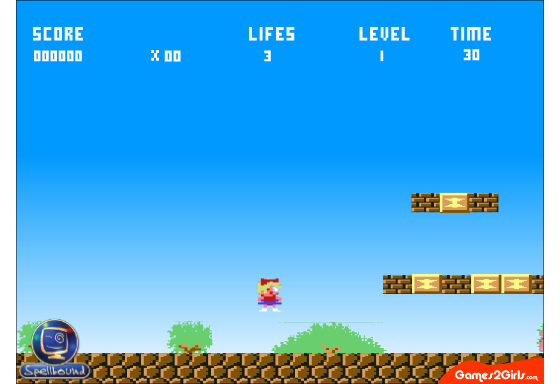
Giana Sisters is a left-to-right scrolling platformer with thirty-two levels across two distinct environment types - overworld and underground - each receiving its own musical theme. The protagonist Giana can run, jump, and collect gems, dispatching enemies by landing on them from above. The controls feel lighter than Super Mario Bros., the jump arc slightly longer in the air, giving the game a floaty quality that suits Hülsbeck's music: the score breathes where Mario's was punchy. Boss encounters appear at regular intervals, signalled by a shift in the musical theme from the level melody to a rhythmically aggressive motif built on the same harmonic skeleton as the surrounding material.
The game offers three difficulty levels. On the highest setting, enemy density and speed increase to the point where the musical timing takes on new significance - the rhythmic grid of the score maps onto the pattern of enemy movement in ways that make skilled play feel choreographed. Whether intentional or coincidental, this synchronisation between music and action became a quality that fans cited when describing why the game felt better than its mechanics alone would suggest.
Three Voices, Four Simultaneous Lines
Hülsbeck's score exploits the SID chip's three oscillator voices with a compositional intelligence that distinguishes it from contemporary C64 music. Rather than assigning fixed roles - bass to voice one, melody to voice two, harmony to voice three - he rotates duties dynamically within phrases, creating the impression of four or even five simultaneous lines. This pseudo-polyphony was not unique to Hülsbeck, but his implementation is unusually disciplined: harmonic substitutions fill gaps in ways that preserve voice-leading across swaps.1
The envelope shaping on the main theme demonstrates what commentators would later call Hülsbeck's "orchestral instinct." The SID chip's ADSR envelope is manipulated to simulate the swell of a string section during the A-section and the percussive bite of a harpsichord during the bridge. The inter-thematic coherence across the game's two environment types - unusual for 1987 - gave the score a structural unity that critics and demoscene composers noted immediately. The HVSC entry contains five subtunes, each showing different approaches to the chip's filter cutoff and resonance.
"I wanted to show what the SID chip could really do - people thought it was just a toy, but it had real musical potential. Every limitation forced a creative decision, and those decisions shaped the music in ways I couldn't have planned."
Chris Hülsbeck, Remix64.com, 2004
94 Percent and Then Silence
Zzap!64 awarded the game a 94% Gold Medal before the recall, with reviewers singling out the music above all other qualities. The score received the kind of attention usually reserved for technical innovations: the review described it as the finest heard on a C64 game to that point. Contemporary readers who then sought the game found it gone from shops; those who found it in later sales or as a second-hand copy discovered the score playing from the first moment of loading, before a single level loaded. The music preceded the game's reputation in a way rarely seen in software publishing.
Commodore User and other European publications carried similar enthusiasm, but the recall meant that press coverage sustained the game's profile in the absence of retail availability. The legal situation became part of the story, and the music became the part of the story worth preserving.
How a Recalled Game Built a Franchise
The SID rips that circulated through the demo scene kept the music alive for the next two decades. By the time the franchise revived, the Hülsbeck score was the primary reason anyone remembered Giana Sisters at all. In 2009 the game received a Nintendo DS port, and in 2012 Black Forest Games launched Giana Sisters: Twisted Dreams - a critically acclaimed platformer with a new Hülsbeck score that entered the charts on Steam and eventually appeared on multiple platforms including PlayStation 4 and Xbox One. Giana Sisters: Dream Runners followed in 2014. The franchise exists because the music made the original worth remembering after the game itself was legally erased from shelves. See the Modern Era page for coverage of the Twisted Dreams and Dream Runners scores.
In the SID remix community, Hülsbeck's Giana Sisters themes have been remixed and covered more than almost any other C64 composition. The High Voltage SID Collection, the demoscene's primary SID archive, lists the original file under /MUSICIANS/H/Huelsbeck_Chris/Great_Giana_Sisters.sid - a path navigated by listeners who were born years after the game was recalled. Listen on the Music page.