A Chronicle of Dracula’s Castle
Origins - 1986
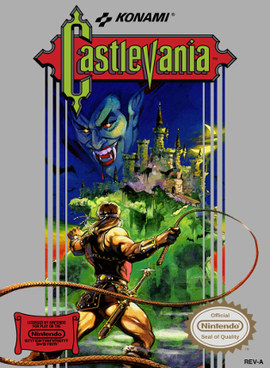
The origin story begins not in a grand studio but in a small corner of Konami’s facility in Kobe, Japan. In 1985, director Hitoshi Akamatsu was tasked with creating a new action game for the Famicom Disk System. Drawing inspiration from classic horror - Dracula, Frankenstein, the Creature from the Black Lagoon - he and his team created the foundations of what would become one of gaming’s great series.
The game shipped on September 26, 1986 in Japan as Akumajô Dracula and reached North America in May 1987 as Castlevania. Its whip-based combat, stage-boss structure, and punishing but fair difficulty set the template for dozens of sequels.
Composer Kinuyo Yamashita produced what is widely considered one of the finest 8-bit soundtracks - creating the series’ defining gothic-electronic sound with tracks like “Vampire Killer”, “Wicked Child”, and “Poison Mind”. She was credited in the NES manual as “James Banana”, a pseudonym common under Konami’s corporate policy.
NES Experiments - 1987–1990
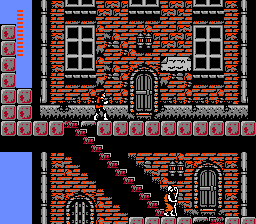
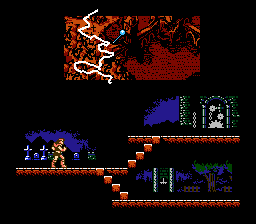
Two NES sequels followed in quick succession, each experimenting boldly with the formula. Castlevania II: Simon’s Quest (1987) shocked players by abandoning the linear stage structure in favour of open-world exploration, RPG mechanics, and a day/night cycle that transformed the enemies around Simon. These innovations were years ahead of mainstream game design.
Castlevania III: Dracula’s Curse (1989) returned to the original’s structure but expanded it with branching stage paths and three companion characters: Grant DaNasty (the pirate), Sypha Belnades (the sorceress), and Alucard - Dracula’s own son - making his series debut. Each character offered radically different gameplay.
The 16-Bit Peak - 1991–1994
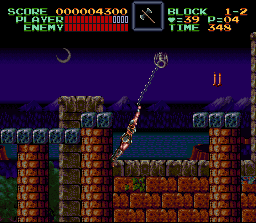
The SNES era brought Castlevania into a new dimension. Super Castlevania IV (1991) was a technical marvel and remains a benchmark for action platformer design. Its 360-degree whip control, Mode 7 rotating rooms, and reverb-soaked soundtrack by Masanori Adachi and Taro Kudo made it the definitive statement of what the SNES could achieve.
Meanwhile, the simultaneous Mega Drive entry, Castlevania: Bloodlines (1994), introduced Michiru Yamane as a composer - who would go on to define the series’ sound for the PlayStation era. And in Japan, Rondo of Blood (1993) on the PC Engine set a template so refined it would influence game design philosophy for the next decade.
The original Castlevania (1986) - World of Longplays
The Birth of Metroidvania - 1993–1997
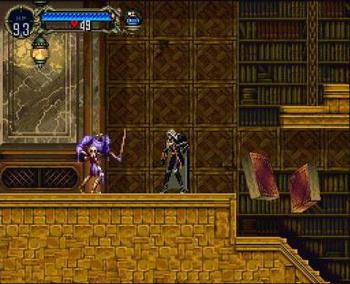
Castlevania: Rondo of Blood (1993, PC Engine) was the pinnacle of the classic formula: Richter Belmont’s desperate chase through a voiced, animated castle with multiple branching routes and a hidden playable character in Maria Renard. It remained Japan-exclusive for 14 years.
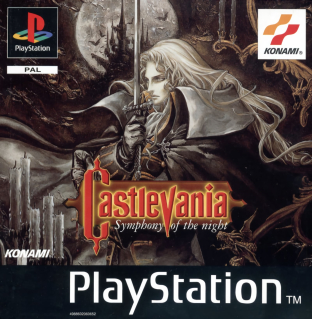
Castlevania: Symphony of the Night (1997, PlayStation) shattered the mould entirely. Under producer Koji “IGA” Igarashi, the series reinvented itself as an exploration-driven RPG. Playing as Alucard, the player explores a vast, interconnected castle - unlocking new areas as new abilities are gained. The game’s infamous inverted castle twist doubled the scope at the midpoint. Michiru Yamane’s score - baroque, gothic rock, orchestral - remains one of the greatest video game soundtracks ever composed.
“Symphony of the Night succeeded because we made the player feel like they were exploring a real, living castle - not just running from room to room. Every corner had to feel like it belonged.”
Koji Igarashi, Producer
Legacy - Beyond 1999
Koji Igarashi stewarded the series through more than a dozen titles on Game Boy Advance, Nintendo DS, and later platforms - each refining the Metroidvania formula. He departed Konami in 2014 and crowdfunded Bloodstained: Ritual of the Night (2019) as a spiritual successor to Symphony of the Night.
The classic era’s influence has never waned. Games like Hollow Knight, Dead Cells, and Blasphemous all trace direct lineage to Castlevania’s gothic aesthetic and exploration structure. The Netflix animated series (2017–2021) introduced the franchise to a new generation and earned wide critical acclaim.
“For Symphony of the Night, I wanted to create music that felt like it existed in another world - somewhere between a dream and a nightmare.”
Michiru Yamane, Composer