Four studies in what made Ben Daglish's SID music remarkable - and why it still holds up.
Gauntlet: The Dungeon That Couldn't Get Tired
1986 · US Gold · C64 · Original arcade: Atari Games (1985)
US Gold C64 cassette release, 1986. The fantasy-themed box art gives little hint of the SID score within.
Atari's Gauntlet (arcade, 1985) was a four-player dungeon crawler of unprecedented
scale - labyrinthine rooms, up to four simultaneous players, and relentless enemy spawning.
Its C64 port, published by US Gold in 1986, needed to bring that atmosphere to a machine with
three sound voices and no dedicated percussion channel. The question was not just technical.
It was compositional: what music survives hours of dungeon exploration without driving the
player to mute the television?
Ben Daglish had the answer, and it was not what the brief implied. Rather than adapt the
arcade's electronic Atari sound system score, he wrote five entirely original dungeon themes
from scratch. They share the atmosphere of the setting - stone corridors, torchlight, distant
monsters - but they are not arrangements of existing material. They are what Daglish decided
the SID version of Gauntlet should sound like.
Writing for the Hours, Not the Minutes
Composing for a dungeon crawler in 1986 required thinking about listener endurance in a way
that most game music of the period did not. A platformer's music played for two minutes between
lives; Gauntlet demanded scores that looped through entire sessions of half an hour or more.
Music that sounded good at the three-minute mark would become actively irritating by minute
twenty. Daglish understood this and wrote accordingly.
Gauntlet was a real challenge because the music had to sustain for hours. You couldn't
write something too catchy or it would drive you mad. You needed something that worked in
the background without demanding attention.
Ben Daglish on Gauntlet, Lemon64 interview
The title music solves the problem through architecture. It is built on a descending bass
line in a minor mode, establishing atmosphere before a single dungeon room appears. The
bass line is long enough - and has enough internal variation across its phrasing - that
the loop point feels natural rather than mechanical. Daglish placed the repeat at the end
of a complete musical phrase, not mid-bar. The difference is the difference between a loop
that breathes and one that stutters.
The in-game dungeon themes are deliberately quieter in character: background music for
concentration rather than excitement. They function as sonic wallpaper for a game where
attention must go to enemy positions and resource management. The music is present and
atmospheric without competing with the game for the player's focus.
What the SID Could Do That the Arcade Couldn't
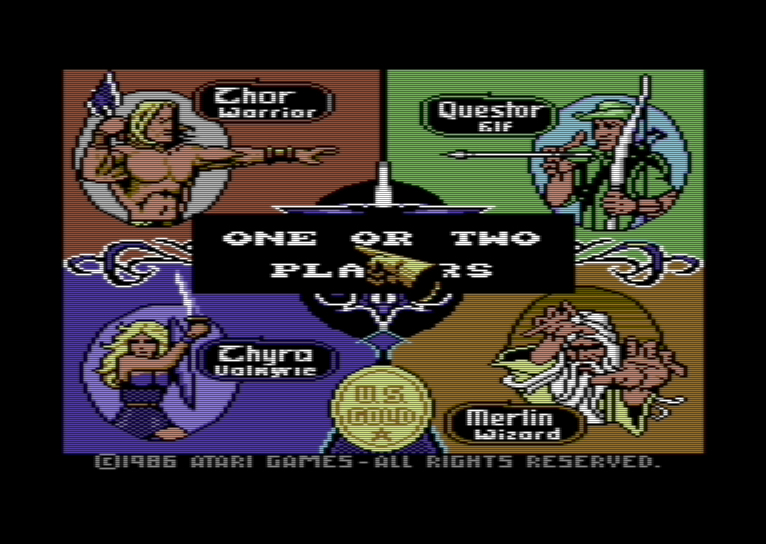
Gauntlet C64 gameplay. The dungeon music loops continuously during sessions that could run for thirty minutes or more.
The SID chip offers three voice channels, each capable of its own pitch, waveform, envelope,
and filter routing. In most C64 music of 1986, the three voices were allocated
predictably: melody above, bass below, counter-melody or arpeggio in between. Daglish
used this structure but filled it with modal harmonies unusual for the era.
C64 game music of the period tended toward major-key fanfares - bright, energetic, unmistakably
cheerful. Gauntlet's themes are minor and modal, touching on Dorian and Phrygian harmonics
that give the score its medieval, stone-corridor character. The brief rests in the bass line -
moments of silence that let the melody breathe - sound like footsteps on stone flags. Restraint
was not common in SID music. Daglish used it to define the Gauntlet sound.
The harmonic language also ages better than major-key contemporaries. Modal harmonies have
a timelessness that the bright pop idioms of 1986 game music often lack. A Gauntlet dungeon
theme listened to today sounds like itself; many games of its era sound like 1986.
How the Critics Heard It
Period reviews consistently highlighted the Gauntlet SID score. Zzap!64, the leading UK
magazine for C64 coverage and notoriously demanding in its music assessments, noted the
atmospheric quality of Daglish's arrangement. The game was one of the most successful UK
C64 releases of 1986, and the music was cited as a contributor to its staying power.
In the HVSC, Gauntlet.sid is regularly used in demonstrations of SID emulator quality.
Its combination of melodic complexity and atmospheric restraint tests emulators in ways
simpler music does not. The game that needed music "that worked in the background without
demanding attention" turned out to produce a score that still demands attention forty years
later - on its own terms, not the game's.
Browse all Gauntlet subtunes on the Music page or view
Gauntlet box art in the Gallery. Daglish's career context
is on the People page.
The Last Ninja: Two Composers, Seven Worlds, One Voice
1987 · System 3 · C64 · Music: Ben Daglish (Wastelands, Wilderness) & Anthony Lees (levels 3-7)
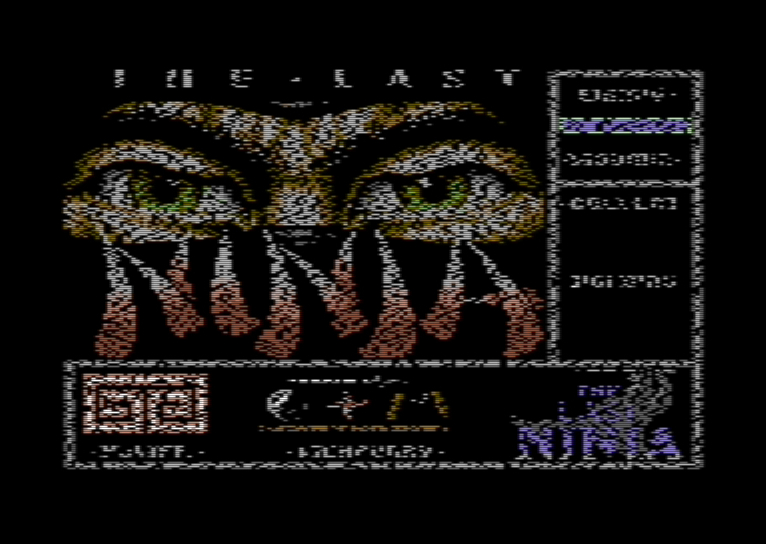
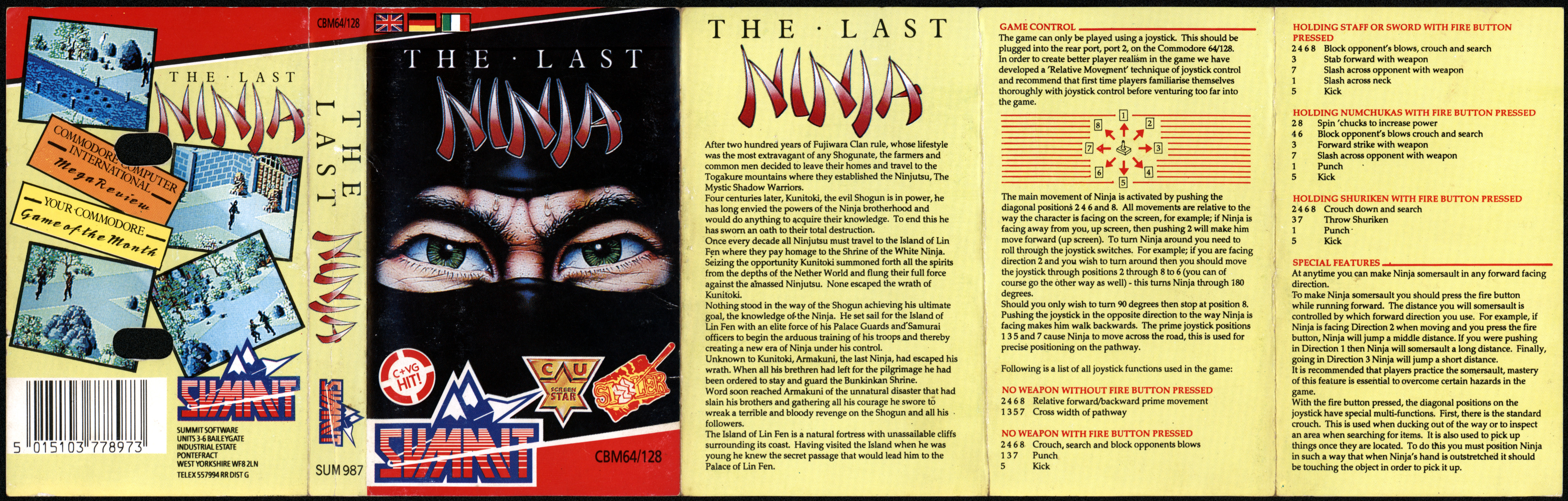
The Last Ninja, System 3 C64 release, 1987. One of the highest-rated C64 games ever released and its score treated as an equal achievement to the game itself.
The Last Ninja arrived in 1987 with a critical reception that treated it
as a new benchmark. System 3's isometric ninja adventure was technically extraordinary -
the scrolling isometric engine alone was a feat - and its music was regarded as equally so.
The score is a collaboration across seven levels: Ben Daglish composed the
first two, Anthony Lees composed the remaining five. Neither composer heard
the other's work until the game was assembled.
Daglish's two themes - Wastelands and Wilderness - open the game. They are the first music
a player encounters and the themes most associated with The Last Ninja in collective memory.
Whether this is because they are the best two themes, or simply because they come first, is
a question the HVSC community has debated for decades without resolution. What is not in
dispute: they are among the most emotionally resonant pieces of 8-bit music ever composed.
The Last Ninja was special. Anthony [Lees] and I didn't work together in the same room -
we each did our levels and they were put together. I'm proud of how it came out, but
honestly the whole game was just brilliant. The graphics, the isometric engine - it all
came together in a way that doesn't often happen.
Ben Daglish on The Last Ninja, Lemon64 interview
Walking Through Mud and Autumn Leaves
The ninja's journey begins in the Wastelands: mud, open sky, autumn. Daglish's opening theme
for this level is built on a sparse pentatonic melody - five notes from the scale, chosen to
eliminate the semitone tensions that create urgency in Western tonal music. Over a slow, wide-spaced
bass pattern, the melody walks rather than runs. It does not try to excite; it tries to convey
the weight of a world that is dangerous and empty and beautiful.
The Last Ninja C64 gameplay in the Wastelands. The isometric view and the sparse pentatonic score work in tandem to establish a world of calculated loneliness.
Wilderness, the second level theme, maintains this character while introducing slightly more
harmonic movement - a suggestion of cautious progress through open country. Both themes share
an economy of means that is uncommon in C64 game music: few notes, wide spacing, long silences
between phrases. The three SID voices are allocated with unusual restraint: melody, slow bass,
and sparse harmonic fill. Much of the frequency space is left empty, which creates room for the
theme to breathe.
Two Composers, Invisible Seam
Anthony Lees' five themes shift the emotional register as the ninja penetrates deeper into
enemy territory. The Palace is imposing where Wastelands was desolate; The Dungeon is tense
where Wilderness was contemplative. The transition between composers is audible to a careful
listener but never jarring to a player. Both composers understood the game's world and
subordinated individual voice to its demands.
The Last Ninja cassette inlay. Music credits at the time were often grouped without per-level attribution; the exact Daglish-Lees split was established through HVSC STIL archival work.
The working method - independent composition, no shared studio, assembled final result -
produced a seven-level score of unusual consistency. Had the two composers been in the same
room, revising each other's work toward a unified sound, the result might have been more
homogeneous but less interesting. The slight audible difference between Daglish's pastoral
openings and Lees' martial later levels mirrors the game's own narrative arc.
What the Zzap!64 Gold Medal Meant
The Last Ninja received a Zzap!64 Gold Medal - the magazine's highest rating. For Zzap!64,
which used a separate Sound score alongside Graphics, Playability, and Value, praise for the
music was substantive rather than formulaic. Period reviewers treated the score as part of what
made the game exceptional, not incidental to it.
The game's critical reception established a reference point that subsequent C64 titles were
measured against. When reviewers of 1988 and 1989 praised a game's atmosphere or music, they
often did so in comparison to The Last Ninja's standard. Daglish's two levels set part of
that benchmark.
Wastelands at Forty
Daglish's Wastelands theme is probably the single piece of C64 music most frequently cited
when players of the 1980s are asked what they remember. It is not the most technically complex
composition in the HVSC library. It is the most emotionally effective for its context: the
right music, for the right world, at the right moment in the player's experience.
The Last Ninja has been remixed and rearranged more times than almost any other C64 game.
The C64Audio tribute album features new arrangements of both Daglish's and Lees' themes.
Remix64 documents dozens of community arrangements of the full score. SID80s performed
Last Ninja material at Back in Time Live events. The score has been heard by people who
have never played the game.
All seven Last Ninja subtunes with composer credits are listed on the
Music page. Anthony Lees' biography is on the
People page.
Krakout & Deflektor: The Gremlin Double-Bill of 1987
1987 · Gremlin Graphics · C64 · Both composed by Ben Daglish as Gremlin in-house composer
By the spring of 1987, Ben Daglish had joined Gremlin Graphics as an in-house composer,
following the W.E.M.U.S.I.C. period with Tony Crowther. That year he produced two scores
for Gremlin that are as different from each other as two pieces of music can be. Both
Krakout and Deflektor are single-screen action puzzles
in the Breakout tradition. Their music is not.
Taken together, they demonstrate the breadth of Daglish's musical vocabulary. A composer who
could write only in one register would have produced similar-sounding scores for similar-looking
games. Daglish wrote completely different music for each, and both choices are exactly right.
Krakout: The Title Music That Outlasted the Game
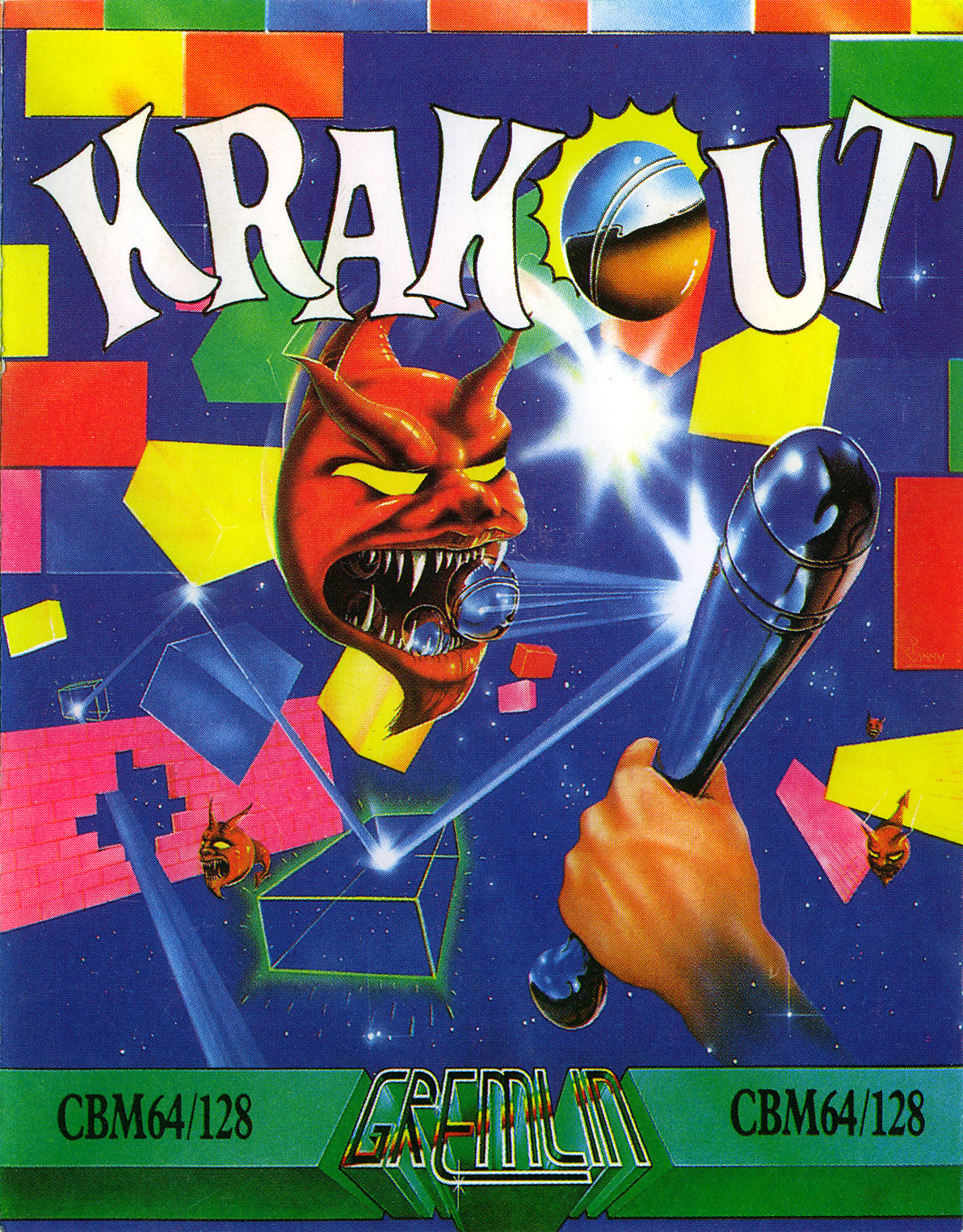
Krakout, Gremlin Graphics C64 release, 1987. The cover art's energy matches the title music - propulsive, forward-moving, immediately engaging.
Krakout is a horizontal Breakout variant - bat on the left, bricks on the
right, ball moving between them. The genre's gameplay is about rhythm: anticipating the
ball's angle, moving early, maintaining a consistent defensive posture. The music understood
this and amplified it.
The title theme is Krakout's most famous piece, and for good reason. It opens with a strong
walking bass line and a melody that moves in eighth notes: busy, alert, relentlessly forward.
The tempo is brisk without being frantic. The harmonic language is major and clear -
unambiguously cheerful in a way that contrasts directly with Gauntlet's minor-mode
oppressiveness. Daglish could write both; the year before he had.
I just sat down and started playing with it. I didn't have any formal music theory
background - I just knew what sounded good to me, and I tried to make the SID do that.
Ben Daglish on his compositional approach, Lemon64 interview
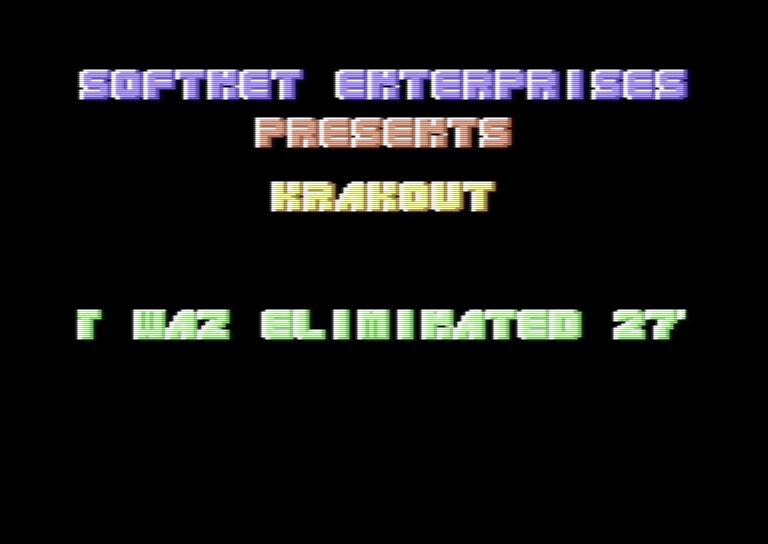
Krakout loaded from cassette. In 1987, a C64 cassette game could take four to seven minutes
to load. During every one of those minutes, the title music played. Krakout's theme was heard
for four to seven minutes before the first ball was launched. The fact that players did not
mute it - and many actively remembered it - is evidence of how well it was written for
sustained listening.
Krakout C64 gameplay. The in-game music is quieter and more repetitive than the title theme, providing concentration-appropriate background rather than excitement.
The contrast between the title theme and the in-game theme is deliberate. During gameplay,
the player needs to concentrate. The in-game music is quieter and more repetitive - background
texture rather than foreground entertainment. Daglish thought functionally about what each
gameplay state needed and wrote to fit each state separately.
Krakout was reviewed positively by Zzap!64, with the music specifically noted. The game
was successful enough to receive international releases and budget re-releases, meaning
Daglish's title theme was heard across multiple years and territories - an unusual longevity
for a single piece of C64 game music.
The Krakout title theme has been covered and remixed in the Remix64 community. Its place
in the Breakout genre canon is secure: ask any C64 player of the period to hum a loading
theme from a bat-and-ball game, and there is a good chance they hum this one.
Deflektor: Writing Music That Thinks
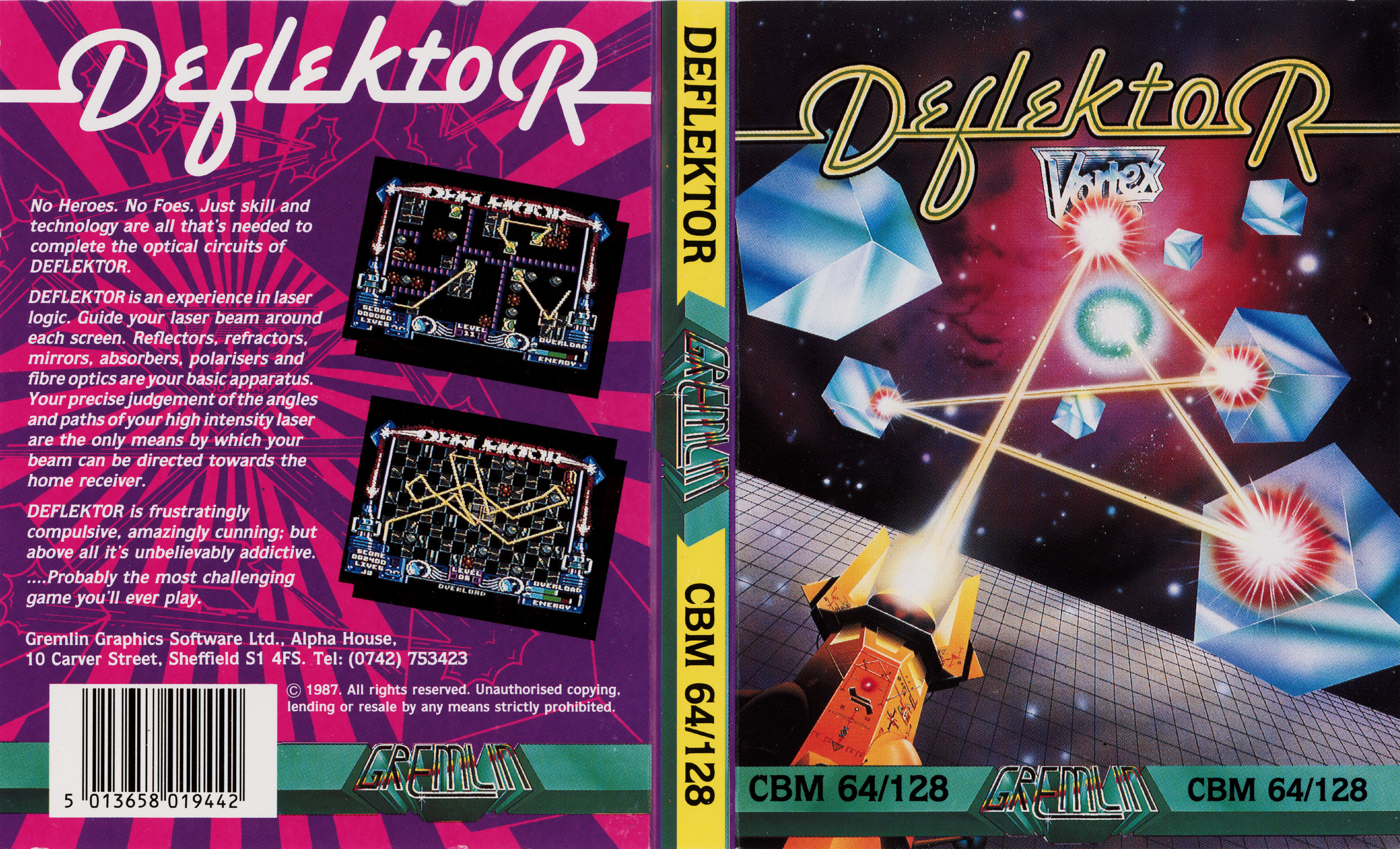
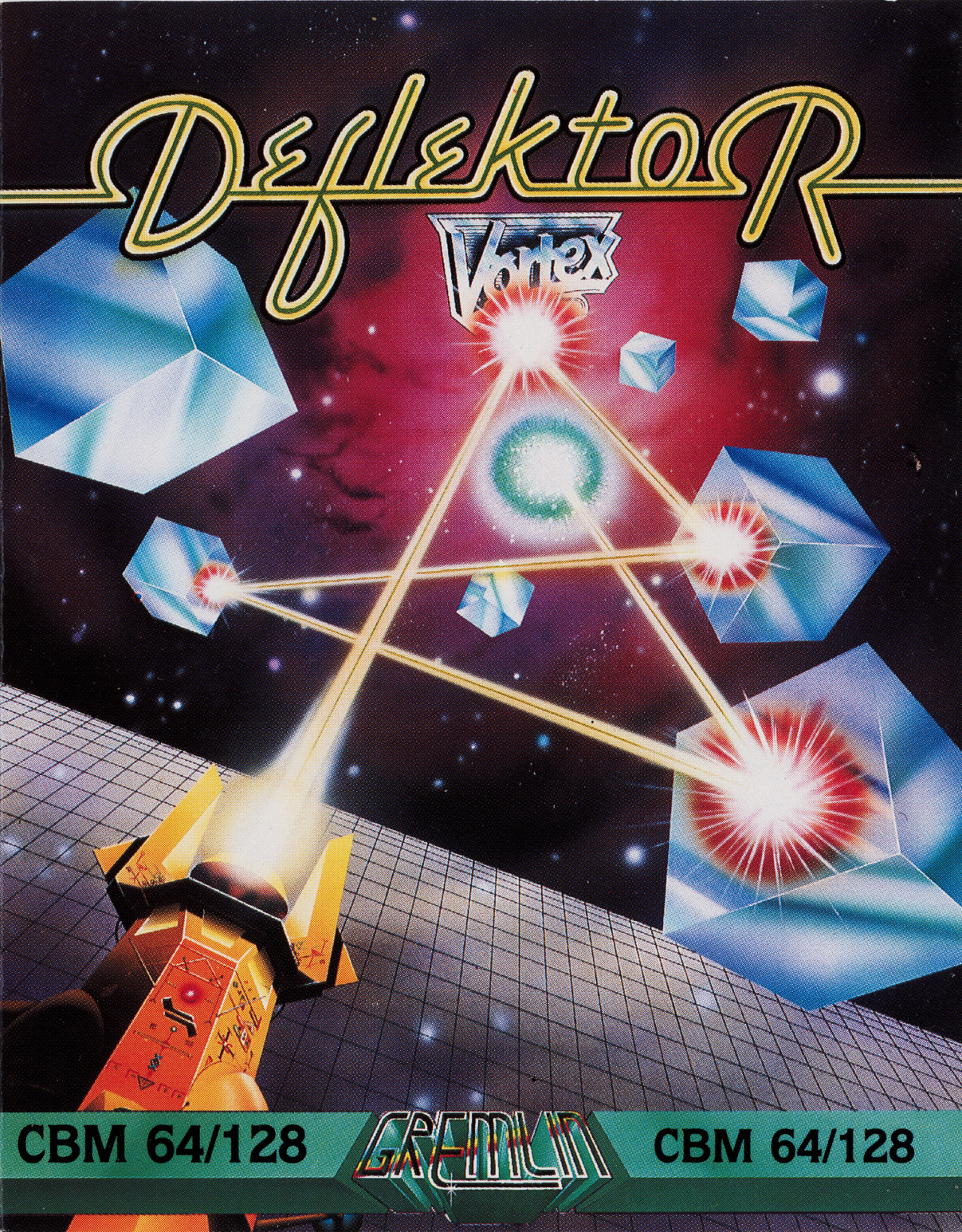
Deflektor cassette inlay, Gremlin Graphics C64 release, 1987. The game's puzzle-based laser-deflection gameplay required music that encouraged deliberate thought rather than rapid action.
Deflektor is a laser-puzzle game. The player rotates mirrors placed on a
grid to direct a laser beam from a source to a target, completing each room before the laser
overheats the source and destroys it. The gameplay is deliberate, spatial, and
analytical. Moving quickly is not an option. Moving correctly is the only option.
Daglish's score for Deflektor matches this exactly. Where Krakout's title music rushes forward
in eighth notes, Deflektor's moves in longer values - sustained notes with careful voice leading,
slow harmonic changes, an electronic texture that suggests precision rather than energy. The
tempo is a thinking tempo. The music sounds like the act of planning a path.
The tools were primitive by today's standards. You were entering note values as hexadecimal
numbers in a monitor. But that closeness to the hardware gave you a kind of control that
modern composers don't have - you understood exactly what was happening at the register level.
Ben Daglish, Metal E-Zine
The SID chip's filter was Daglish's primary tool for the Deflektor sound. Running sustained
notes through the SID's resonant filter produces an electronic, slightly hollow quality that
sits between a synthesizer pad and a lead instrument - neither clearly one nor the other. It
is the sound of a laser passing through glass.
Deflektor C64 gameplay. The puzzle demands careful spatial reasoning; the music provides appropriate sonic context for deliberate thought rather than rapid reaction.
Deflektor's reception was positive but quieter than Krakout's - the game was more challenging
and less immediately accessible. Zzap!64 noted the puzzle quality and the atmosphere. The music
was part of the atmosphere: without it, Deflektor would be a different and lesser game.
Considered together, Krakout and Deflektor are the clearest evidence of what Daglish could do
with the SID chip across a single year at a single studio. Two games with similar gameplay
structures, two completely different musical solutions, both precisely calibrated to what each
game needed. The range required to produce both - the walking-bass propulsion of Krakout and
the filtered-sustain contemplation of Deflektor - is not common among composers of any era.
Both titles are available in the Music catalogue.
Box art and screenshots are in the Gallery.
For the Gremlin Graphics in-house context, see the People page.