Dropzone and IK+

Two games. One programmer. The titles that defined a career and set benchmarks that other developers spent a decade trying to match.

Better Than the Game It Was Based On

Dropzone appeared in 1984, published by U.S. Gold for the Atari 8-bit family. It was written by one person - Archer MacLean, operating under the company name Arena Graphics - and it was unambiguously based on Williams Electronics' Defender. Critics said it was better. They were probably right.
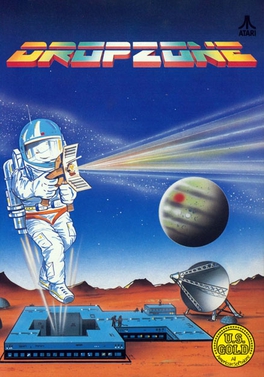
Dropzone original box art - yellow and red cover with spaceman and alien wave

Defender was a technically demanding arcade game - a scrolling shooter with a wide playfield, multiple enemy types, a radar display, and a mechanic built around protecting humanoids from abduction. MacLean took the structure and rebuilt it for home hardware, retaining the complexity while tightening the gameplay loop. On the Atari 800, the results were remarkable. The game ran at a smooth frame rate with enemies that behaved distinctly, a radar that functioned correctly, and visual polish well beyond the norm for 1984.

One Atari, One Bedroom, Two Years

MacLean had purchased one of the first Atari 800s imported into the United Kingdom. The machine gave him a platform with genuine colour graphics, hardware sprites, and a sound chip capable of more than beeps. He spent the time between acquiring the machine and publishing Dropzone building up the technical knowledge to exploit it fully. There was no team, no publisher involvement in the development process, no QA department. Just MacLean, the code, and the hardware.

The C64 conversion came next. MacLean ported it himself, and described the experience in the Halcyon Days interview as "a real nightmare implementation." The Commodore 64's hardware was genuinely different from the Atari's - different memory map, different chip architecture, a more constrained sprite system. Getting Dropzone's engine to run on it at acceptable quality took sustained effort. He did it anyway.
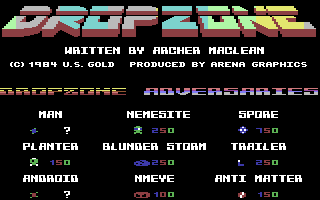
Dropzone C64 gameplay - alien swarm against moonscape

"The C64 conversion was a real nightmare implementation. But Dropzone was so strong on the Atari that we had to get it out there on the biggest-selling platform."

Archer MacLean, Halcyon Days interview, dadgum.com

What Made It Harder to Put Down Than Defender

Defender's difficulty curve was brutal in a way that often felt arbitrary. Dropzone's was precise. The wave design escalated in a manner that felt authored - each new enemy type introduced at a moment when the player had just mastered dealing with the previous set. The radar display was accurate and readable. The humanoid abduction mechanic created immediate, legible stakes without overwhelming the main shooting task.

MacLean prioritised responsiveness. The ship controls felt tight and predictable. The hitbox on the player's ship was honest. When you died in Dropzone, you usually understood why. That clarity - that sense that the game was fair even when it was difficult - separated it from Defender and from most contemporary shooters. See the full screenshot gallery for the game in motion across C64 and Atari platforms.
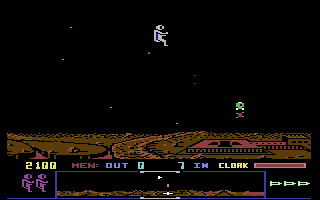
Dropzone C64 - shooting action with enemy formations

Ninety-Five Percent and a Number One Chart Position

Zzap!64 reviewed Dropzone in Issue 3 (July 1985), awarding it a Gold Medal at 95%. "Graphically it's superb, sonically it's amazing, and playability is on a par with all the best arcade machines around today... Dropzone is an absolute gem of a game." Computer and Video Games called it "one of the finest Atari titles available." The game reached number one in the UK charts and remained on sale for five or six years.

Dropzone C64 Longplay (Myrryspeikko)

Forty Years Later, Still in Print

Dropzone's 40th Anniversary Edition was published in December 2024 by System 3 for PC (Steam), Nintendo Switch, PlayStation 5, and Xbox Series X/S, built from MacLean's original source code. It included toggleable upgraded graphics, save states, and up to four-player multiplayer - features that the original could never have supported. The game that launched a career in 1984 was still selling in 2024. See the Resources page for the modern port link and the Games page for catalogue context.
The Third Fighter Nobody Had Thought of Before

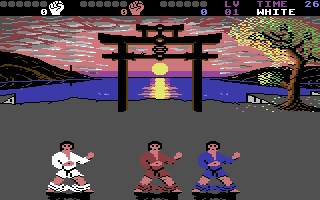
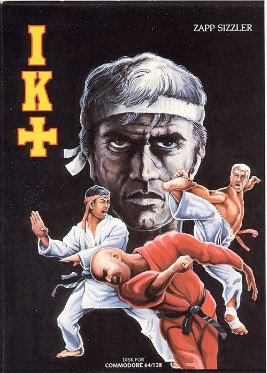
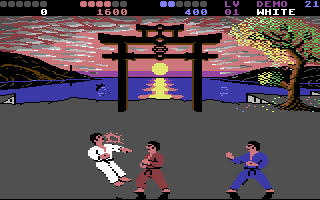
International Karate+ arrived in 1987. Its selling point was in the title: plus. Where one-on-one karate games had been the genre standard, IK+ put three fighters on the screen simultaneously. Not two fighting while a third watched. Three fighting each other, at the same time, each with its own physics, its own animations, its own score contribution. It had never been done before on a home computer.

IK+ box art - three karate fighters in action against a colourful background

MacLean had previously rebuilt International Karate (1986) from scratch after being handed a failing project by another developer. IK was published by System 3, reached the US Billboard number one position as "World Karate Championship," and spawned a lawsuit from Data East (who made Karate Champ) that a US appeals court eventually threw out. IK+ took the engine and asked what would happen if you added a third character to every bout.

Seven Months and Seven Days

The C64 version of IK+ shipped in 1987. The Atari ST port took six months to develop. The subsequent Amiga port, which ran at higher resolution with more colours and smoother animation, was completed in seven days. MacLean later explained that the second time round he simply knew what he was doing - the problems he had spent six months solving on Atari ST had taught him exactly what the code needed to do, and the Amiga version was an exercise in applying that knowledge rapidly.

IK+ C64 - three simultaneous fighters in combat

How Three Bodies Occupy One Screen

The central design challenge in IK+ was collision detection. With three fighters, any two of them could be in contact at any moment - a kick from the left fighter might connect with the centre fighter while the right fighter is jumping. MacLean solved this with a physics system that handled multi-body interactions cleanly enough that the combat read as coherent rather than chaotic. The fighters had different stances, moves, and timing. The game rewarded positional play - managing space between three bodies on a narrow screen.

Between rounds, players entered a balloon-shooting bonus stage. The distinct subtune that Rob Hubbard wrote for this section - lighter, jazzier, rhythmically playful against the main theme's power - became one of the most celebrated pieces of SID music. See the Music page for in-browser SID playback of both IK and IK+.

IK+ C64 - balloon bonus round with balloons floating across screen

"Certainly the best fighting game on the C64... The backdrops and smooth animation make the graphics superb, and the sound amazing."

Zzap!64, Gold Medal review of IK+, 97%, Issue 1987

What Hubbard Wrote for the SID Chip

Rob Hubbard composed the IK+ soundtrack on the SID chip - three oscillators, four waveform modes, and a filter section that Hubbard exploited with greater skill than almost anyone before or since. The main theme drove the combat sections with a muscular, driving rhythm. The balloon bonus subtune shifted the mood entirely, exploiting the SID's filter resonance to create something genuinely melodic and surprising. The Lemon64 community called it "a wonderful Rob Hubbard soundtrack." Zzap!64's reviewer wrote "the sound amazing." That assessment has not aged poorly.

The IK+ soundtrack won Best 16-Bit Soundtrack at the 1988 Golden Joystick Awards. In August 2005 it was performed live at the Symphonic Game Music Concert in Leipzig, Germany - one of only a handful of C64 games ever to receive orchestral treatment.

IK+ C64 - fighters with dojo background

IK+ Amiga Longplay - higher resolution and smoother animation

Ninety-Seven Percent and a Genre Redefined

Zzap!64 awarded IK+ a Gold Medal at 97% - the highest score available on their scale. The Lemon64 community retrospective called it "quite simply the best 8-bit fighting game ever made on any platform." Your Sinclair gave the ZX Spectrum version 7/10 - a score that reflected the hardware's limitations rather than the design's quality. Street Fighter II (1991) would later bring the fighting game genre to mass market. Its three-on-three tag mechanics, introduced years later, operated on a different principle but addressed the same underlying question that MacLean had answered in 1987: what happens when you add a third fighter?

IK+ remained available via virtual console releases for decades: PlayStation Virtual Console in Europe in July 2008, and the Wii Virtual Console. As of 2026 it is playable via the System 3 back catalogue. For catalogue details see the Games page; for review scores see the Reviews page.