Early Life & First Programs (1965–1982)
Antony Crowther was born on 10 May 1965 in the United Kingdom. He grew up during the first wave of home computing, gaining access to machines like the Commodore PET before eventually getting a Commodore 64 — the machine that would define his career.
Like many bedroom programmers of the era, Crowther was entirely self-taught. He learned 6502 assembly language — the native instruction set of the C64's MOS 6510 processor — by reading Commodore magazines, experimenting directly with the hardware, and simply writing code until it worked. There were no courses, no mentors, no stack overflow. Just the machine, the manual, and the monitor.
By the early 1980s he was producing complete programs solo — code, graphics, and SID music written by a single teenager. This total authorship would become his signature throughout his career.
The Alligata Years (1983–1985)
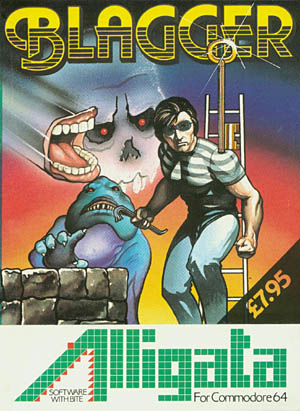
Crowther's first commercial releases appeared in 1983 through Alligata Software, a Sheffield-based publisher active in the early UK micro market. The partnership was immediate and productive: Blagger, Gnasher, Loco, and Suicide Express all appeared within a two-year window and all charted.
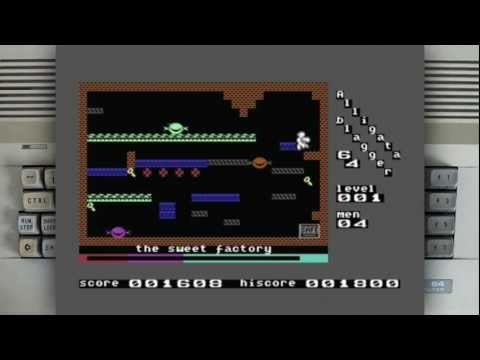
Blagger (1983) was the breakthrough. A platform game with tight controls and an instantly recognisable visual style, it hit the C64 charts and established Crowther as a name worth watching. Zzap!64 covered it positively and readers began to recognise the Alligata / Crowther byline as a quality signal.
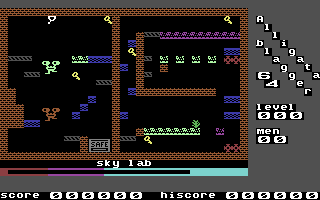
Gnasher and Loco followed in rapid succession, demonstrating the speed at which Crowther could deliver. Developing complete professional games in as little as two weeks was not unusual for him during this period — a pace that astonished publishers accustomed to studio timelines.
Suicide Express (1984) was a faster, darker follow-up to Loco — a train game pushed to its mechanical limits. Crowther began using sampled sounds in his SID work around this period, adding a new dimension to his compositions.
The Middle Period & Licensed Work (1985–1988)
The mid-1980s brought diversification. Crowther continued to produce original titles but also began working on licensed material, demonstrating an ability to work to brief that many bedroom programmers could not match.
Aliens (1986), published by Electric Dreams, was a significant step. Based on James Cameron's film, it required Crowther to capture the tension and atmosphere of a major Hollywood property in 6502 assembly and a handful of SID chip voices. He delivered a game that held up to scrutiny and earned positive reviews in the specialist press.
In 1985, Crowther collaborated with friend and accomplished composer Ben Daglish to found W.E.M.U.S.I.C. (We Make Use of Sound In Computers), a collective that brought together computer music talent for the UK games industry. Daglish had composed the music for Crowther's game Loco and the two were natural collaborators.
Skimmer (1988), published by Electronic Arts, marked his most ambitious production yet — a hovercraft action game that met EA's demanding quality standards and was released across the C64 and Amiga. Working for one of the most commercially sophisticated publishers in the industry was a different kind of pressure from the Alligata years, and Crowther rose to it.
C64 Era Retrospective
At the height of his output, Crowther exemplified what the UK bedroom programmer could achieve: total creative authorship over a commercial product, delivered at commercial speed, across every discipline the craft required. He was writing code and SID music simultaneously — disciplines that most developers separated between specialists.
The green-phosphor glow of the C64's green-screen monitor, and the character-cell grid of the PETSCII display, were the defining aesthetic environment of his work. Every game he shipped was born in that terminal world.
Final C64 Work & Legacy (1989–1990)
Blinky's Scary School (1990), published by Grandslam Entertainment, was Crowther's most technically ambitious and cross-platform project. Released simultaneously on C64, Amiga, DOS, and Atari ST, the game features a ghost navigating a haunted school — a far cry from the tight arcade action of Blagger seven years earlier.
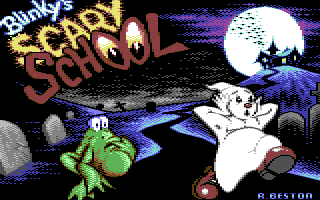
It was also his farewell to the bedroom programmer era. As the 16-bit generation matured and game development became a more team-based activity, the window for a single developer to deliver a complete commercial product narrowed. Crowther's career arc — from a two-week Alligata turnaround in 1983 to a four-platform Grandslam release in 1990 — precisely maps the transformation of the UK games industry.
His legacy is a body of work that holds up: playable games, well-composed SID music, and
a demonstration that one person with a machine and enough time could build something worth
shipping. The HVSC collection preserves his SID compositions under
MUSICIANS/C/Crowther_Antony/.